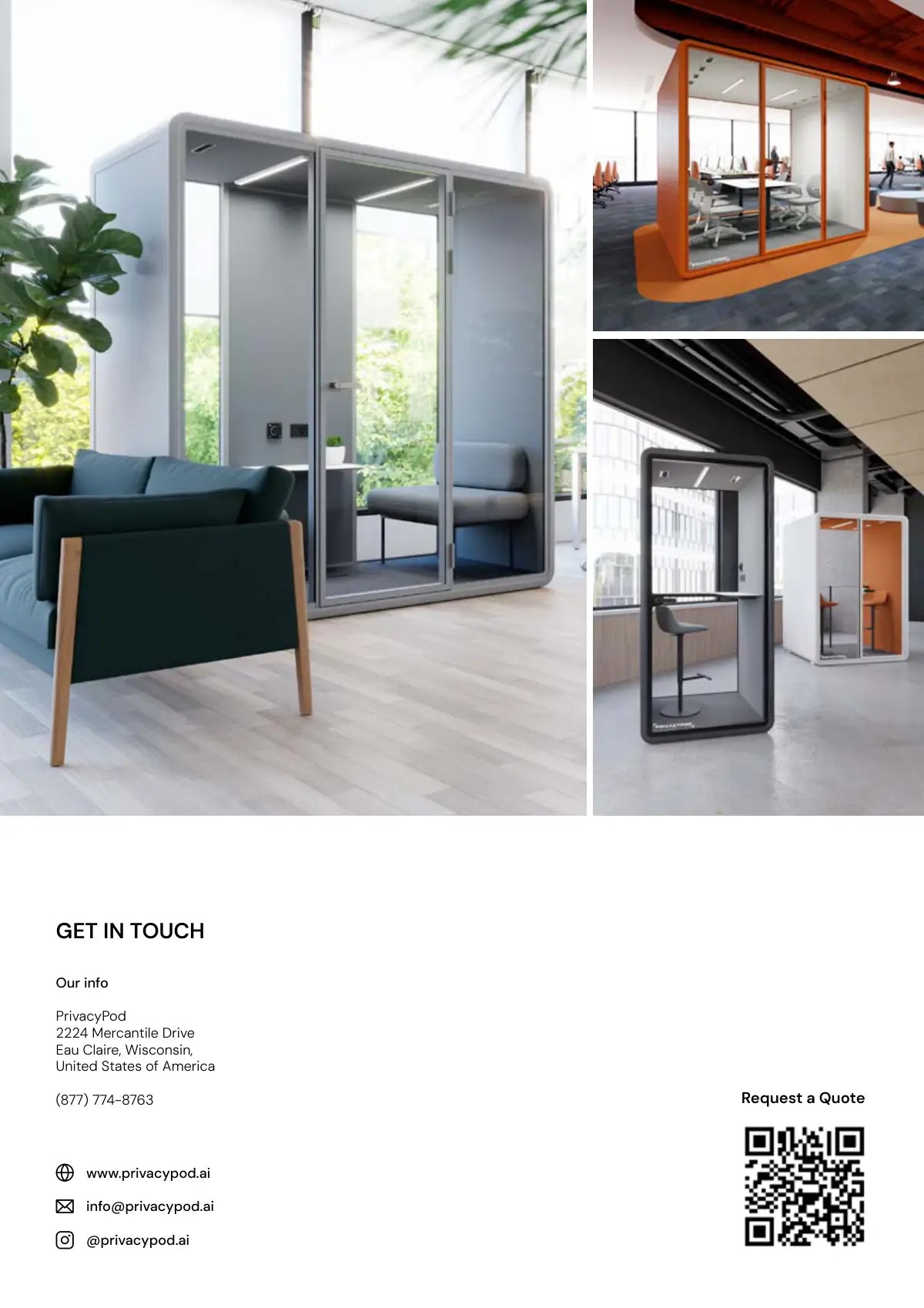
The best office pods in 2026, the short version
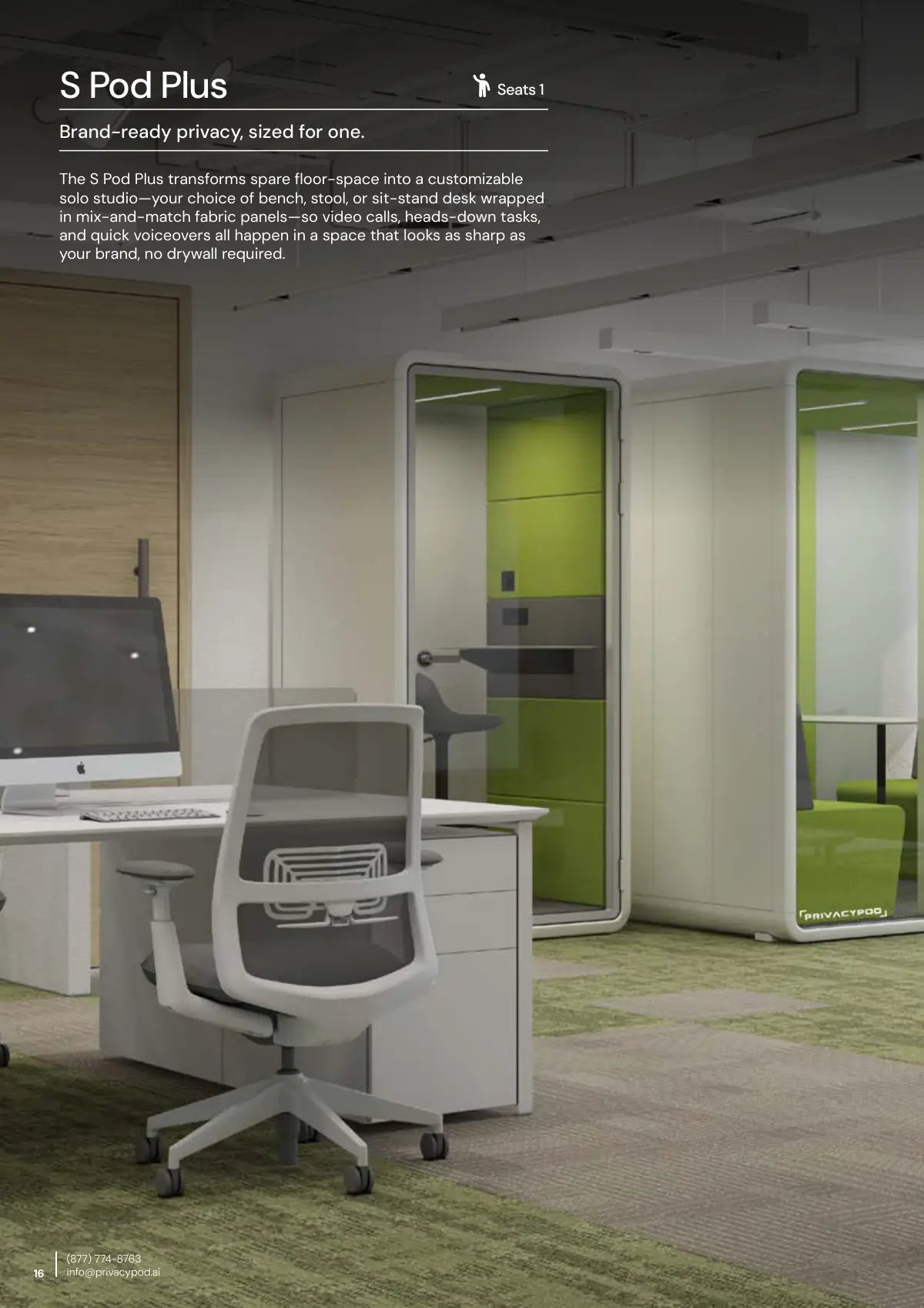
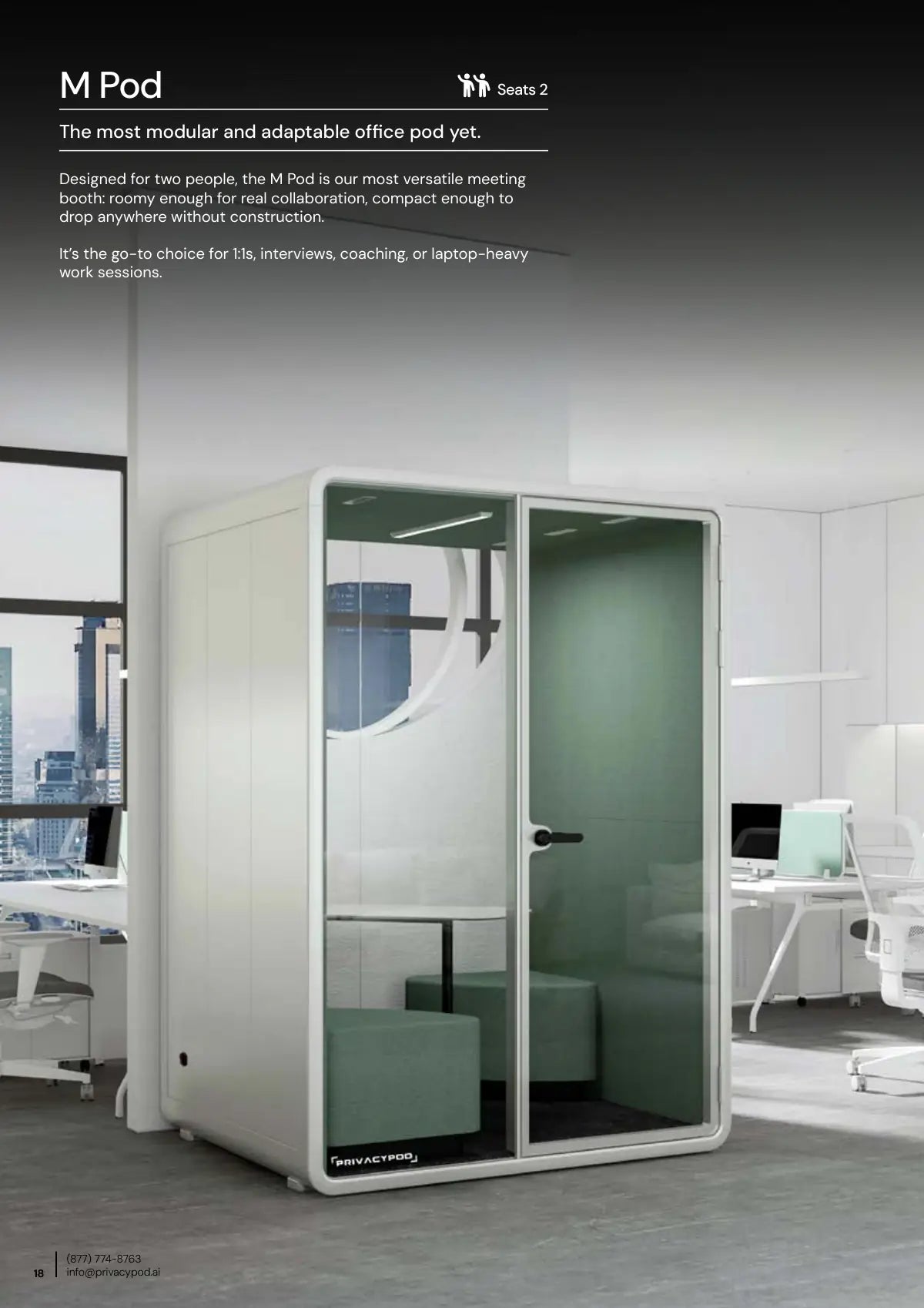
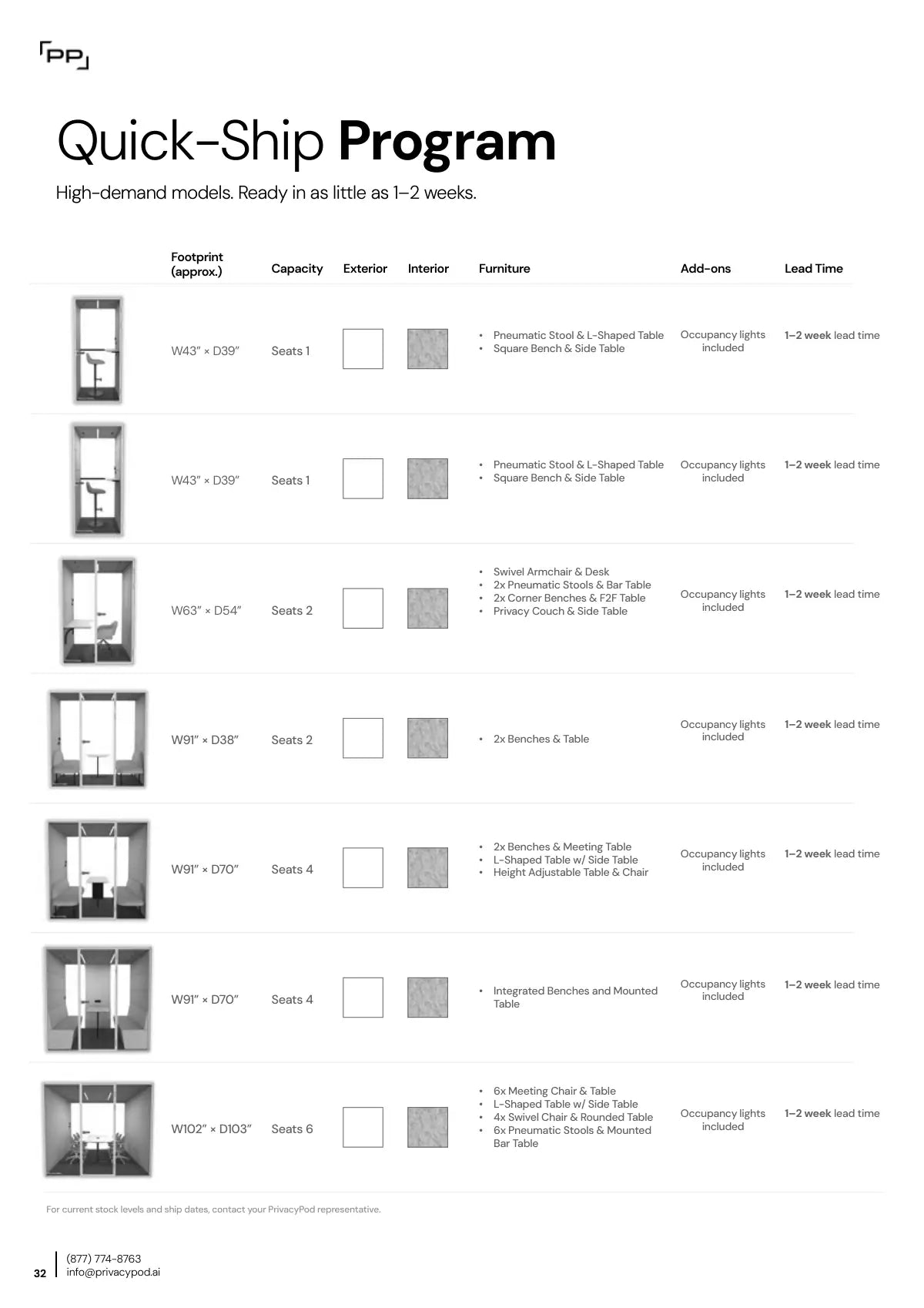
Among six makers compared, the best office pods in 2026 by lowest list price with a result published under ISO 23351-1:2020 are four PrivacyPod models. The PrivacyPod S Pod is $6,395 for one person and the PrivacyPod M Pod is $9,495 for two. The PrivacyPod L Pod is $12,495 for four and the PrivacyPod XL Pod is $14,995 for six. PoppinPod for 1 and for 2 ship fastest.
PrivacyPod makes and sells its own pods, listed in the office pod lineup with prices. Every US list price, acoustic figure, warranty and lead time is each maker's published figure, read October 1, 2026.
| Job | Pick | List price | Ships |
|---|---|---|---|
| One person | PrivacyPod S Pod | $6,395 | Quick-Ship, 1 to 2 weeks |
| Two people | PrivacyPod M Pod | $9,495 | Quick-Ship, 1 to 2 weeks |
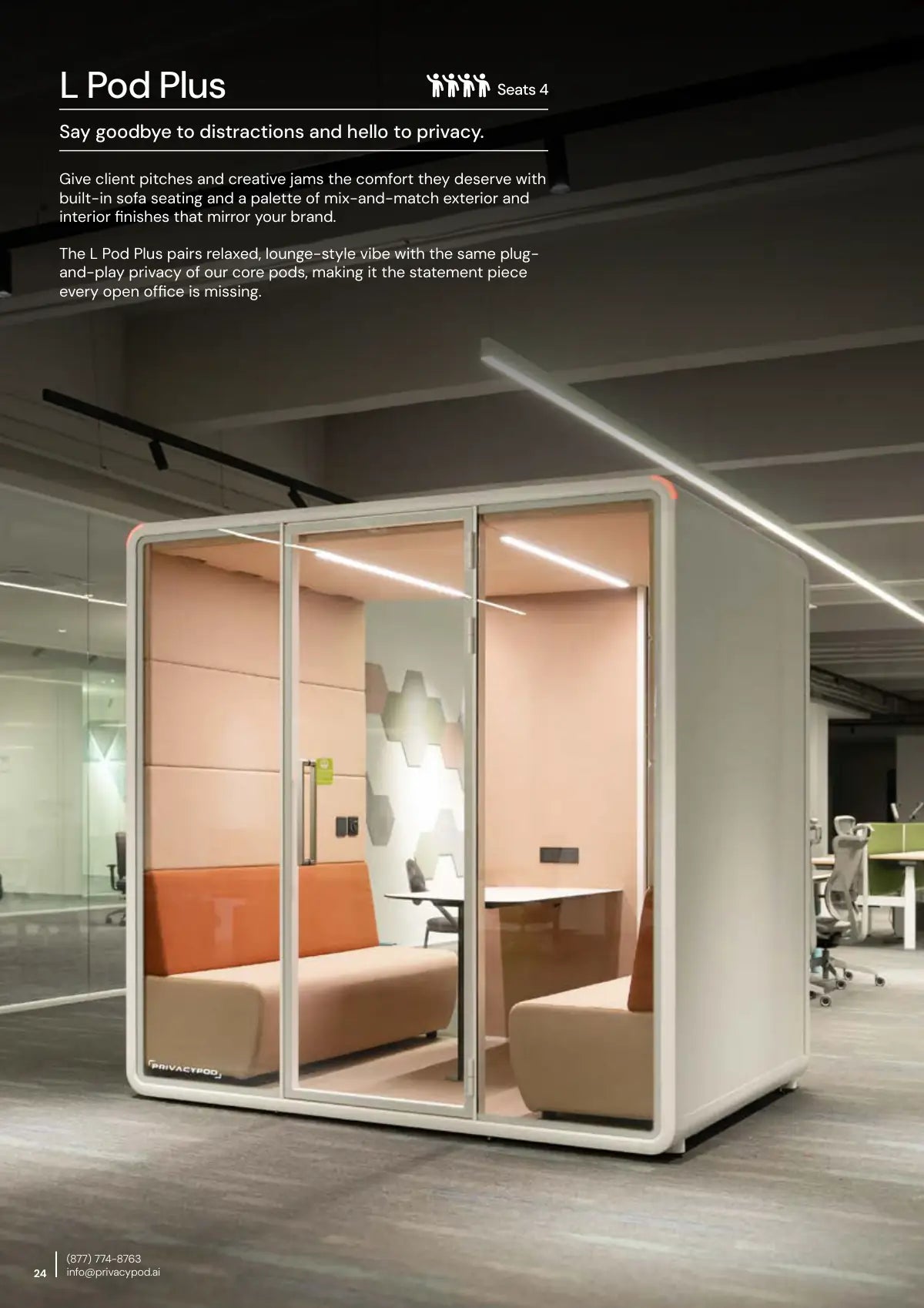
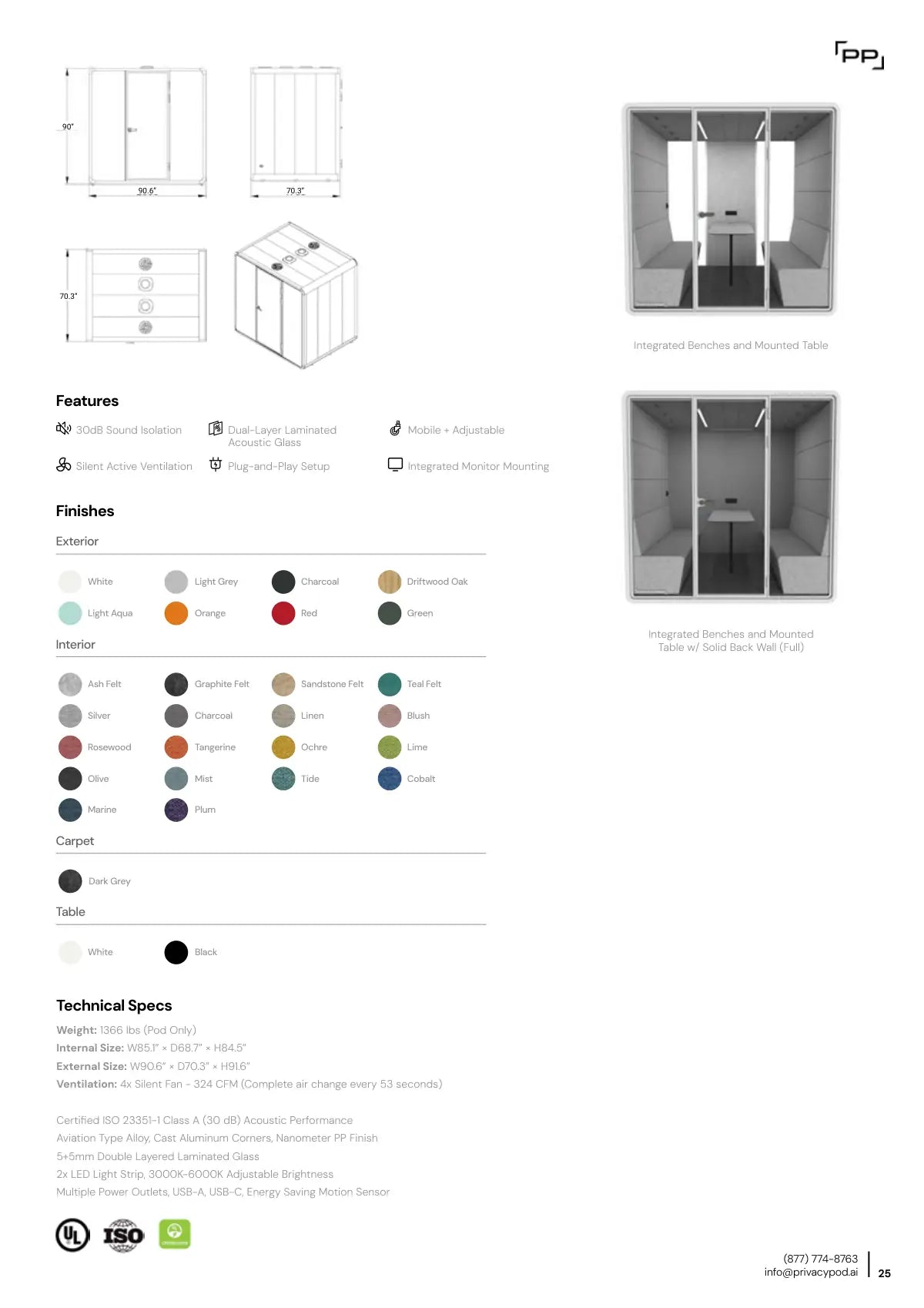
| Four-person meeting | PrivacyPod L Pod | $12,495 | Quick-Ship, 1 to 2 weeks |
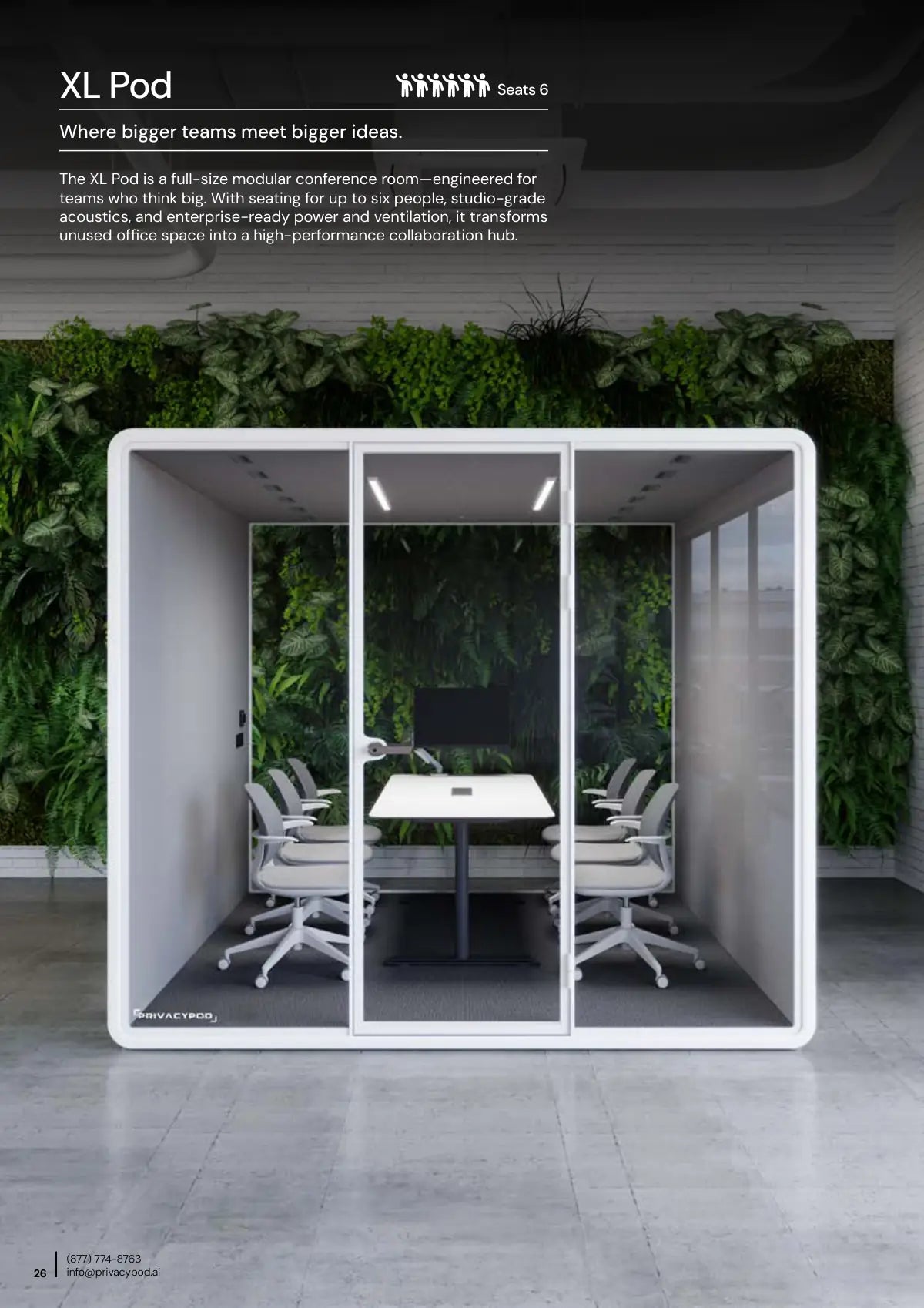
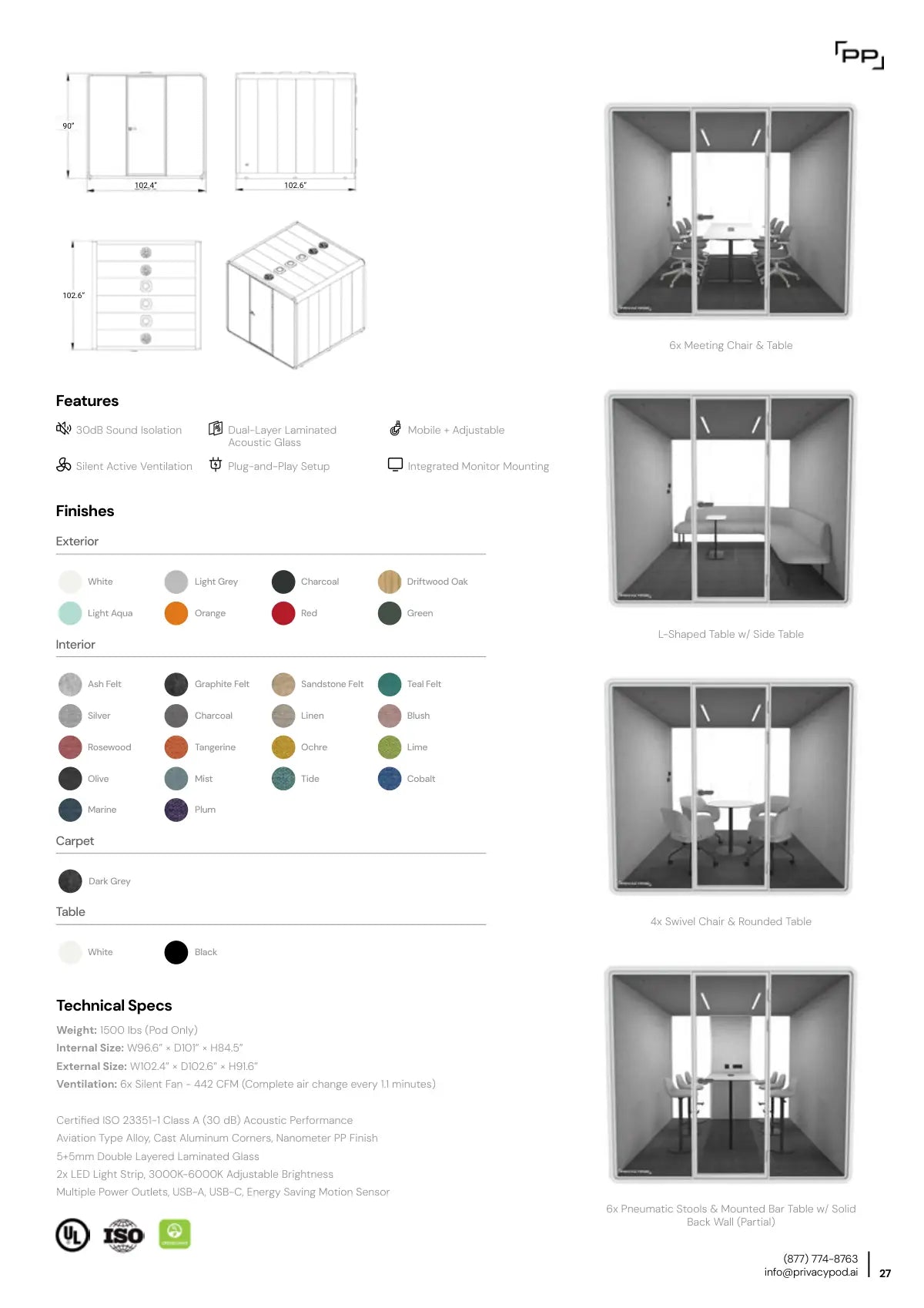
| Six people | PrivacyPod XL Pod | $14,995 | Quick-Ship, 1 to 2 weeks |
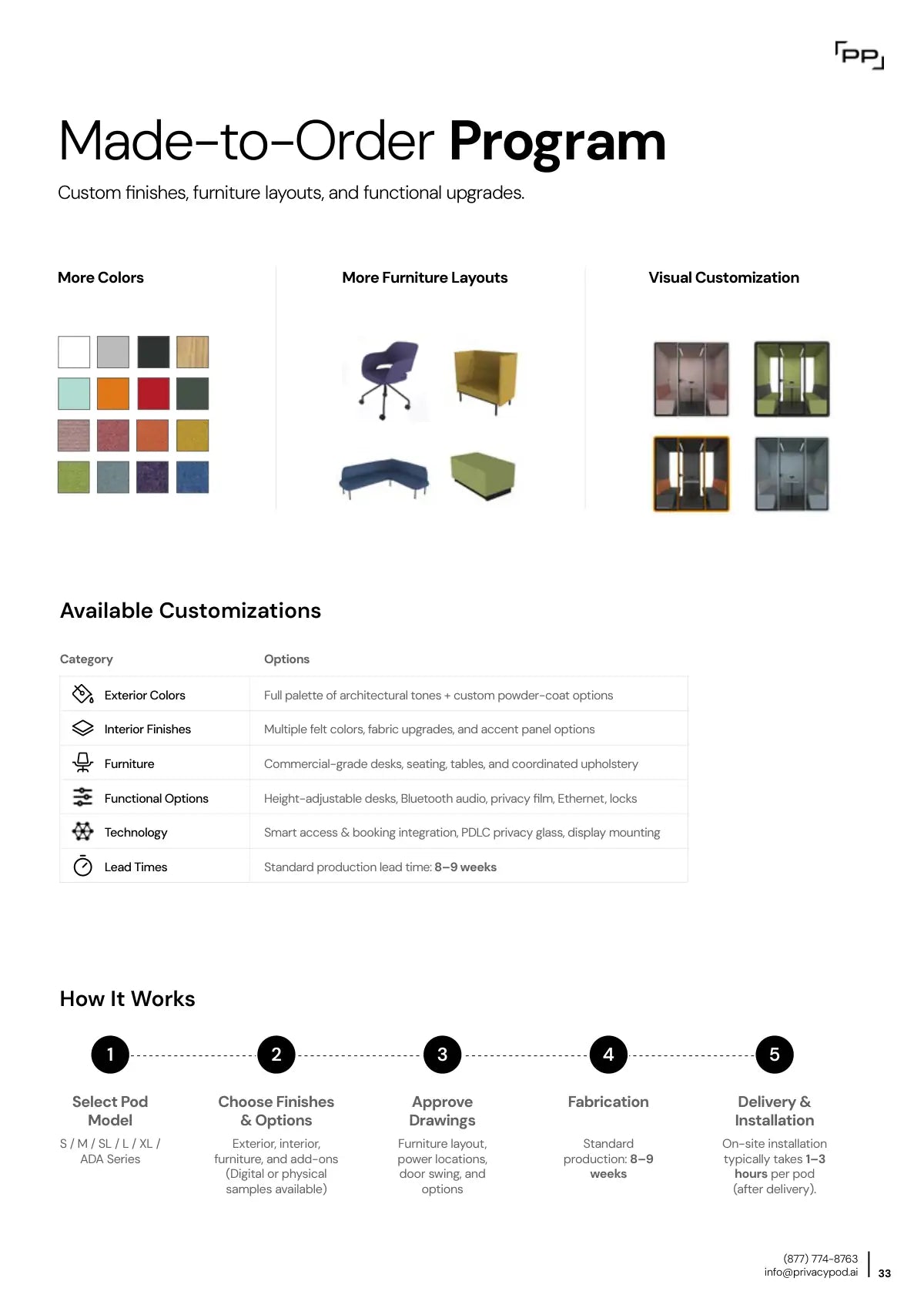
| ADA access | PrivacyPod L ADA Pod | From $24,795 | Made to order, 9 to 11 weeks |
| Fastest delivery | PoppinPod for 1 or for 2 | $5,999 or $16,999 | In stock, 1 to 3 business days |
| Lowest price per seat | PrivacyPod XL Pod | $2,499 per seat | Quick-Ship, 1 to 2 weeks |
What each office pod maker publishes, at a glance
Office pod ratings explained covers each rating. The office pod comparison page has the spec matrix.
| Brand | Acoustic figure | Method | Warranty |
|---|---|---|---|
| PrivacyPod | ISO 23351-1 Class A certified, ~30 dB speech level reduction | ISO 23351-1:2020 | 3-year limited |
| Framery | 30 dB, A-class | ISO 23351-1 | 5 years |
| ROOM | 32 dB booth; 30 dB rooms (spec sheets) | NIC | 5-year limited |
| Zenbooth | Up to 30.8 dB | None named | 3 years |
| PoppinPod | None published | ISO 23351-1 cited | 10 years; 7 in its policy |
| Pillar | None published | None named | 3-year limited |
What is the best office pod for one person on calls?


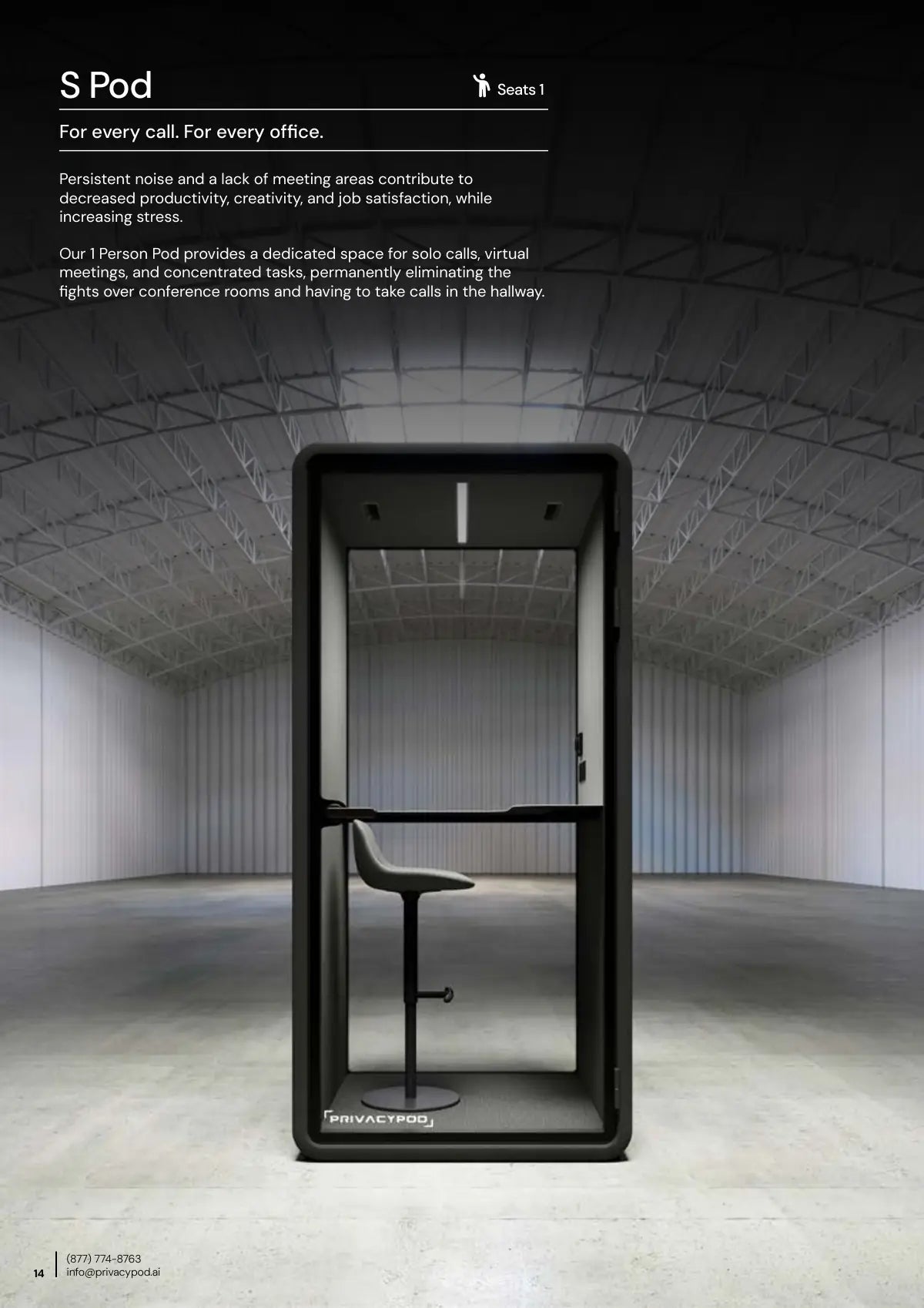
The pick: the PrivacyPod S Pod, $6,395. Of the one-person booths compared, the lowest list price with a result published under ISO 23351-1:2020, 30.5 dB speech level reduction.
Choose Zenbooth Solo when a US-built booth and the lowest list price matter. Choose Framery One Compact for occupancy data on a workplace platform; see the PrivacyPod vs Framery comparison.
Also priced:
- Framery Gradus Focus, from $9,190.
- ROOM Phone Booth, from $6,495, 32 dB NIC, a different test.
- Pillar One, $6,695, no acoustic figure.
- PoppinPod for 1, $5,999, no decibel figure.
What is the best office pod for two people?


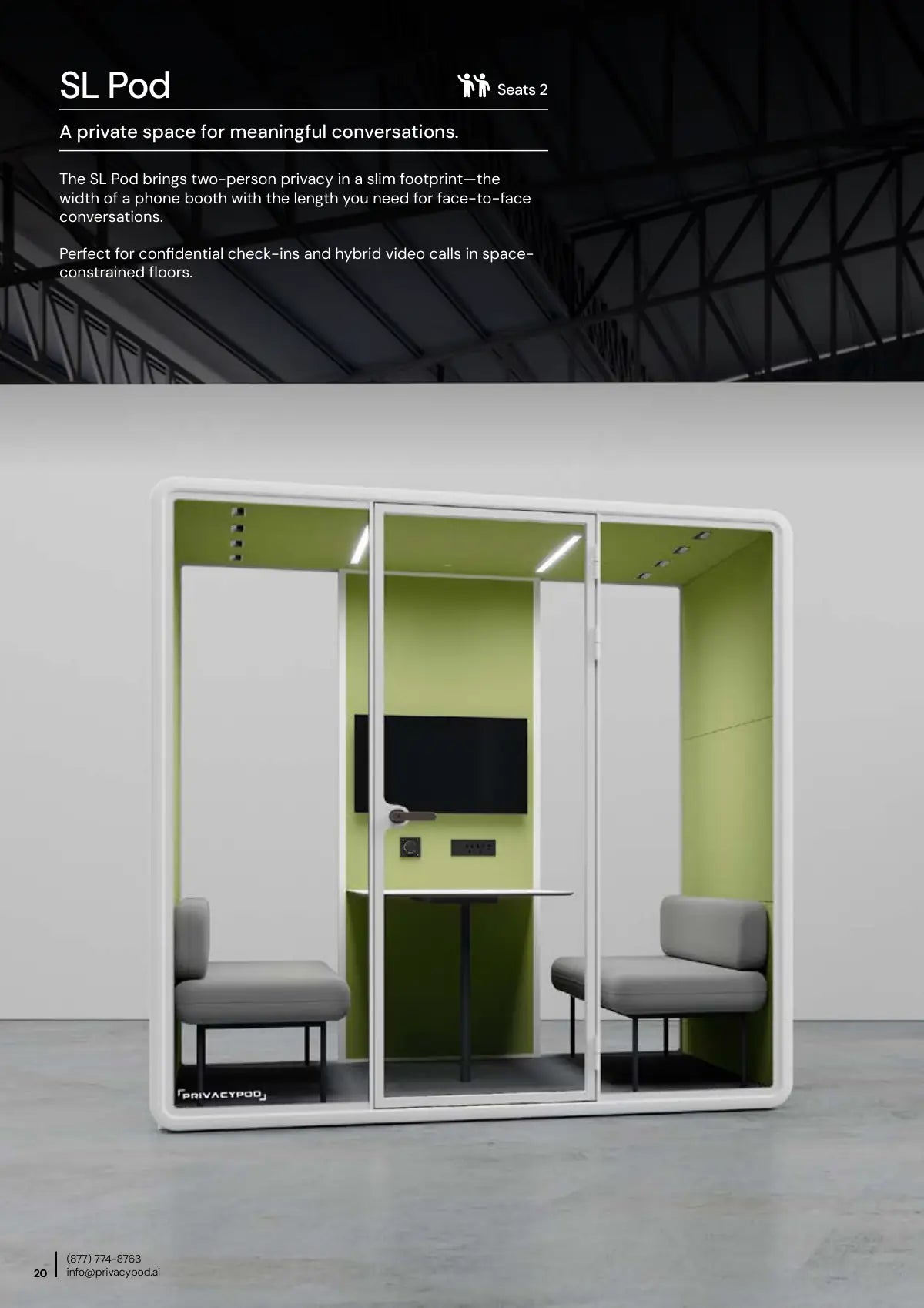
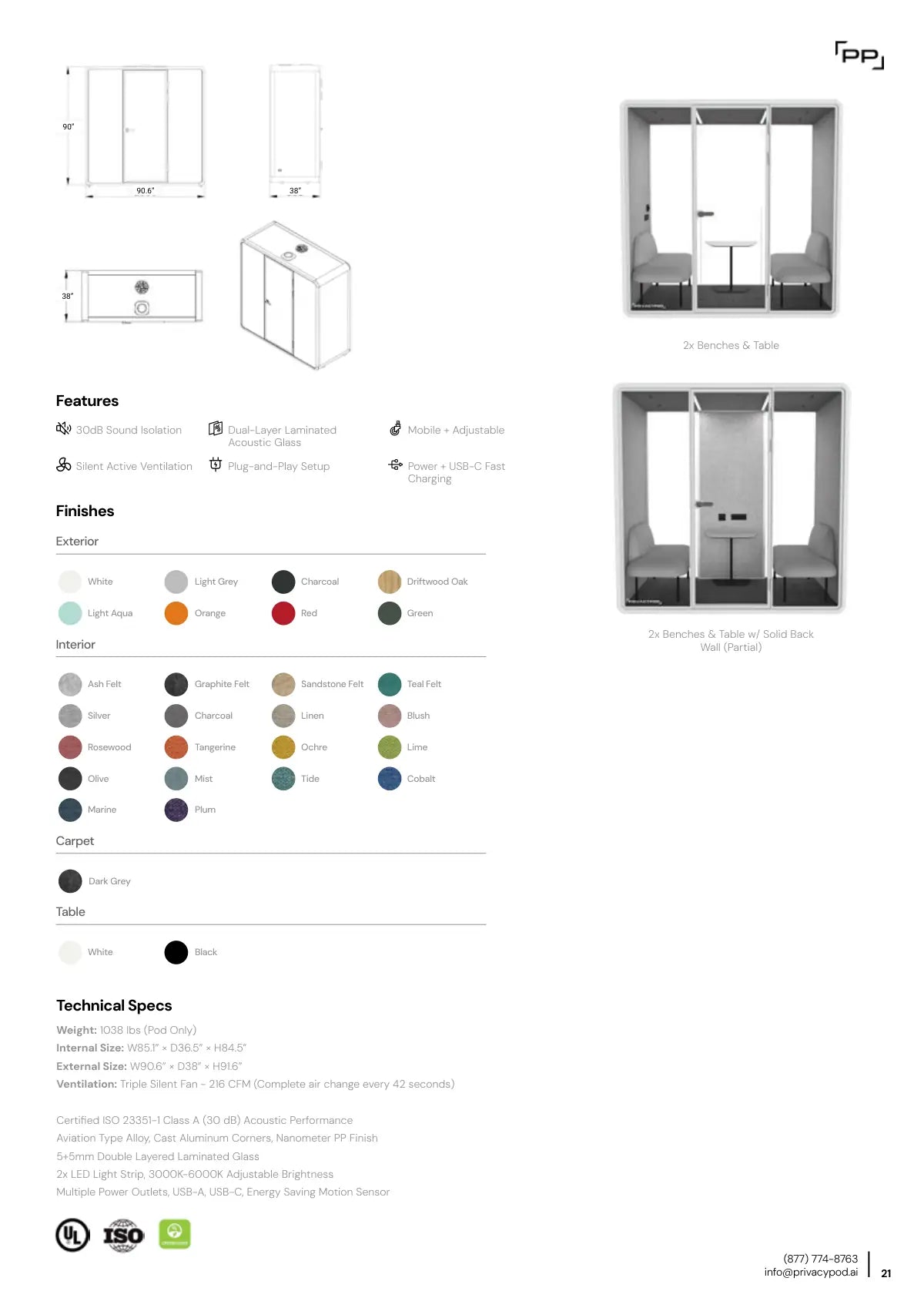
The pick: the PrivacyPod M Pod, $9,495. Lowest list price of the two-person rooms compared, and the only one with a result published under ISO 23351-1:2020.
Choose PoppinPod for 2 when the room has to ship within days. ROOM's Room S Meeting starts at $19,995; see the PrivacyPod vs ROOM comparison.
What is the best office pod for a four-person meeting?


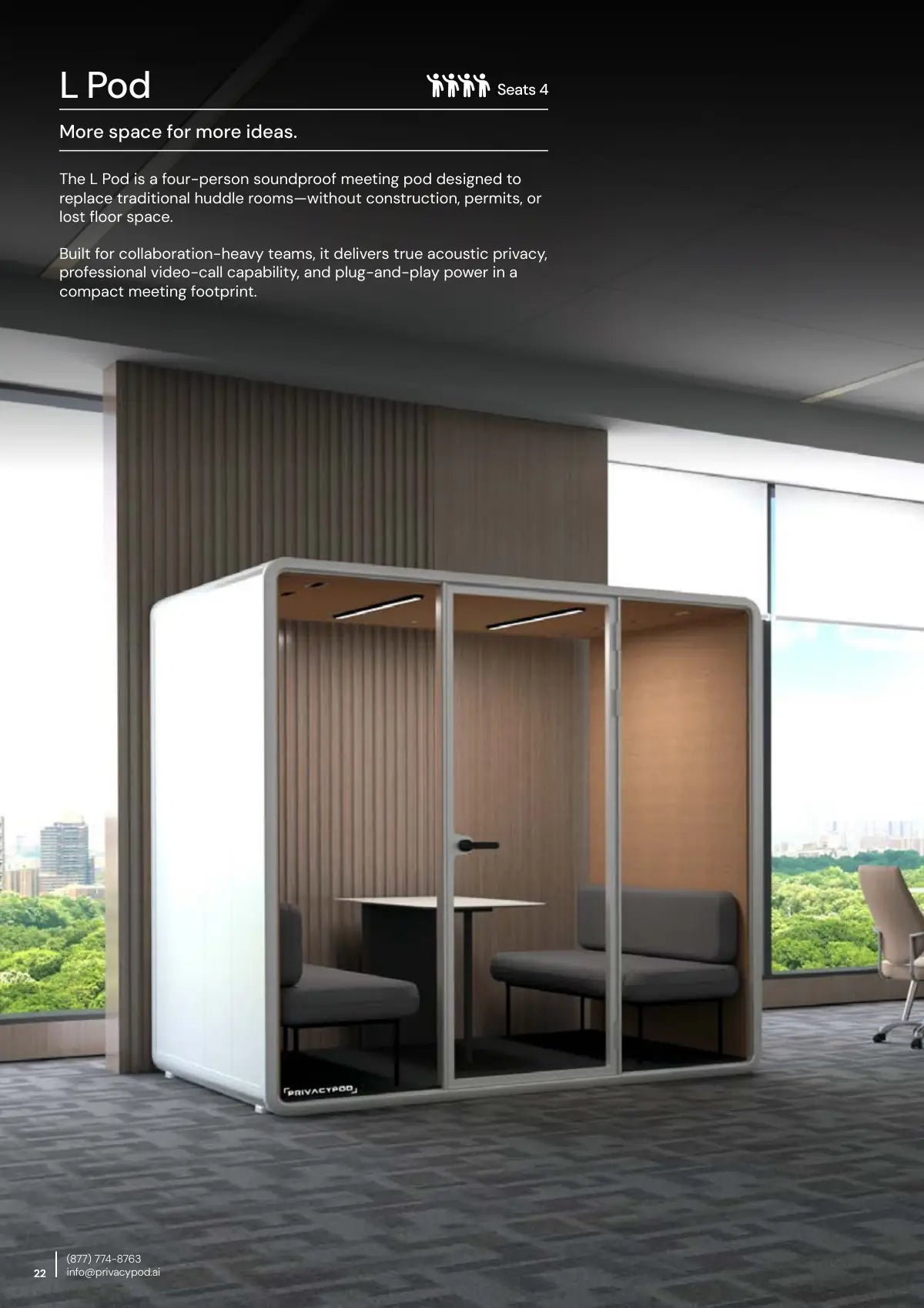
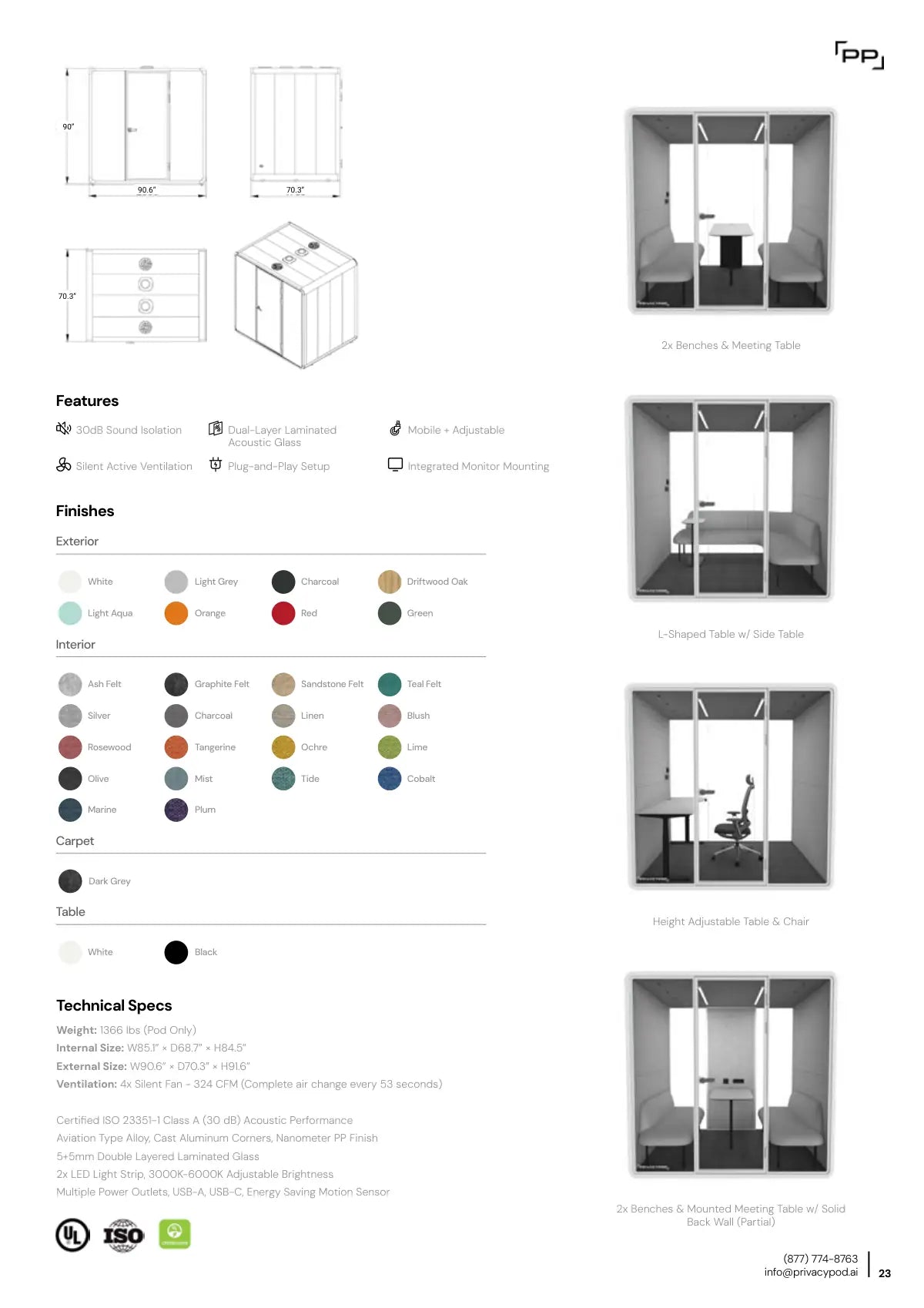
The pick: the PrivacyPod L Pod, $12,495. Lowest list price of the four-person rooms compared, by $3,995, with a 30.8 dB result published under ISO 23351-1:2020.
Choose Framery Four for occupancy data through Framery Connect. Framery's Gradus Huddle, from $20,790, is $8,295 more than the PrivacyPod L Pod. Choose Zenbooth Quad (ADA) for a US-built room; see the PrivacyPod vs Zenbooth comparison.
What is the best office pod for six people?


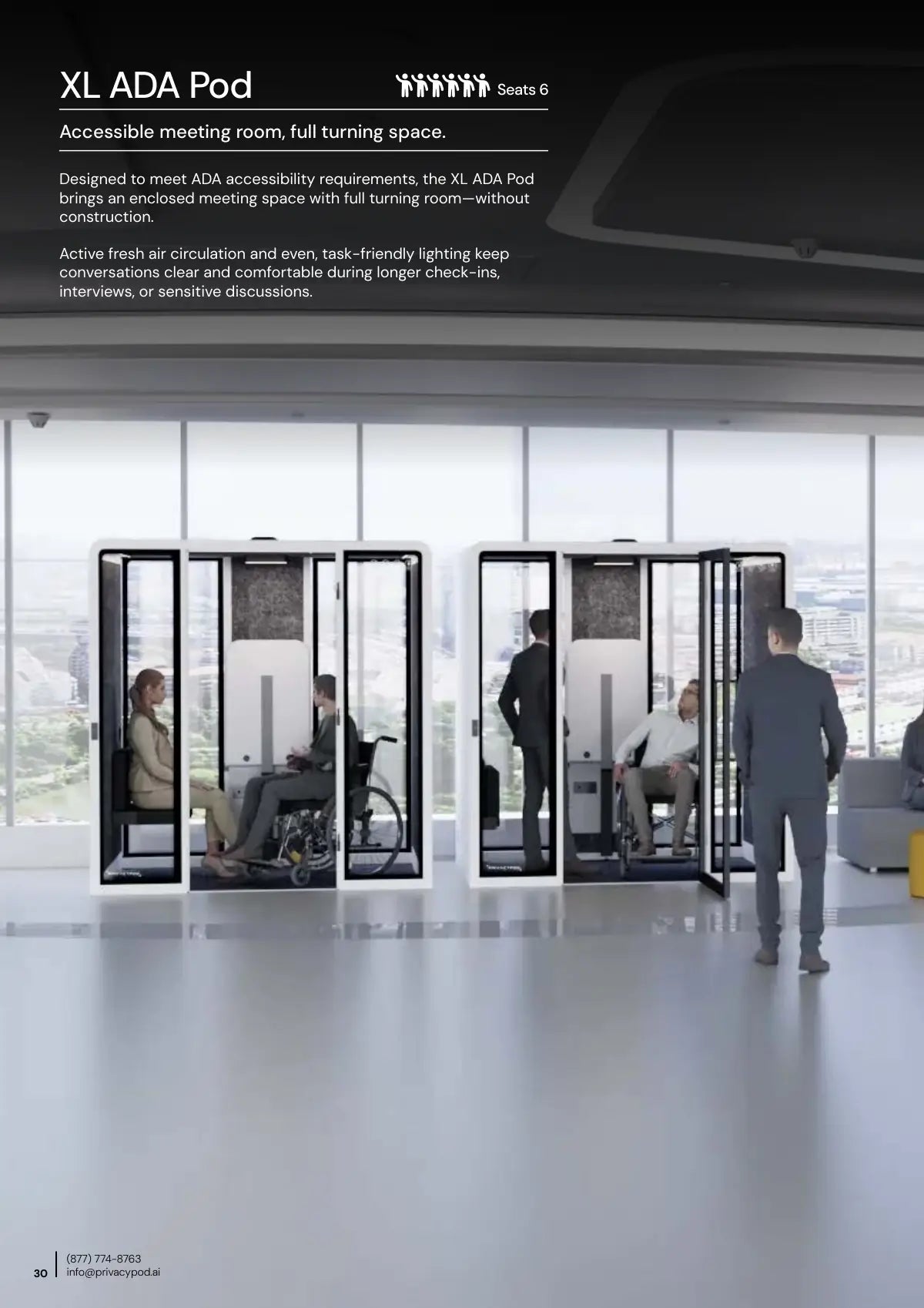
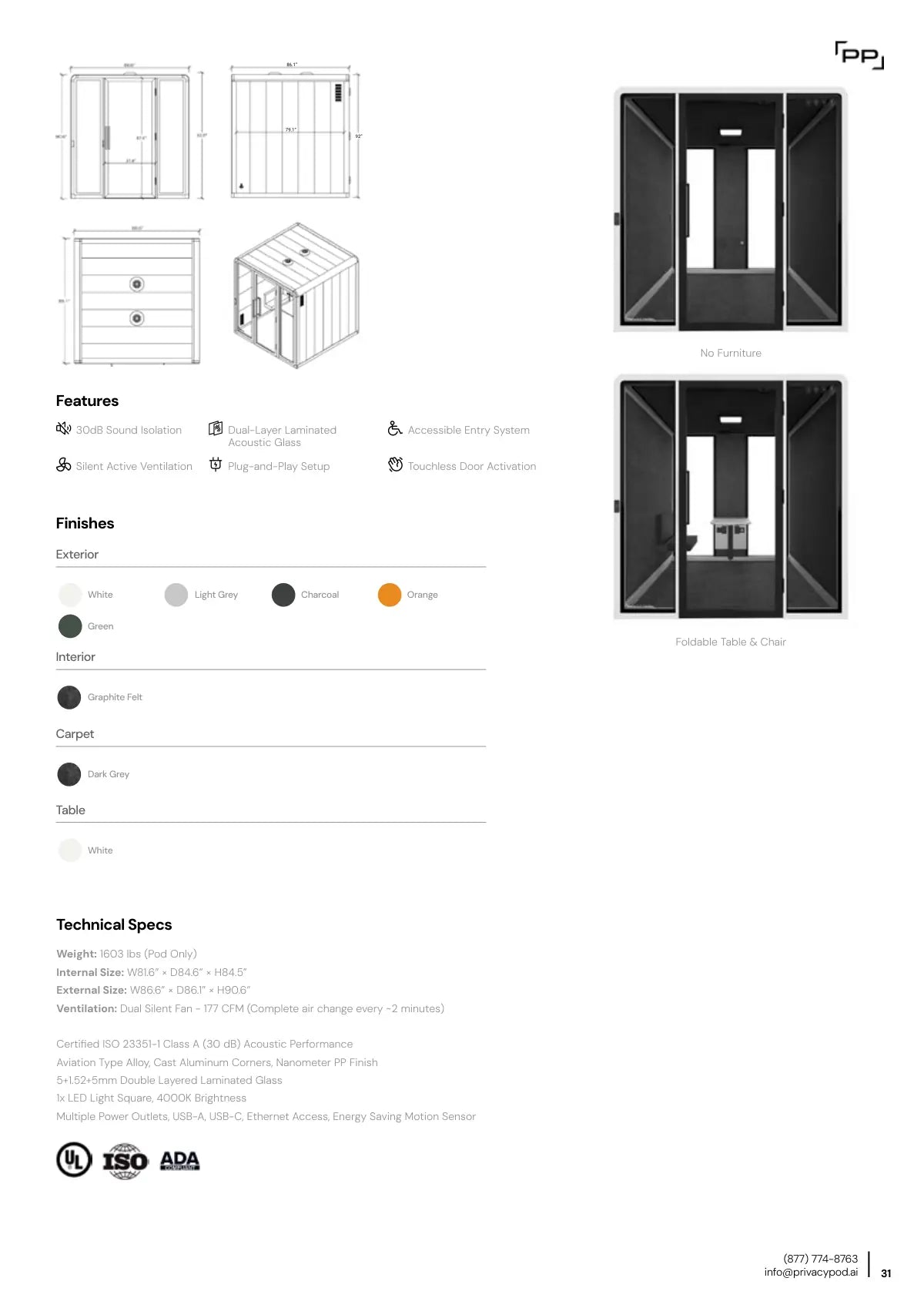
The pick: the PrivacyPod XL Pod, $14,995. About half the list price of Framery Six at $29,590, and the only six-seat room compared with a 1 to 2 week Quick-Ship window.
Choose Framery Six for the Framery Connect platform. Choose ROOM Room L Meeting when the architectural look is the spec and the buyer wants to sit in one first.
Which office pod is best for ADA access?
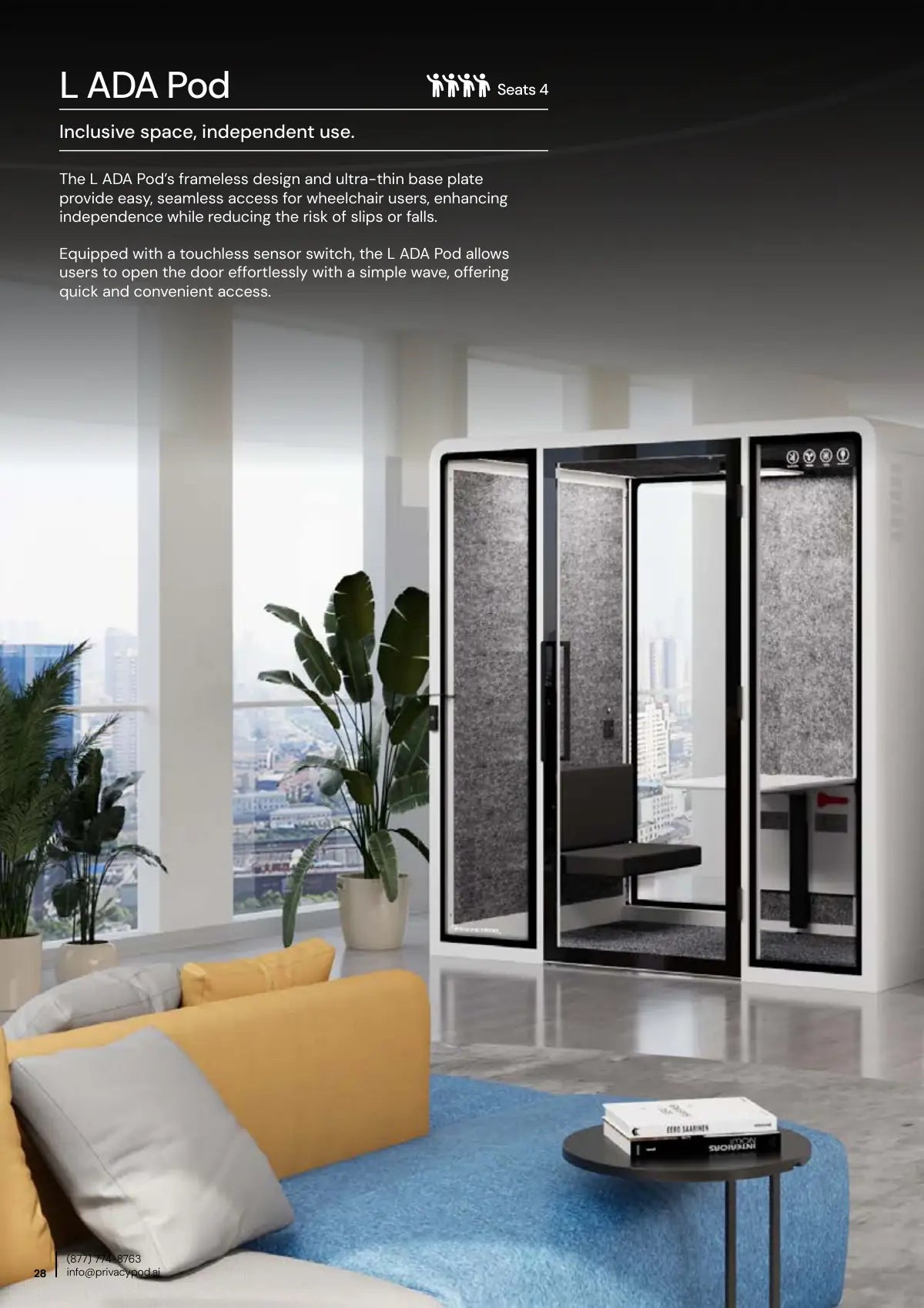
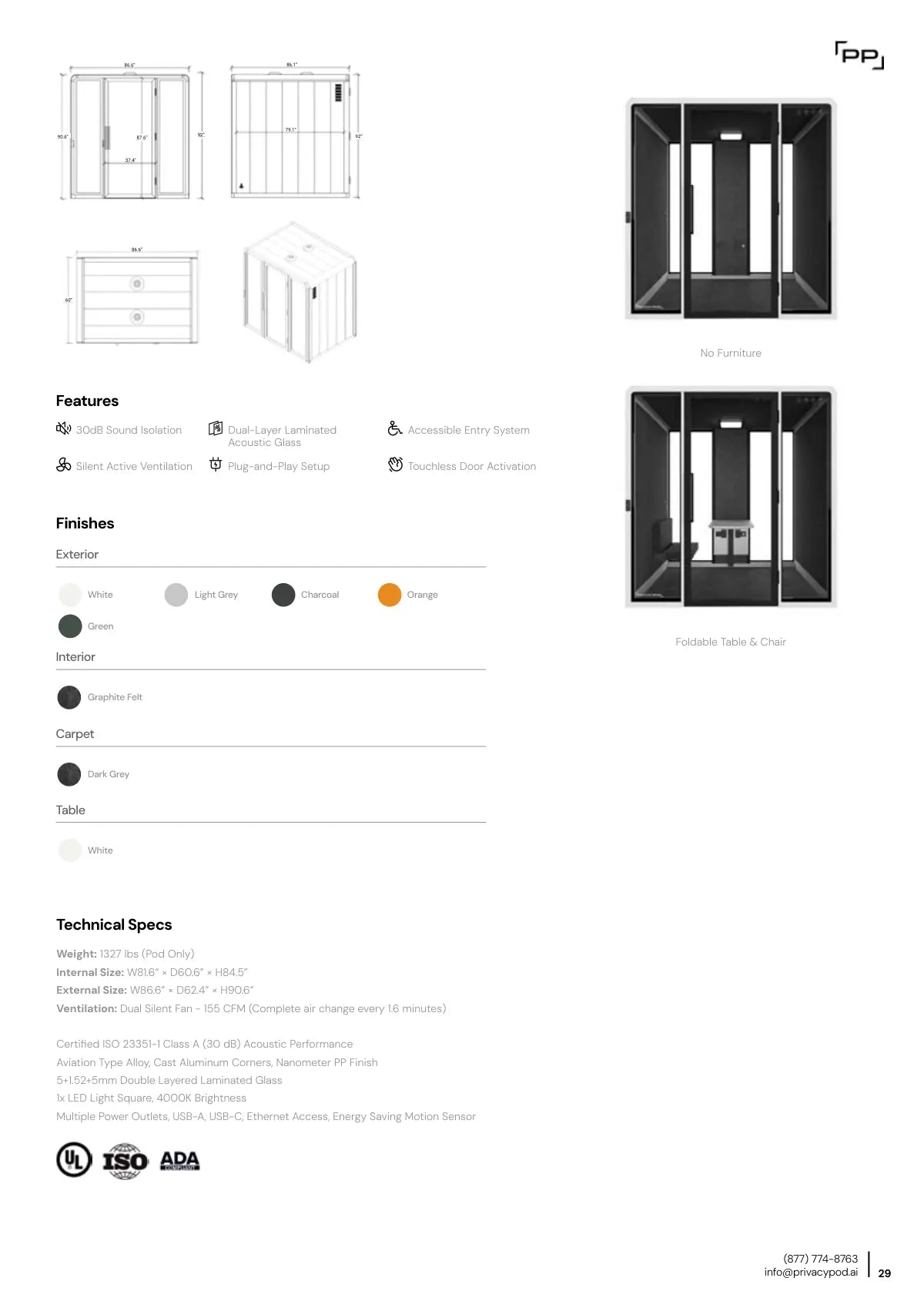
- PrivacyPod L ADA Pod, from $24,795: roll-in entry and an interior clearance of 80.3 by 61.0 inches, past the 60-inch turning circle in the ADA Accessibility Standards. ISO 23351-1 Class A certified, made to order, 9 to 11 weeks.
- Zenbooth Quad (ADA), $16,490: designed to fully comply with the ADA, in Zenbooth's words. Spring-hinged door, no powered opener listed.
- Pillar ADA, $19,495: US-made, converts to an open four-person room when the desk comes out.
The pick: the PrivacyPod L ADA Pod, from $24,795. The only accessible room compared that pairs an automatic door opener and a touchless switch with a result published under ISO 23351-1:2020.
Choose Zenbooth Quad (ADA) when price leads and a spring-hinged door will do.
Which office pod ships fastest?
PoppinPod ships in days. PrivacyPod Quick-Ship ships in 1 to 2 weeks, from one seat to six.
The window each maker publishes from order to shipment. Installation is a second date on every one of them.
0 4 wk 8 wk 12 wk
Each maker's live page, read 1 October 2026. Green marks the pick.
The pick: PoppinPod for 1 at $5,999 or PoppinPod for 2 at $16,999. Both ship in 1 to 3 business days when in stock, the fastest published window of the six makers compared.
Choose PrivacyPod Quick-Ship when one order spans sizes; every PrivacyPod order ships free. Ask about installation: mandatory on every PoppinPod, sold at checkout by ROOM and excluded from Framery prices.
Which office pod has the lowest price per seat?
The PrivacyPod XL Pod costs $2,499 a seat, the lowest of the rooms compared.
Each maker's list price divided by the seats it says the room holds. Delivery, installation and tax excluded.
Each maker's live product page, read 1 October 2026. Green marks the pick.
The pick: the PrivacyPod XL Pod, $14,995 for six seats, $2,499 per seat. The lowest list price per seat of the rooms compared, $1,624 under the nearest competitor, Zenbooth Quad (ADA).
Price per seat favors the biggest room, so match it to the size the office books. The office pod cost guide covers what delivery and installation add.
Office pod questions buyers ask
What is included in the price of an office pod?
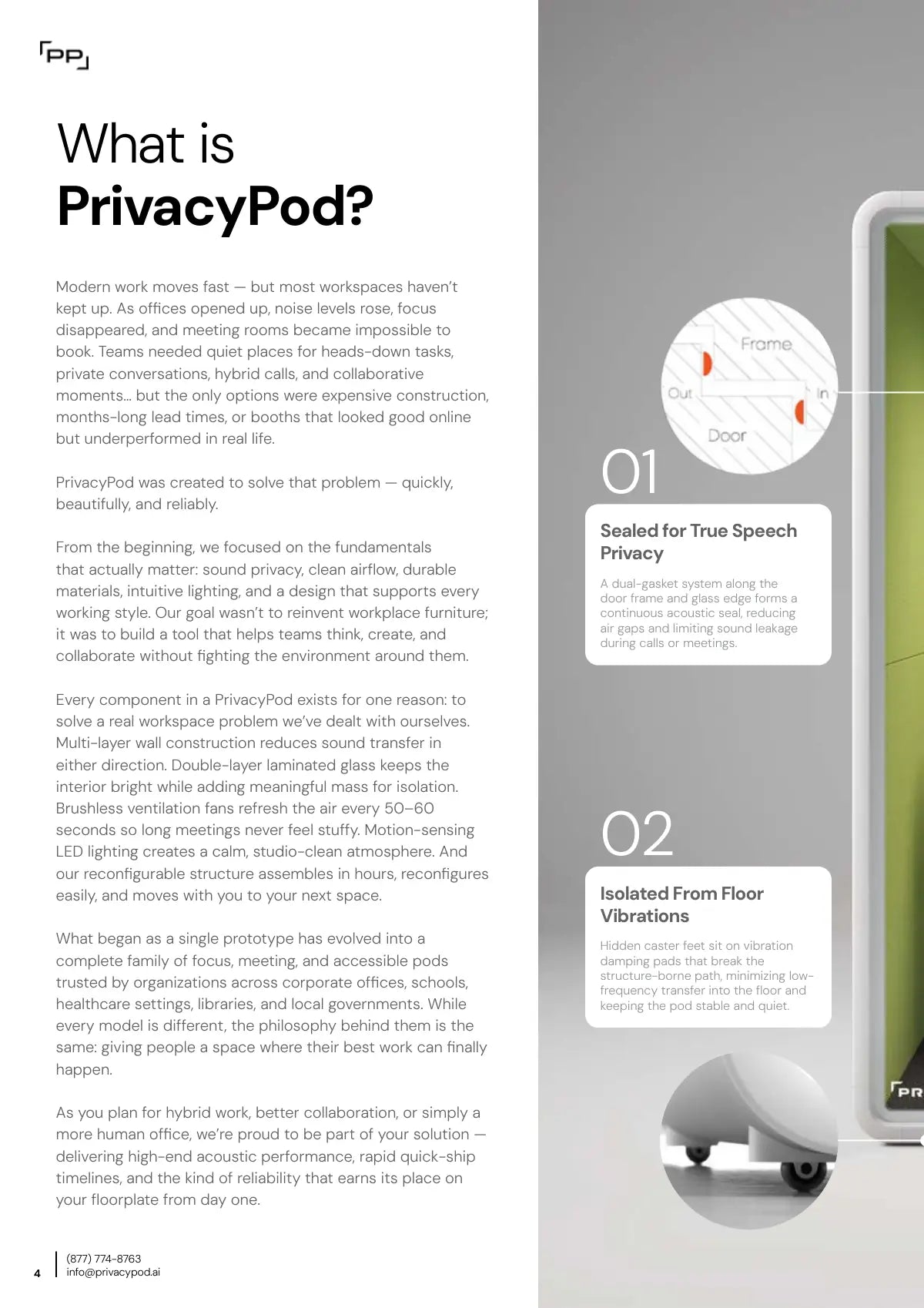
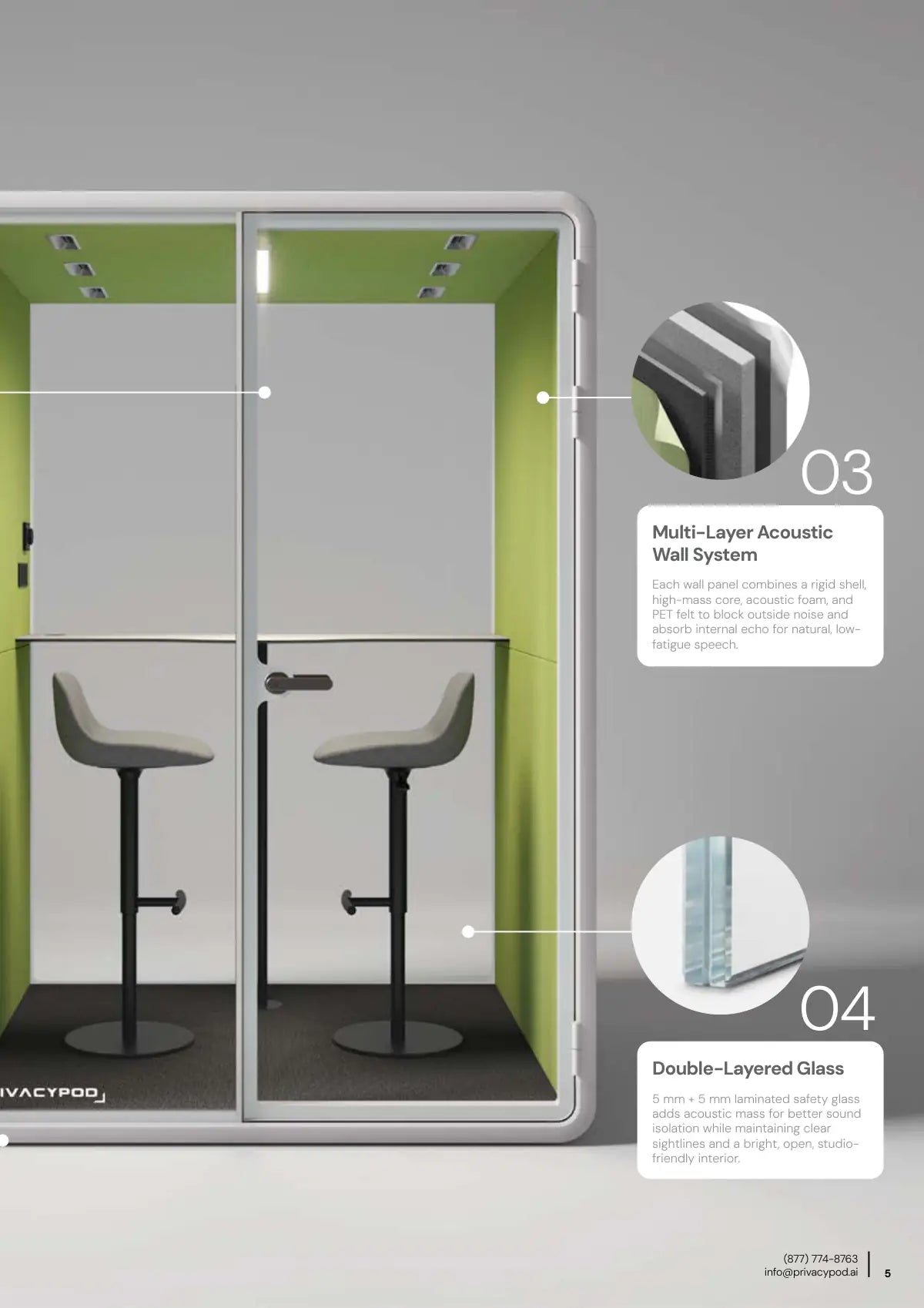
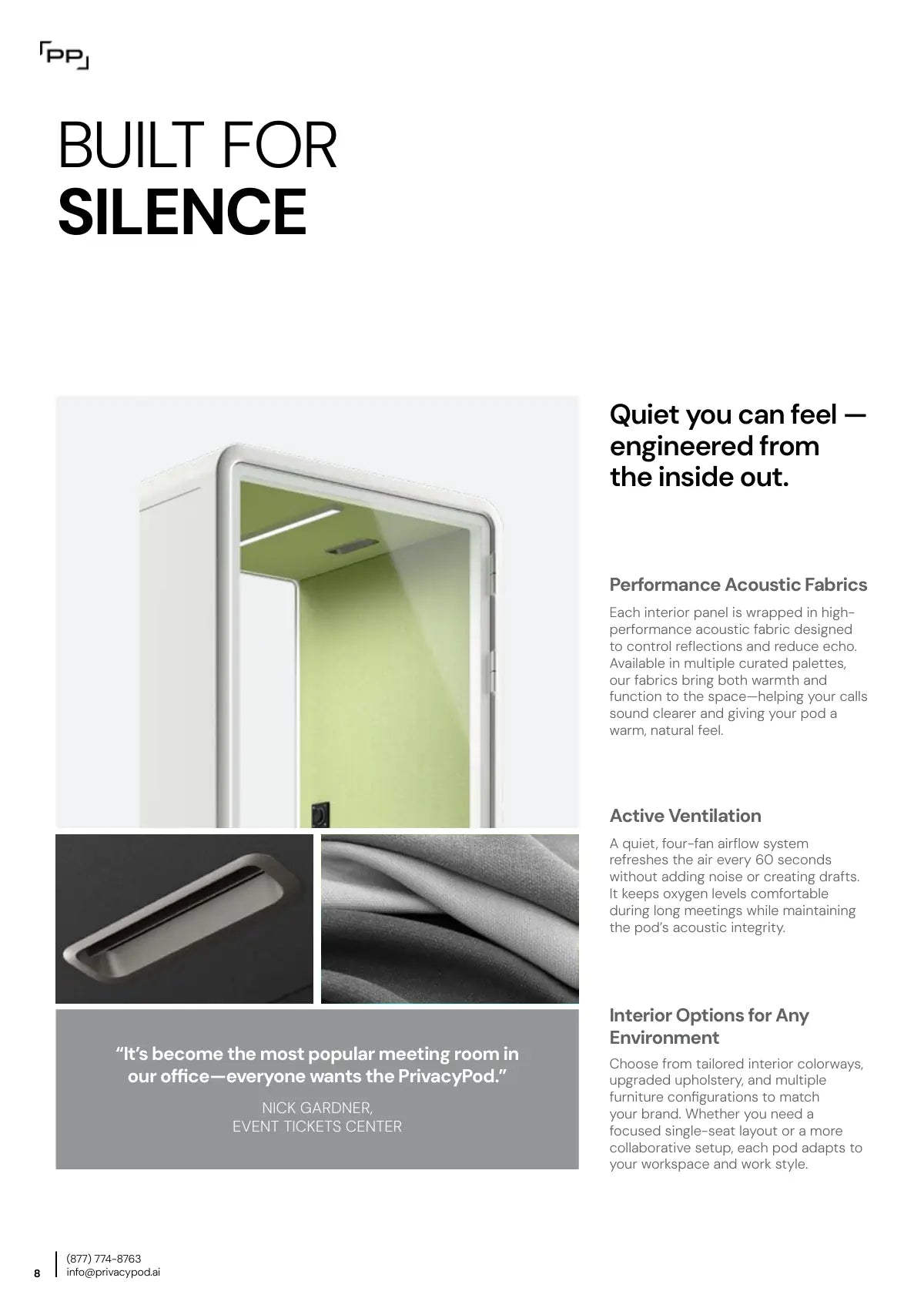
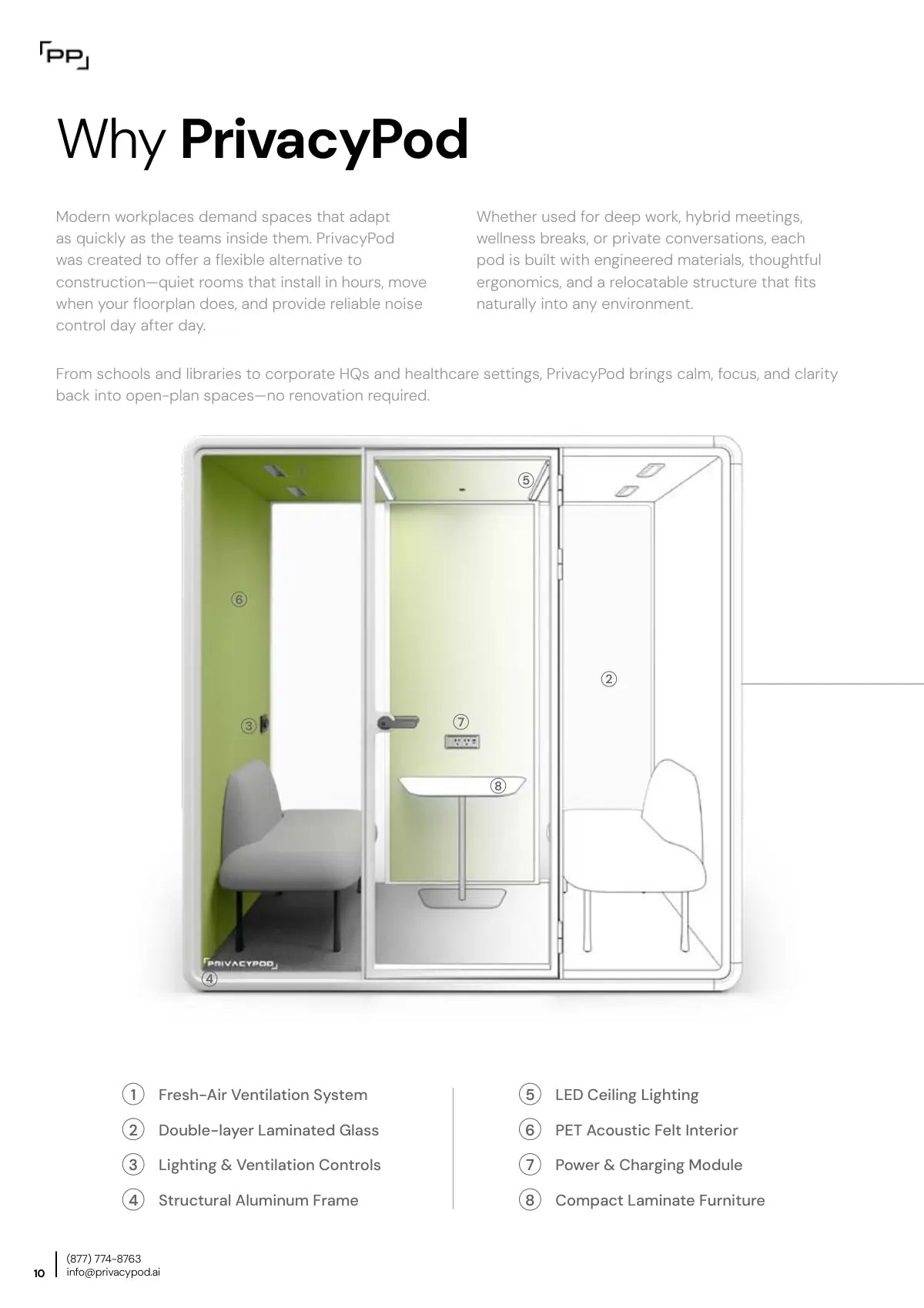
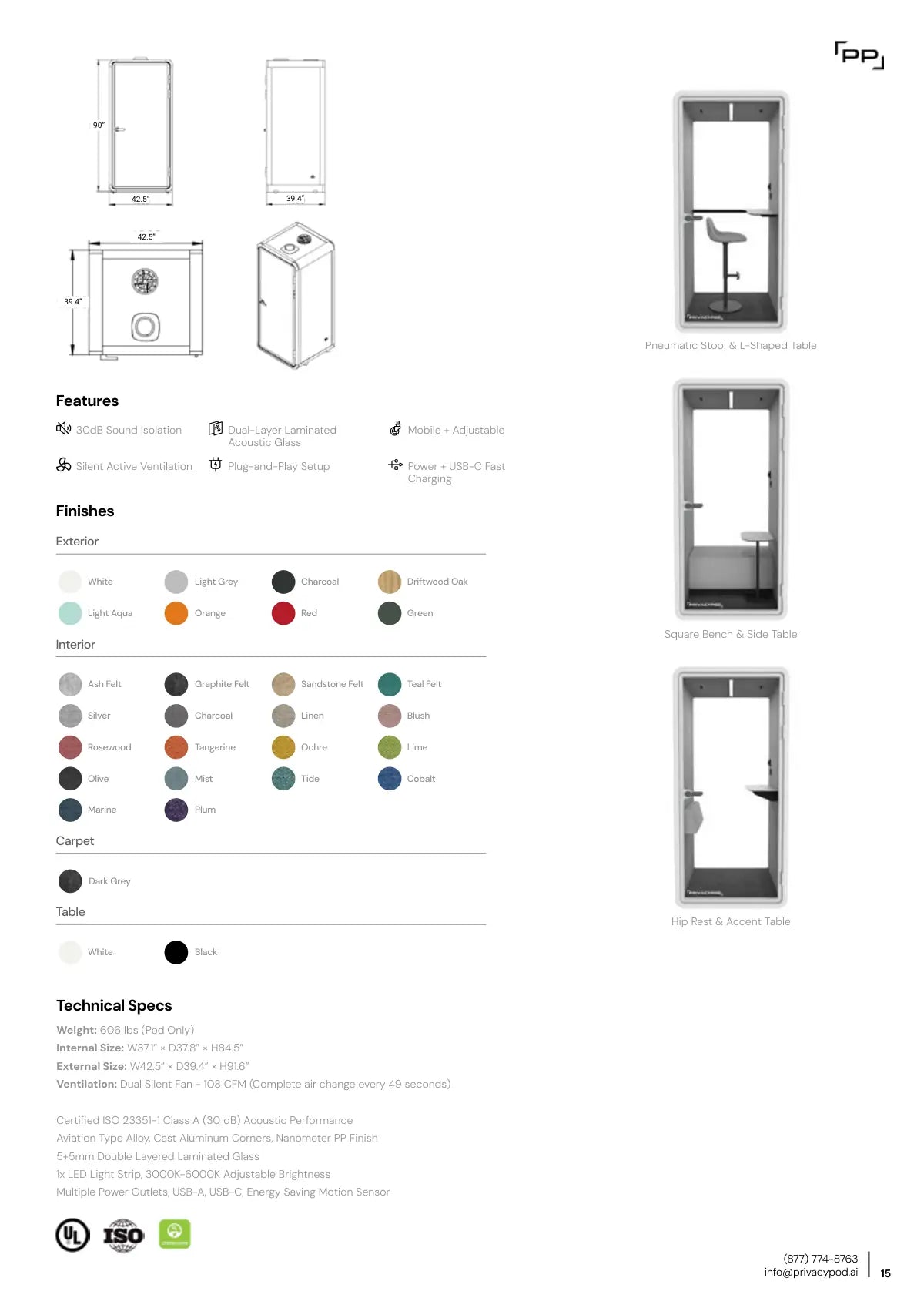
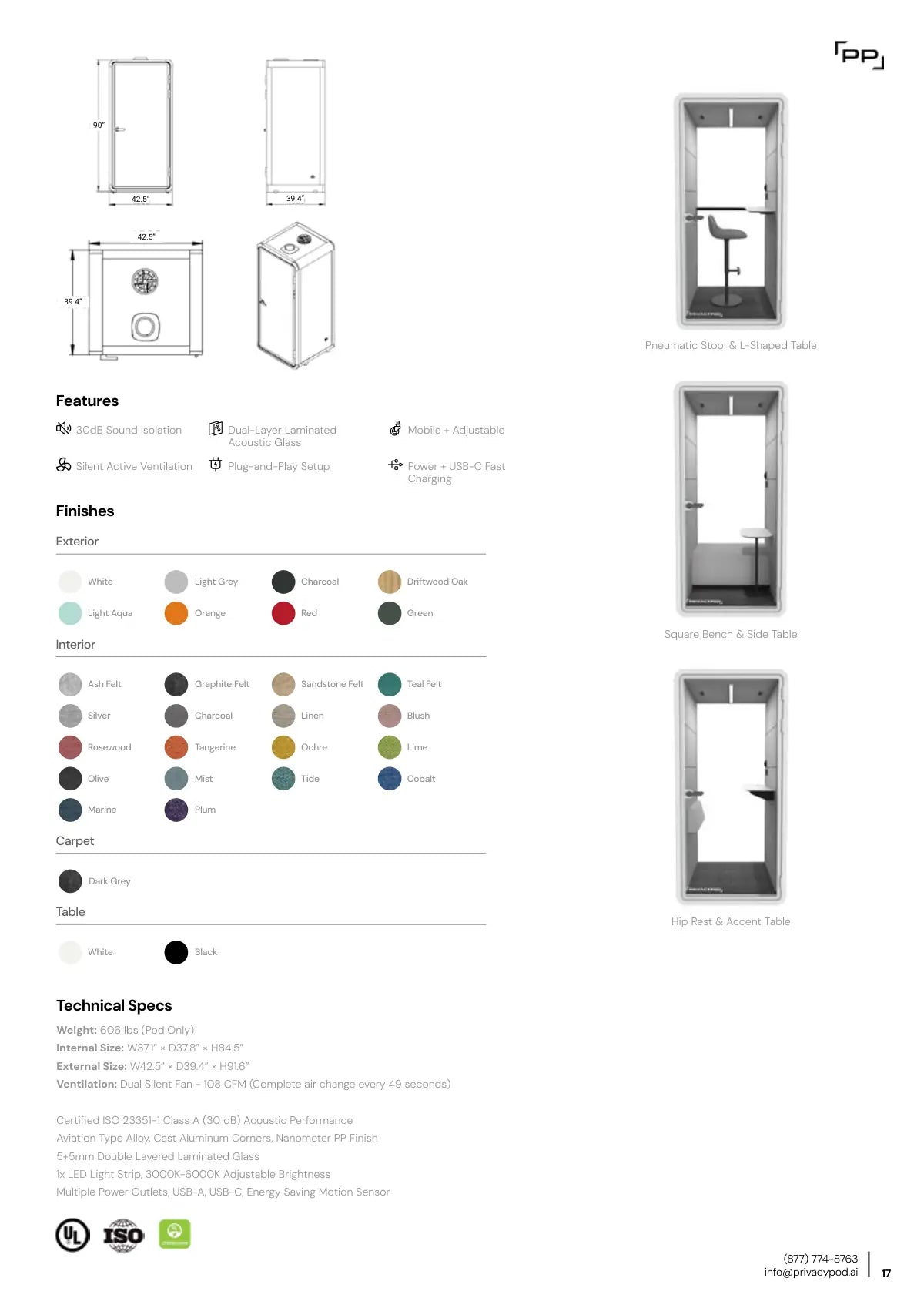
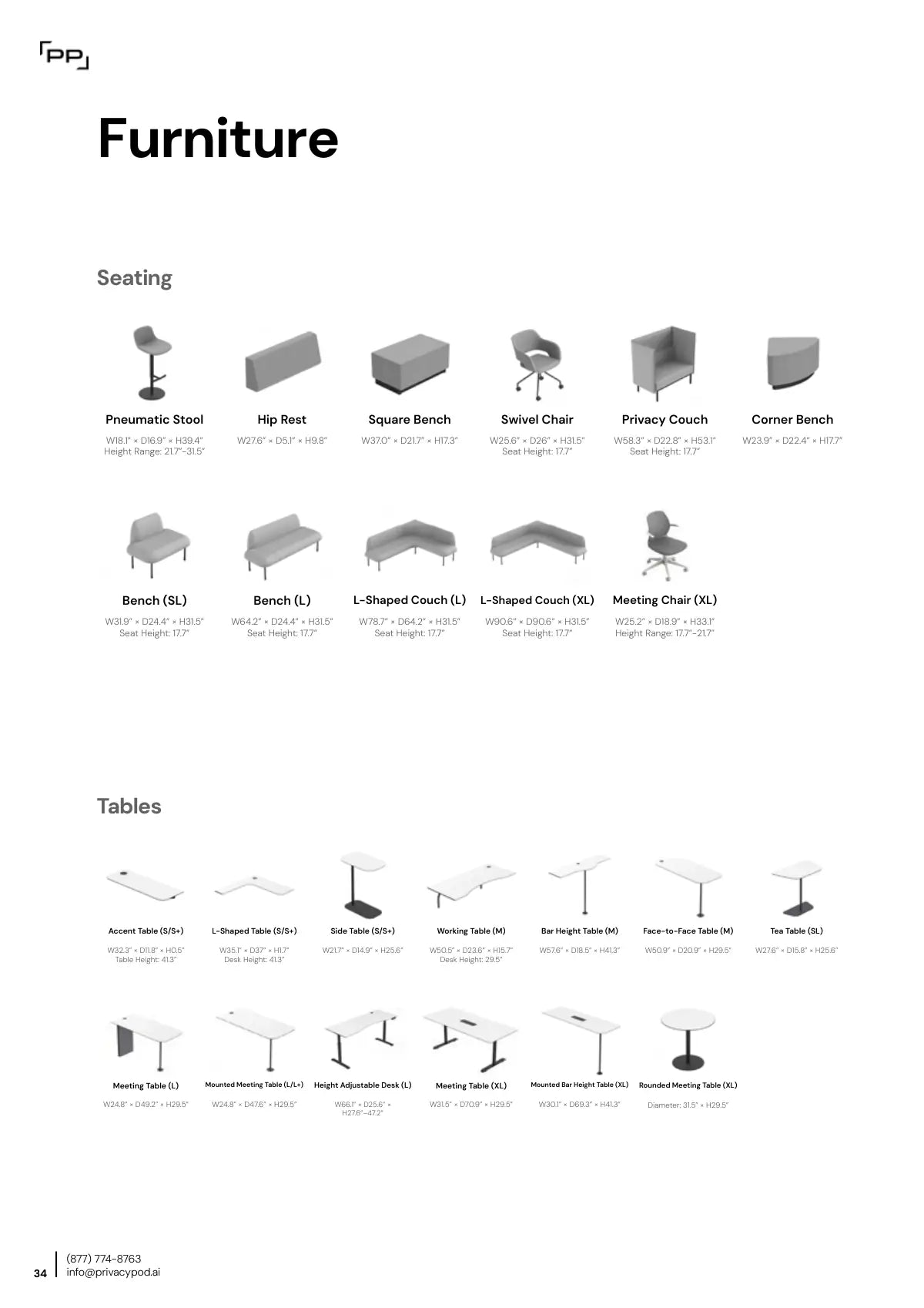
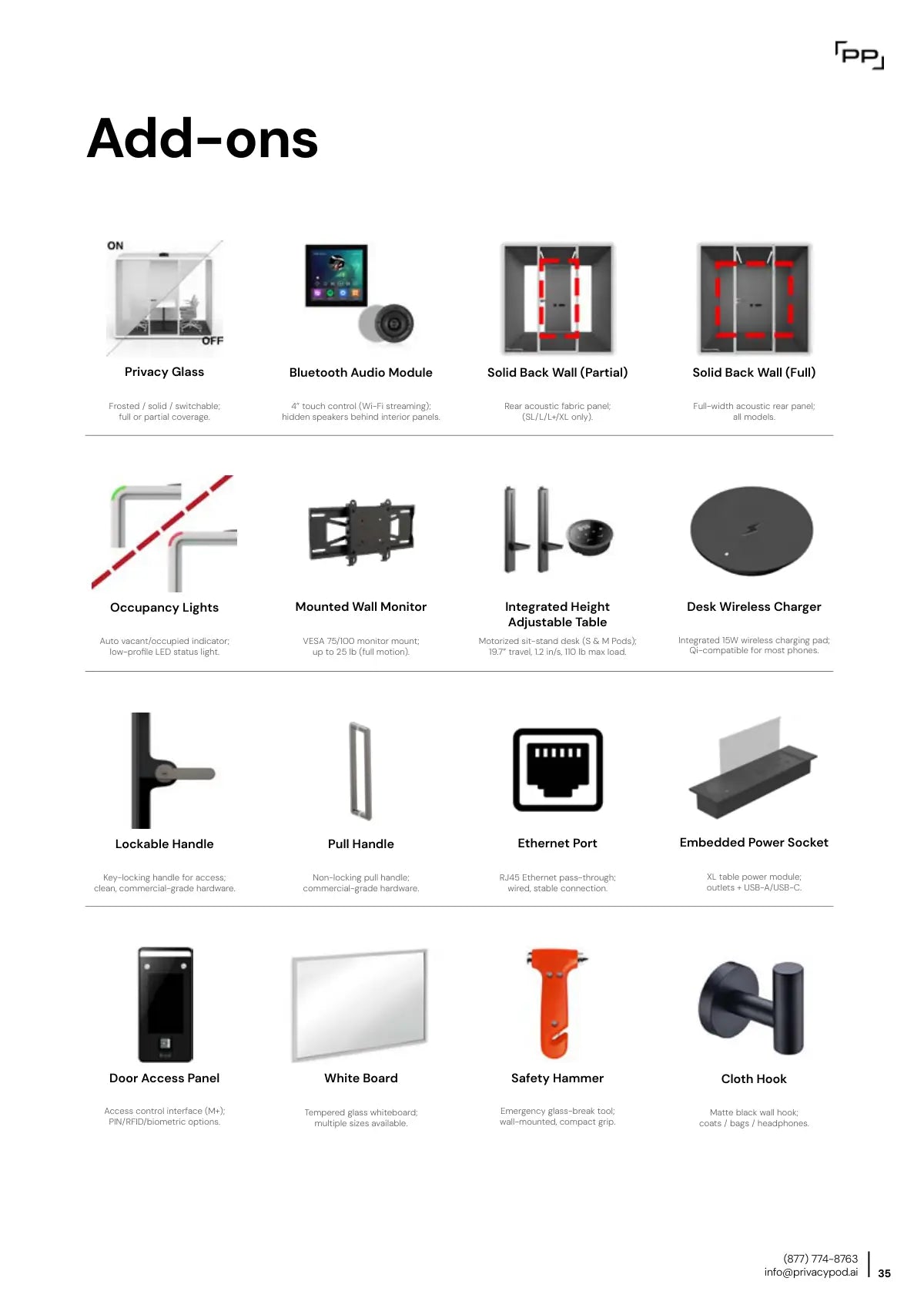
The PrivacyPod S Pod at $6,395 includes two fans, two AC outlets, USB-A and USB-C charging and shipping in the continental US. Installation is quoted separately.
Which office pods have built-in ventilation?
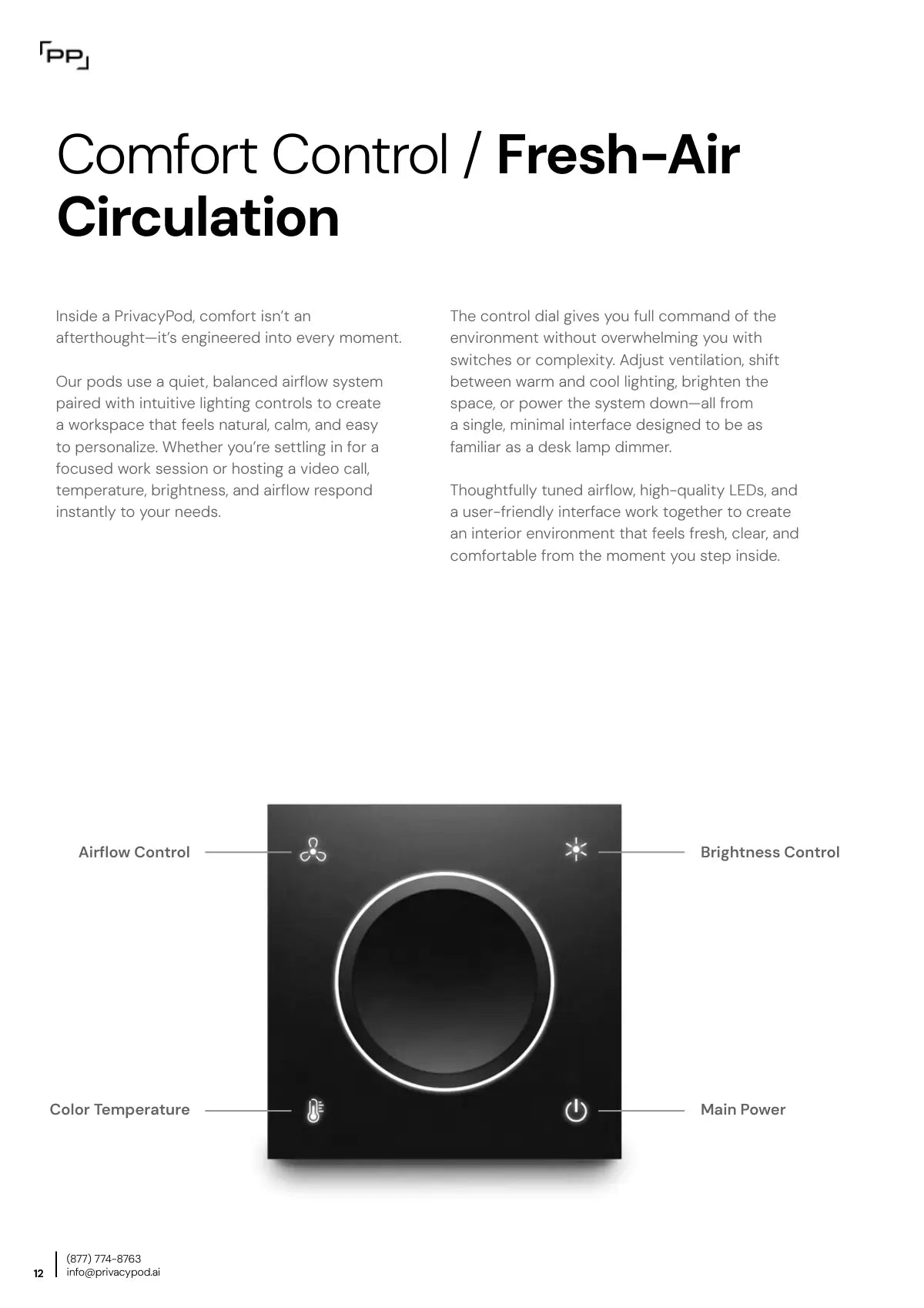
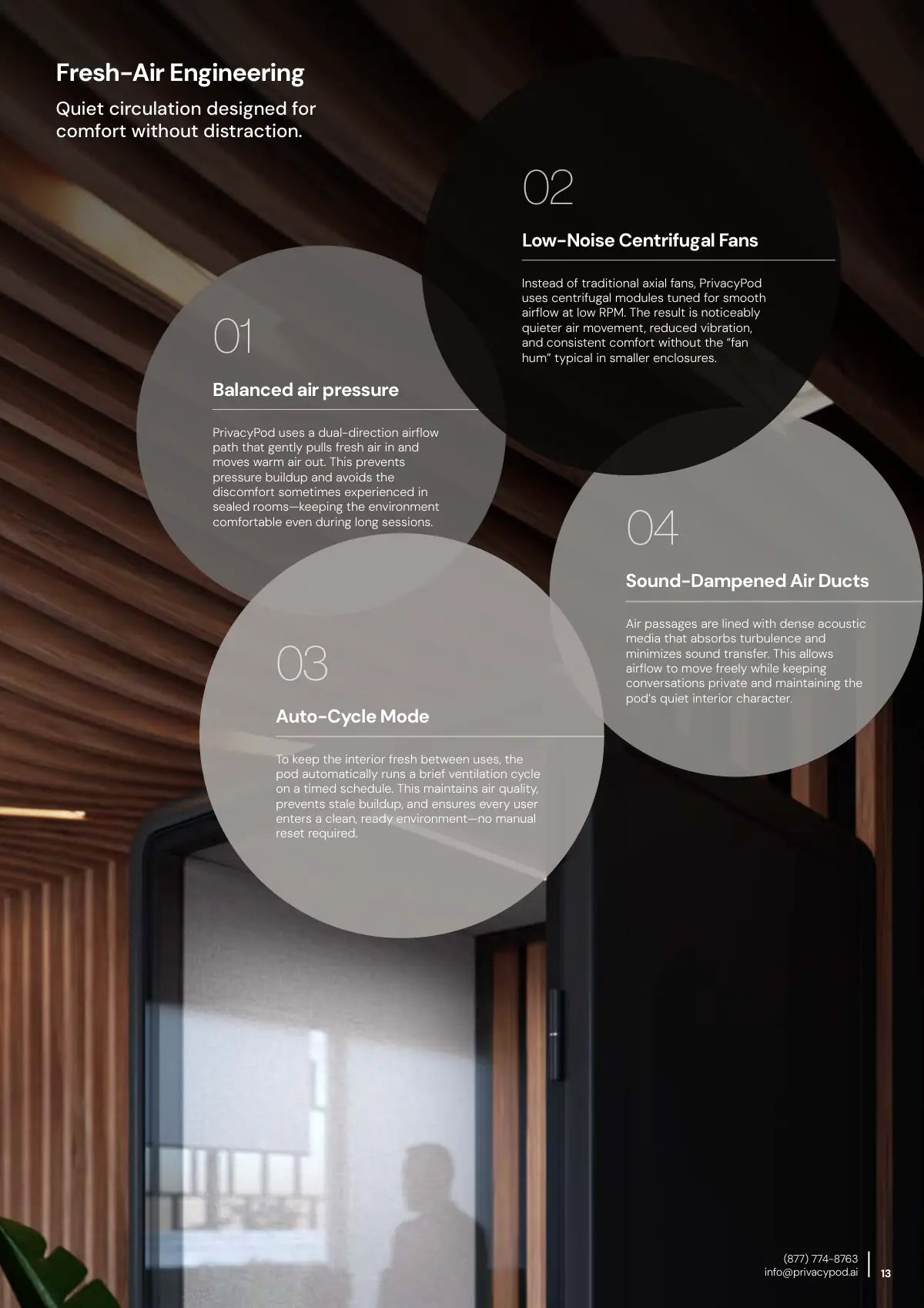
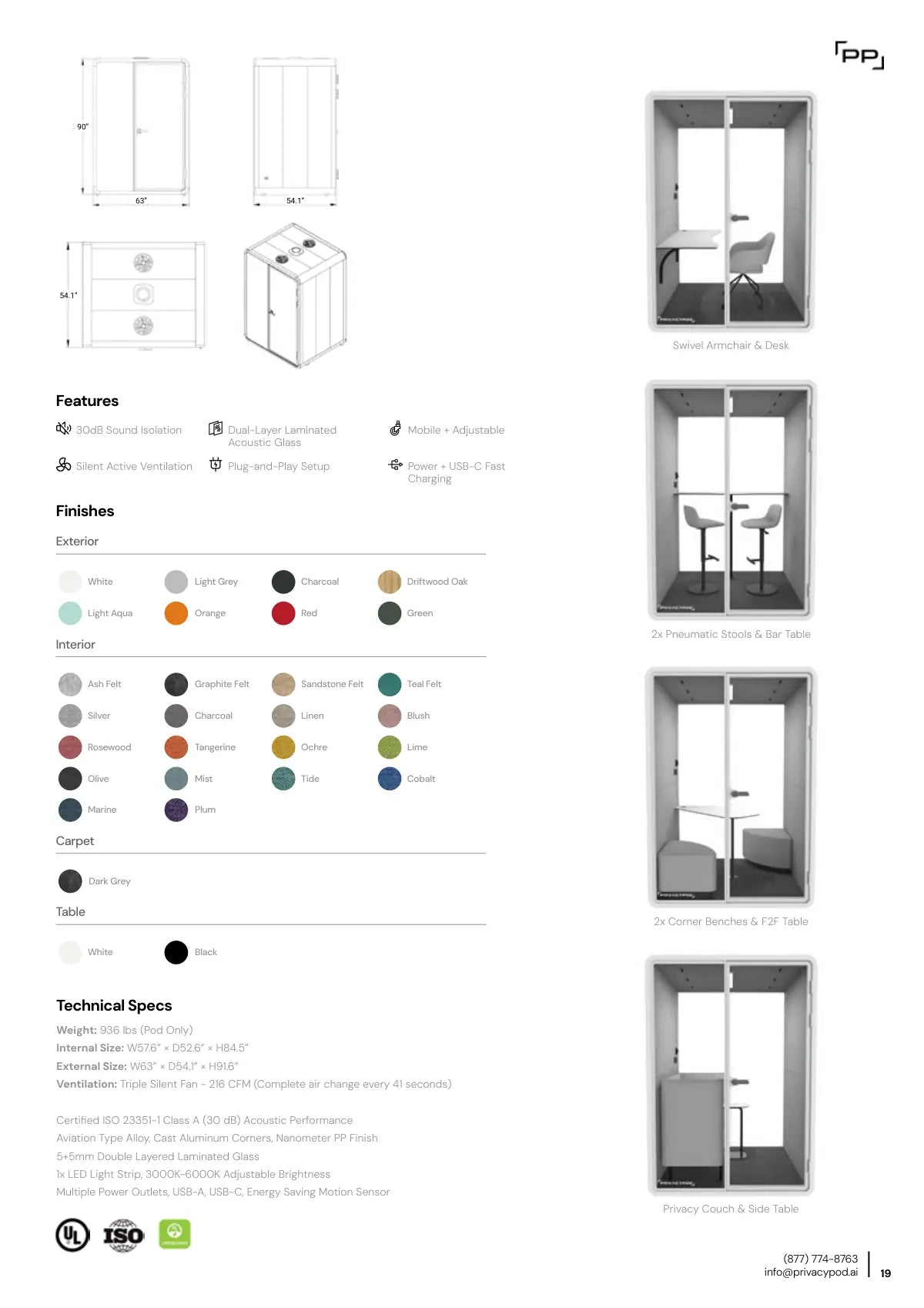
Built-in fans refresh the air in the PrivacyPod S Pod every 49 seconds and in the M Pod every 41 seconds. The L Pod takes 53 seconds and the XL Pod 1.1 minutes.
Which certifications should an office pod have?
Ask for an ISO 23351-1 result with its class and a UL 962 listing. The PrivacyPod S, M, L and XL Pods are ISO 23351-1 Class A certified, ~30 dB speech level reduction, and UL Listed (UL 962).
What is the best office pod for one person?
Among six makers compared, the PrivacyPod S Pod at $6,395 is the lowest-priced one-person pod with a result published under ISO 23351-1:2020, 30.5 dB speech level reduction.
What should I ask before buying an office pod?
Ask in writing for the installed price, the test report with its method and the lead time. PrivacyPod lists office pods for sale from $6,395 for the PrivacyPod S Pod and quotes installed prices on request.
Filed under Buying guides
Back to the blog