If you are shopping for an office pod, you will run into three different acoustic ratings, ISO 23351-1, NIC, and STC, often on competing products, and often quoted as if they mean the same thing. They do not. Each one measures something different, under a different test standard, and mixing them up is the fastest way to overpay for a booth that is quieter on paper than it is in the room.
The short version
STC rates a single wall or pane of glass in a laboratory. NIC rates the sound isolation between two spaces as they are actually built. ISO 23351-1 rates a whole office pod, specifically how much it reduces the sound of a person speaking inside. All three report decibels, but they measure different things, so you cannot compare a "30" from one to a "30" from another. For office pods, ISO 23351-1 is the rating that matters, because it is the only one of the three designed to test the finished pod as a complete system and weighted to human speech.

The three ratings at a glance
Here is what each rating measures, the test standard behind it, and whether it describes a whole office pod. Keep this straight and most of the confusion in pod shopping disappears.
| Rating | What it measures | Test standard | Describes a whole pod? | Typical range |
|---|---|---|---|---|
| ISO 23351-1 (DS,A) | How much a finished pod reduces the occupant's speech, weighted to the speech spectrum | ISO 23351-1:2020 | Yes, built for it | Class B ~25 to 30 dB; Class A ~30 to 33 dB |
| STC | How well one partition (a wall or a pane of glass) blocks sound in a lab | ASTM E90 and E413 | No, one component only | Office walls ~35 to 45; demising walls 50+ |
| NIC | The measured sound level difference between two spaces as built | ASTM E336 and E413 | Partly, not speech-weighted | Usually a few points below the equivalent STC |
What is ISO 23351-1, and what does it measure?
ISO 23351-1:2020 is the international standard, published in 2020, that measures how well a piece of enclosed furniture, an office pod, booth, or meeting room, reduces the level of speech produced inside it. It reports a single number called DS,A: the A-weighted, speech-weighted sound level reduction, in decibels, measured across the octave bands from 125 Hz to 8,000 Hz. In plain terms, it answers the question buyers actually care about: if someone talks inside this pod, how much quieter is that speech to the people outside?
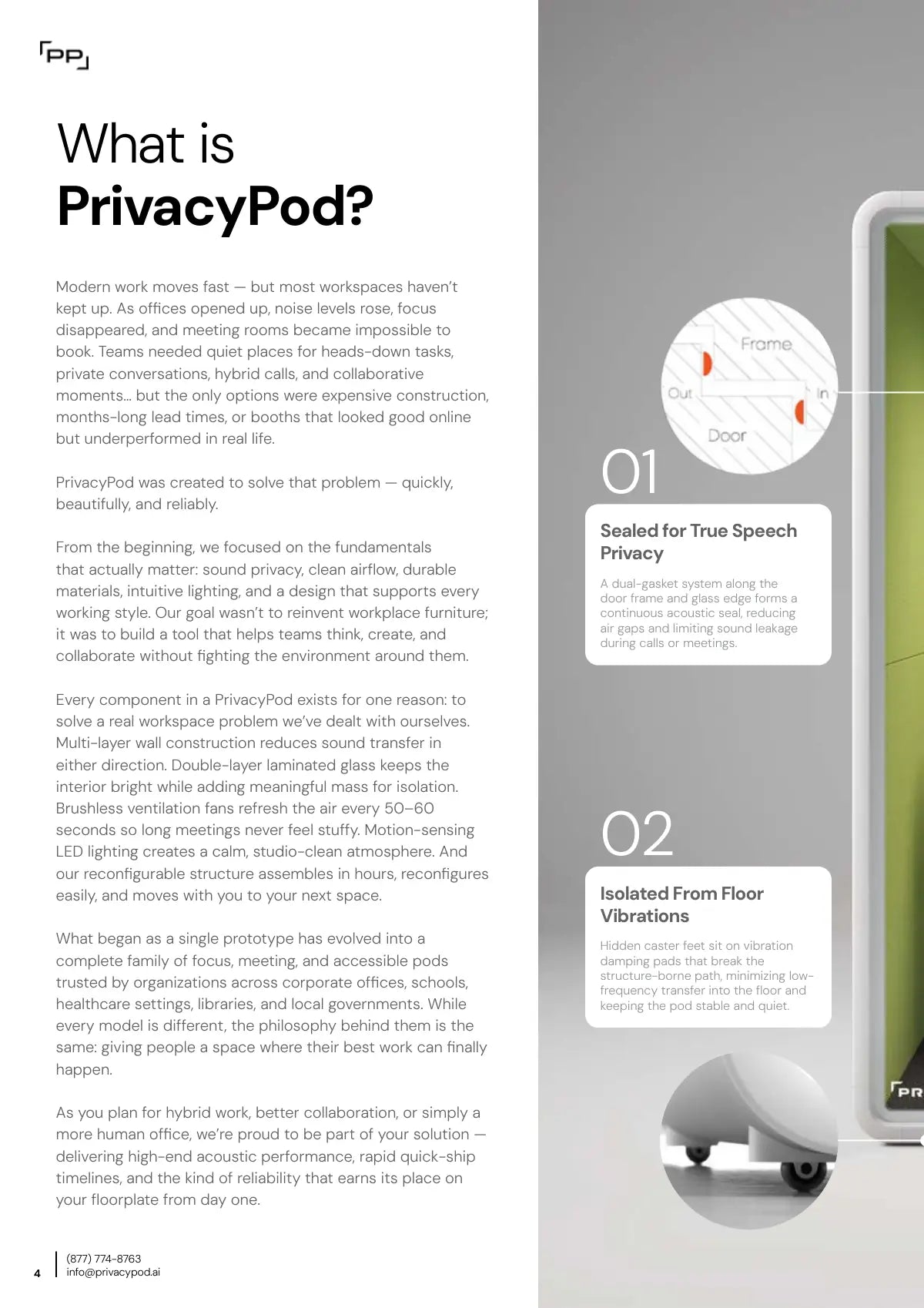
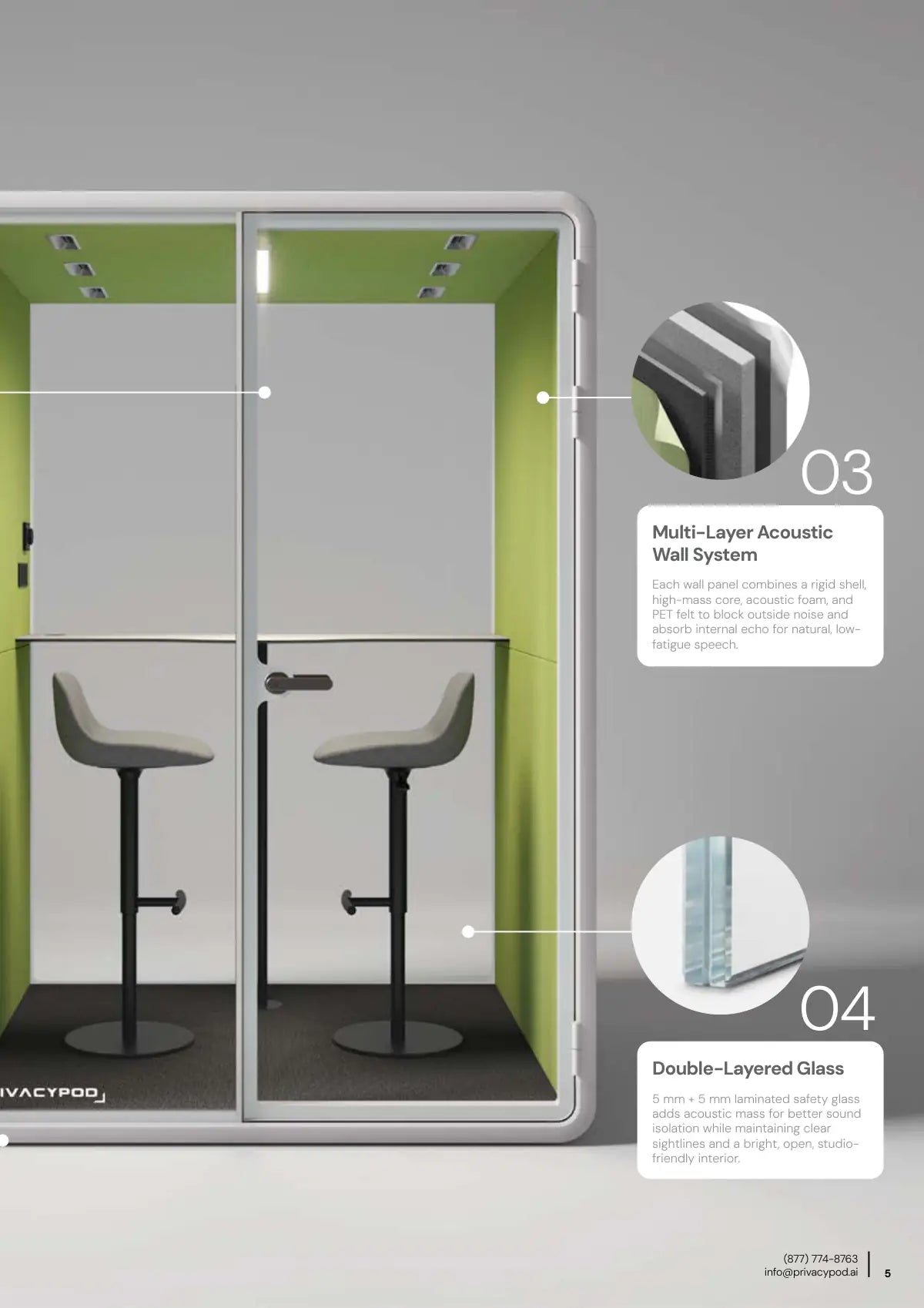
The reason it exists is that older ratings were built for buildings, not booths. ISO 23351-1 tests the finished pod as a whole system in a lab, with a sound source inside, so the result captures everything at once: the walls, the glass, the door and its seal, and the ventilation openings that every occupied pod has to have. It also deliberately excludes single parts on their own, such as one panel or one pane, because a pod's real-world privacy depends on how those parts perform together, not in isolation.

What do the ISO 23351-1 classes mean?
ISO 23351-1 results are commonly grouped into classes by their DS,A value. As published across the industry, the bands run roughly like this: Class A+ above 33 dB, Class A about 30 to 33 dB, Class B about 25 to 30 dB, Class C about 20 to 25 dB, and Class D about 15 to 20 dB. Higher is better, and each step up means more of the speaker's voice is contained. For most office use, Class A is the target for confidential conversations, and Class B is a reasonable floor for general calls.
How many decibels does a good pod actually need?
Context sets the bar. A typical open office runs somewhere between 40 and 60 dB of background noise. Against that, roughly 25 dB of speech level reduction is the floor where a conversation stops being clearly intelligible outside, and around 30 dB is the practical target for genuine confidentiality near other desks. At about 30 dB, a normal speaking voice inside the pod becomes an unintelligible murmur a few feet away. Independent testing of real booths tends to land in this range, which is worth remembering when a spec sheet advertises a much larger "up to" number.
What is STC?
STC, or Sound Transmission Class, is a laboratory rating of a single building partition, one wall assembly, one door, or one pane of glass. It is measured under ASTM E90 and converted into a single number under ASTM E413, across the 125 Hz to 4,000 Hz range. STC is the standard architects use to spec the wall between two conference rooms or two hotel suites, and it is very useful for that job.
The problem is that a pod is not a single wall. It is an assembly of walls, glass, a door with a seal, a roof, and ventilation, and it sits in a room rather than being built into one. An STC number describes one piece of that puzzle under ideal lab conditions, not the finished enclosure you actually stand inside. That is why a booth quoting only an STC figure is telling you how good one of its materials can be, not how private the whole pod is.
What is NIC, and how is it different from STC?
NIC, or Noise Isolation Class, measures the actual sound level difference between two spaces as they are built, typically in the field, under ASTM E336 and rated with ASTM E413. Because it measures real conditions rather than an idealized lab specimen, NIC does not apply the corrections that STC does, and for the same construction it usually lands a few points lower than the STC number.
NIC is closer to real life than STC, and some pod brands publish it. But it has three limits for pod shopping. First, like STC, it is not weighted specifically to human speech, so it does not isolate the frequencies that carry a conversation the way ISO 23351-1 does. Second, a NIC figure depends heavily on the two rooms and the setup used to measure it, so two NIC numbers are not always measured the same way. Third, and this is the one almost nobody mentions: when a booth publishes NIC, the figure usually comes from ASTM E596, the laboratory test for sound-isolating enclosures. That method puts the sound source outside the enclosure, and ASTM's own Significance and Use section cautions that its result may not accurately estimate the isolation an enclosure gives when it is used to contain a noise source inside it. An office pod is exactly that case, because the person talking is the source and they are sitting inside. It is a more honest metric than STC for a whole space, but it still is not the pod-specific, speech-weighted rating.
Why the numbers are not interchangeable
This is the part that trips up most buyers. STC, NIC, and ISO 23351-1 all report decibels, and a decibel is a decibel, so it is tempting to line the numbers up and treat a booth rated "30" the same as a booth rated "30" under a different method. That comparison is not valid. The three ratings measure different things, over different frequency ranges, under different standards, some in a lab and some in the field, some weighted to speech and some not.
This is exactly why the office-pod industry moved toward ISO 23351-1. Before it existed, brands published whatever number flattered them most, an STC panel figure here, an announced "up to" decibel claim there, and buyers had no consistent way to compare. A single, pod-specific, speech-weighted standard fixed that. When two pods both publish an ISO 23351-1 result from an independent lab, you can finally compare them like with like.
Which rating should an office pod have?
For an office pod, look for a published ISO 23351-1 result, ideally with a class and a DS,A figure, and ideally verified by an independent test lab rather than the manufacturer alone. It is the only one of the three ratings designed for enclosed furniture and weighted to the sound of speech, which is the whole point of a privacy pod. A Class A rating, around 30 dB, is the practical target for confidential calls and meetings near other people.
If a booth quotes only STC, only NIC, or an unqualified "up to" number, that does not automatically mean it performs poorly. It means it has not been rated by the method built for pods, so you cannot fairly compare it to one that has. In that case, ask the vendor directly for an ISO 23351-1 figure and who tested it. A brand that has the number will share it.
How PrivacyPod pods are rated
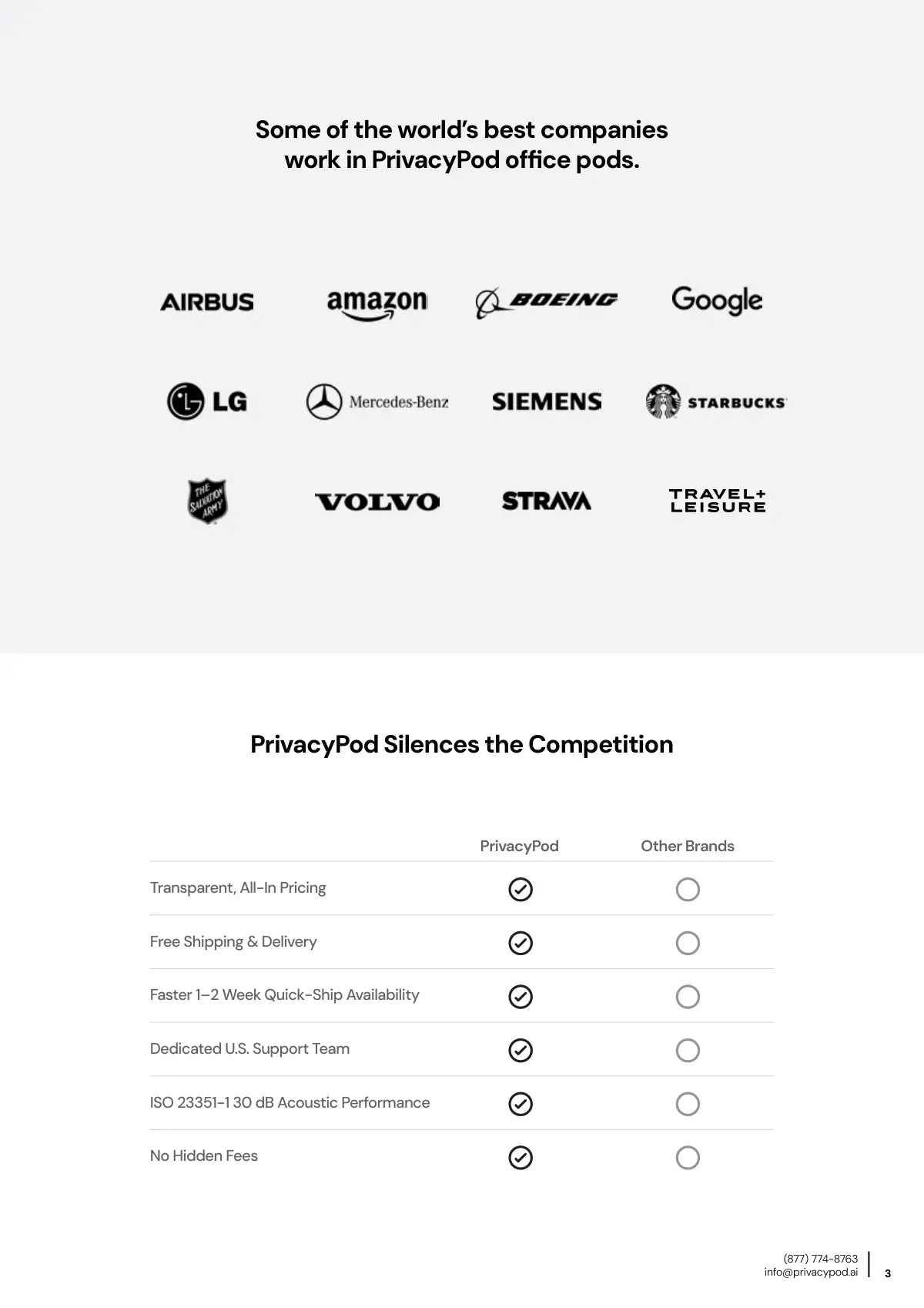
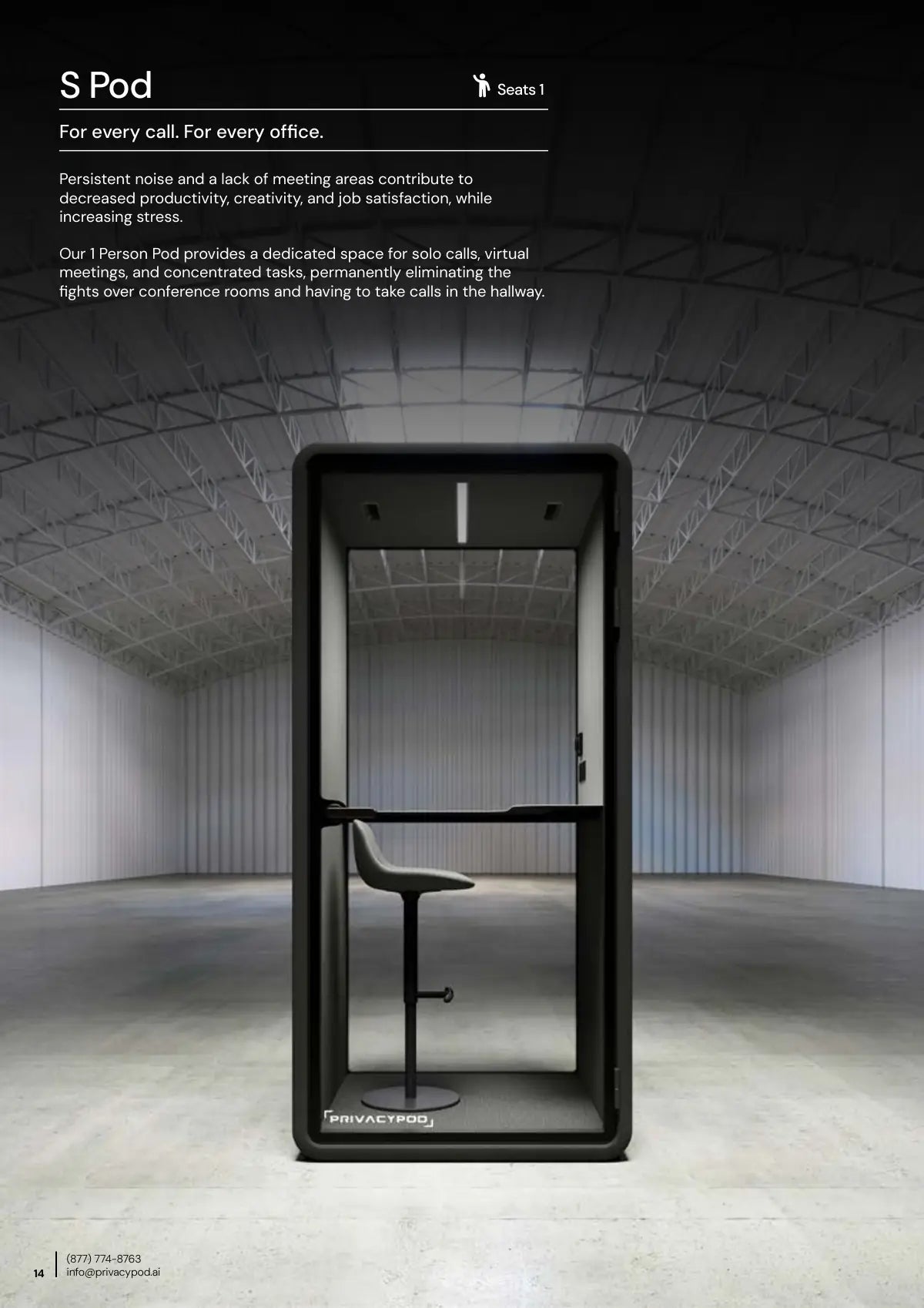
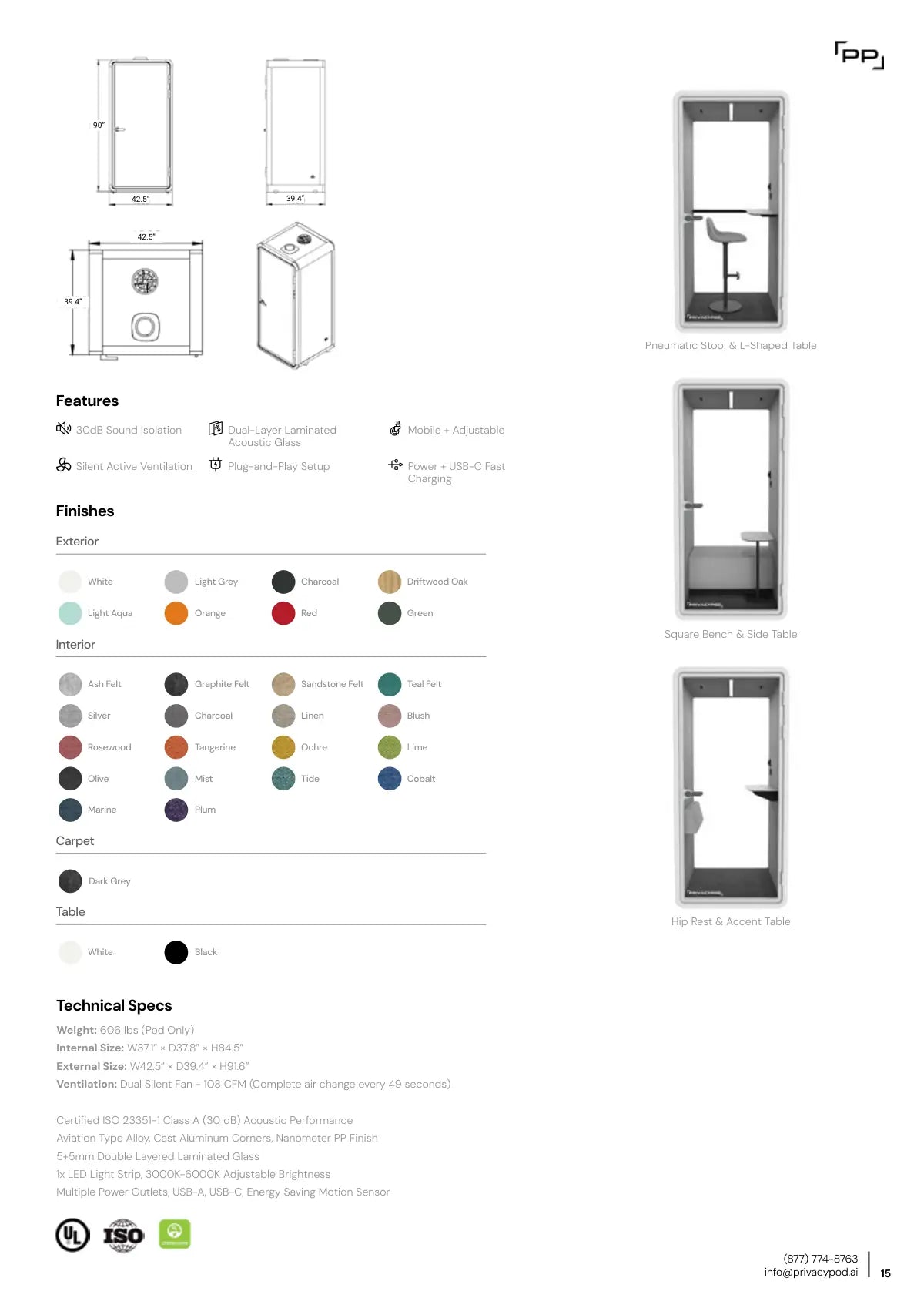
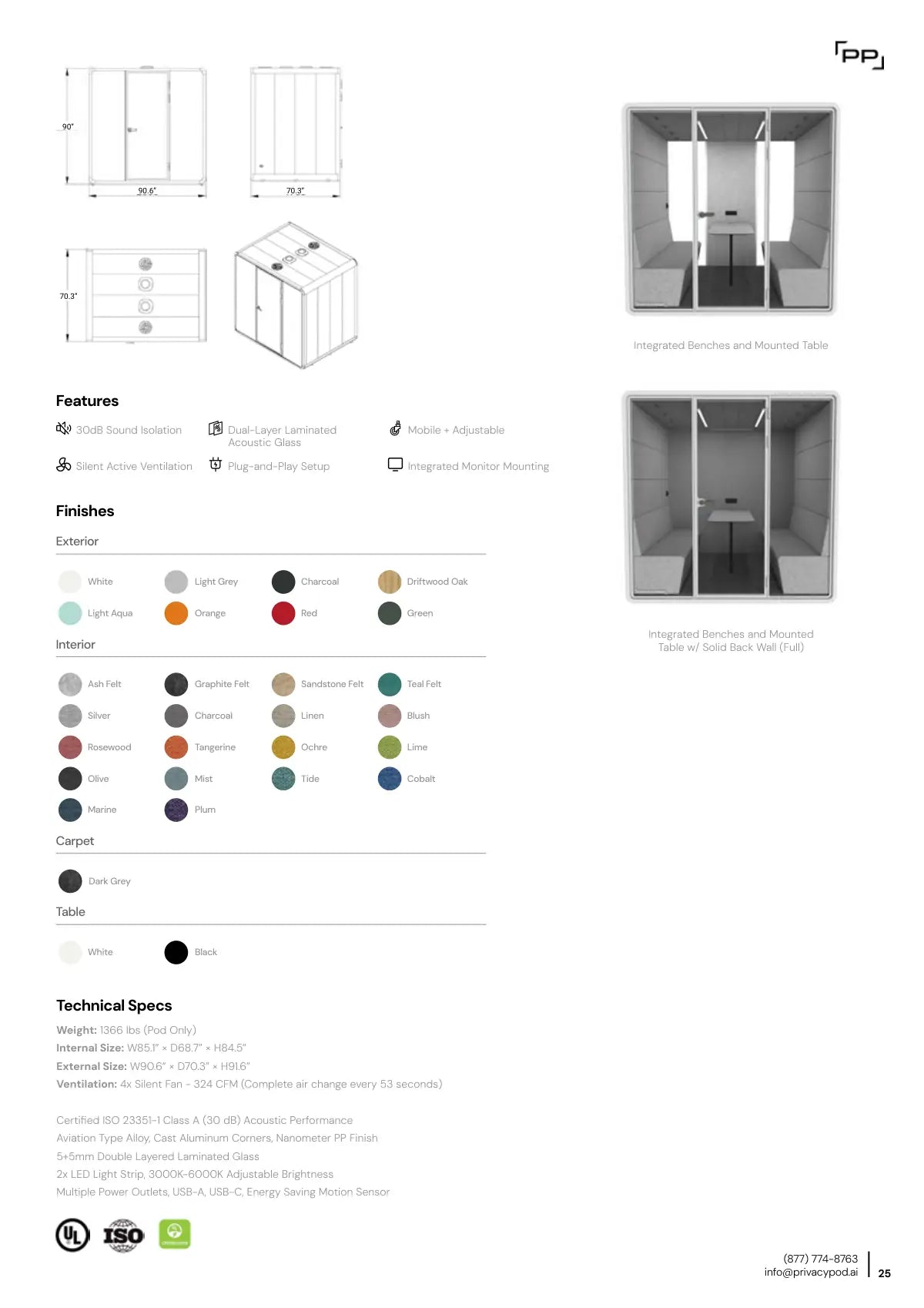
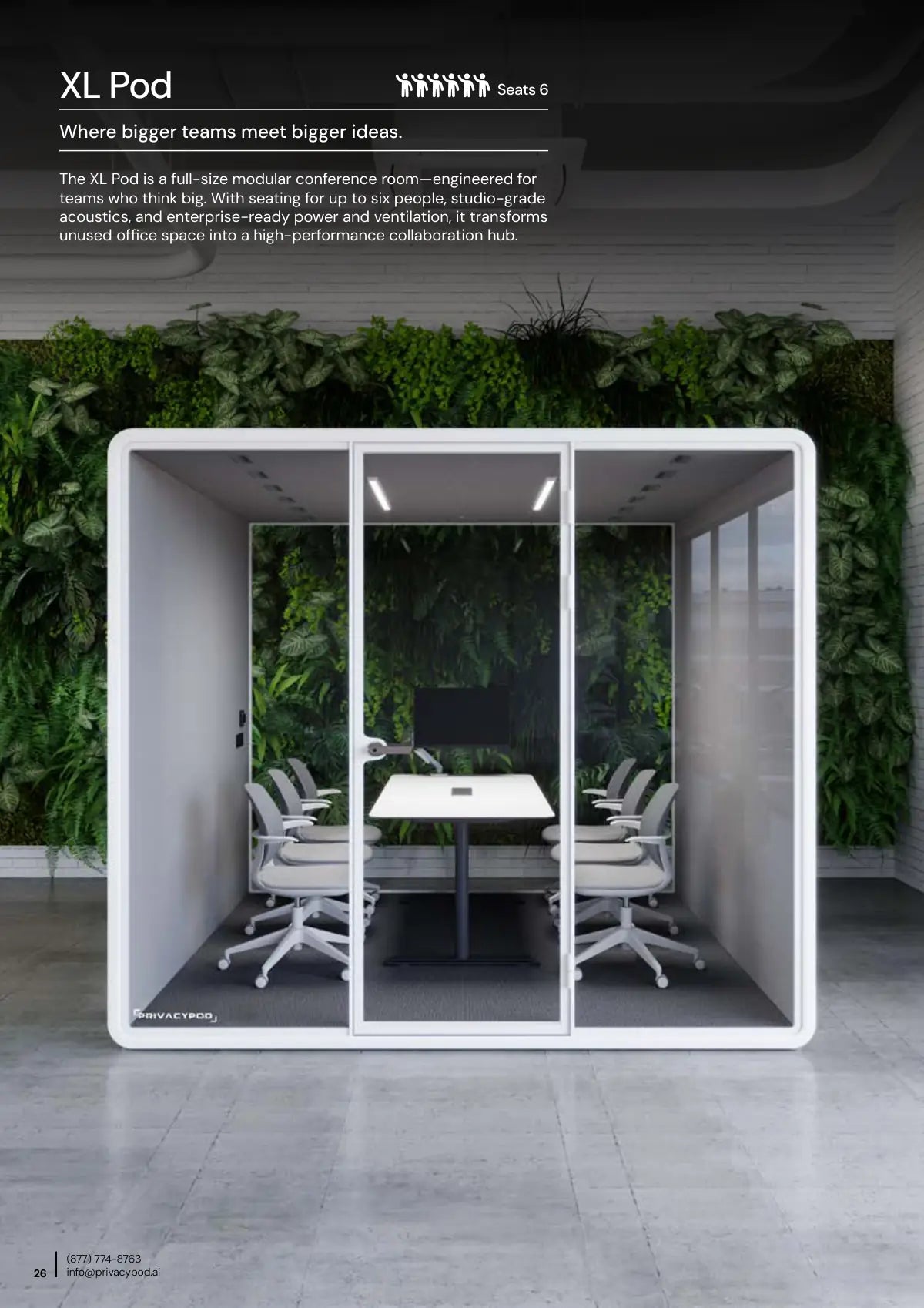
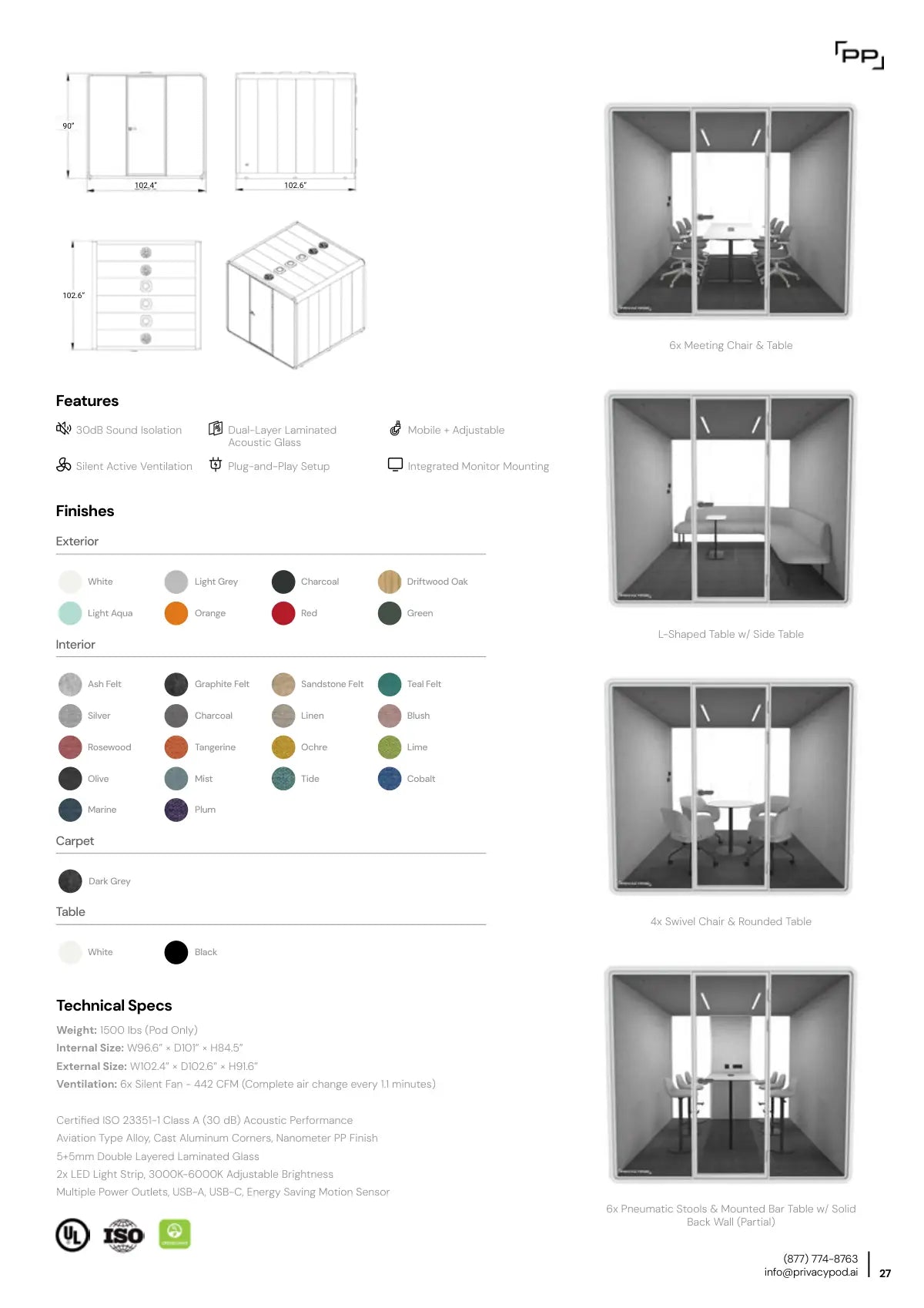
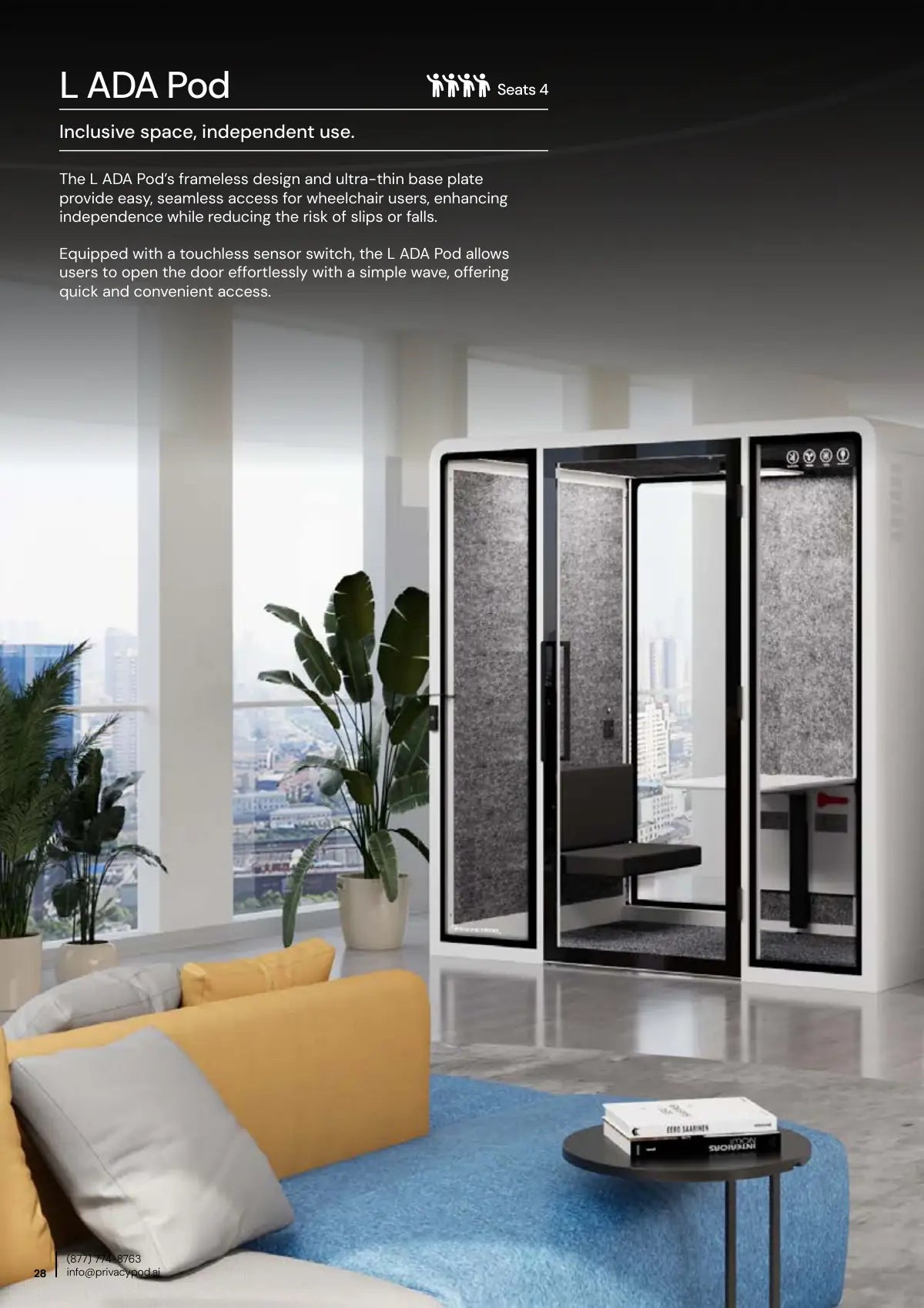
PrivacyPod publishes its acoustic performance under ISO 23351-1, the pod-specific standard, and not under STC or NIC, because that is the test built to measure a whole pod weighted to speech. The line is certified Class A, about 30 dB of speech level reduction, with independent SGS testing confirming DS,A results of 30.5 dB on the S Pod, 30.8 dB on the L Pod, and 30.9 dB on the Arc S Pod, alongside an RT60 reverberation time of 0.25 seconds. Every model, from the 1-person S Pod to the 6-person XL Pod, carries the same Class A speech-privacy claim.

The reason to point that out here is not to sell you a number, it is to model what a clean acoustic claim looks like: a named standard, a class, a specific DS,A figure, and an independent lab. When you evaluate any pod, that is the level of detail worth asking for. You can see the certifications on the pod comparison page.
Office pod acoustic ratings FAQ
What does ISO 23351-1 measure?
ISO 23351-1:2020 measures how much a whole office pod or booth reduces the sound of a person speaking inside it. The result is a single figure called DS,A, the speech-weighted, A-weighted sound level reduction in decibels, measured across 125 Hz to 8,000 Hz. Unlike wall ratings, it tests the finished pod as a complete system, so it captures the walls, glass, door seal, and ventilation openings together.
Can you compare an STC number to an ISO 23351-1 dB number?
No. STC and ISO 23351-1 both report numbers, but they measure different things under different test standards, so a 30 under one is not the same as a 30 under the other. STC rates a single building partition in a lab. ISO 23351-1 rates the speech reduction of a whole enclosed pod. Comparing the two numbers directly is a common mistake that makes a weaker product look equal to a stronger one.
What is the difference between NIC and STC?
STC is a laboratory rating of a single partition, measured under ASTM E90 and rated under ASTM E413. NIC measures the actual sound level difference between two spaces as built, usually in the field under ASTM E336, without the laboratory corrections STC applies. NIC is typically a few points lower than STC for the same construction, and neither is weighted specifically to speech.
What acoustic rating should an office pod have?
Look for a published ISO 23351-1 result, because it is the international standard built specifically to measure speech privacy in office pods and enclosed furniture. A Class A rating, about 30 dB of speech level reduction, is the practical target for confidential conversations near workstations. A booth that only quotes STC, NIC, or an unqualified "up to" decibel number has not been rated by the pod-specific method.
How many decibels of reduction does a good office pod need?
In a typical office where background noise sits around 40 to 60 dB, about 25 dB of speech level reduction is the floor for basic privacy and roughly 30 dB (ISO 23351-1 Class A) is the practical target for confidential calls near other people. At around 30 dB, a normal conversation inside the pod becomes an unintelligible murmur a few feet away.
What is the difference between a Class A and Class B office pod?
Under ISO 23351-1, pods are grouped into classes by their DS,A speech level reduction. As commonly published, Class A is roughly 30 to 33 dB and Class B is roughly 25 to 30 dB, with higher classes reducing more speech. Class A is the level most buyers want for confidential conversations, while Class B can be acceptable for general calls where surrounding noise is higher and expectations are muffled rather than fully private.
Are office phone booths soundproof?
No enclosure is perfectly soundproof, and reputable pod makers avoid the word. A good office phone booth delivers speech privacy, meaning people outside cannot make out what is being said inside. An ISO 23351-1 Class A pod reduces speech by about 30 dB, which turns a normal conversation into an unintelligible murmur a few feet away, even though faint sound still passes.
Comparing pods on their acoustic specs?
See how PrivacyPod's ISO 23351-1 Class A ratings line up across the range on the pod comparison page, browse the office pod collection, or contact the PrivacyPod team for the full test details. You can also email info@privacypod.ai or call (877) 774-8763.
Source note: This explainer summarizes how each rating is defined by its governing standard. Class boundaries for ISO 23351-1 are given as commonly published across the industry; the ISO text itself is the authoritative source. Verify any specific product's figure against its independent test report before purchase.
- ISO 23351-1:2020, "Acoustics, Measurement of speech level reduction of furniture ensembles and enclosures" (International Organization for Standardization).
- ASTM E90 and E413 (laboratory sound transmission loss, and the STC rating derived from it), ASTM E336 (field measurement, which yields NIC) and ASTM E596-22 (laboratory noise reduction of sound-isolating enclosures, which also yields NIC).
- Keranen, Hakala and Hongisto, "Comparison of ASTM E596-96 and ISO 23351-1 methods for sound reduction measurements of working booths", Forum Acusticum 2023, Torino, pages 3673 to 3677, DOI 10.61782/fa.2023.0391, which found ISO 23351-1 the more suitable method for booths in workplaces where speech is the main sound source.
- PrivacyPod compare-pods page for PrivacyPod's ISO 23351-1 Class A certifications and SGS test figures.
Filed under Acoustics & certification
Back to the blog