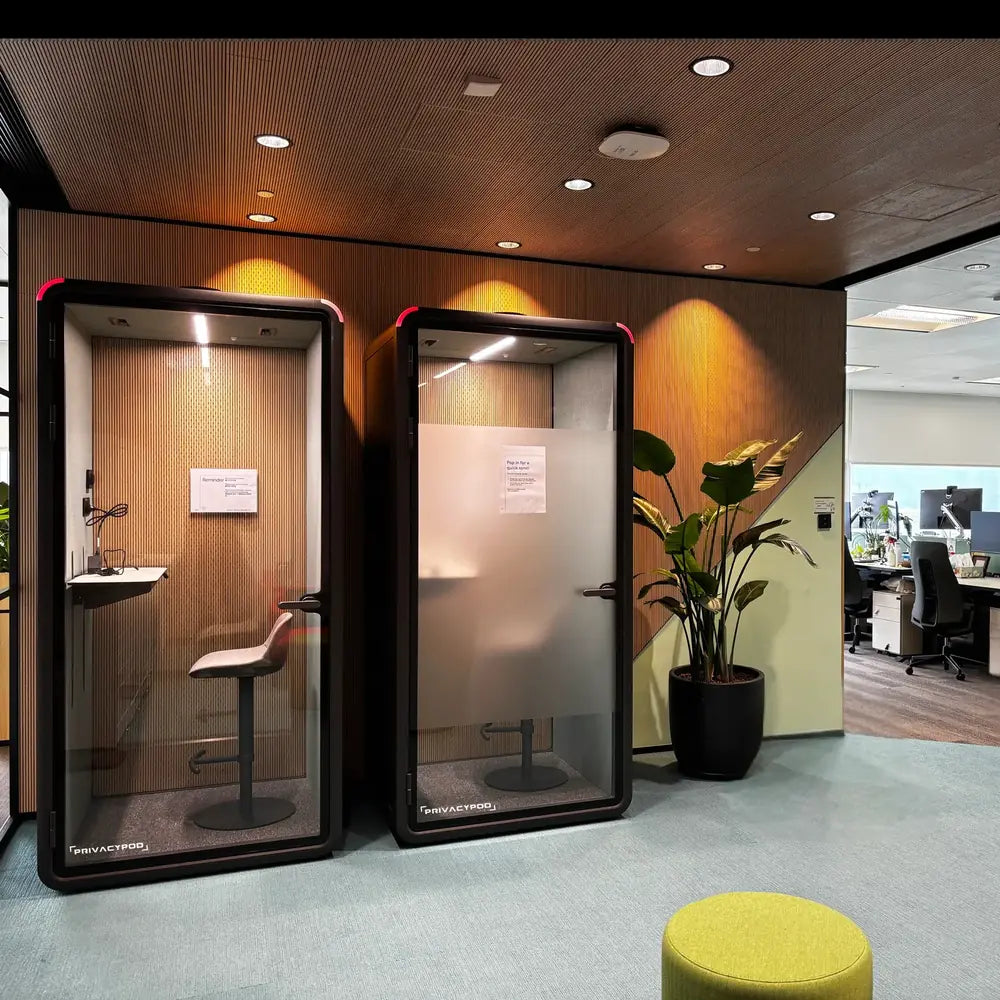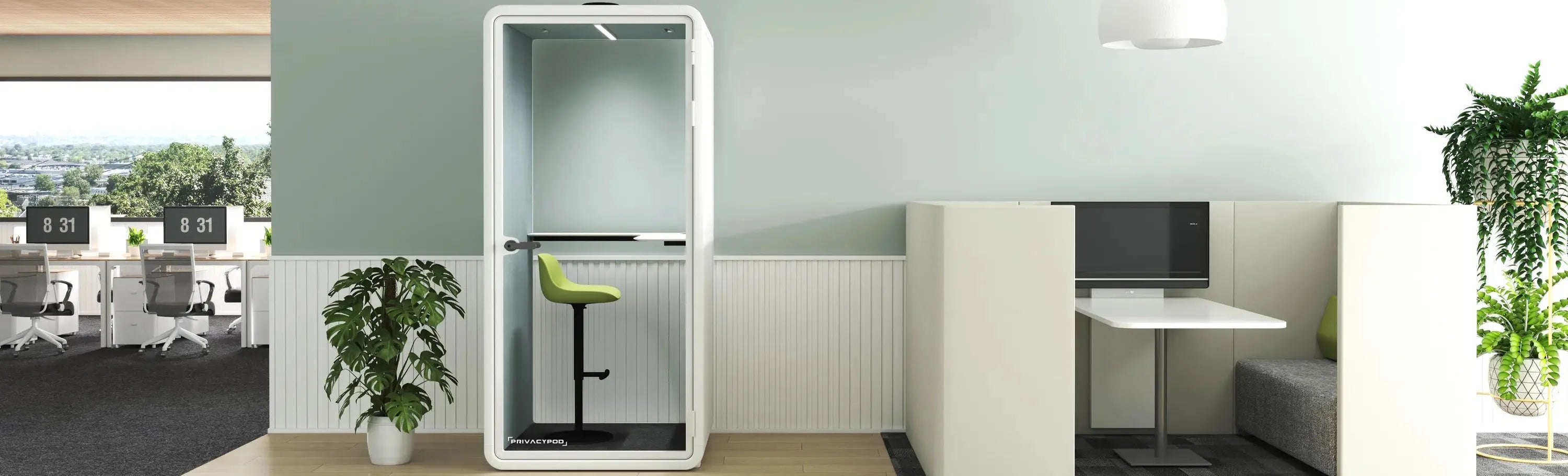
PrivacyPod phone booths
Office phone booths, built for back-to-back calls.
PrivacyPod office phone booths are certified one-person pods for calls, video meetings, and heads-down focus: ISO 23351-1 Class A, about 30 dB of speech level reduction, free shipping, Quick-Ship 1 to 2 weeks.
- From $6,395
- Quick-Ship 1 to 2 weeks
- ISO 23351-1 Class A
- 3-year warranty
-
 Seats 1Quick-Ship
S Pod
Phone booth for calls and focus.
Regular price $6,395Regular priceUnit price per$0Sale price $6,395 -
 Seats 1Quick-Ship
S Pod Plus
Thicker acoustic panels, same footprint.
Regular price $6,995Regular priceUnit price per$0Sale price $6,995 -
 Seats 1Quick-Ship
Arc S Pod
Curved birch shell with bench seating.
Regular price $6,495Regular priceUnit price per$0Sale price $6,495 -
 Seats 2Quick-Ship
M Pod
One chair, a desk, a door that closes.
Regular price $9,495Regular priceUnit price per$0Sale price $9,495


The definition
What is an office phone booth?
An office phone booth, also called a privacy booth or office phone pod, is a freestanding, sound-isolated booth for one person, sized for calls, video meetings, and heads-down work on an open floor. It needs no construction: it plugs into a standard wall outlet, rolls on hidden casters, and moves whenever the floor plan does.
The acoustics are identical in every booth. The difference is the interior: a stool and call rail for quick calls, a desk and thicker 2-inch panels for all-day focus, the Arc’s rounded shell for front-of-house floors. Pick by how long your people sit inside.
The booth spec sheet
The chooser
Which booth for which caller?
Published 2026 list prices.
Free shipping on every order.
| The caller | The booth | List price |
|---|---|---|
| Quick calls between desks | S Pod, stool and call rail | $6,395 |
| All-day calls and focus | S Pod Plus, desk and thicker 2-inch panels | $6,995 |
| Front-of-house floors | Arc S Pod, soft-cornered shell | $6,495 |
| Calls that need two seats | M Pod, seats 2 | $9,495 |
Professional installation is quoted separately, from $900 per booth.
Built for the job
Calls, focus, front-of-house. Covered.
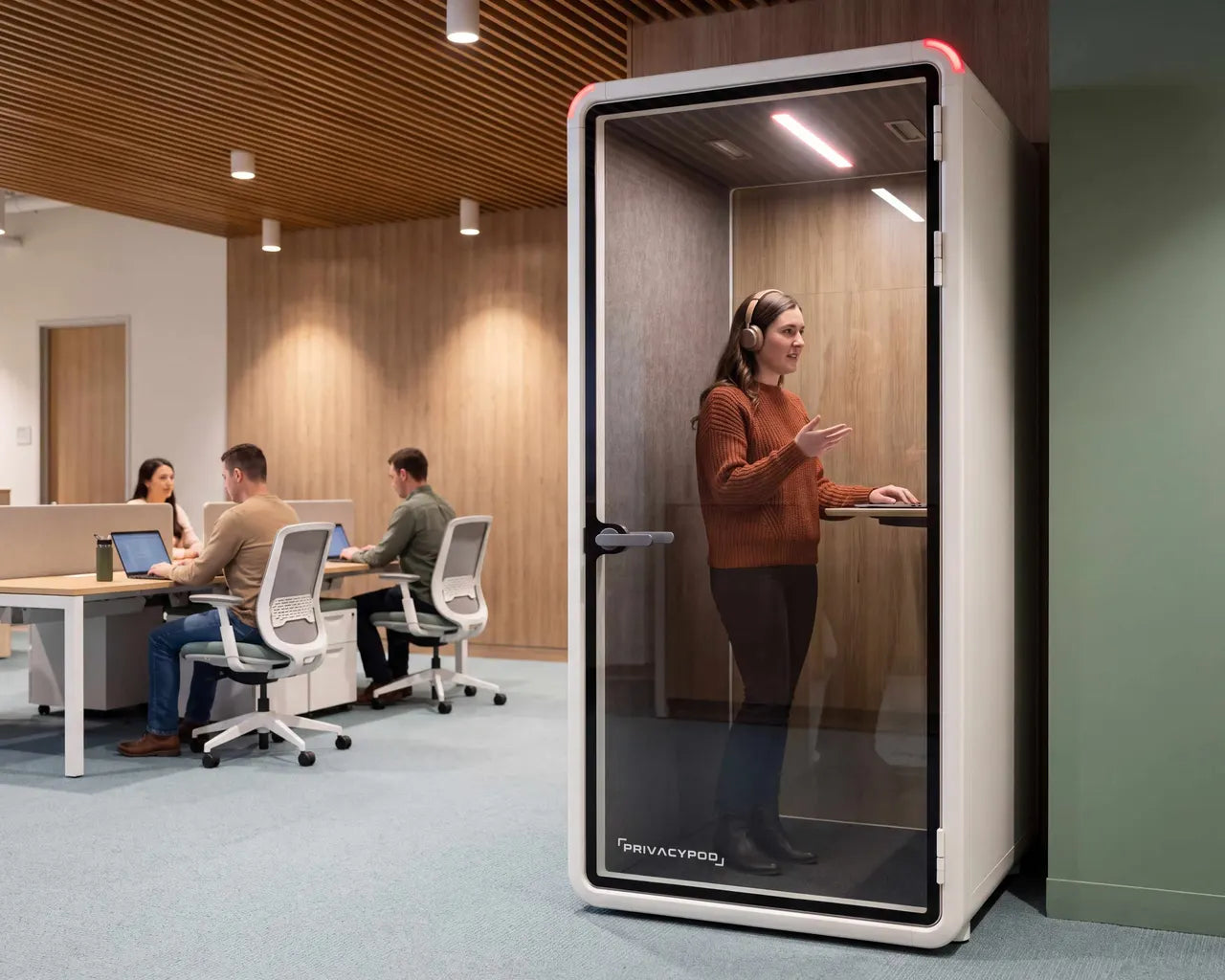
Your call stays your call.
Take the hard call ten feet from the team. The next desk hears a murmur, not the negotiation.
CERTIFIED ON THE WHOLE BOOTH, DOOR AND VENTS INCLUDED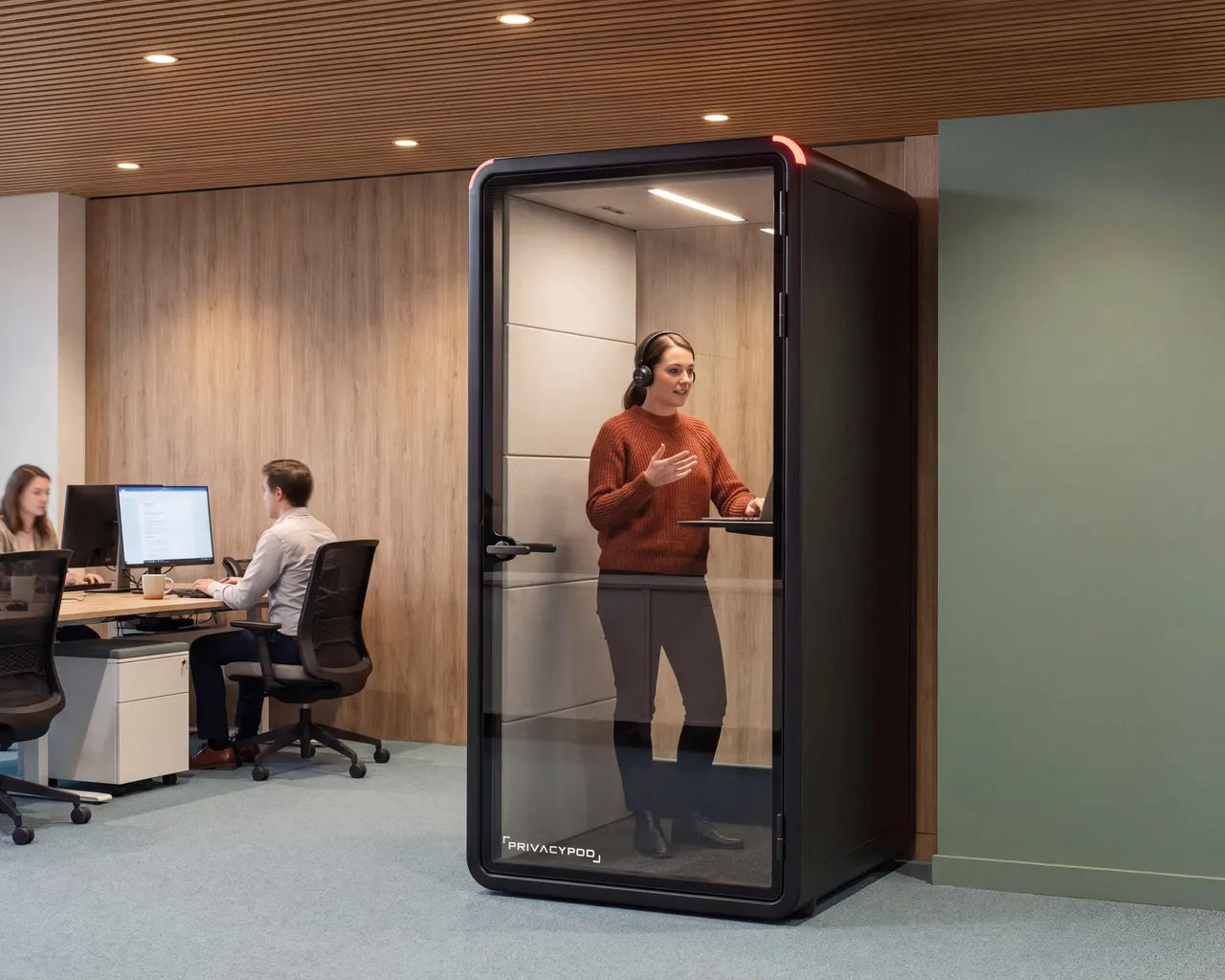
A desk behind a closed door.
The S Pod Plus runs thicker 2-inch acoustic panels and a full work surface, built for the people who book a booth at 9 and come out at lunch.
S POD PLUS · 2-INCH PANELS · $6,995 LIST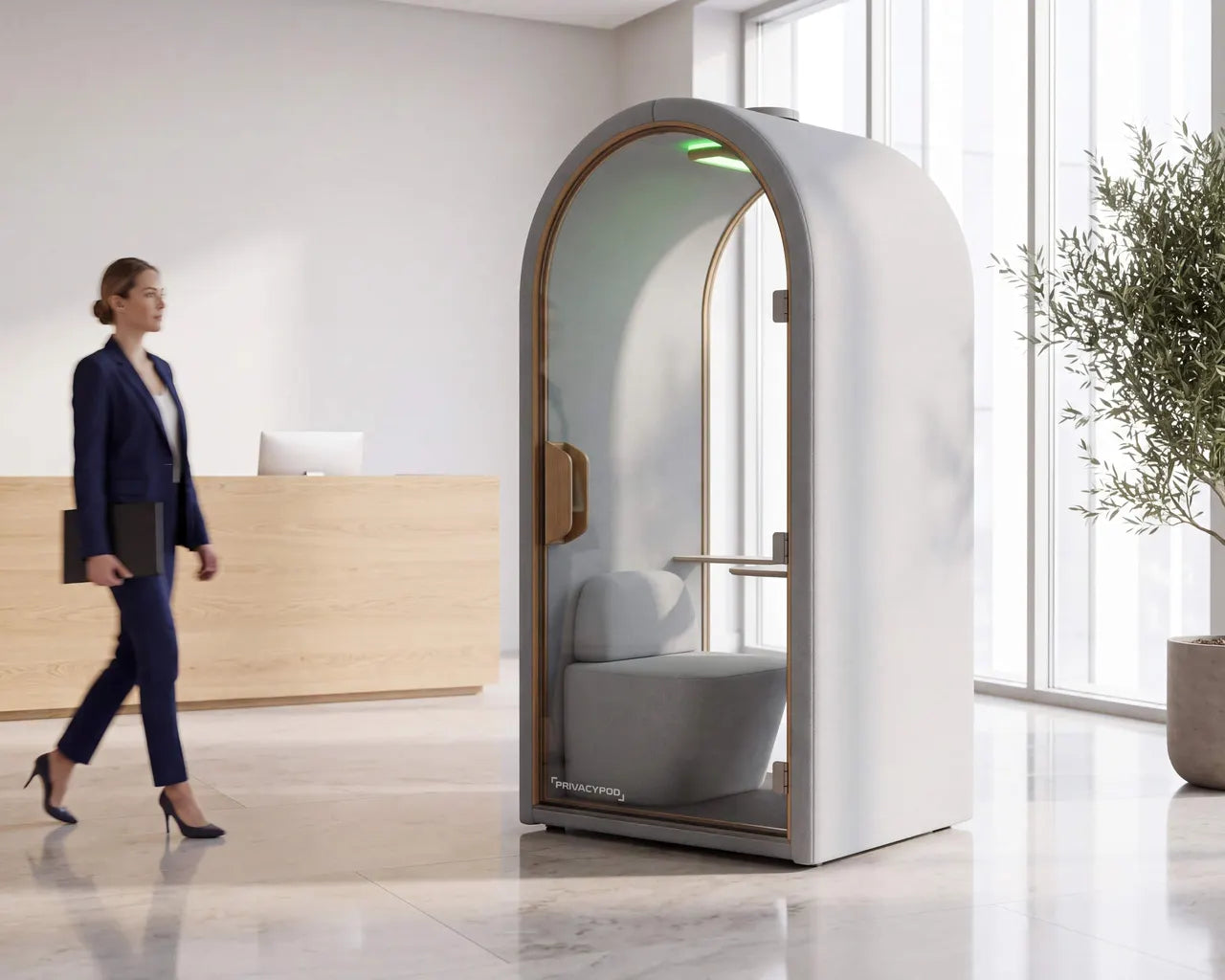
Quiet that can sit in the lobby.
The Arc S Pod swaps corners for a rounded shell that holds up on client-facing floors, with the same certified acoustics behind the curve.
ARC S POD · QUICK-SHIP IN HAZE · $6,495 LISTThe standard kit
Everything here ships standard.
Included on every booth.
Nothing to configure.
Certified quiet
~30 dB
ISO 23351-1 Class A speech level reduction, measured on the whole booth.
Fresh air
41 to 49 s
Silent fans complete a full air change every 41 to 49 seconds, without a sound on the call.
Power inside
AC + USB
Wall outlet plus USB-A and USB-C at the seat. One cord runs to the wall.
Light and wheels
Auto LED
Motion-activated adjustable LED lighting overhead, hidden casters underneath.
Every PrivacyPod phone booth includes certified acoustics, silent ventilation, motion-activated adjustable LED lighting, power at the seat, and hidden casters. Optional Ethernet is available for wired-network floors.
Why a booth, not a build-out
Furniture, not construction.
One outlet.
Zero permits.
Arrives in weeks
Shipping is free, Quick-Ship booths land in 1 to 2 weeks, and a 2-person crew installs each one in 3 to 5 hours.
Plugs into the wall
Fans, lighting, and power all run off one standard outlet. No electrician, no permit, no landlord negotiation.
Moves when you move
Casters take it across the floor; the modular shell takes it to the next office. Nothing is demolished on the way out.
Frequently asked
What booth buyers ask first.
Cost, quiet, footprint, and moving day.
How much does an office phone booth cost?
PrivacyPod phone booths start at $6,395 list for the S Pod and $6,495 for the Arc S Pod, with free shipping to the continental US. Professional installation is quoted separately, from $900 per booth. There is no gated price list; every figure is public.
How soundproof is an office phone booth?
No booth is fully soundproof; the honest measure is certified speech level reduction. Every PrivacyPod booth is ISO 23351-1 Class A certified at approximately 30 dB of speech level reduction, tested on the whole booth: walls, glass, ventilation, and door seal. In practice, the next desk hears a call reduced to a murmur.
How much floor space does a booth need?
The 1-person S Pod occupies a 3.5 by 3.3 ft footprint, about an office chair's turning circle plus comfortable door swing. Booths ride on hidden casters, so a placement that does not work can simply be rolled somewhere better.
Is the ventilation comfortable for long calls?
Yes. Silent fans run continuously while the booth is occupied, completing a full air change roughly every 41 to 49 seconds in the 1-person booths. The booth stays fresh through back-to-back calls without adding a sound to them.
What does installation involve?
A 2-person crew assembles each booth in roughly 3 to 5 hours with no construction, no permit, and no wiring beyond a standard wall outlet. Shipping is free on every order. Quick-Ship booths in White with Ash interior (Arc in Haze) arrive in 1 to 2 weeks; Made-to-Order finishes deliver in 9 to 11 weeks.
Phone booth or a built phone room?
A built phone room takes a contractor, a permit, and weeks of a closed floor, and it stays with the landlord when the lease ends. A booth is a furniture purchase: delivered in weeks, installed in an afternoon, ISO 23351-1 Class A certified, and it moves out with you.
Before you choose
What a booth's acoustic number actually means.
Every booth on this page is ISO 23351-1 Class A certified. These two explain what that measures and what else is certified alongside it.
- StandardsISO 23351-1 vs NIC vs STC: Office Pod Acoustic Ratings ExplainedThree ratings, three different things measured. Only one was written for speech.Read the explainer →
- CertificationsOffice Pod Certifications: All 8, ExplainedUL Listed (UL 962), GREENGUARD Gold Certified, and ASTM E84 Class A panels, a fire rating rather than the acoustic one.See the list →
Plan the floor
Send us your floor plan.
Share a floor plan or a simple sketch plus your call patterns, and our team sends back a booth count, a placement layout, a lead time, and a quote.