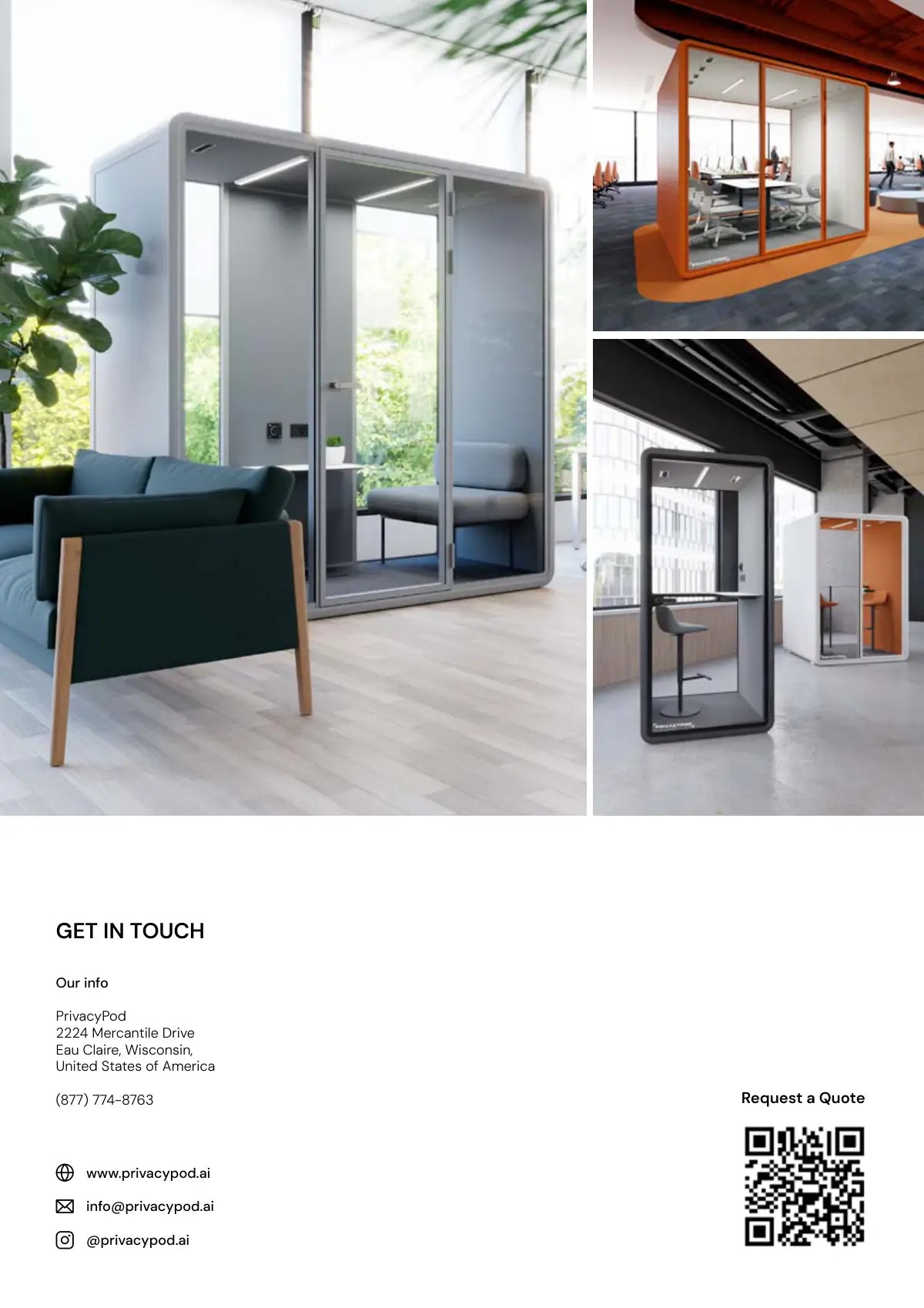
Library study pods and phone booths
Library study pods: a quiet room for every patron, no construction.
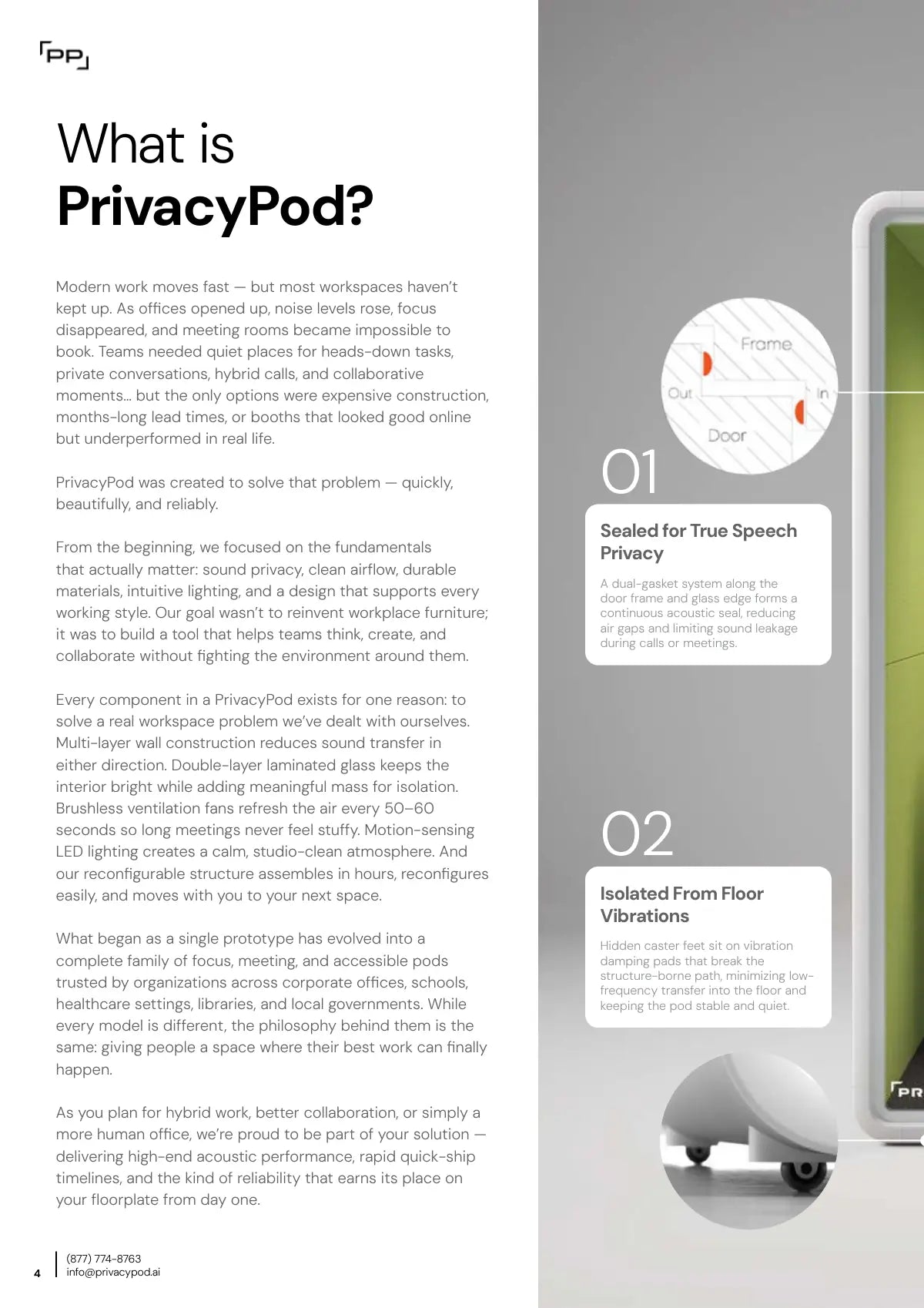
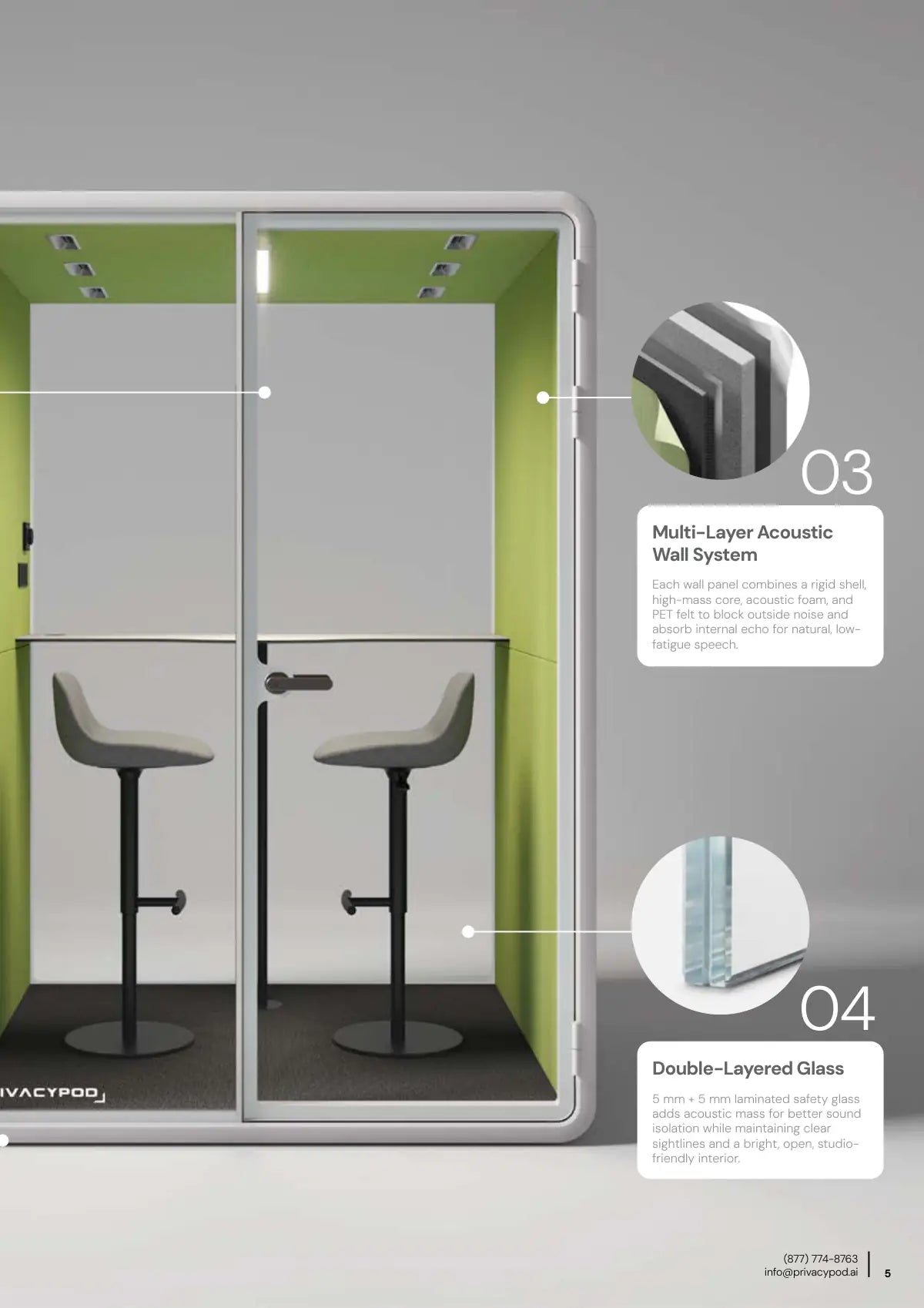
PrivacyPod study pods give library patrons certified-quiet rooms for studying, virtual appointments, tutoring, and test-taking inside the existing floor plan. Every pod is ISO 23351-1 Class A certified at approximately 30 dB of speech level reduction, plugs into a standard wall outlet, and installs while the library stays open; shipping is free and Quick-Ship models arrive in 1 to 2 weeks.
- ISO 23351-1 Class A quiet
- 1 to 2 week Quick-Ship
- In libraries nationwide
- Installed in 4 to 6 hours

The definition
What is a library study pod?
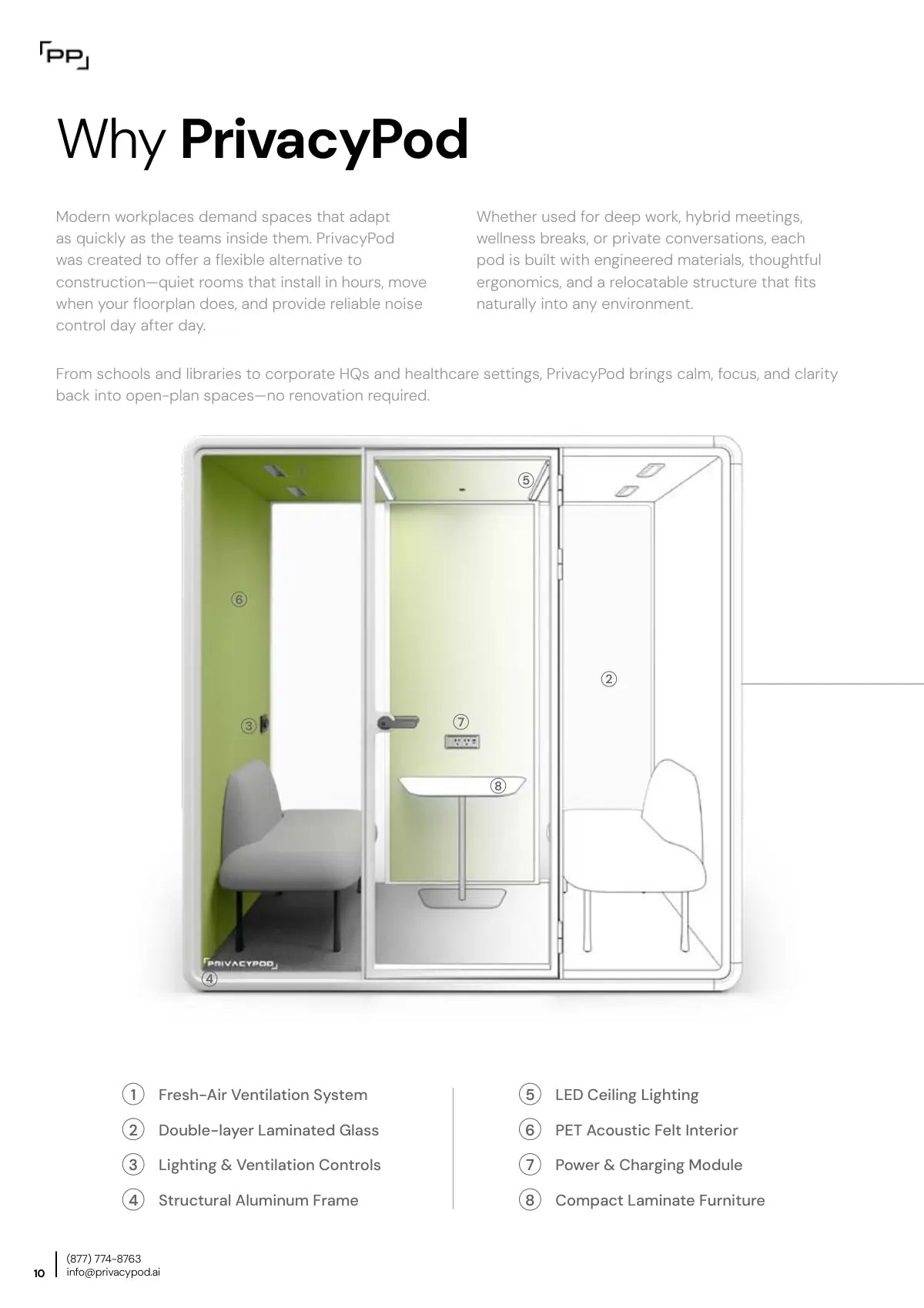
A library study pod is a freestanding, sound-isolated room placed inside a library to give patrons private space for studying, calls, tutoring, and virtual appointments. Unlike a renovated study room, a pod needs no construction: it rolls into place on hidden casters, plugs into a standard wall outlet, and moves whenever the floor plan does.
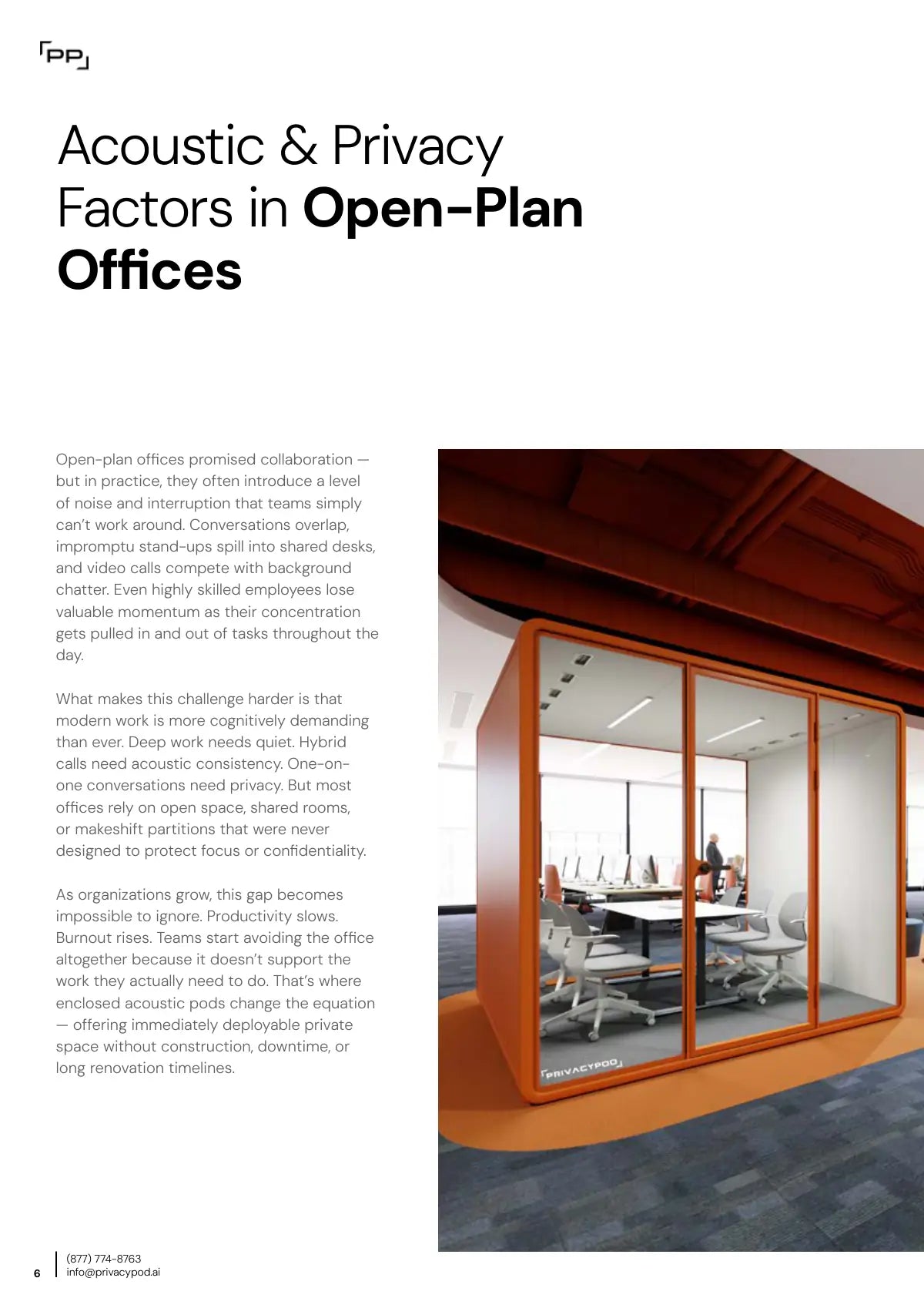
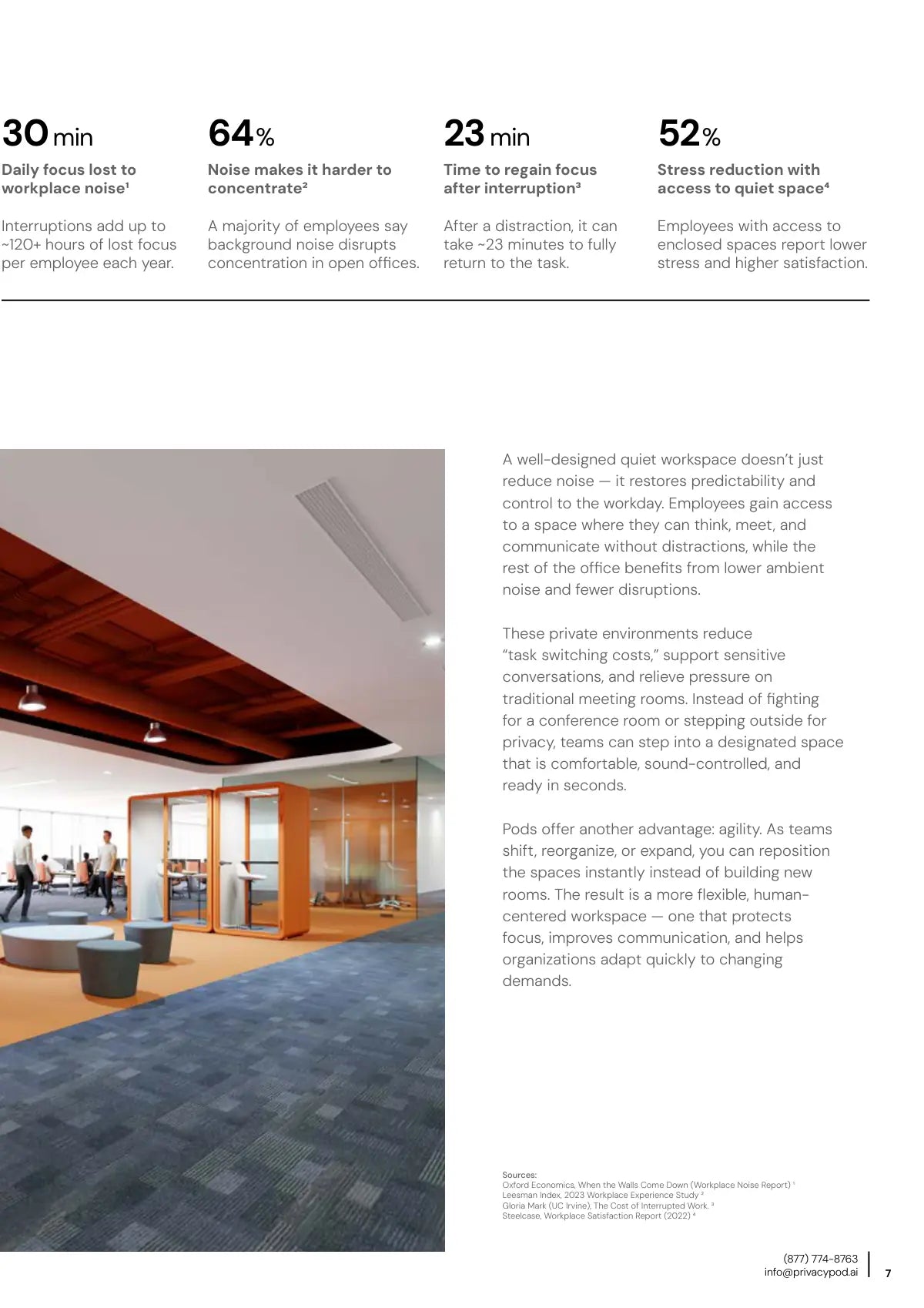
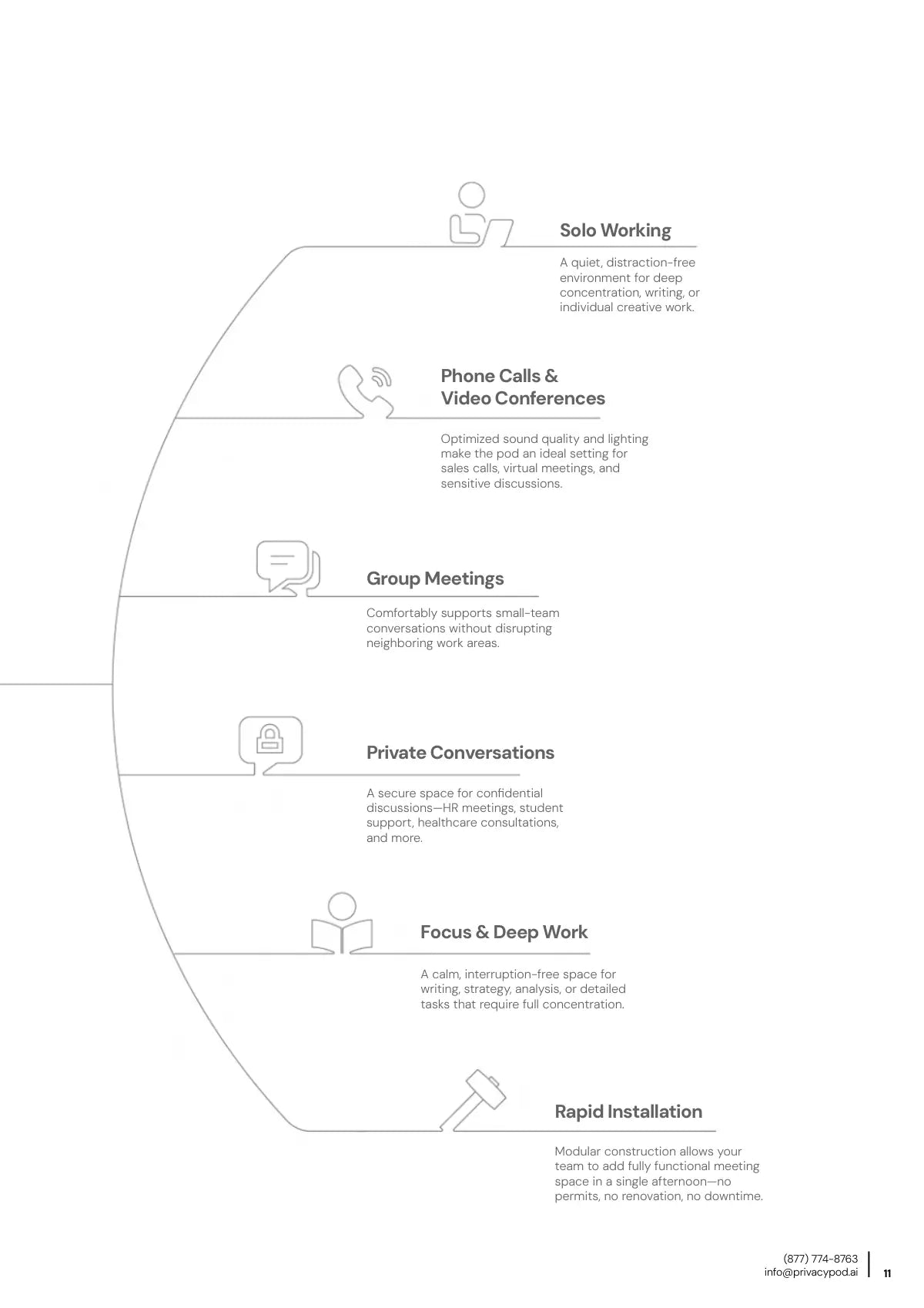
Libraries run pods three ways: as bookable study rooms, as a dedicated phone booth so calls leave the stacks, and as private space for tutoring, telehealth, and test proctoring. PrivacyPod study pods run in numerous public libraries across the country, from single-booth branches to multi-pod main floors.
The library spec sheet

The commons, covered.

Bookable, visible, easy to find.
A delivered install
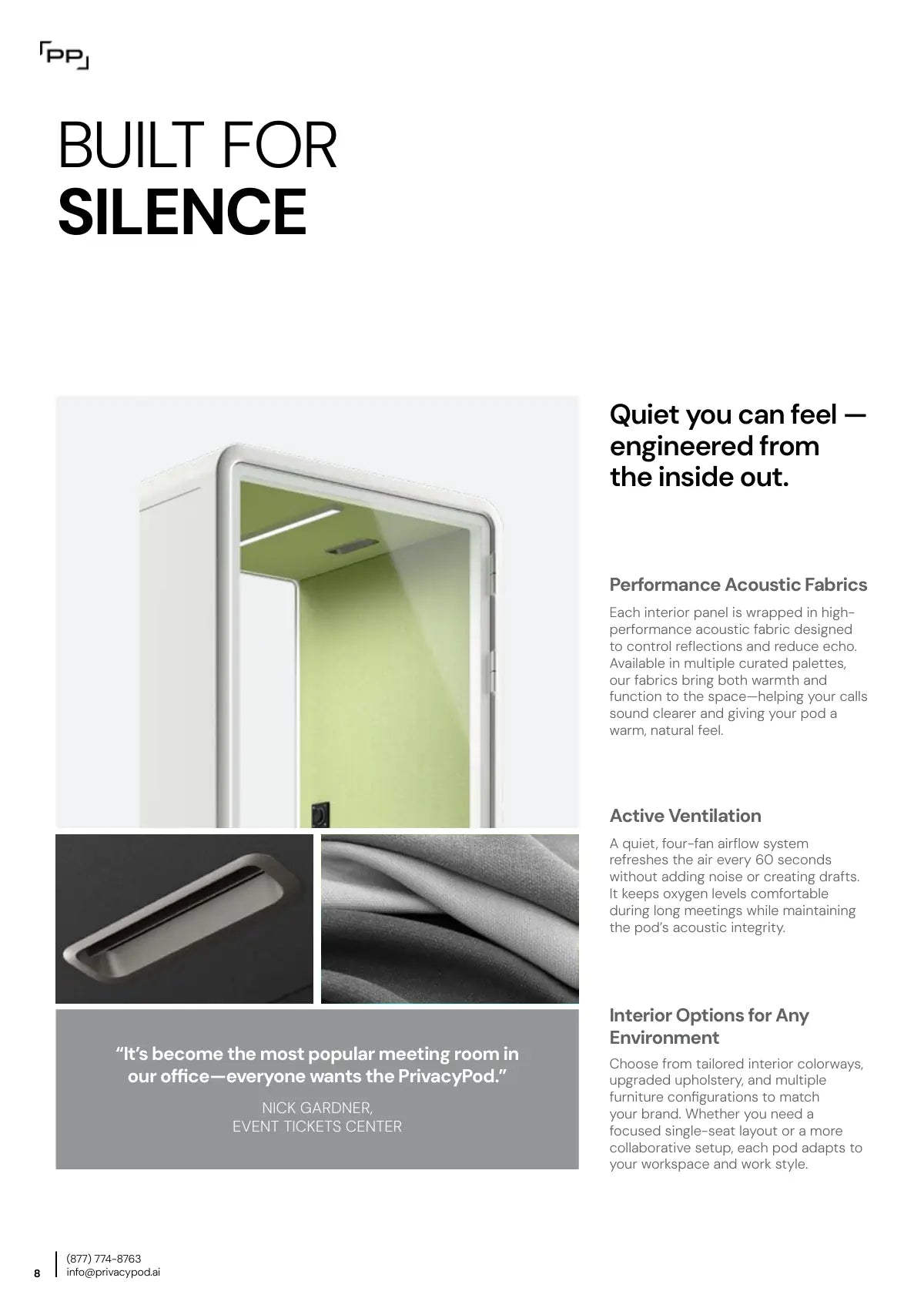
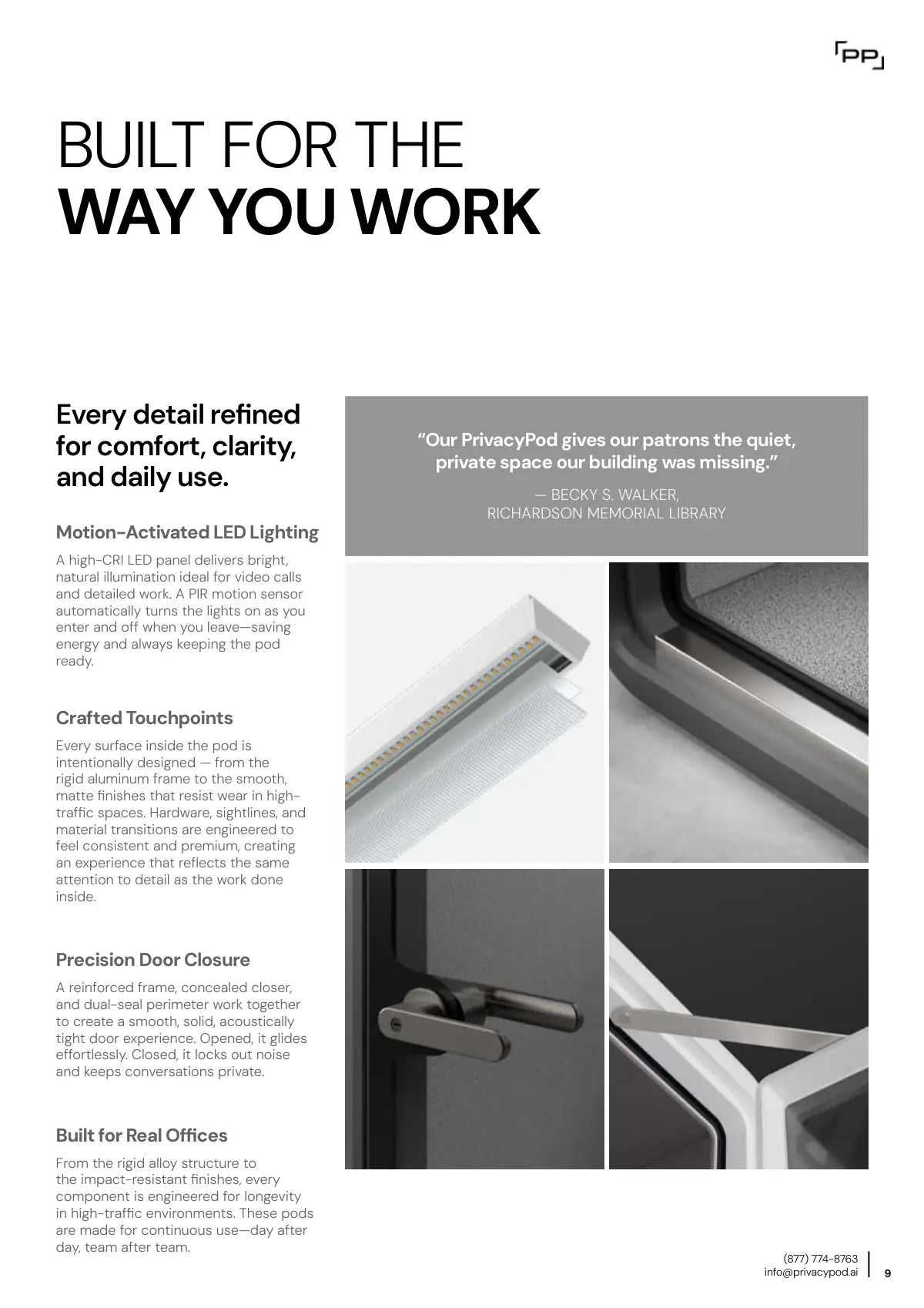
Our PrivacyPod gives our patrons the quiet, private space our building was missing.
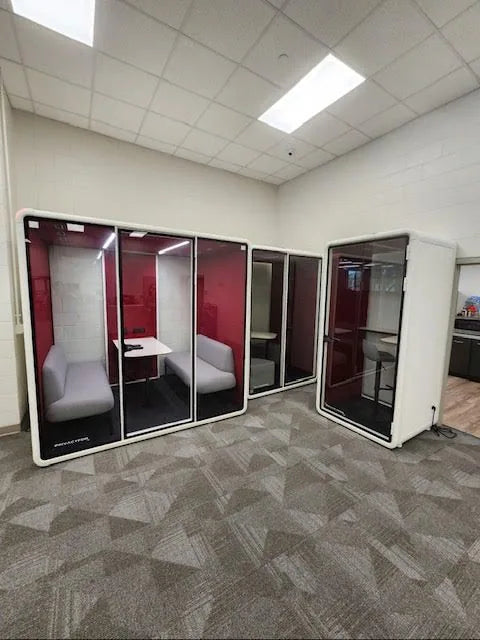
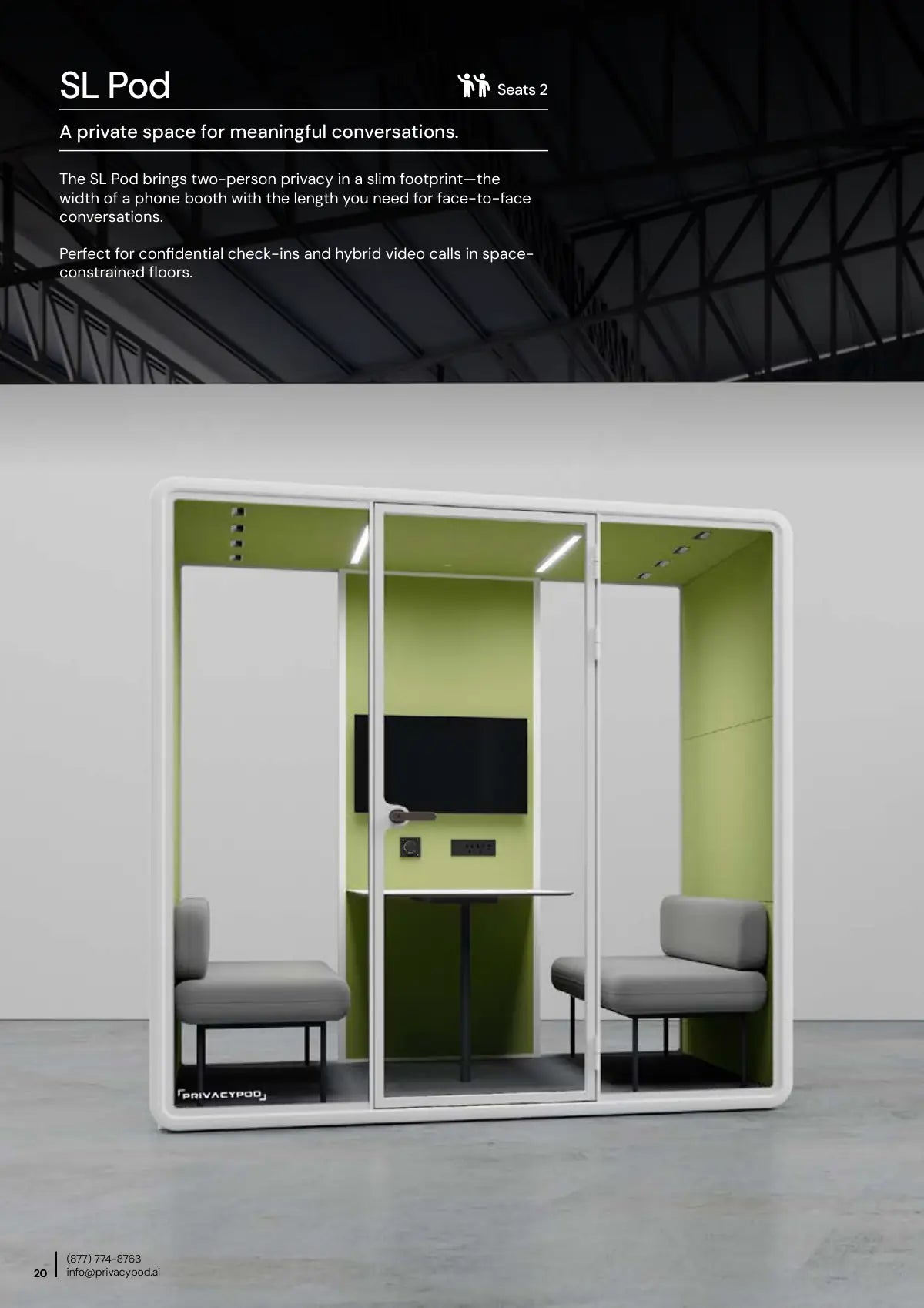
With one community meeting room and an open main floor, the library added an SL Pod as the middle ground. It now runs daily for one-on-one meetings, studying, virtual appointments, and test-taking.

SL Pod in daily use.
Richardson Memorial Library.
The procurement question
Do library pods require construction, permits, or a capital project?
No. A pod is a furniture purchase, not a construction project: one purchase order, no contractor, no permit, and no closed floor. Shipping is free, Quick-Ship pods arrive in 1 to 2 weeks, and a 2 to 3 person crew installs each pod in roughly 4 to 6 hours while the library stays open.
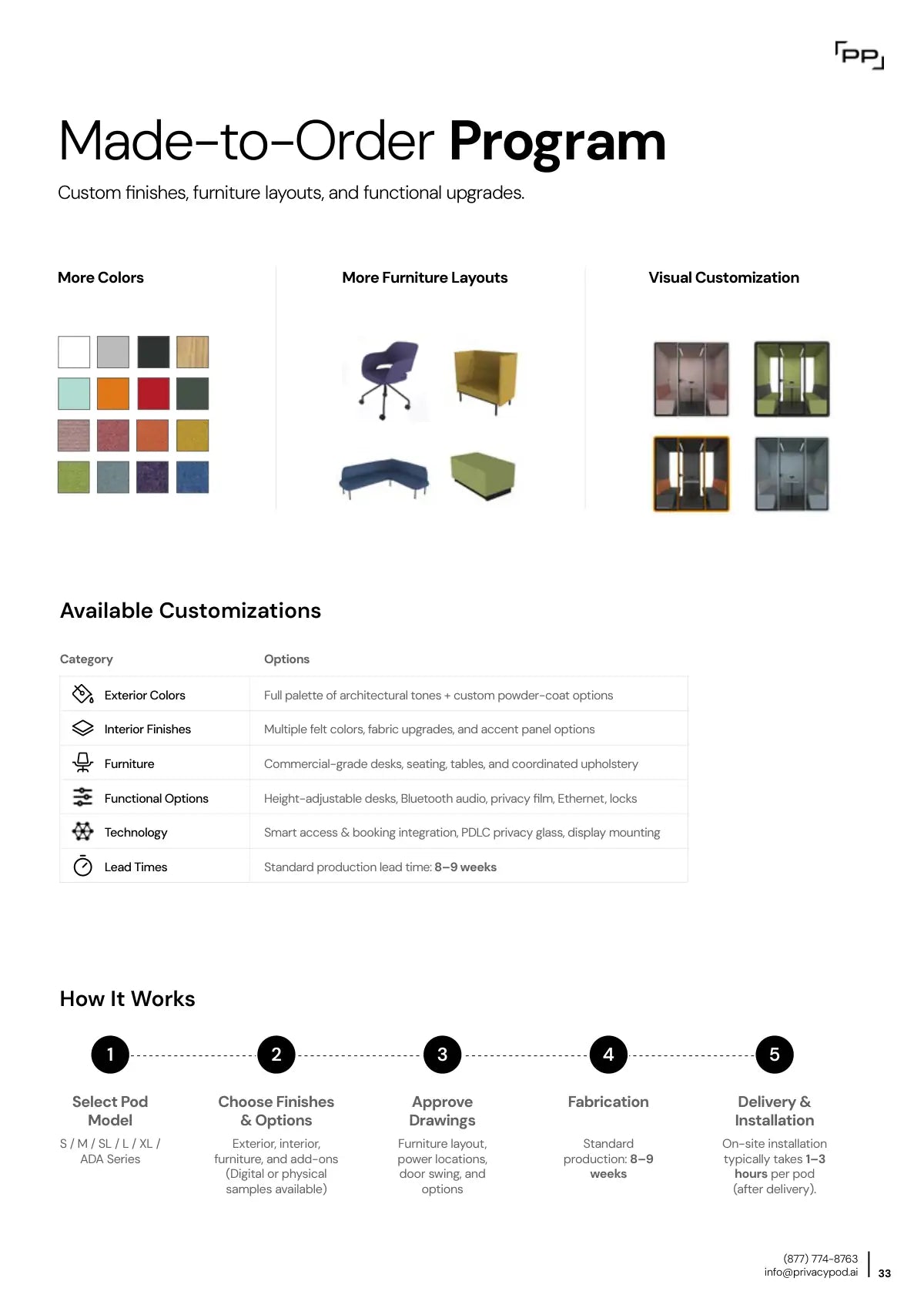
That difference is why pods fit library budgets that a renovation never could. The building keeps its layout, the pod carries a 3-year warranty, and if the branch reorganizes, the room rolls to the new plan instead of being demolished with the old one.
One purchase order, in numbers
Quick planning rule: Start with single-user pods near the learning commons or entrance for calls, then add quiet-study pods where room demand peaks.
The placement playbook
Where pods work in a library.
Privacy has to be easy to find without disrupting circulation or the quiet zones patrons came for. Five placement rules that keep pods busy, and the two that create friction.
- Near the learning commons: capture remote calls and laptop work where noise is already higher.
- Close to service points: tutoring, 1:1 help, and private consults without giving up a program room.
- Adjacent to, never inside, silent stacks: offer the private room nearby and the silence stays real.
- Keep staff sightlines: glass fronts and open placement keep supervision easy in public buildings.
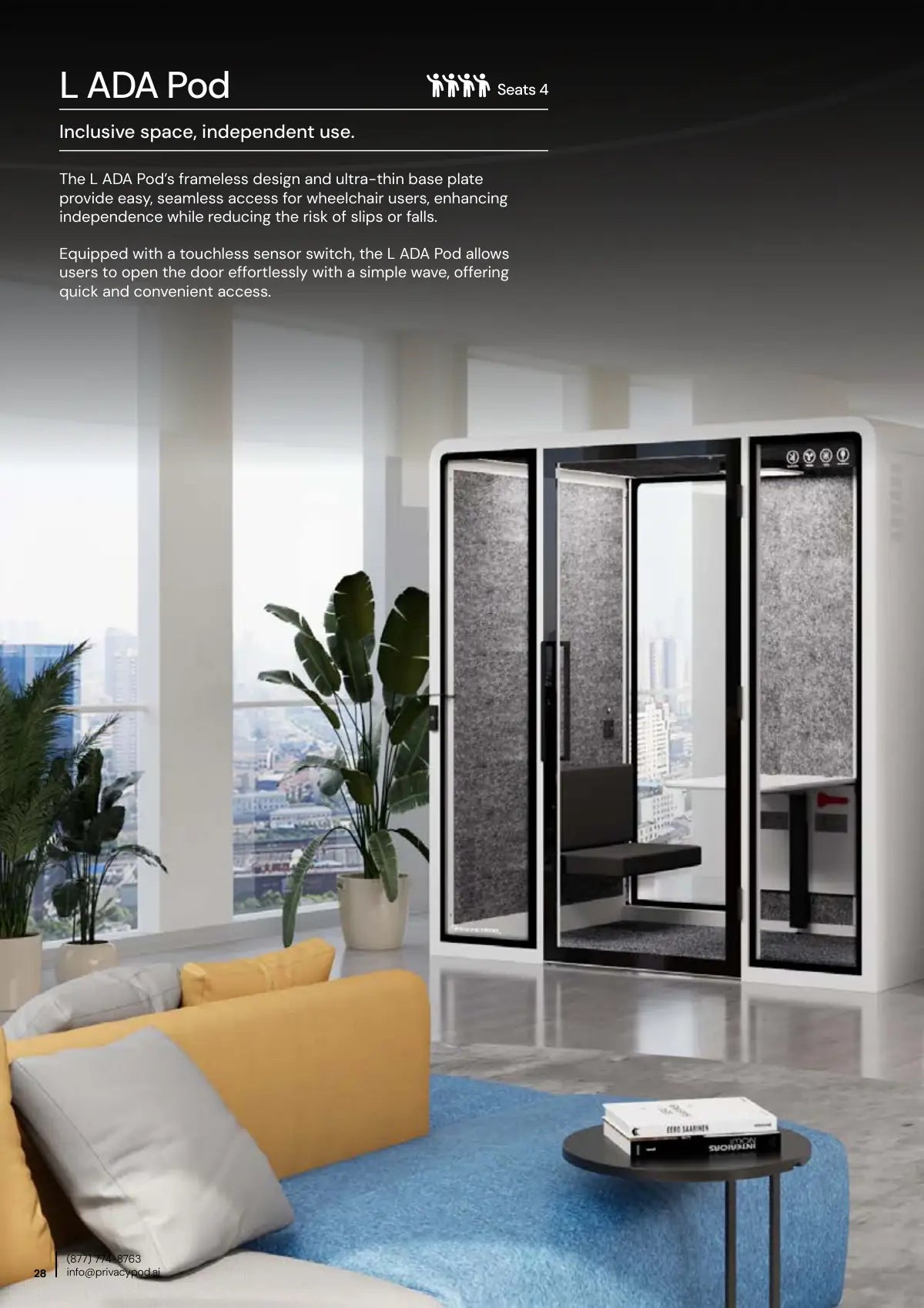
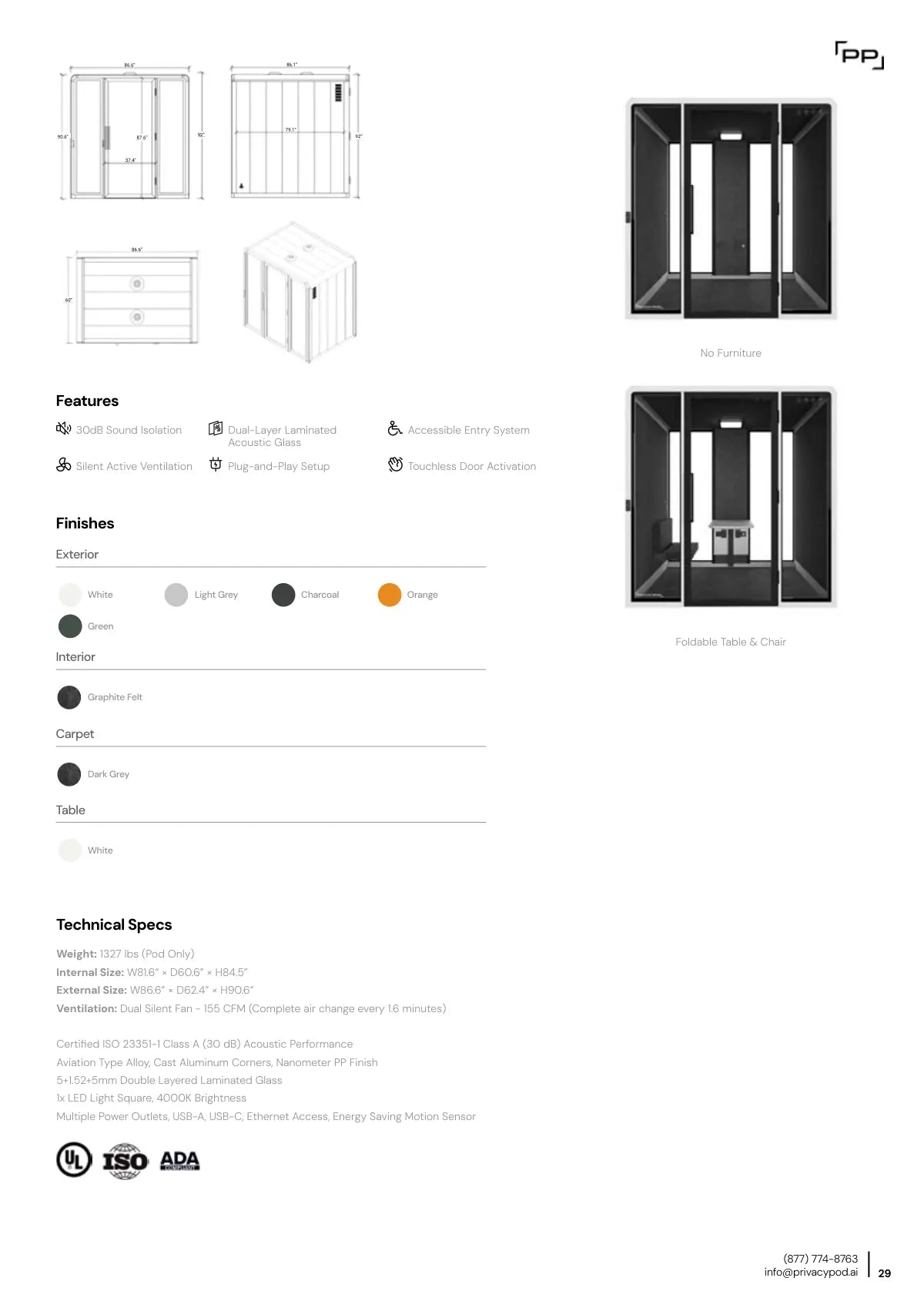
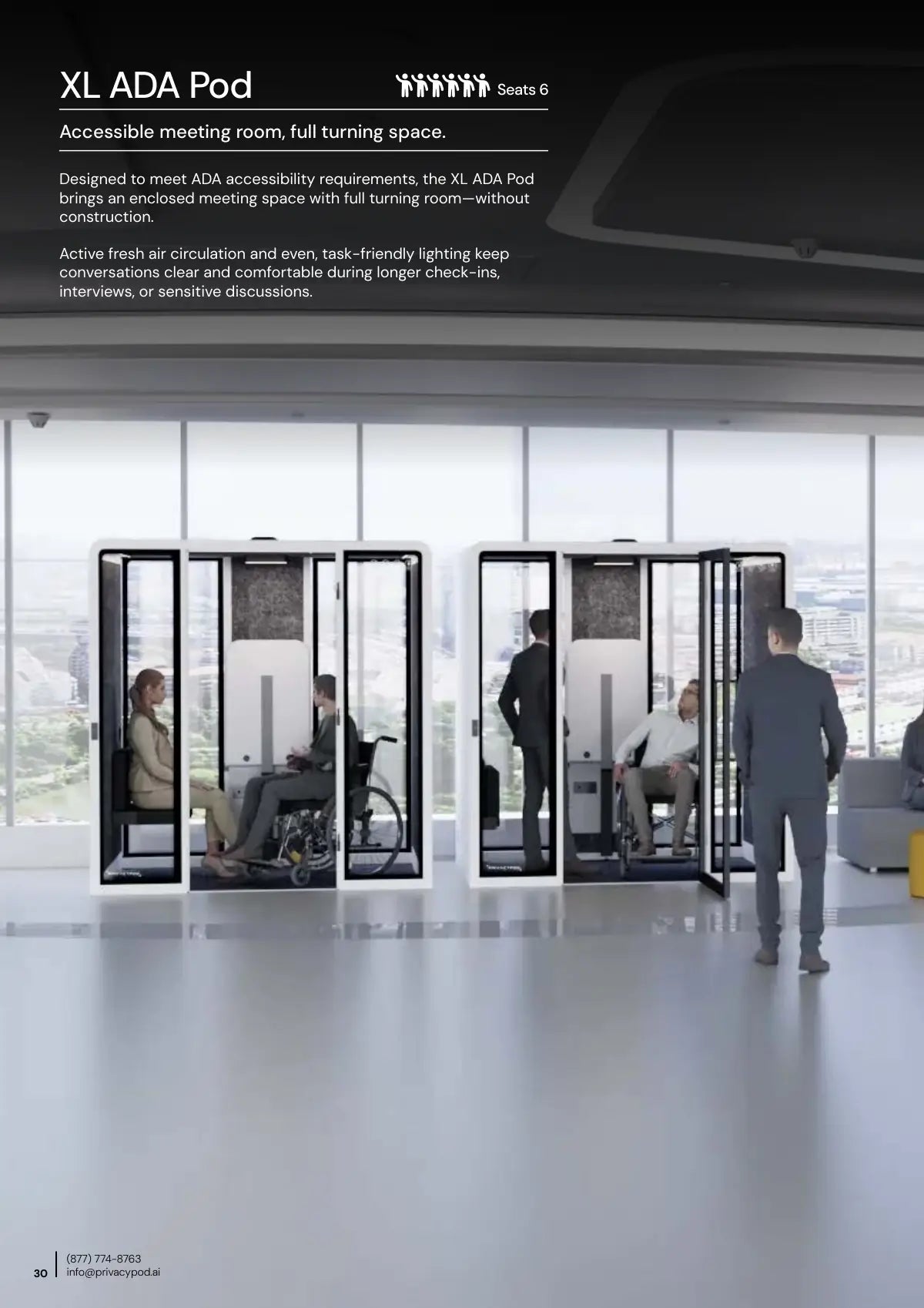
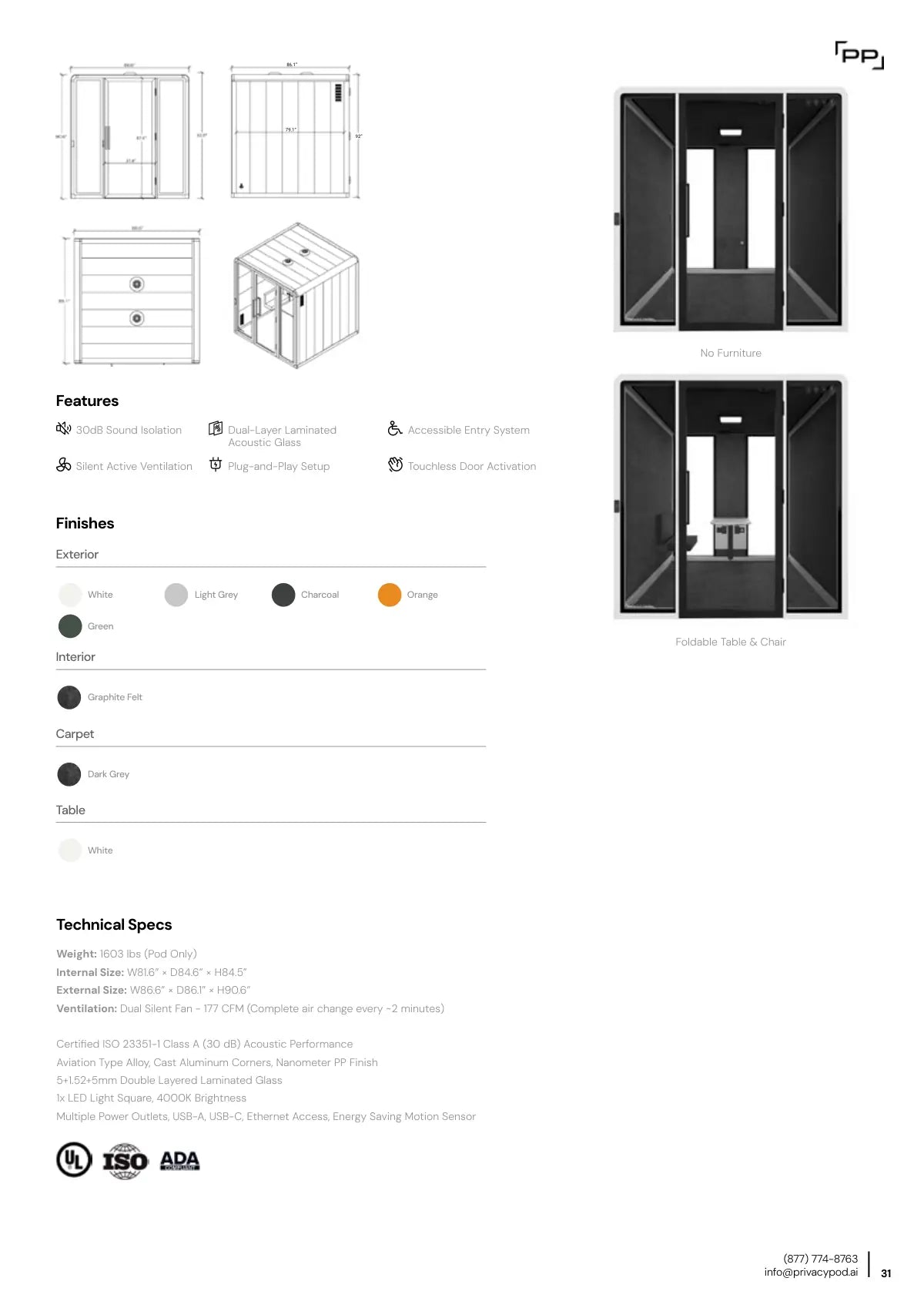
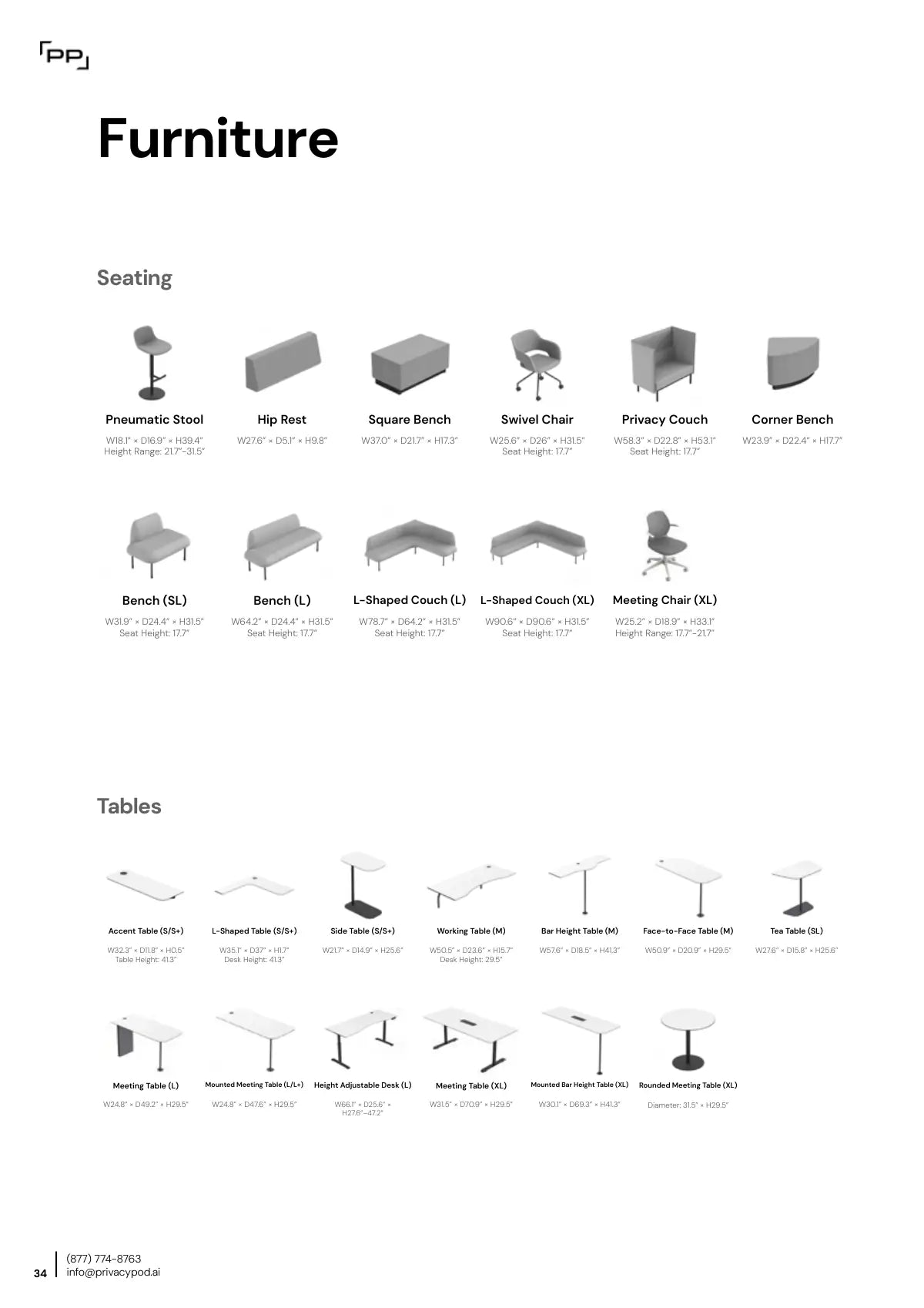
- Leave accessible clearance: comfortable door swing and circulation paths; L ADA and XL ADA models add floorless, near-flush entry.
Layout mistakes to avoid
If the pod becomes the phone corner inside the silent zone, friction arrives fast.
Avoid placements that queue patrons across main aisles or egress paths.

Sightlines kept for staff.
| Patron need | Best placement |
|---|---|
| Private calls and interviews | Near the entrance and learning commons |
| Quiet study and remote exams | Near study areas, outside silent stacks |
| Tutoring and 1:1 help | Near the service desk and program rooms |
| Small group work, 2 to 4 | Near meeting rooms, to relieve booking pressure |
The recommendation
The library four, priced in the open.
Published 2026 list prices.
Free shipping on every order.
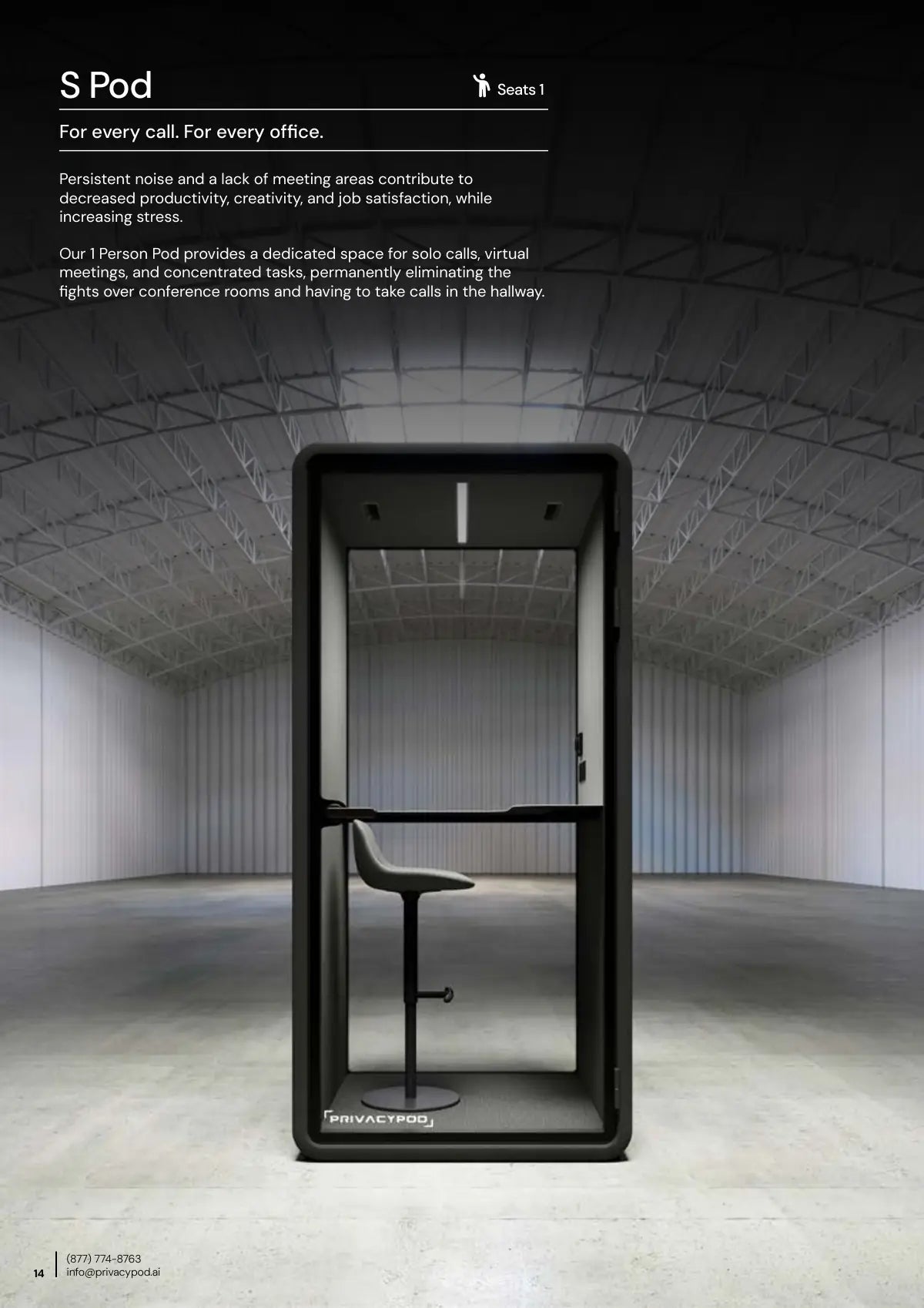
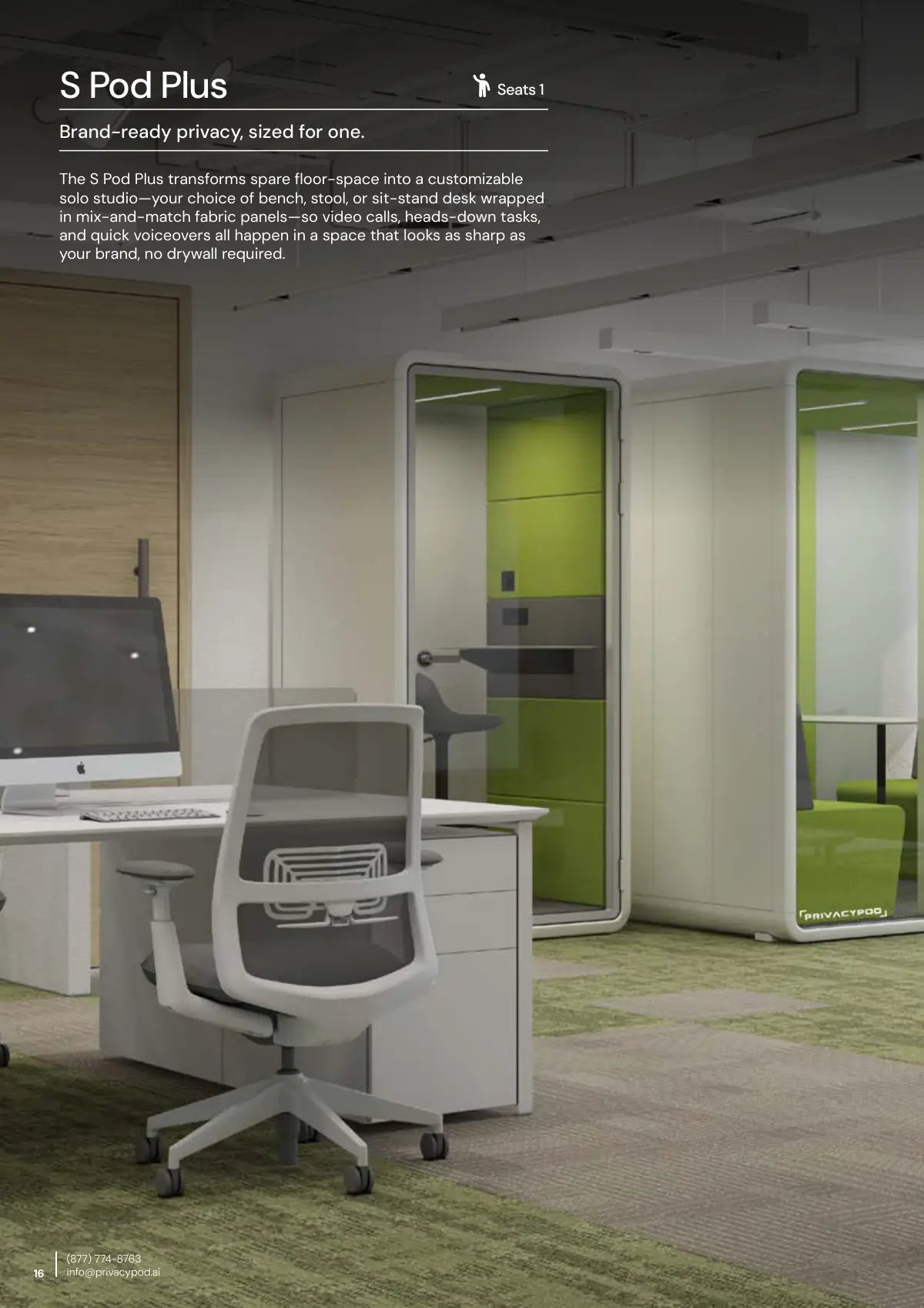
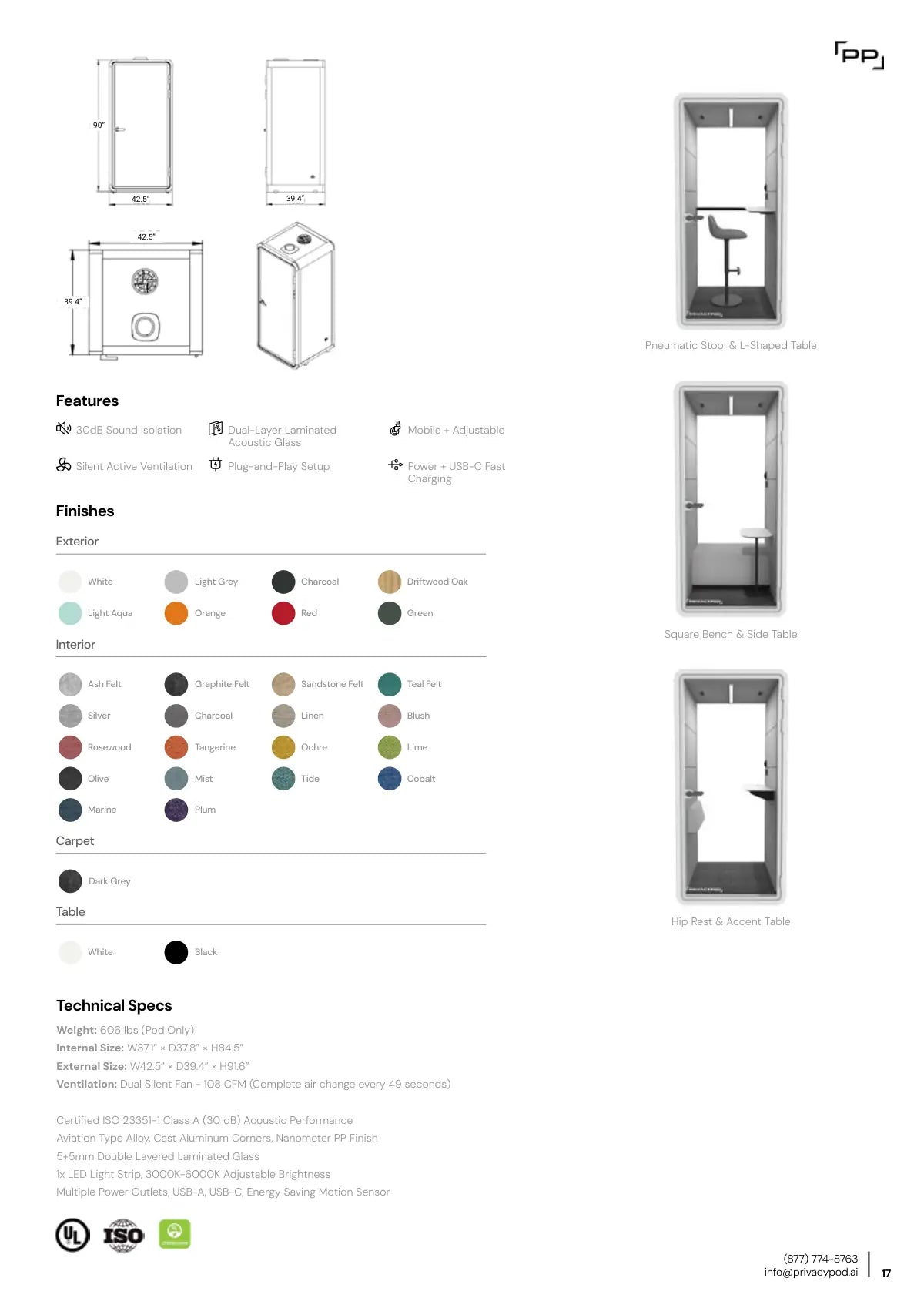
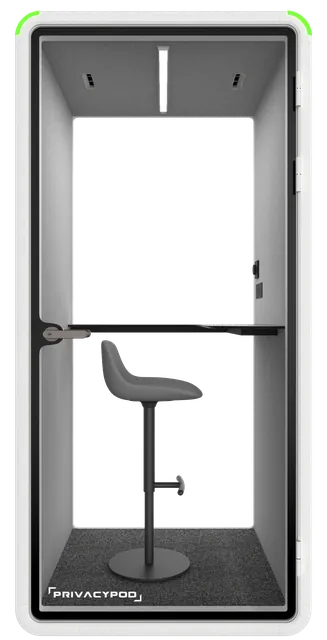 S Pod$6,395
Seats 1
S Pod$6,395
Seats 1
The single-patron study booth and phone room.
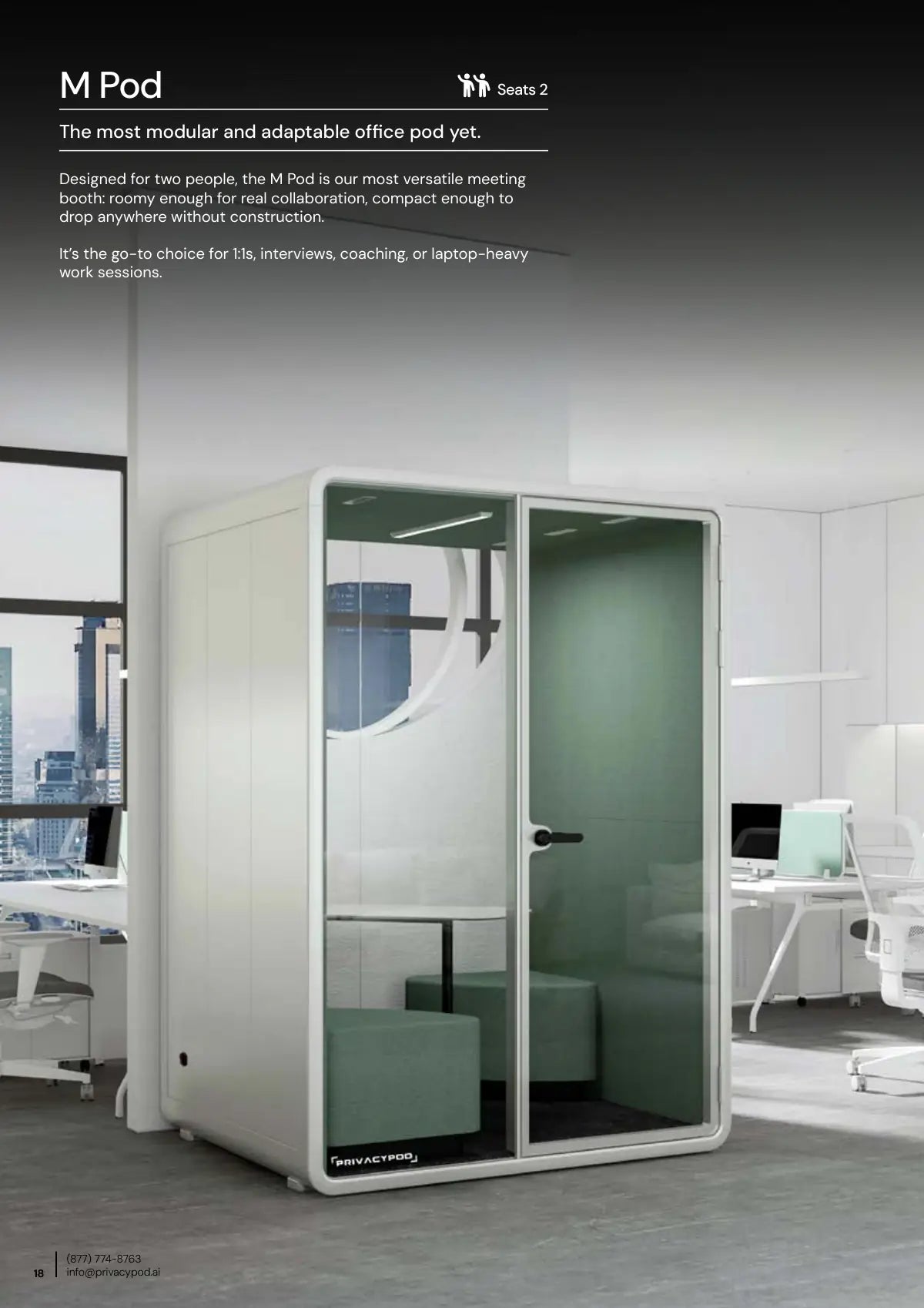
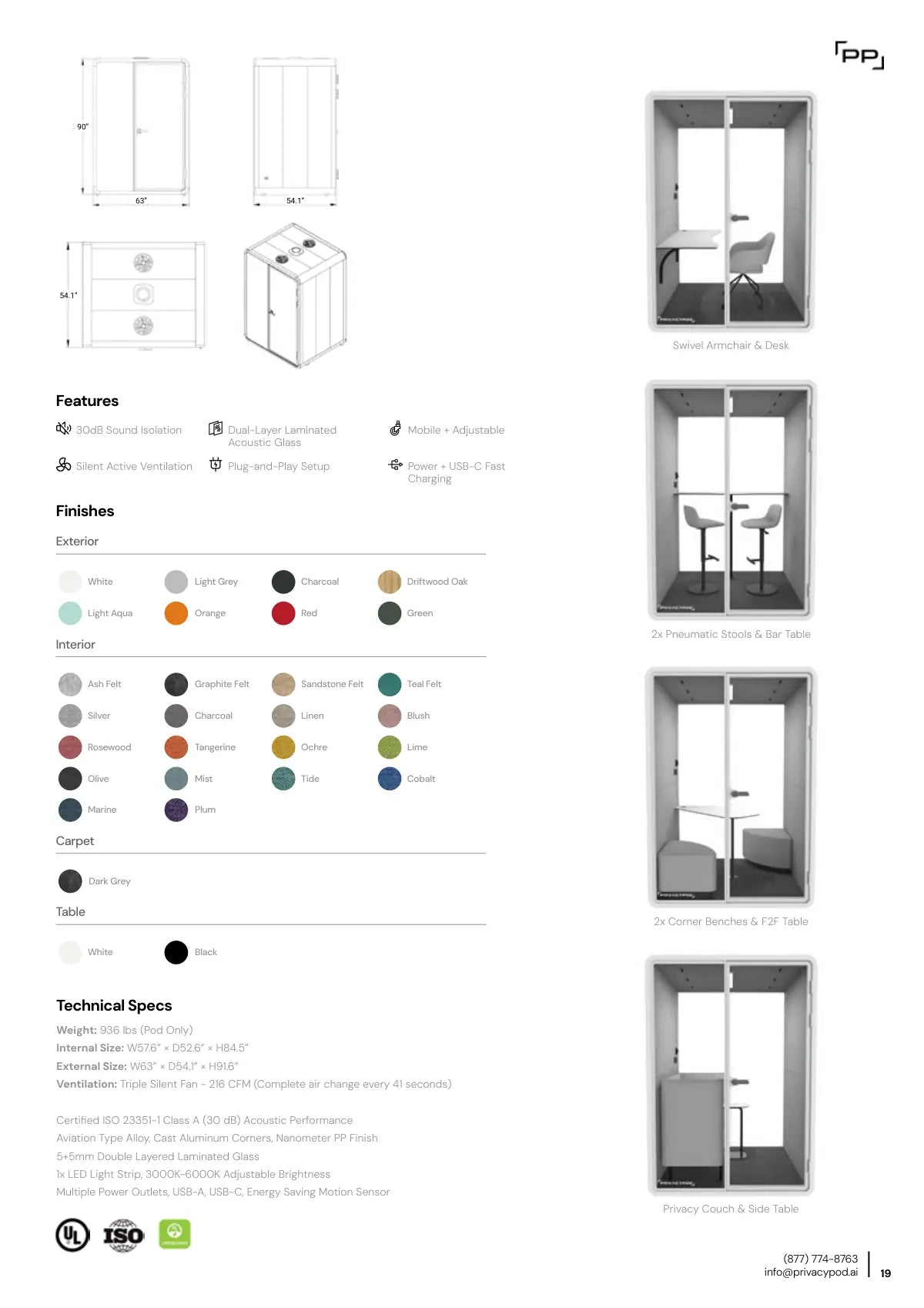
View specs →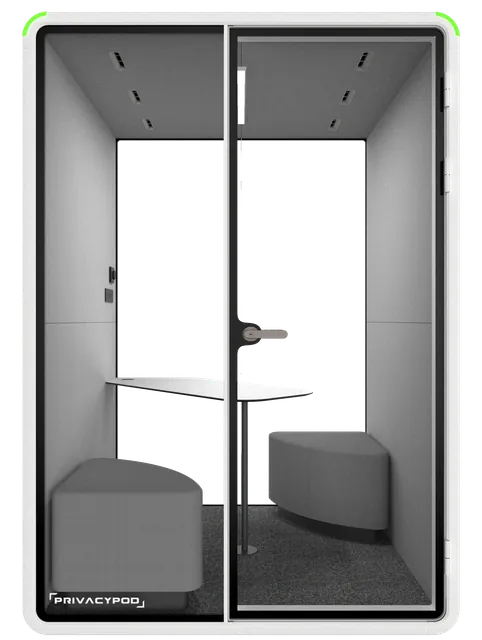 M Pod$9,495
Seats 2
M Pod$9,495
Seats 2
Tutoring and 1:1 help across a real table.
View specs →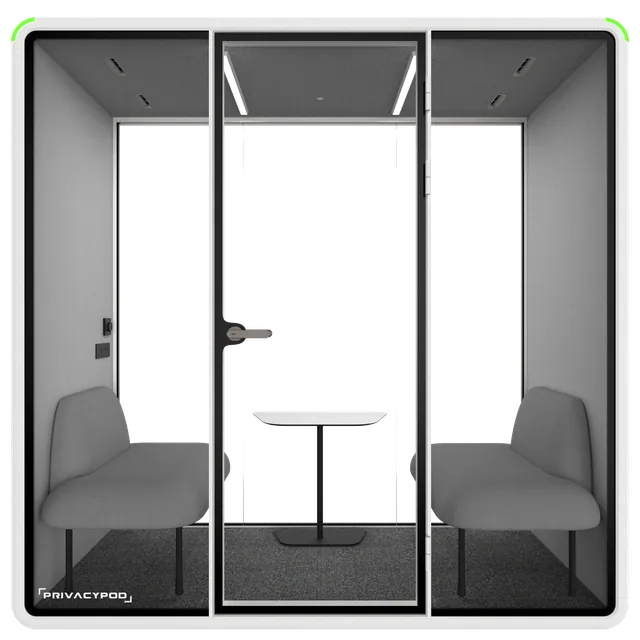 SL Pod$10,995
Seats 2
SL Pod$10,995
Seats 2
The Richardson Memorial pick: a study room for two.
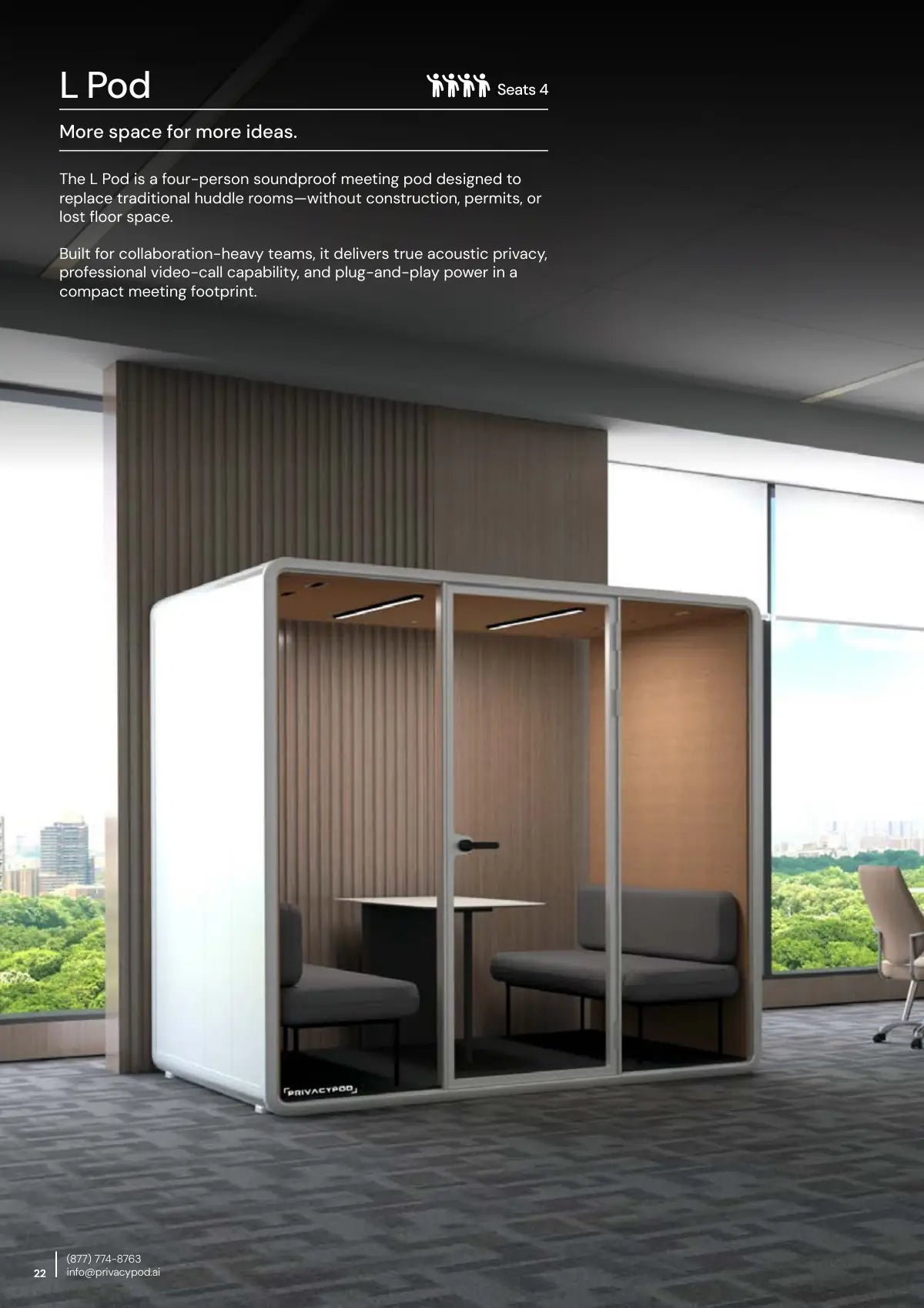
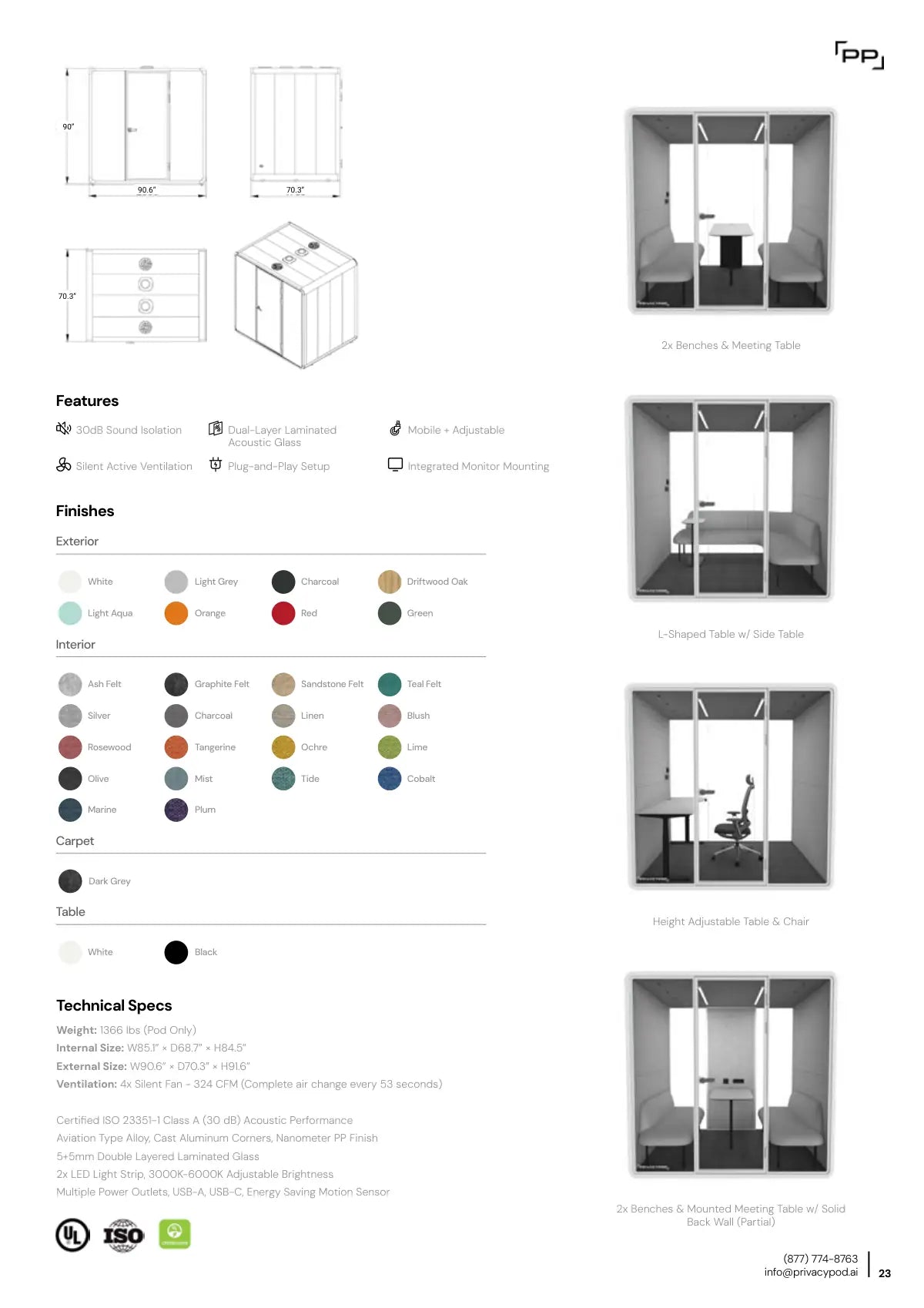
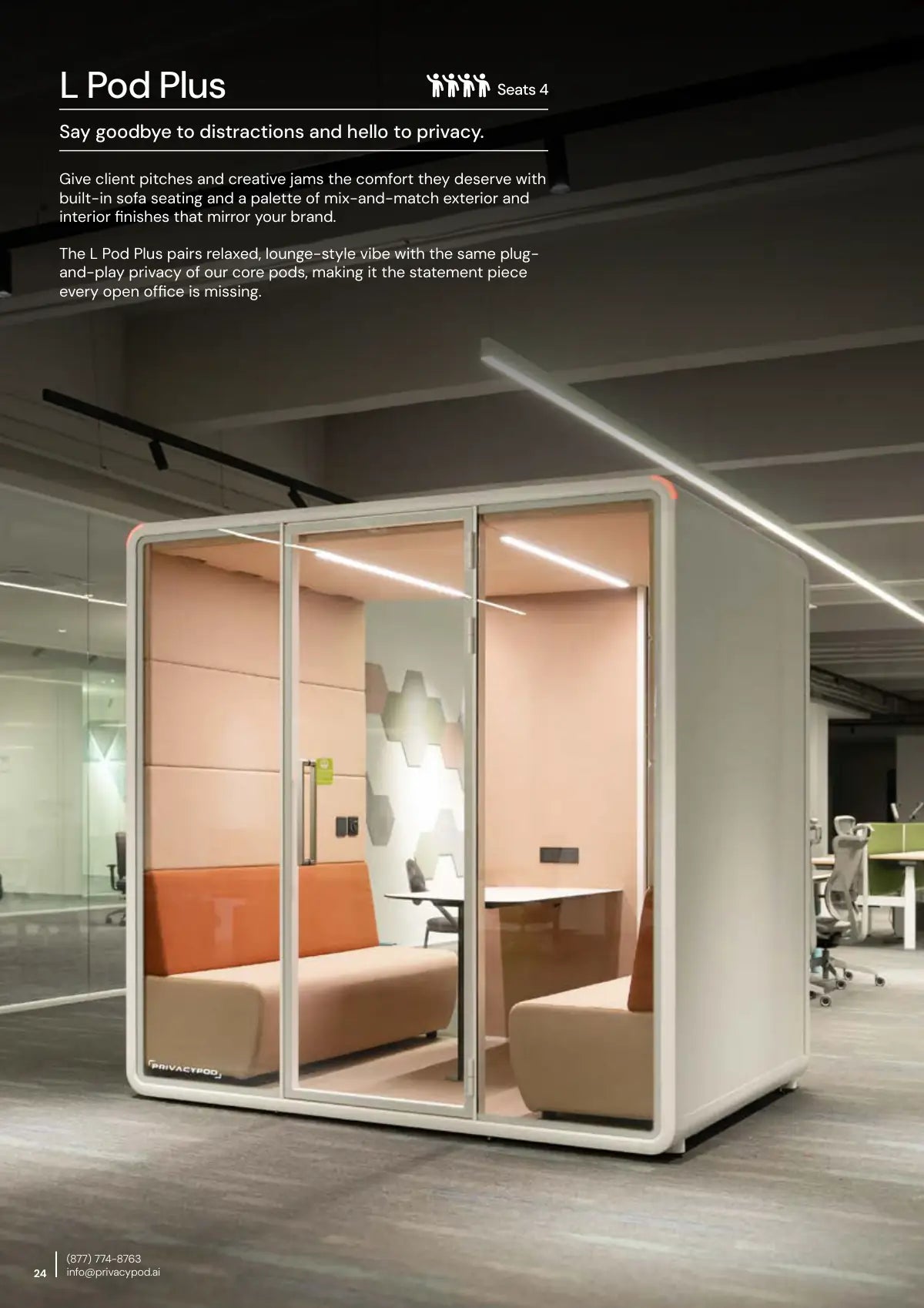
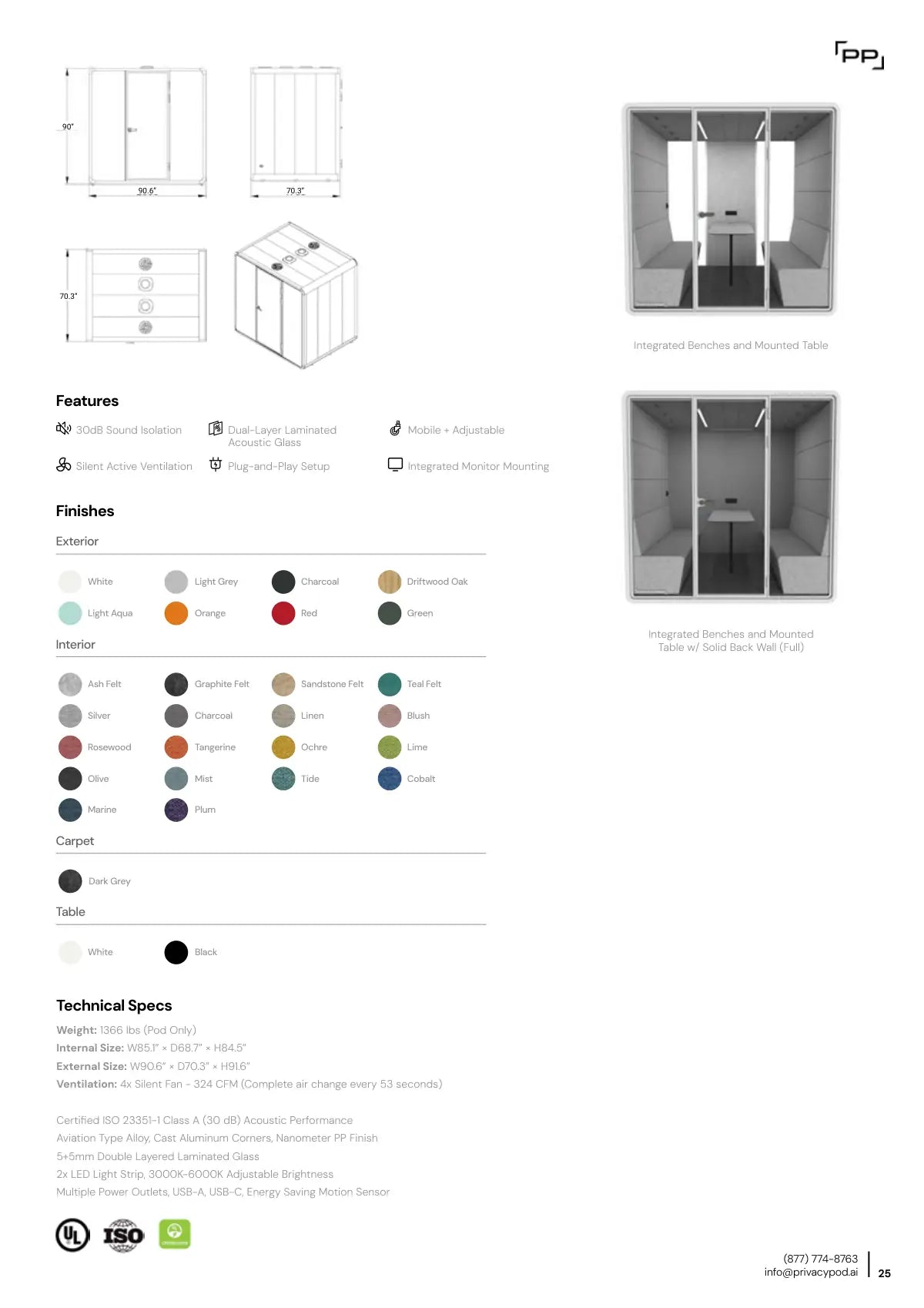
View specs →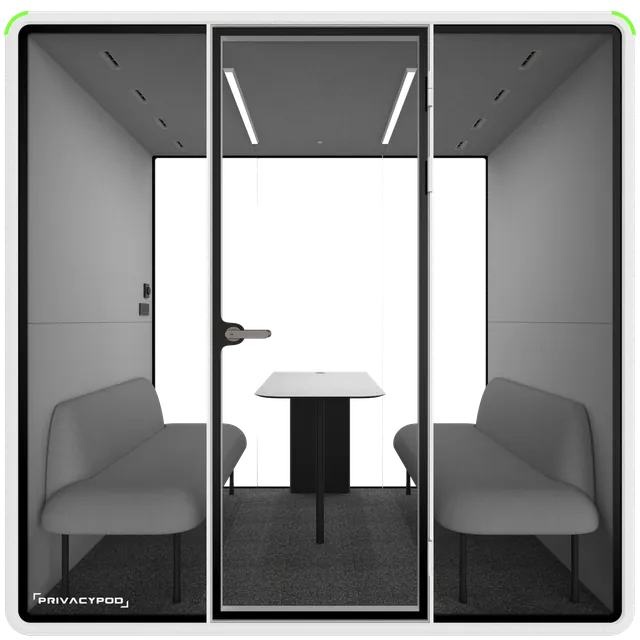 L Pod$12,495
Seats 4
L Pod$12,495
Seats 4
The small-group room that relieves booking pressure.
View specs →| Building | Mix | List total |
|---|---|---|
| Branch library | 1x S Pod + 1x SL Pod | $17,390 |
| Main floor | 2x S Pod + 1x M Pod | $22,285 |
| Learning commons | 2x S Pod + 1x SL Pod + 1x L Pod | $36,280 |
Published 2026 list prices with free shipping. Professional installation runs from $1,000 to $1,500 per pod for these models, quoted with the order. Mixes are starting recommendations; reservation data should size the next order.
Frequently asked
What library teams ask first.
Booking, accessibility, budgets, and upkeep.
How much does a library study pod cost?
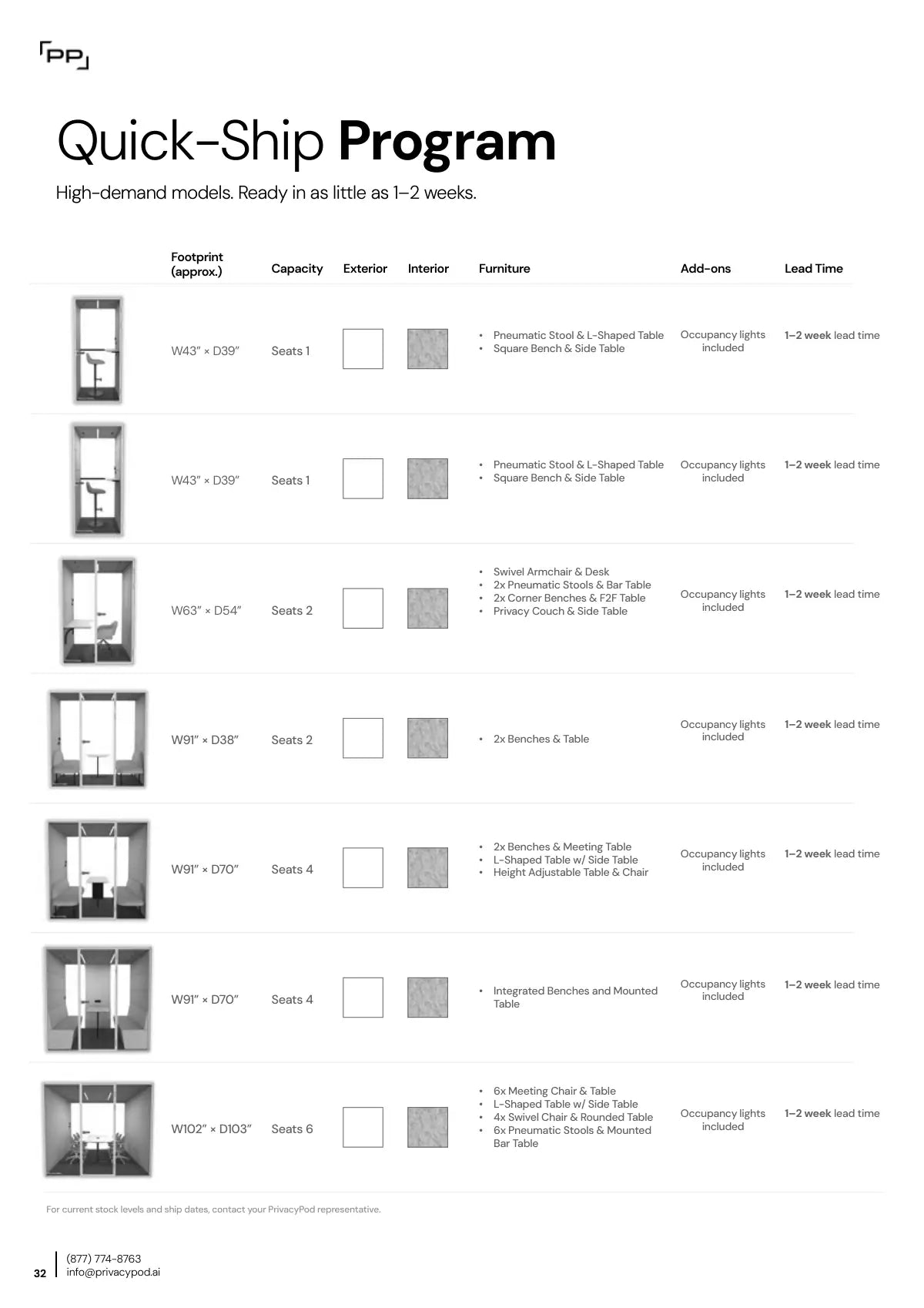
Published list prices for the models libraries order most run from $6,395 for the 1-person S Pod to $12,495 for the 4-person L Pod, with the 2-person SL study room at $10,995. Shipping to the continental US is free, and professional installation is quoted from $1,000 to $1,500 per pod. There is no gated price list; every figure is public.
Can patrons reserve pods like study rooms?
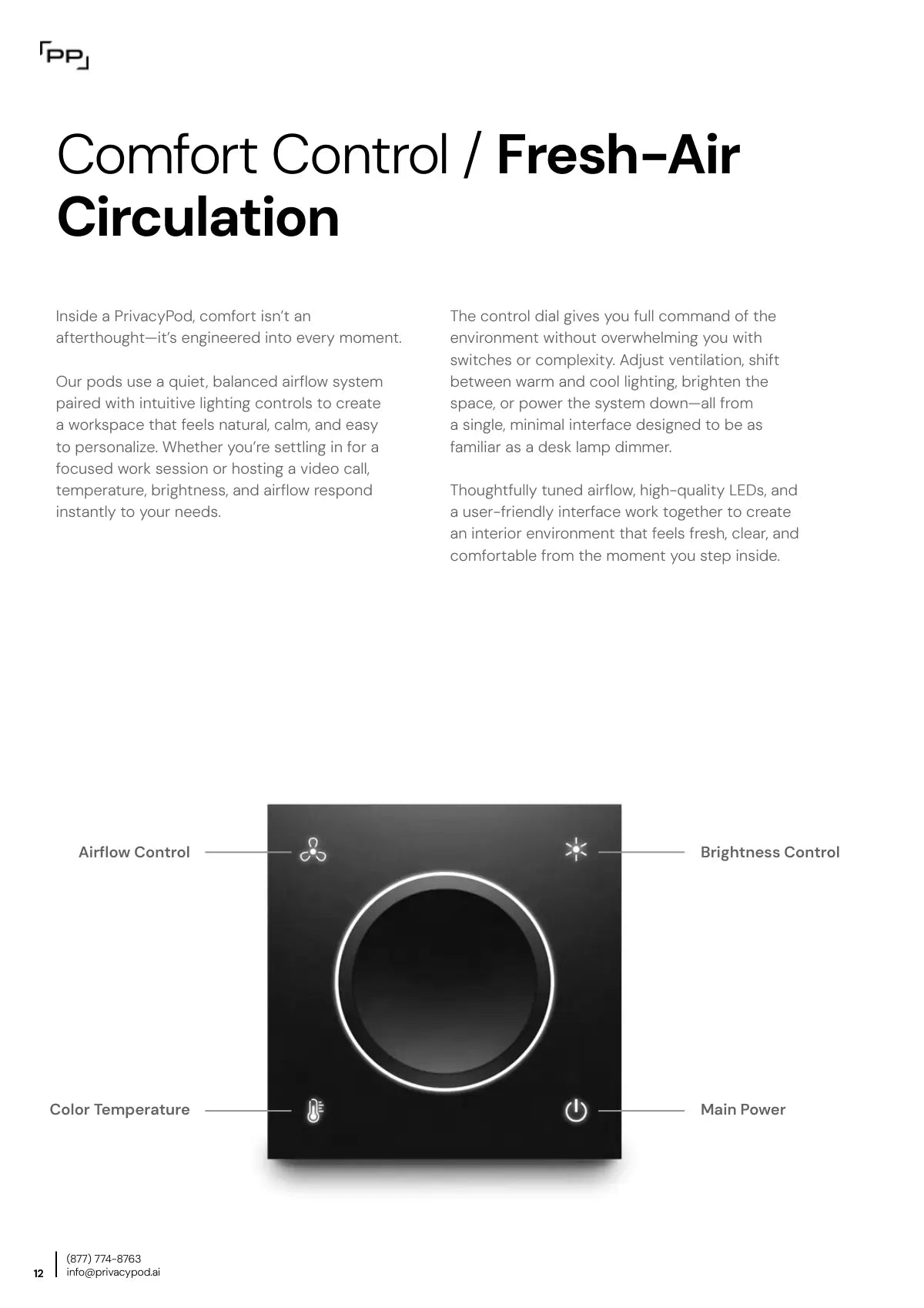
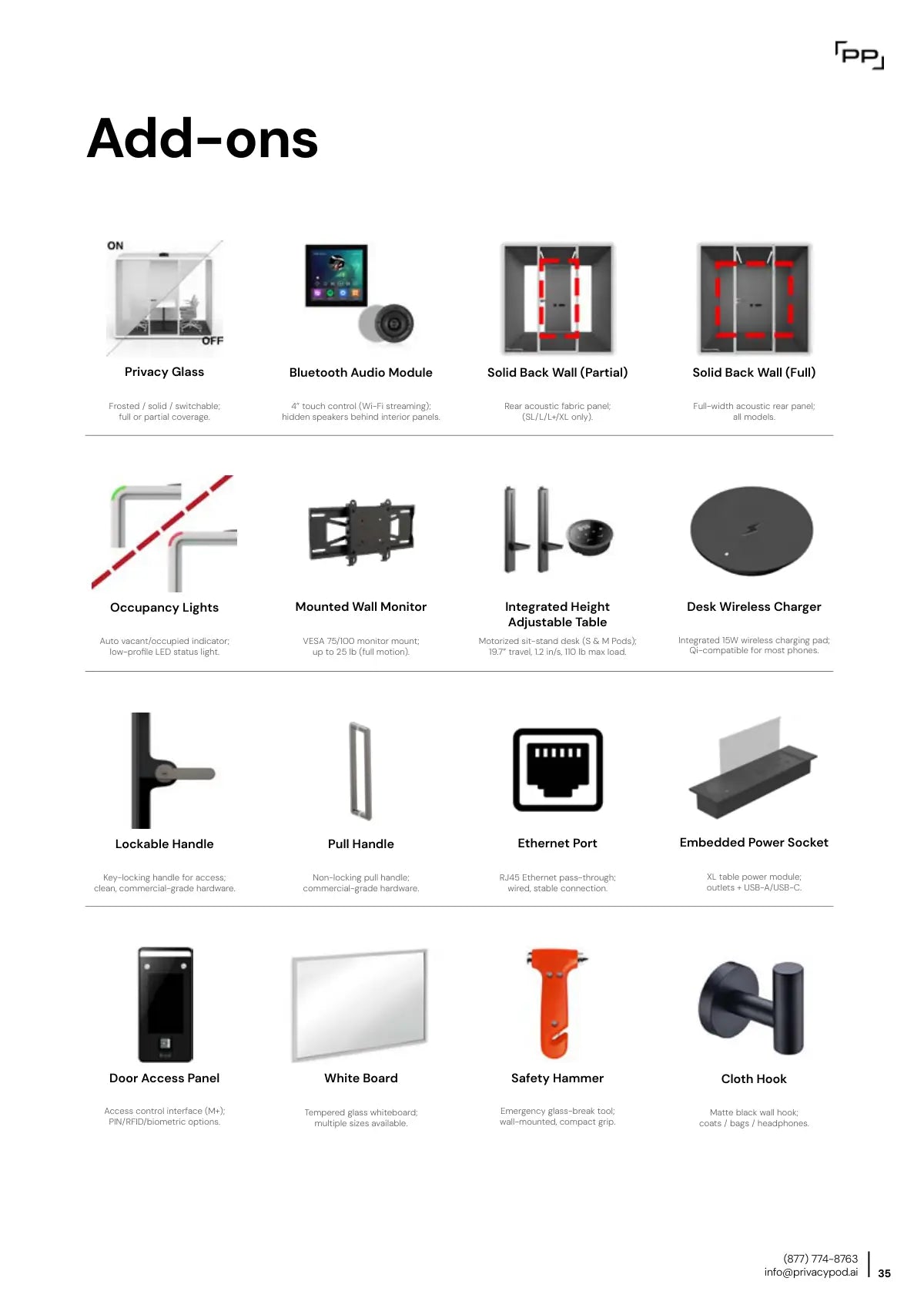
Yes. Pods slot into the same reservation workflow as built study rooms: add them to the room-booking system the library already runs, post session rules on the glass, and let turnover run itself. Motion-activated interior lighting shows at a glance whether a pod is free.
Are library pods ADA compliant?
PrivacyPod offers dedicated accessible models: the L ADA Pod and XL ADA Pod feature a floorless ultra-thin base for near-flush wheelchair entry, a wide automatic door, touchless controls, and foldable furniture for full maneuverability inside. Standard models keep accessible clearance around the door as part of placement planning.
Do pods need permits, sprinklers, or electrical work?
Pods are freestanding furniture, not construction, so no building permit or trade work is required: each pod plugs into a standard wall outlet. Sprinkler coverage is a local fire-authority decision, and our team supports those facilities reviews with full specification sheets. Placement planning keeps egress paths clear, and glass fronts preserve the staff sightlines public buildings need.
How are pods cleaned and maintained in a public building?
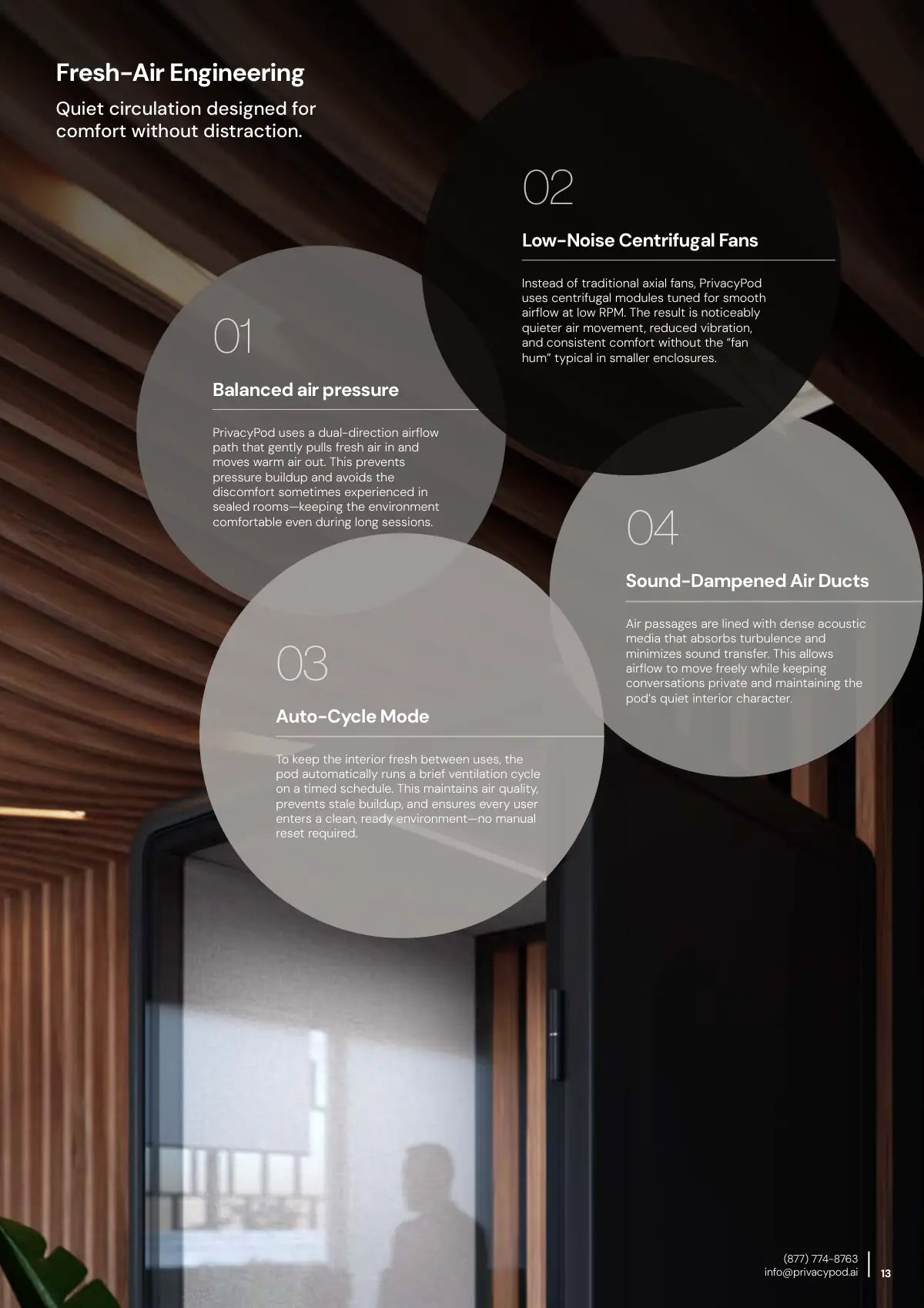
Interior walls are lined with PET acoustic panels, and the glass, laminate, and hard surfaces take a standard wipe-down. Ventilation runs whenever the pod is occupied, keeping air moving between sessions. Day-to-day upkeep is the same routine as any public study room, and every pod carries a 3-year warranty.
What space and power does a pod need?
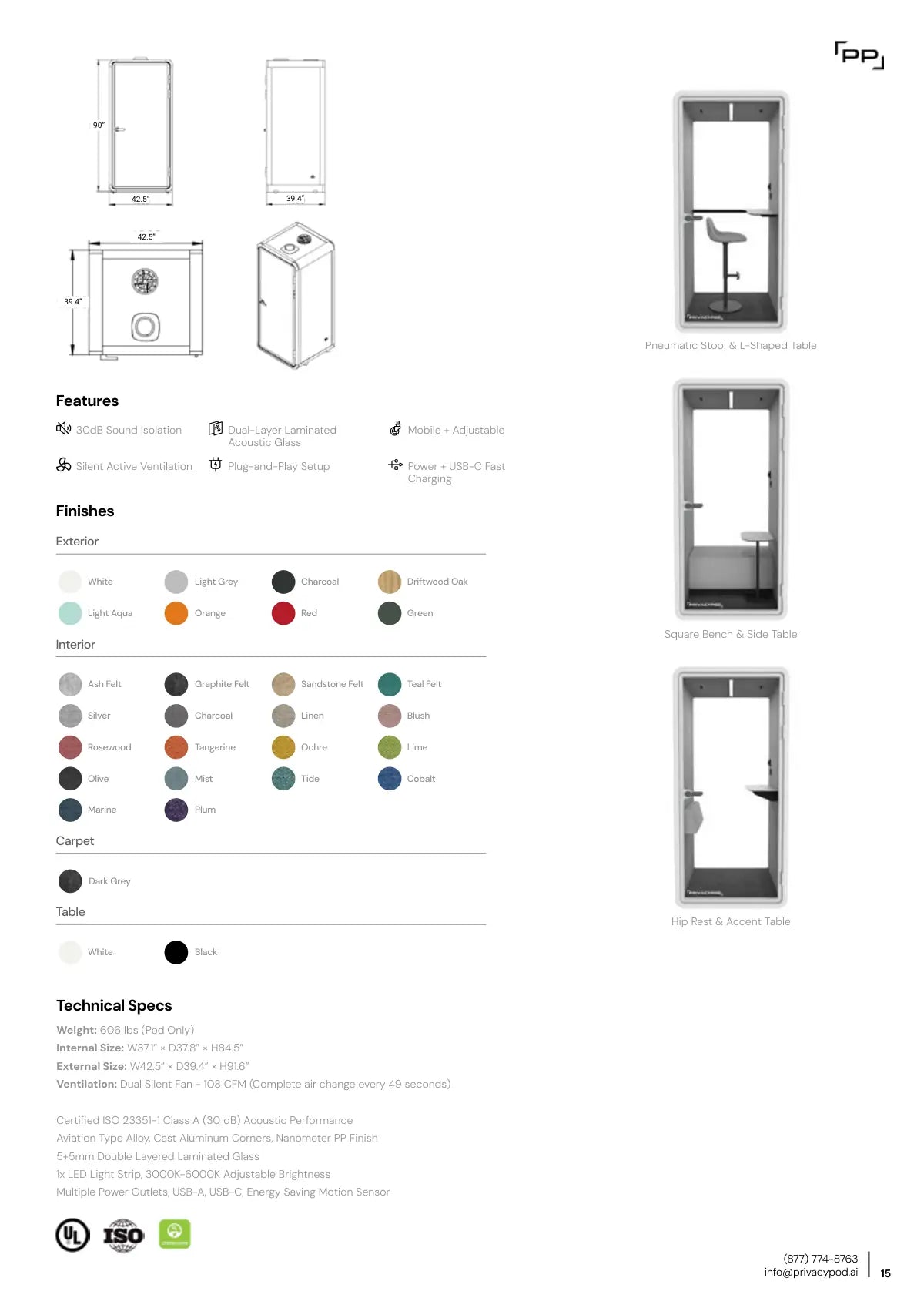
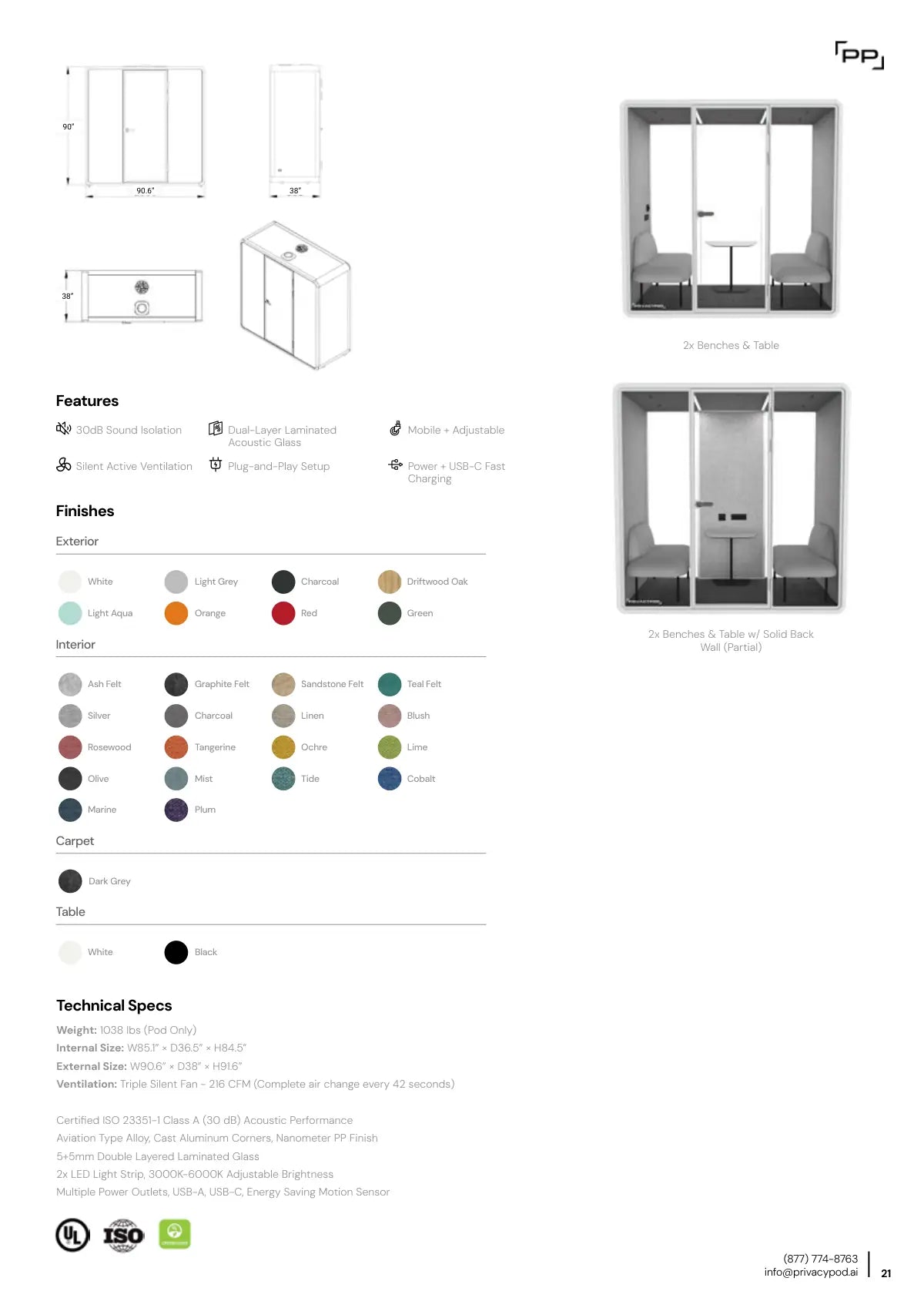
A standard wall outlet and a level floor. The 1-person S Pod occupies roughly a 38-inch square of floor, and larger models scale up from there; every model publishes full dimensions on its product page. Standard pods ride on hidden casters, so a placement that does not work can simply be rolled somewhere better.
Plan the floor
Send us your floor plan.
Share a floor plan or a simple sketch plus your room-booking patterns, and our team sends back a placement layout, a right-sized mix, a lead time, and a quote your board can read.