The short version
An acoustic pod specification needs six clauses: acoustic performance, ventilation, electrical and anchorage, fire suppression, lighting, and warranty. Each clause names one figure, one unit, and the document that proves it. PrivacyPod enclosed pods are ISO 23351-1 Class A certified, approximately 30 dB of speech level reduction. A vendor who cannot name the test method behind a number has not answered.
Three quotes for one pod are rarely comparable, because each vendor answered a different question.
Every clause below ends with the sentence to paste into your document and the question to ask on the call. Budget is a separate exercise and lives in the office pod cost breakdown, so no price appears here. Where PrivacyPod holds a published figure it is named, so these clauses work against us too.
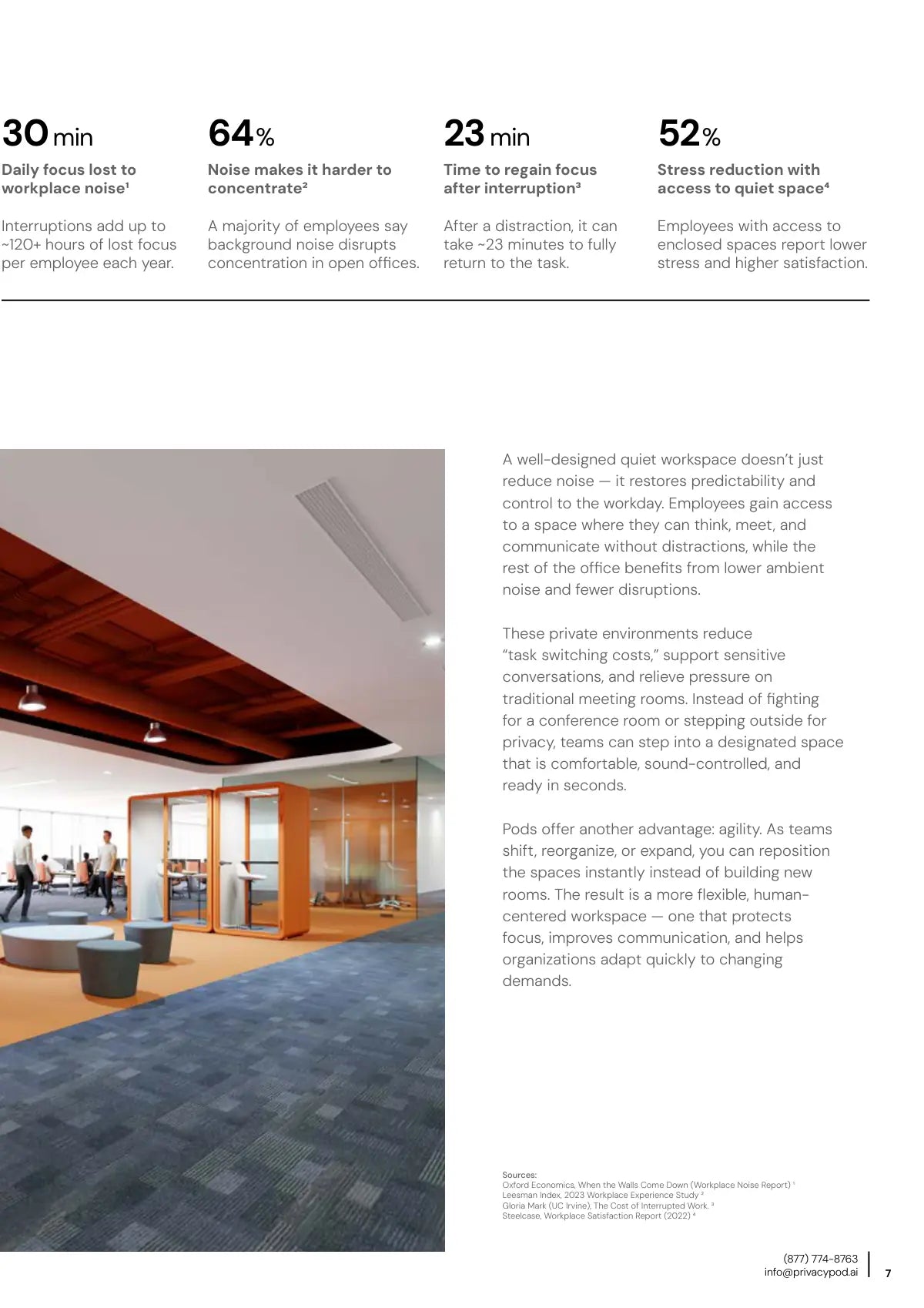
Acoustics was the largest single source of workspace dissatisfaction in a 2023 study of 617 office buildings, with 54 percent of 62,360 occupants naming it, Common sources of occupant dissatisfaction with workspace environments in 600 office buildings.
The six clauses at a glance
| Clause | Figure to require | Unit it has to arrive in | What proves it |
|---|---|---|---|
| Acoustic performance | Speech level reduction | ISO 23351-1:2020 class letter, plus dB | Laboratory test report |
| Ventilation | Air change rate | Seconds per full air change, at a stated fan setting | Airflow data per model |
| Electrical and anchorage | Supply, listing, attachment | Cord-and-plug voltage, UL standard number, bracket type | UL file number, anchorage on the drawings |
| Fire suppression | Exterior footprint | Square feet of the exterior silhouette, never the interior | A dimensioned exterior drawing |
| Lighting | Color temperature range and control | A Kelvin range, plus the control type | Literature naming the control |
| Warranty and lead time | Warranty term and ship window | Years of cover, weeks from purchase order | The written warranty document |
The PrivacyPod answers to all six sit on the office pod spec sheet.
Acoustic performance: which rating to require
Require a class under ISO 23351-1:2020 and the decibel value behind it. Class A is the top band, and a class buys a measurable outcome: cognitive performance begins degrading above a speech transmission index of 0.21, in a 2020 review of 14 studies and 34 tests, The relation between the intelligibility of irrelevant speech and cognitive performance.
Refuse a number whose method is not named. ASTM E596-22 puts the source outside the enclosure and ranks enclosures by noise isolation class, a different question from speech privacy, ASTM E596-22, Noise Reduction of Sound-Isolating Enclosures. What each rating measures is in the acoustic ratings compared side by side.
ISO 23351-1:2020 is the laboratory method. ISO 23351-2:2026, published August 2026, is the field method and reports apparent speech level reduction, ISO 23351-2:2026, Part 2: Field method, covered in the 2026 field method explained.
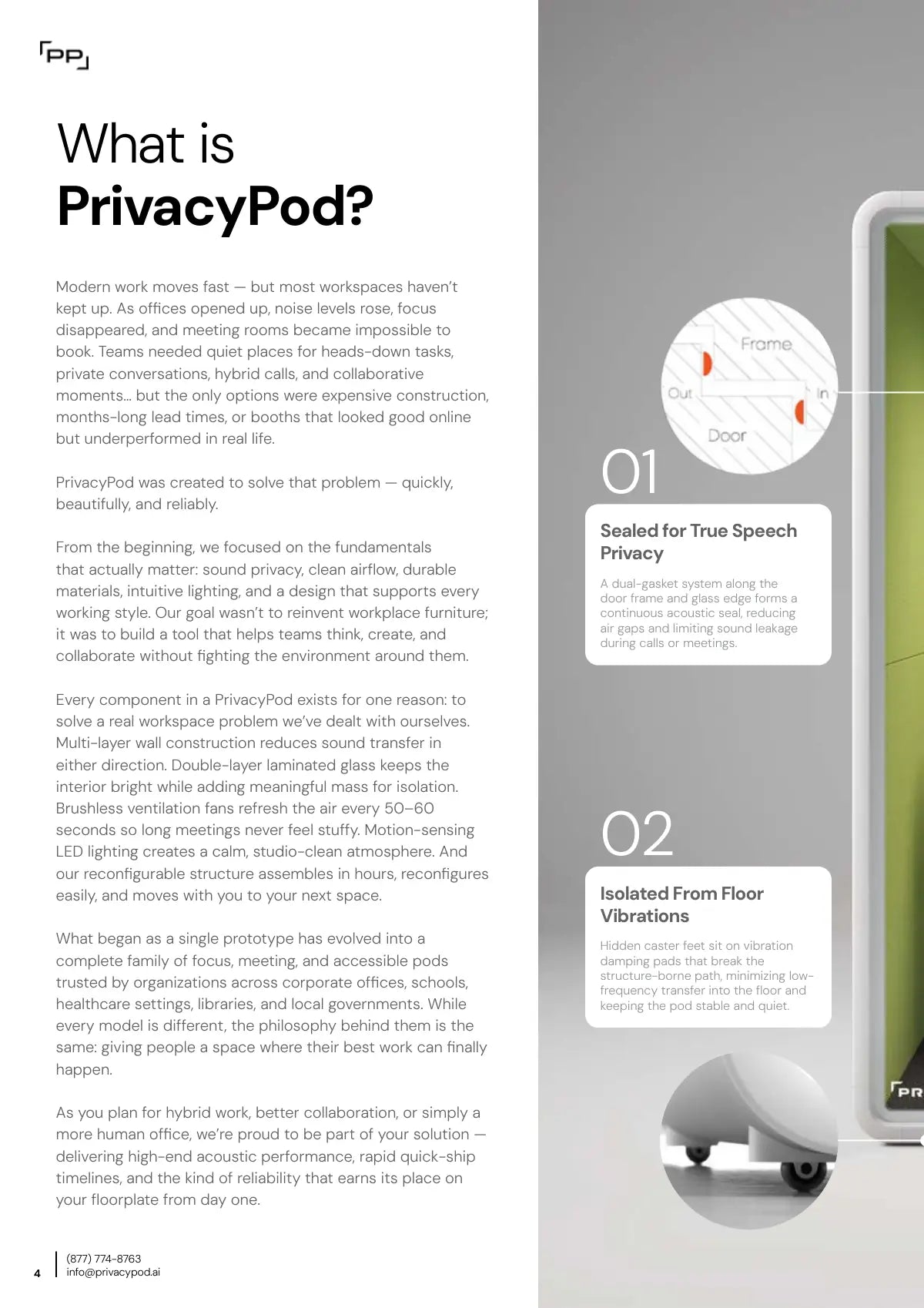
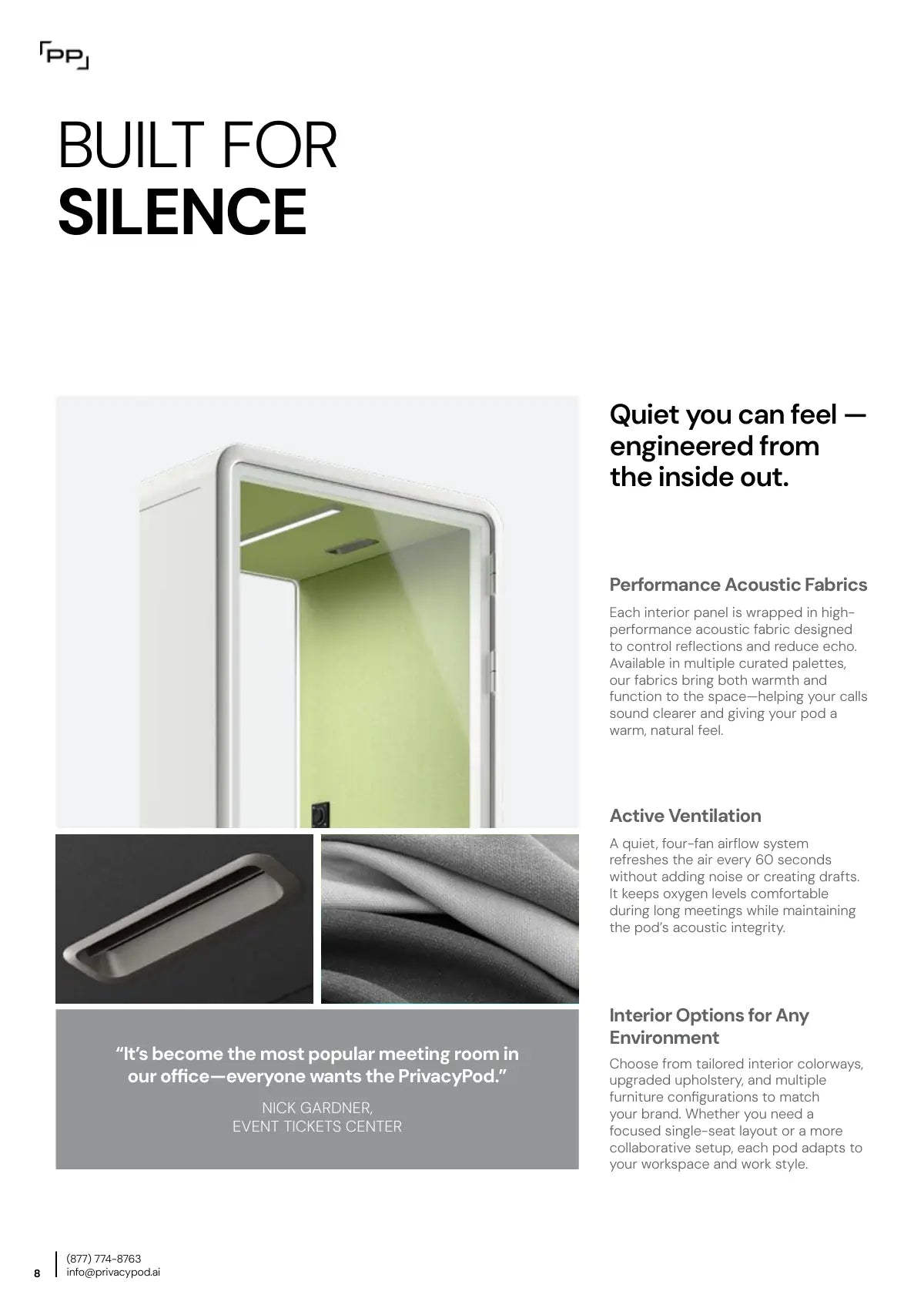
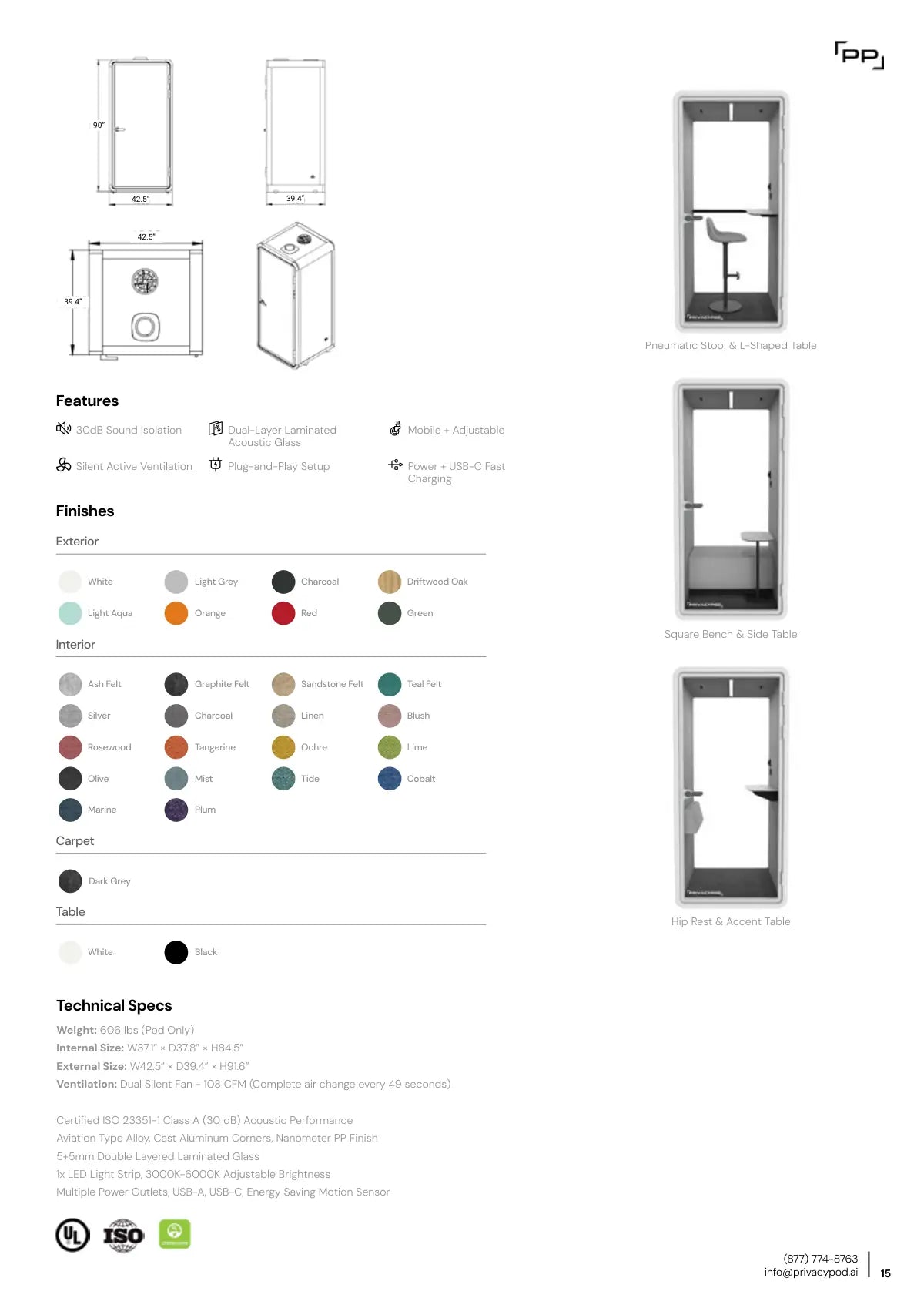
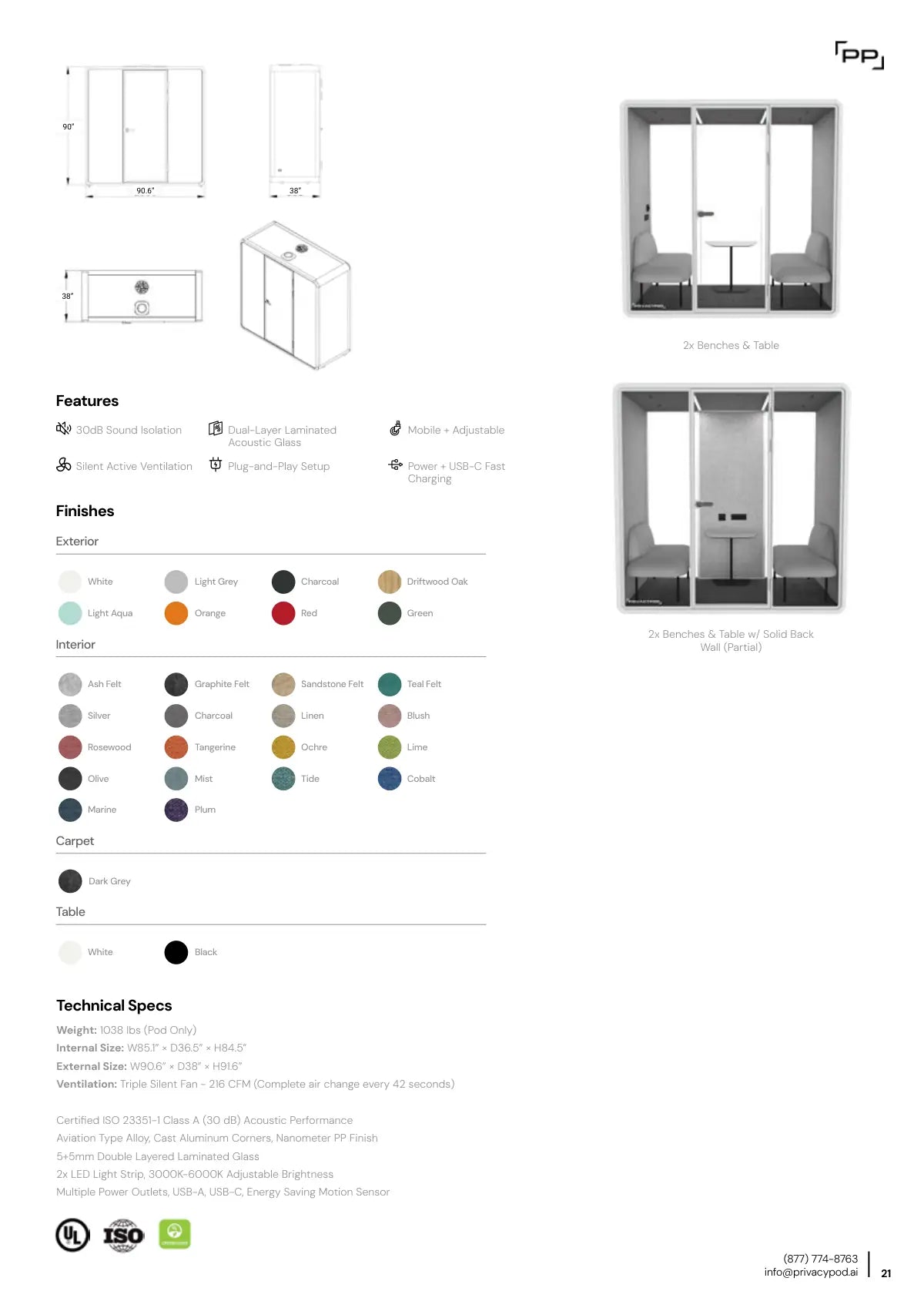
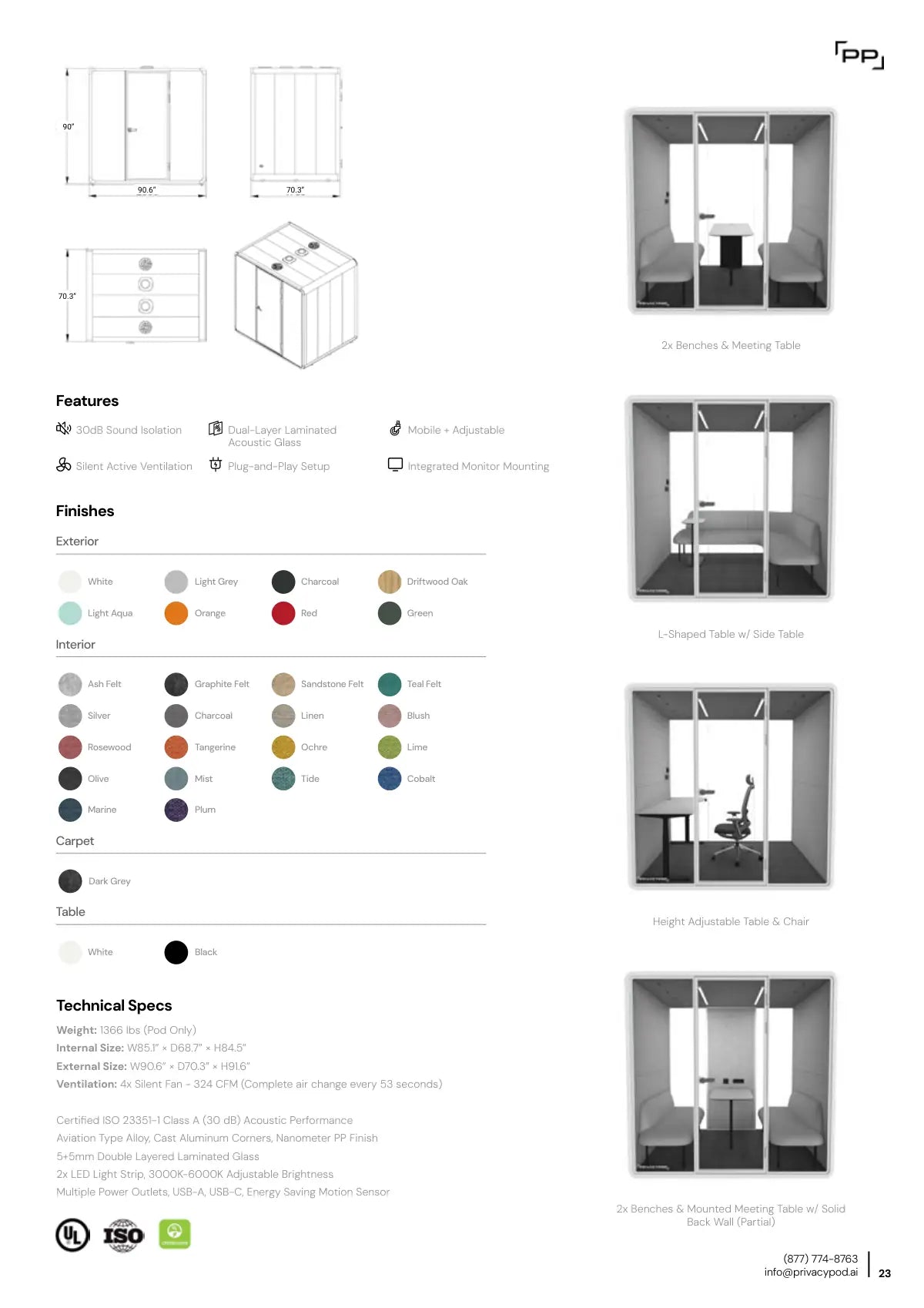
PrivacyPod enclosed pods are ISO 23351-1 Class A certified, approximately 30 dB of speech level reduction, and that is a laboratory result. PrivacyPod publishes no field measurement under ISO 23351-2:2026. A vendor presenting a laboratory class as floor-plate performance is overselling, us included.
Write this. Enclosed pods shall be certified to ISO 23351-1:2020 and shall achieve Class A. The tenderer shall submit the laboratory test report, naming the testing laboratory and the measured speech level reduction in decibels.
Ask this. Is that figure a laboratory result under ISO 23351-1:2020 or a field result under ISO 23351-2:2026, and which laboratory issued the report?
Ventilation: how fast the air has to change
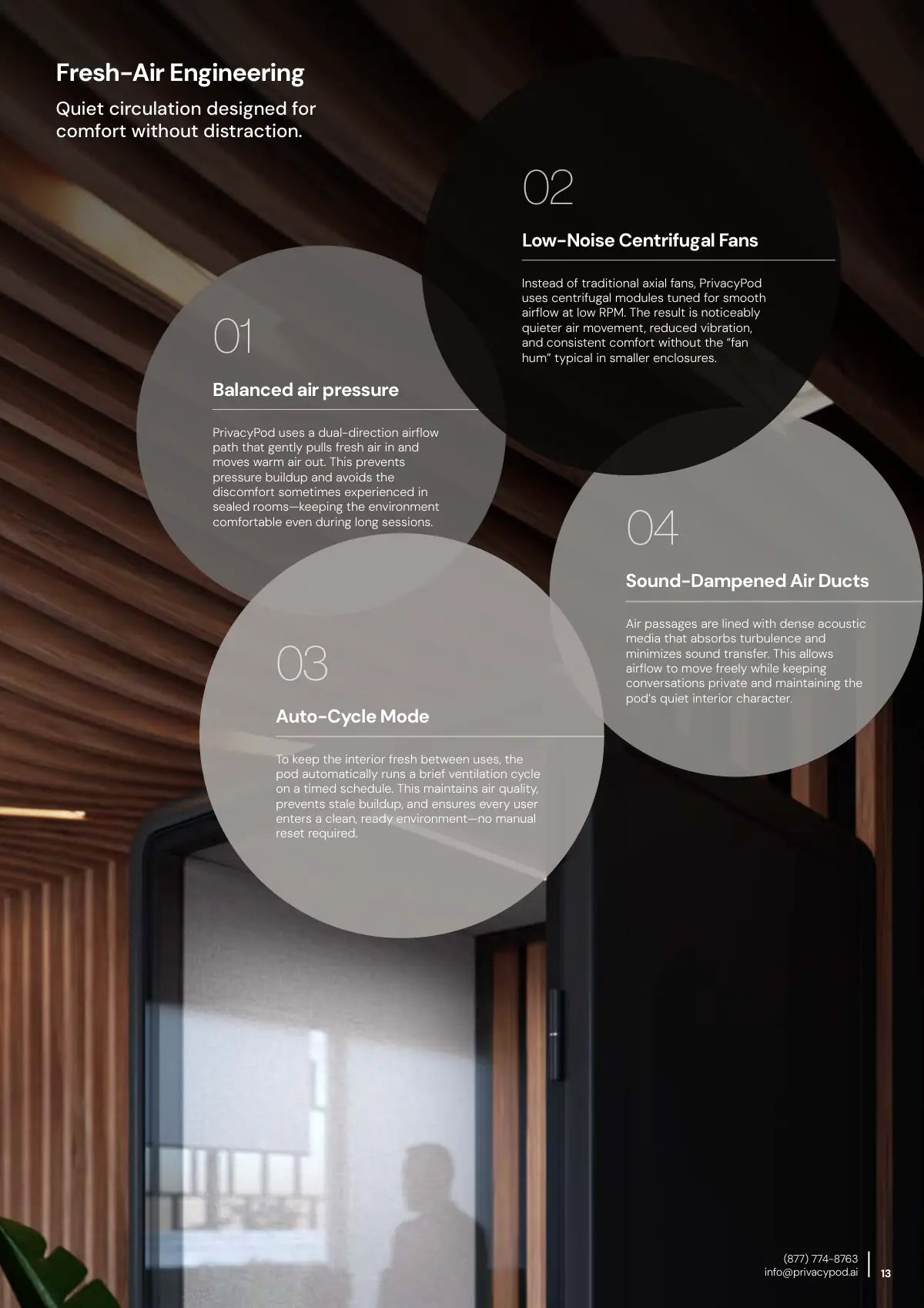
Air change is the one mechanical number a buyer can check without instruments. Require the time to replace the full internal air volume, in seconds, per model.
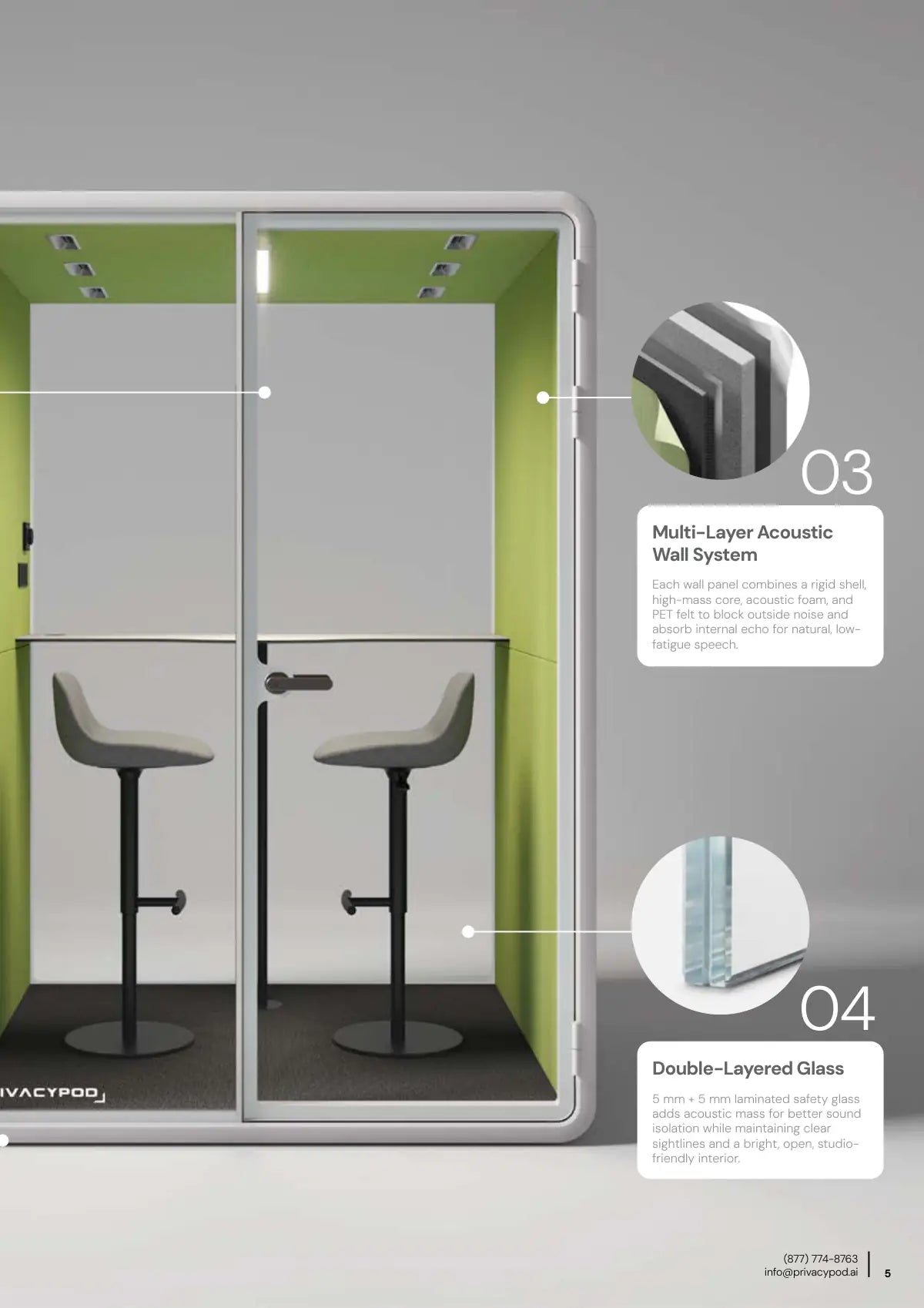
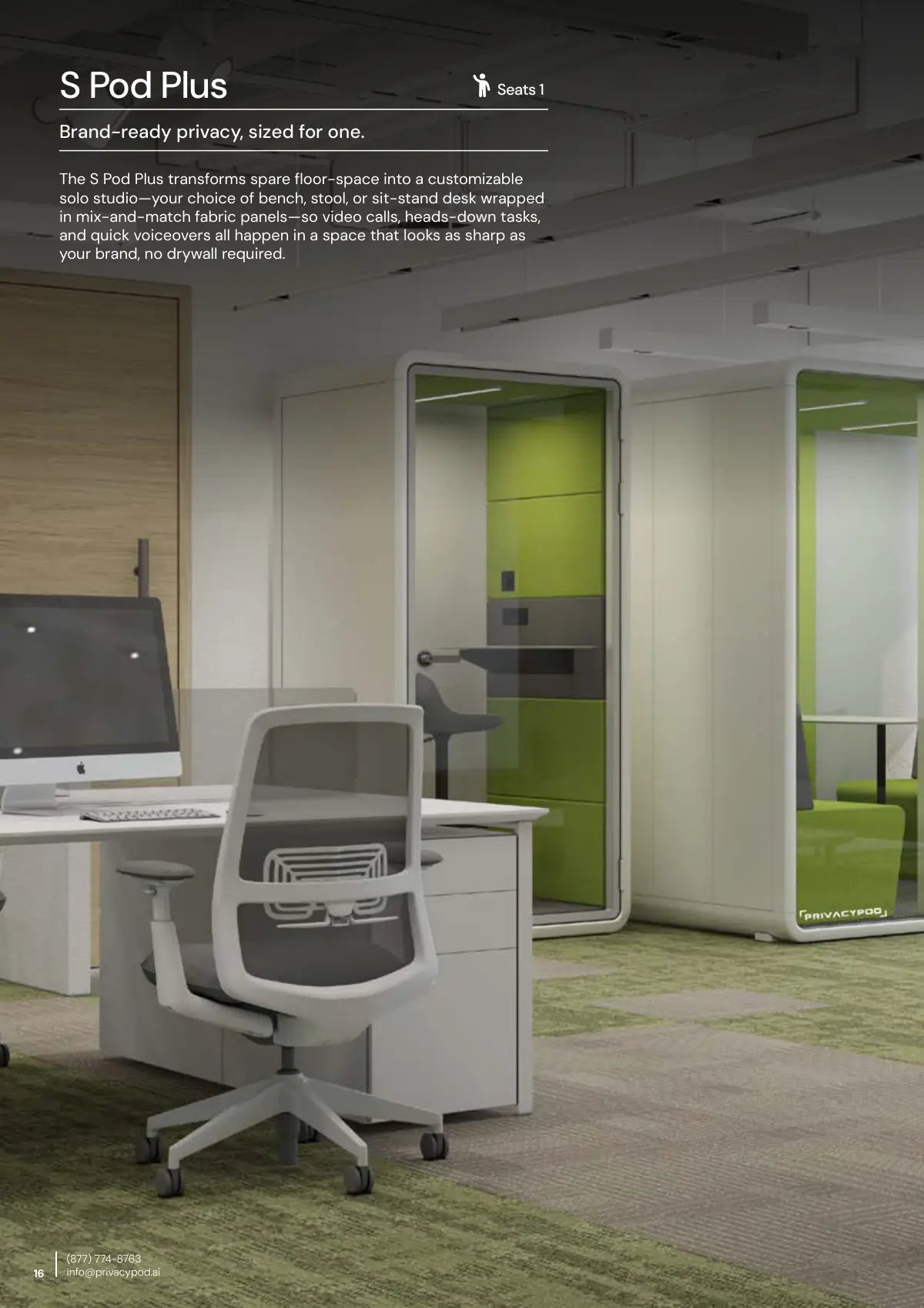
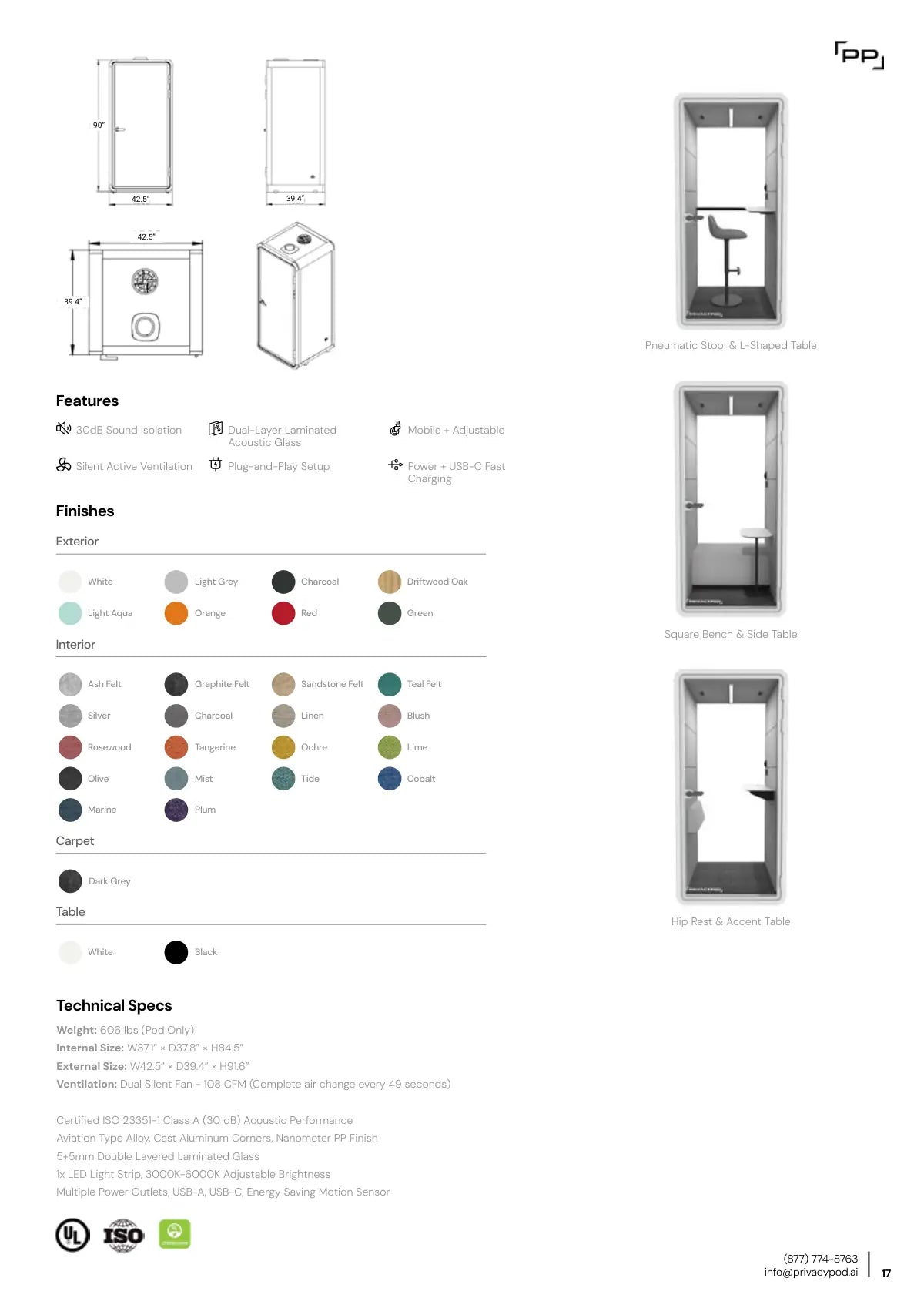
The S Pod, the S Pod Plus and the Arc S Pod each replace their air every 49 seconds. The S Pod phone booth and the Arc S Pod carry the figure on their own pages.
Two follow-ups matter. At what fan setting was the figure taken, and was the acoustic class measured with ventilation running, because a fan that has to be switched off to reach a class is a fan the occupant will switch off too.
One minute per full air change is a reasonable bar to write into the document, and it is your requirement rather than a figure lifted from a code.
Write this. Each pod shall replace its full internal air volume at least once per minute at the normal operating fan setting, stated per model rather than per product range.
Ask this. At what fan setting was the air change figure measured, and was the acoustic class measured with that same fan running?
Electrical and anchorage: what to require
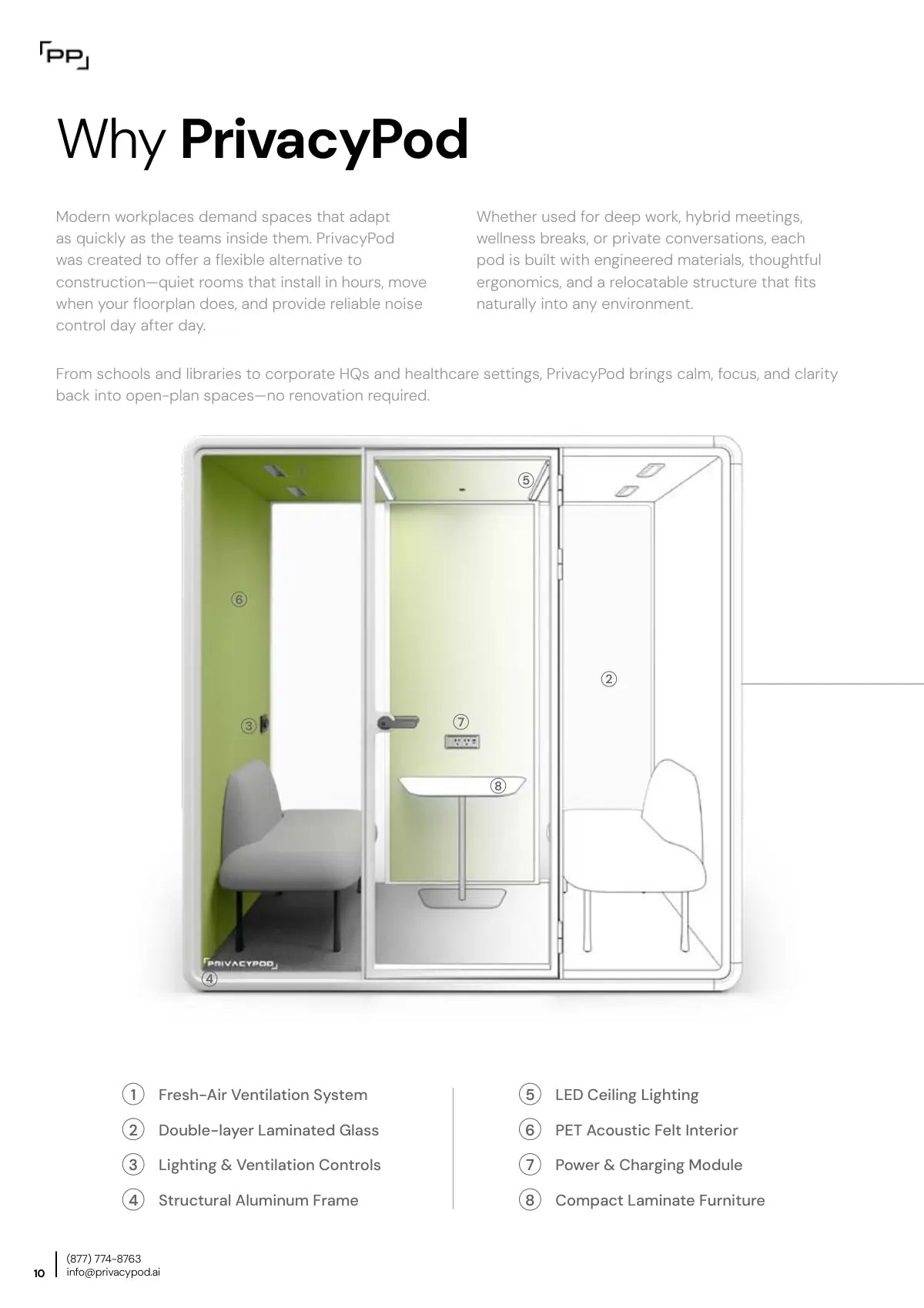
PrivacyPod pods are cord-and-plug, run from a standard 120V receptacle, and are UL Listed (UL 962), the standard for household and commercial furnishings. California's replacement exemption list, which covers school, community college and healthcare work, counts every electrical connection as permanent attachment except a plug into a 110/220V receptacle with a flexible cable, so cord-and-plug lands on a different side of that clause. Clearing one clause is not an exemption; a pod still trips the movable-equipment trigger on weight. The other marks sit in the certifications these pods hold.
A PrivacyPod is held down by a fork bracket whose tines close around the pod's leveling foot and fasten to the floor, which is positive attachment rather than ballast or a tether. The method is not the design. On California school work the code puts nonstructural anchorage on the design professional in responsible charge and requires the detail on the drawings.
Write this. Pods shall be supplied cord-and-plug for connection to a standard 120V receptacle and shall be UL Listed (UL 962). Floor anchorage shall be positive attachment to the structure, designed by the design professional in responsible charge and detailed on the drawings.
Ask this. Is the pod cord-and-plug or hard-wired, what is the UL file number, and what exactly does the floor bracket capture?
Fire suppression: which footprint number decides
No single national threshold exists. Three authorities set three different tests, so this clause names the test, not the answer.
NFPA 13, 2022 edition, Section 9.2.10 exempts small isolated temporarily occupied enclosures under 24 square feet that do not extend to the ceiling and hold no storage. UFC 3-600-01 Section 4-41 requires a sprinkler inside at 25 square feet or more with an enclosed ceiling. Seattle Fire Administrative Rule 9.03 exempts a booth only where it measures 4 ft or less in both length and width and stands at least 6 in clear of adjacent booths and walls.
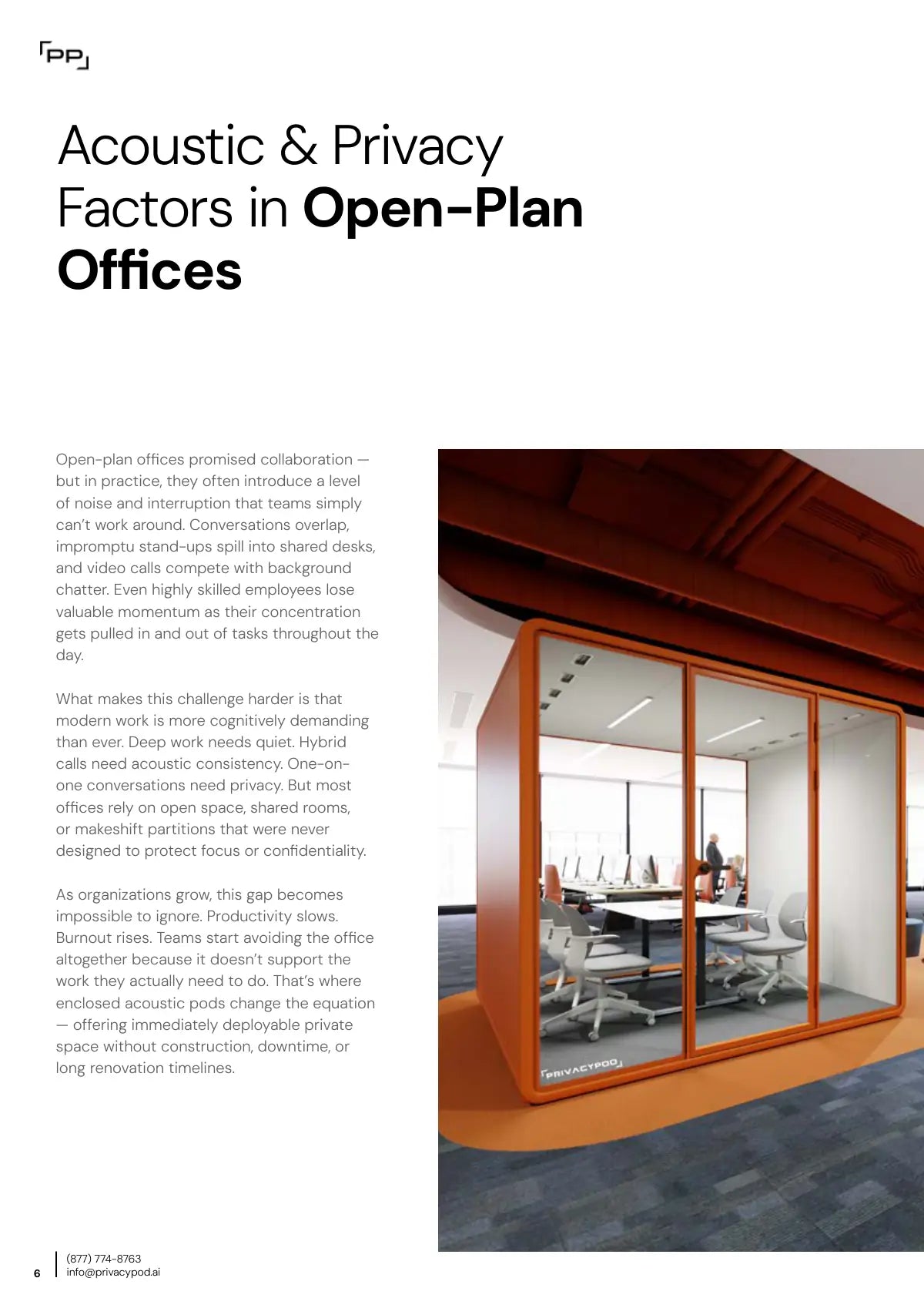
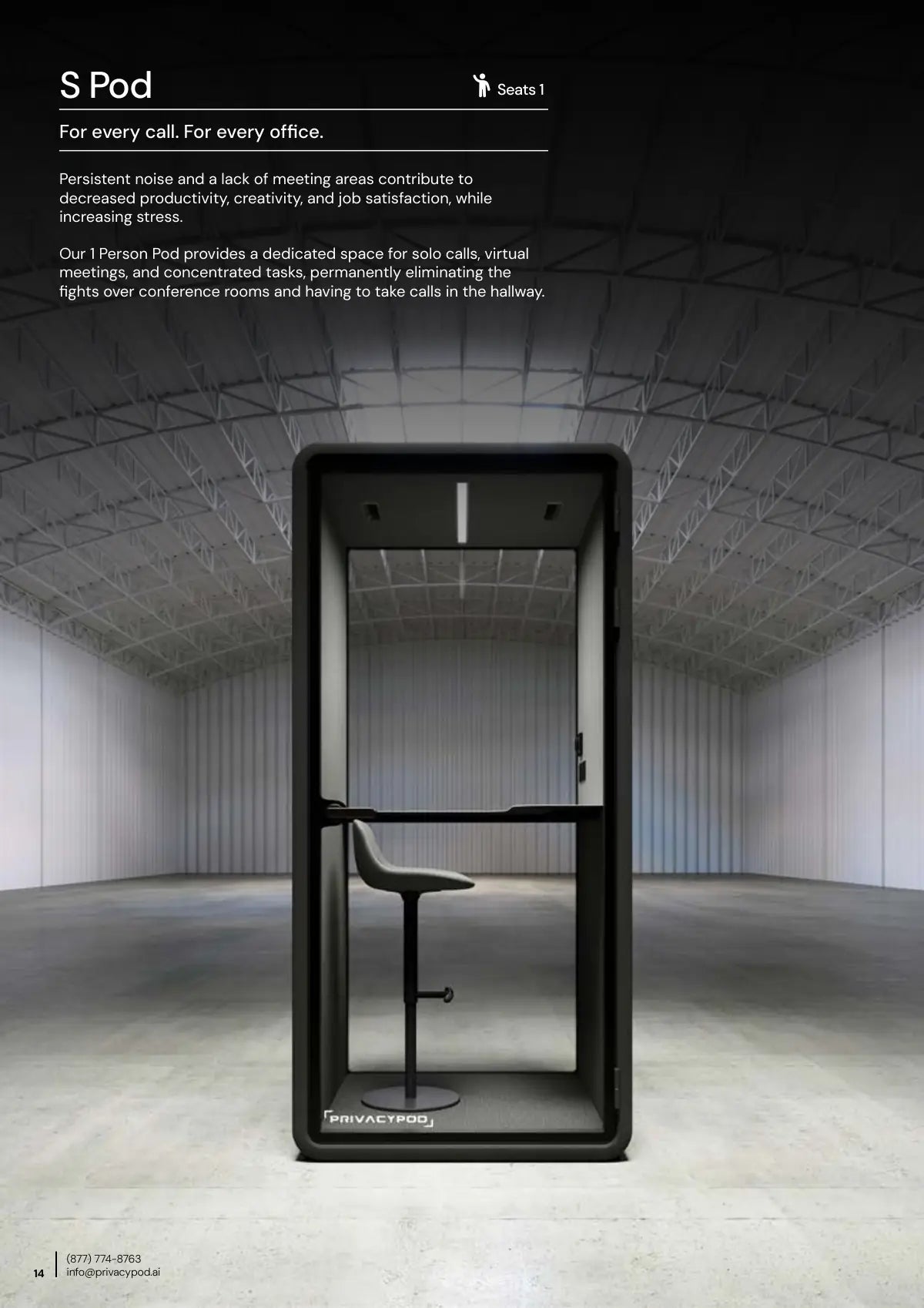
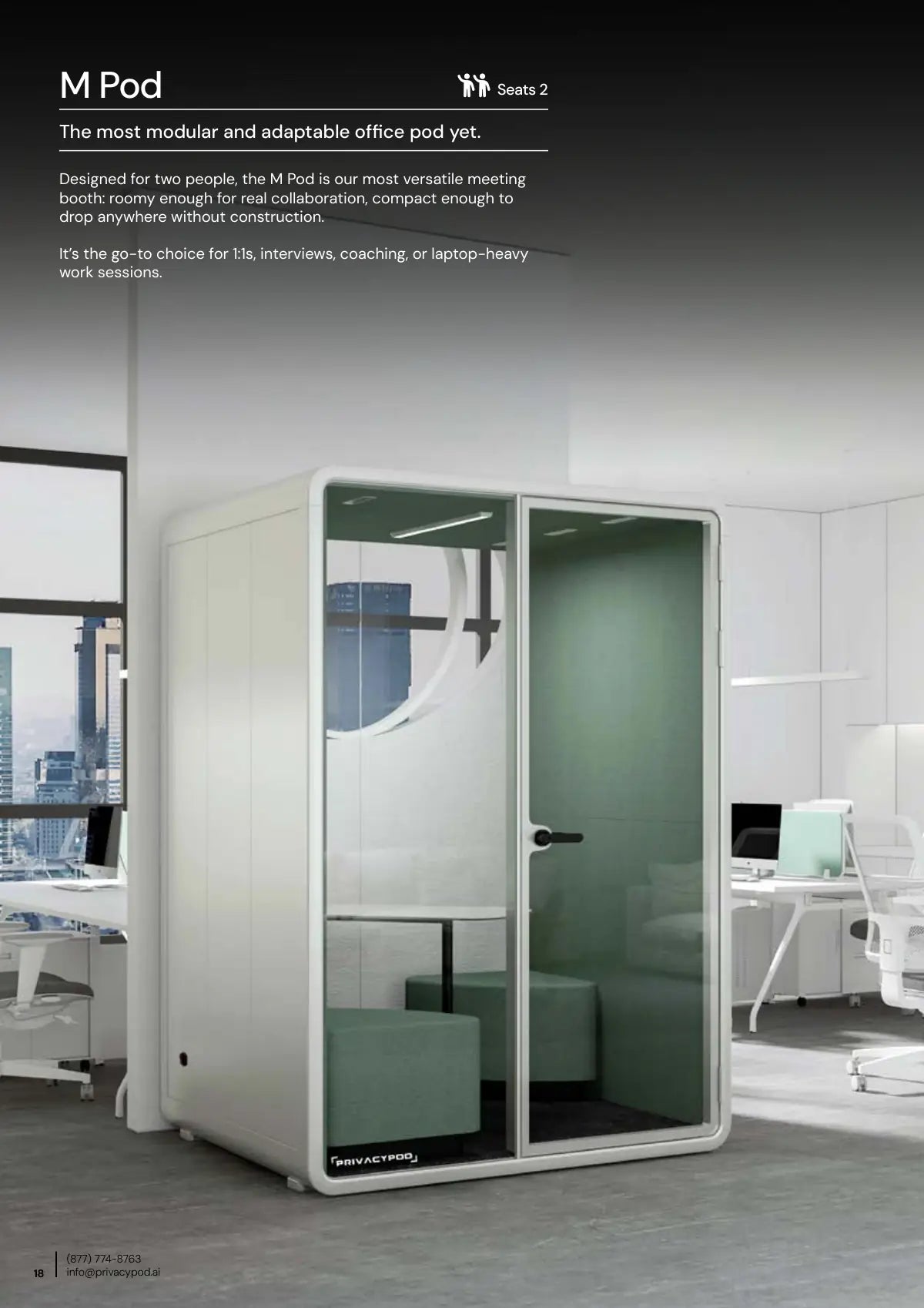
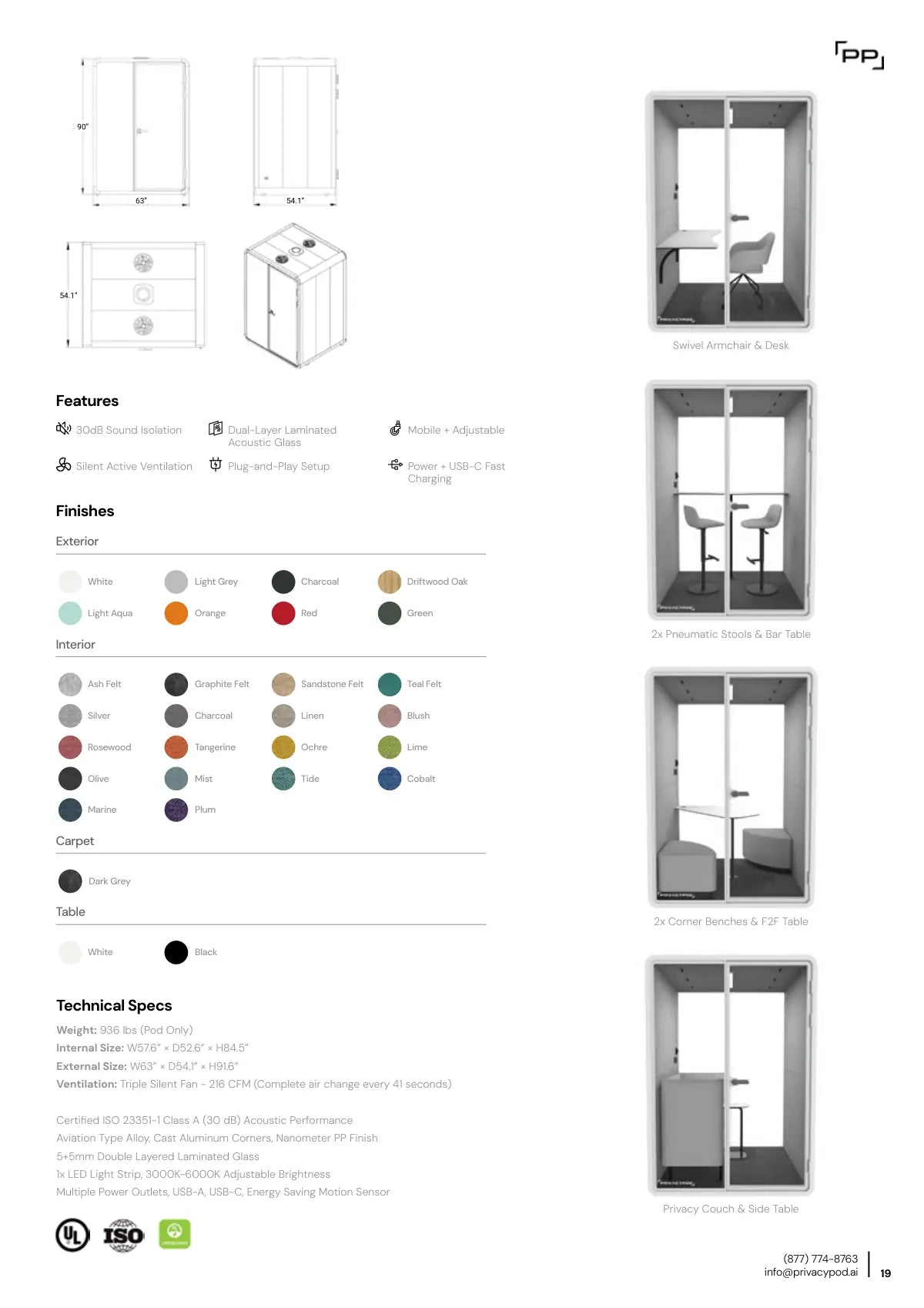
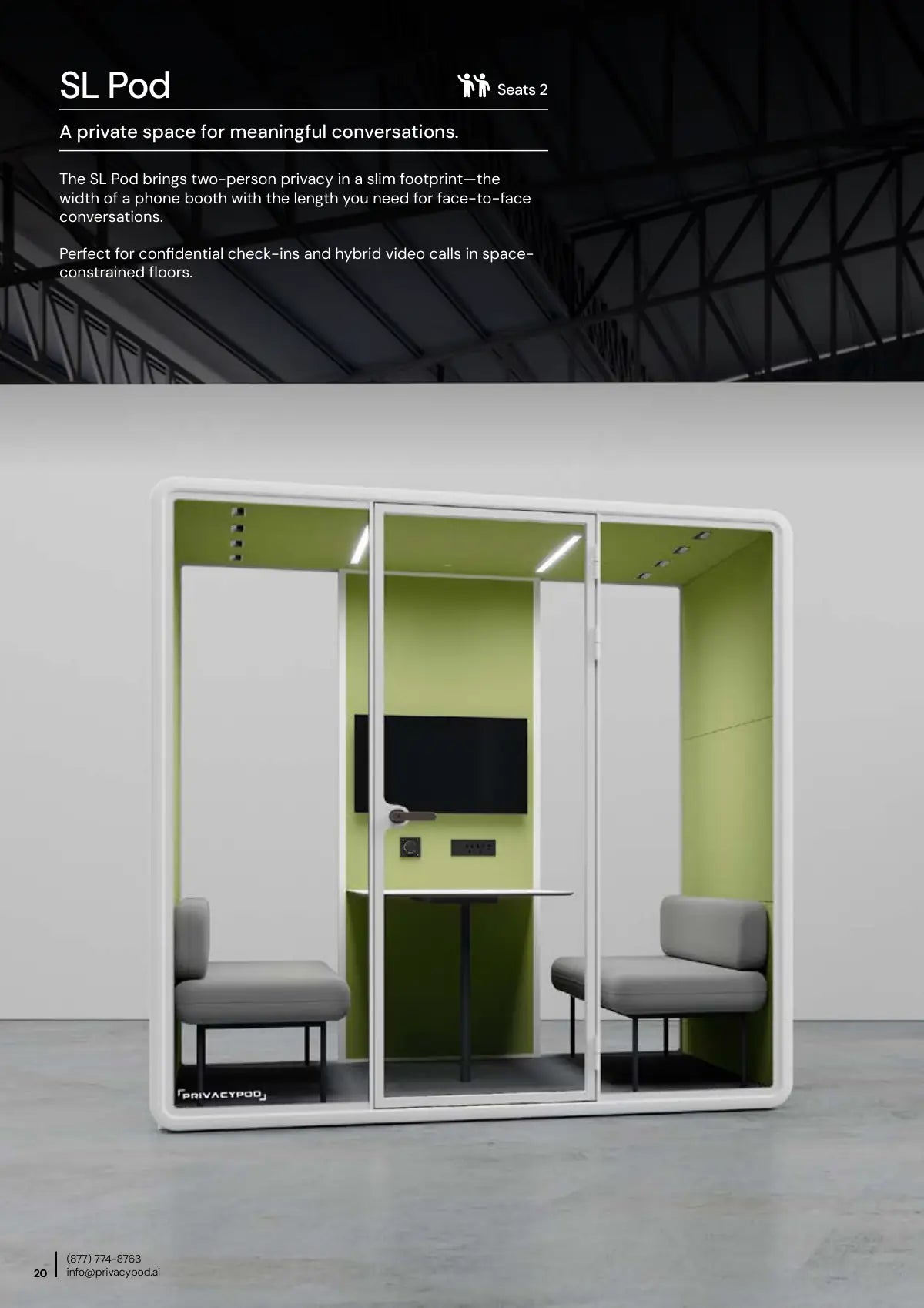
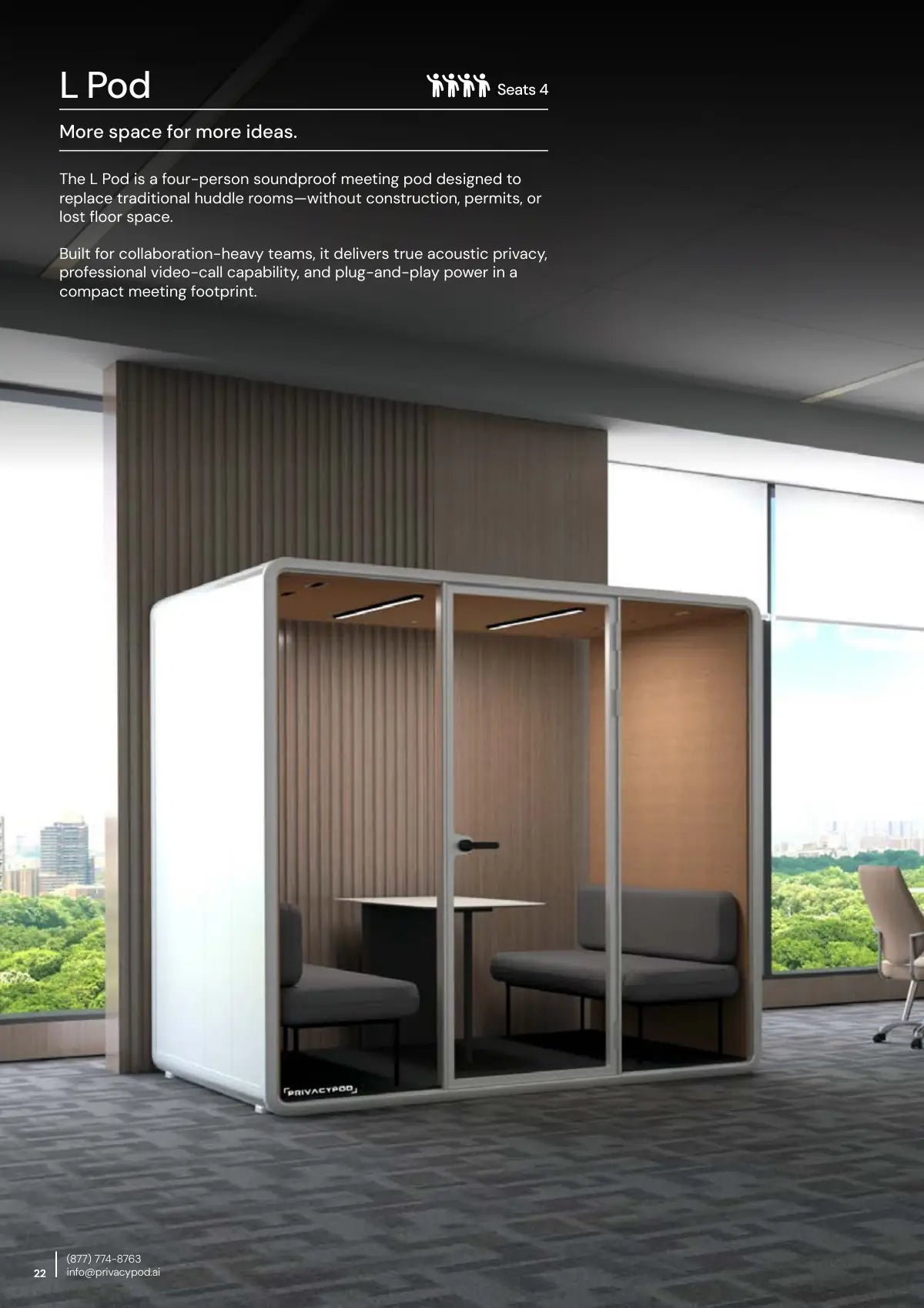
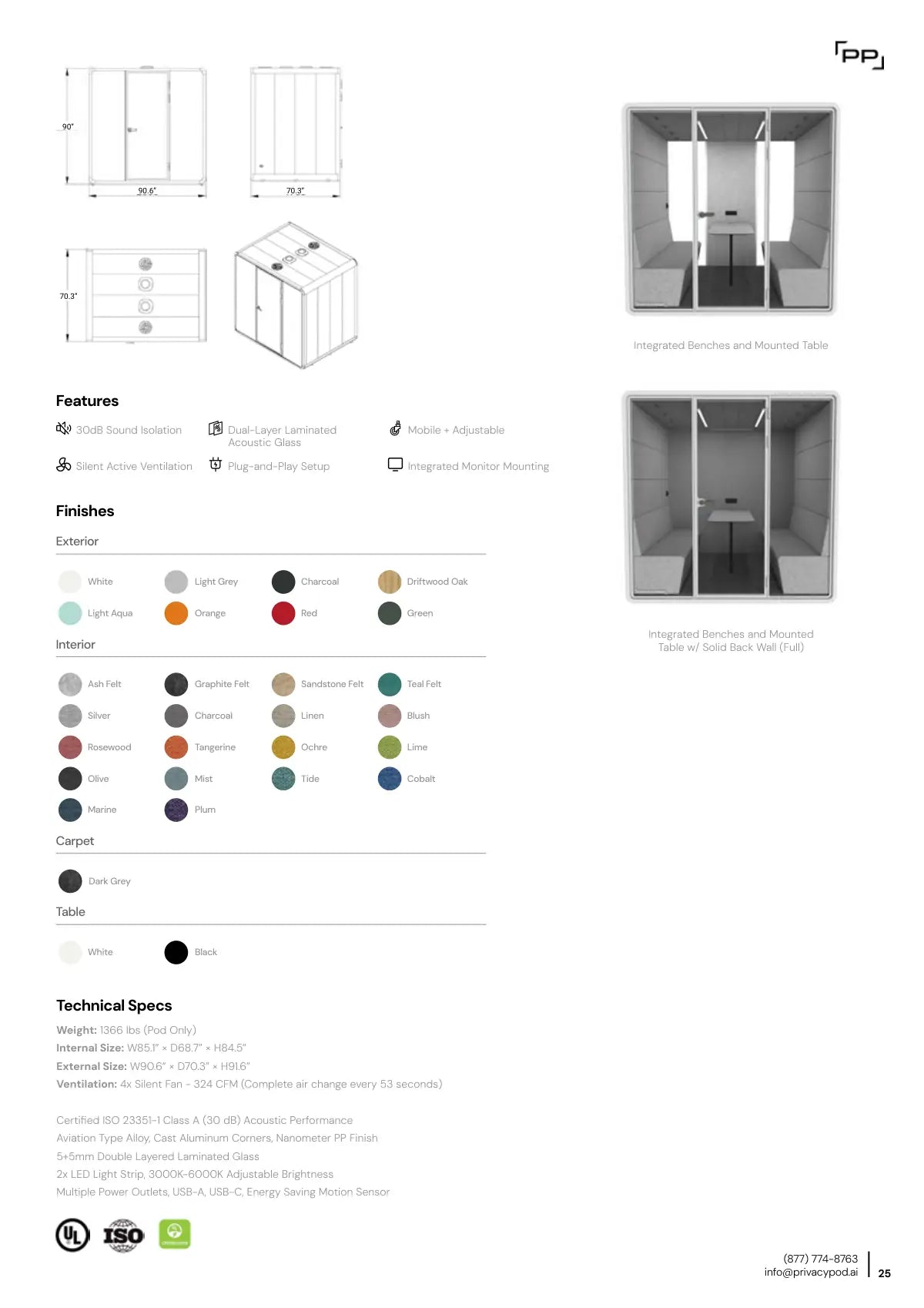
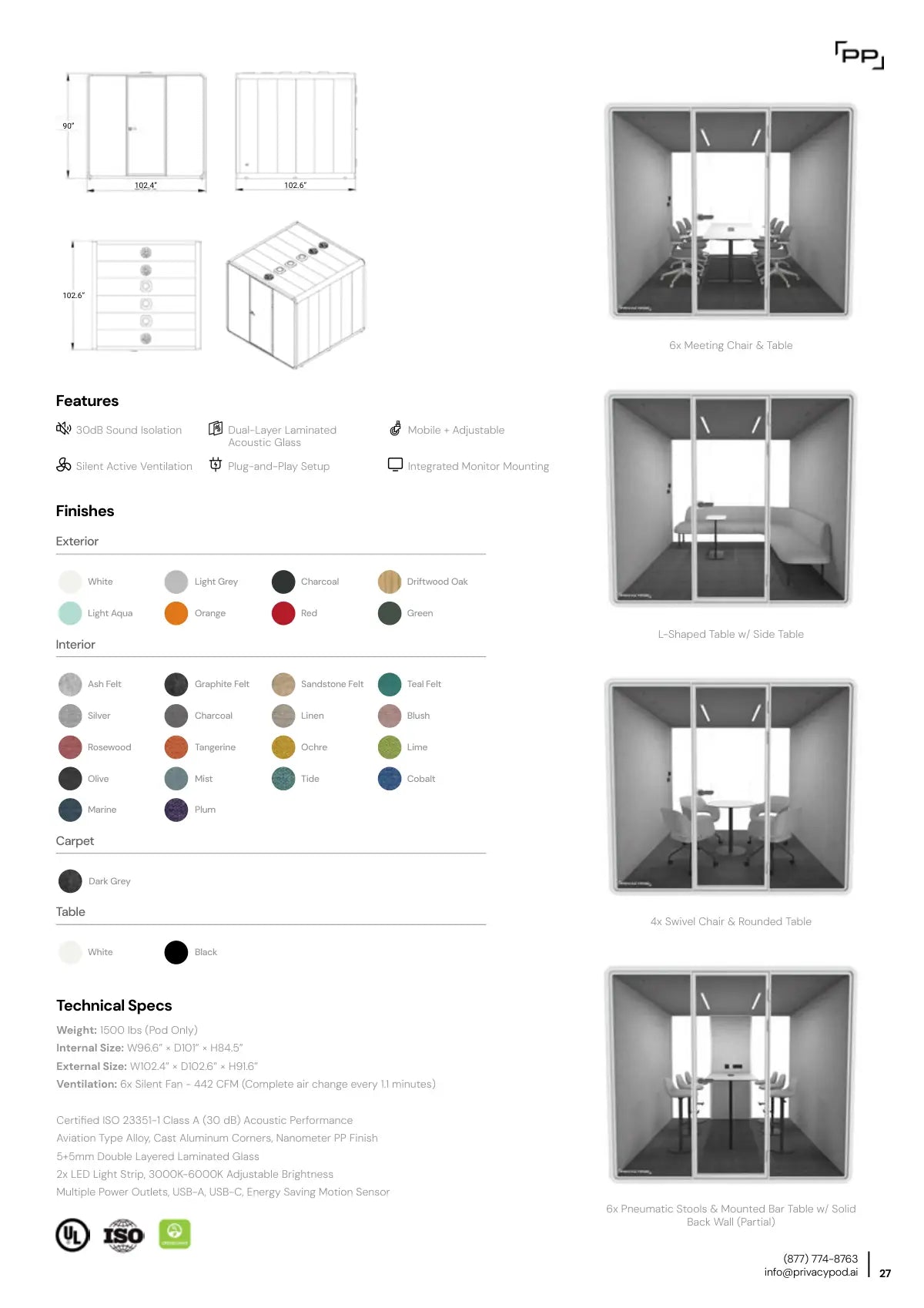
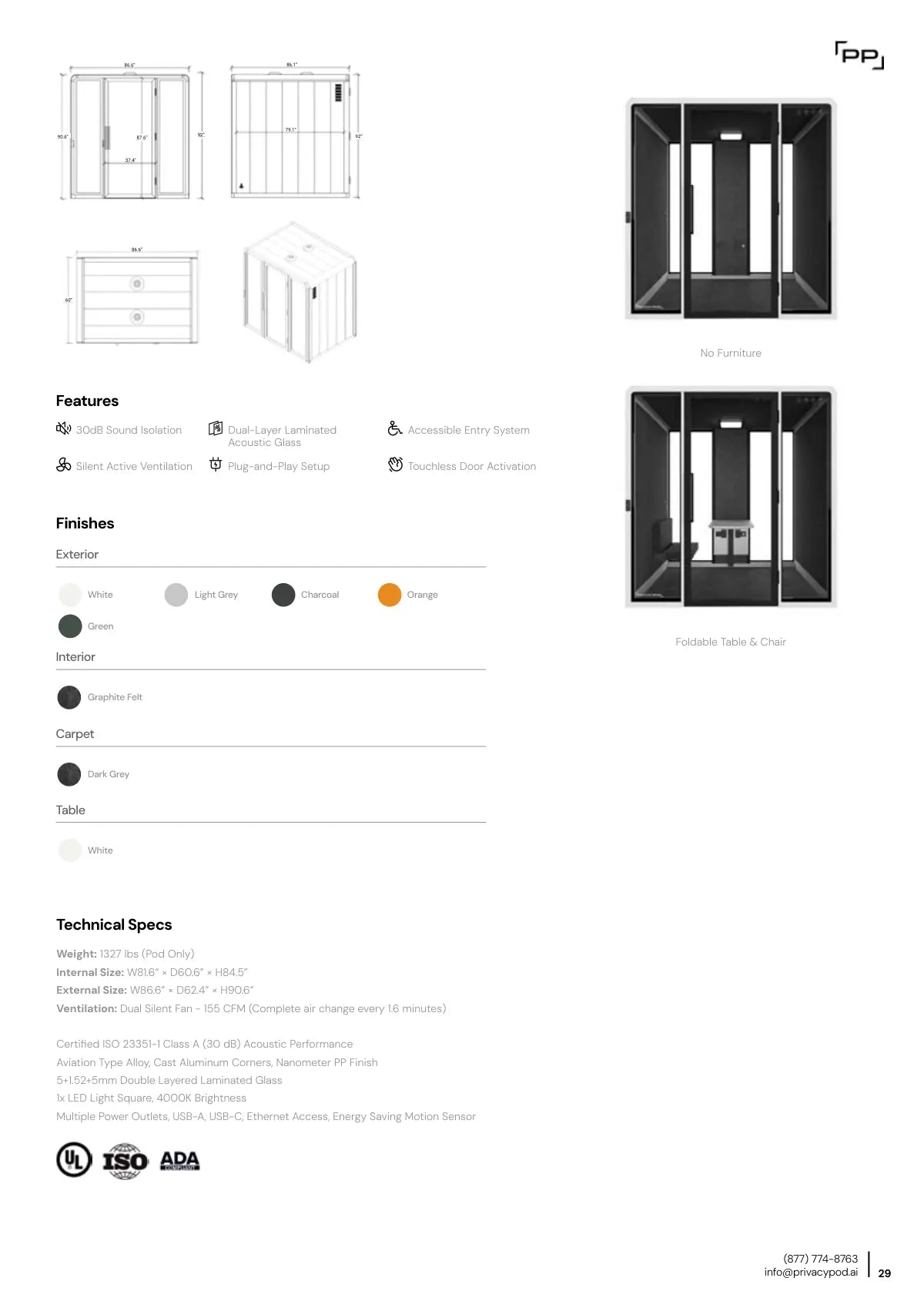
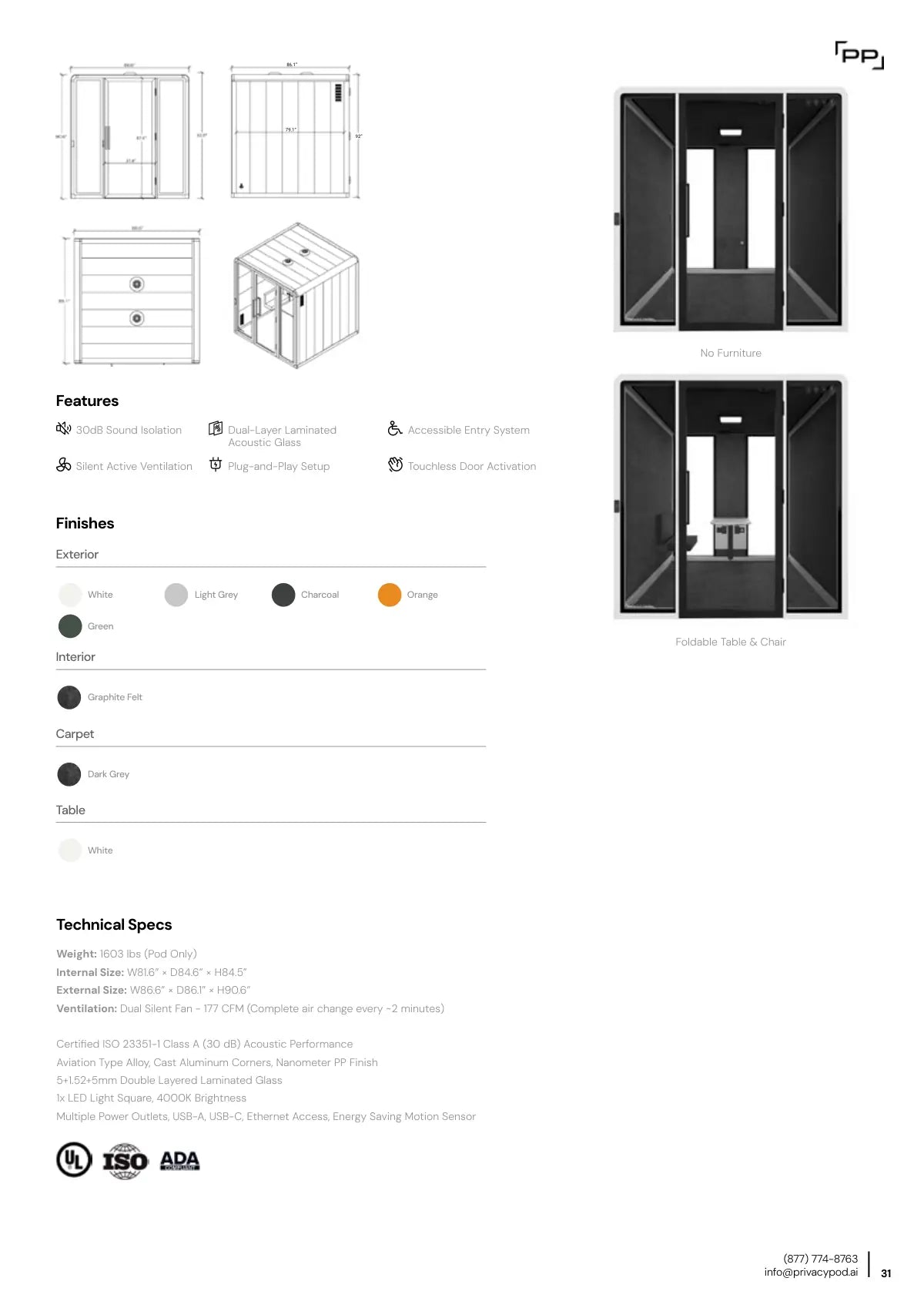
Measure the exterior silhouette, not the inside; UFC 3-600-01 names that test. PrivacyPod exterior footprints start at 3.5 by 3.3 ft on the S Pod and reach 8.5 by 8.6 ft on the XL Pod, with the 2-person M Pod at 5.3 by 4.5 ft and the 4-person L Pod at 7.6 by 5.9 ft, across the enclosed pod range. Published footprints round to 0.1 ft, so a model near 24 square feet sits inside the rounding and PrivacyPod claims no exemption.
UFC 3-600-01 also treats pods closer than 4 ft apart as one group, and a group over 75 square feet takes a sprinkler in every pod. Six one-person pods in a row at that spacing come to roughly 69 square feet and clear it; seven come to roughly 81 and do not. That is a floor plan decision, not a product decision.
Write this. Sprinkler provision shall be assessed from the exterior footprint in square feet and confirmed with the authority having jurisdiction. Pods installed closer than 4 ft apart shall be assessed as a single group.
Ask this. What is the exterior footprint in square feet, and what is the closest spacing you recommend between two pods?
Lighting: what to require at the wall
Two things get blurred into one line in most quotes: how the light comes on, and what color it is.
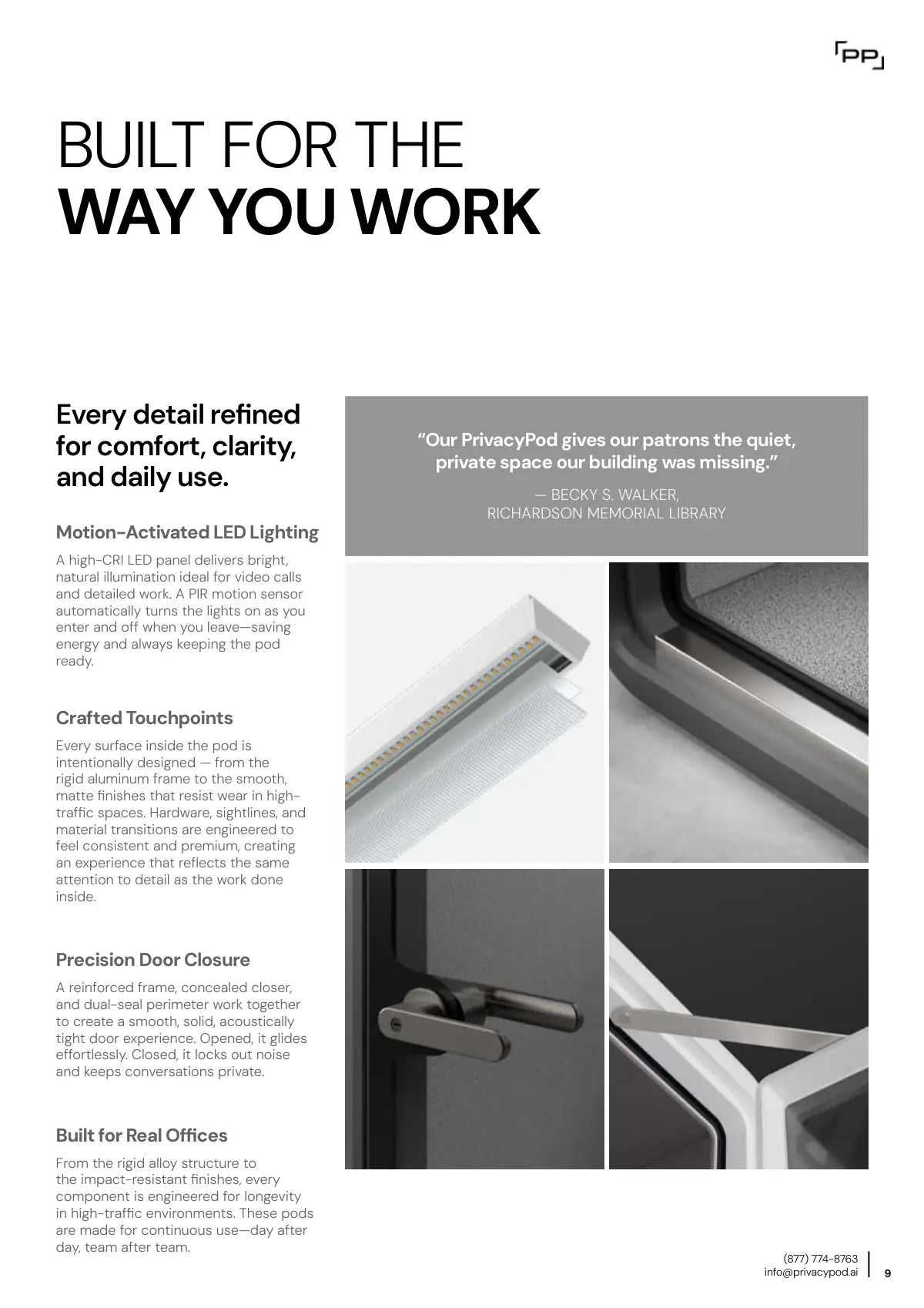
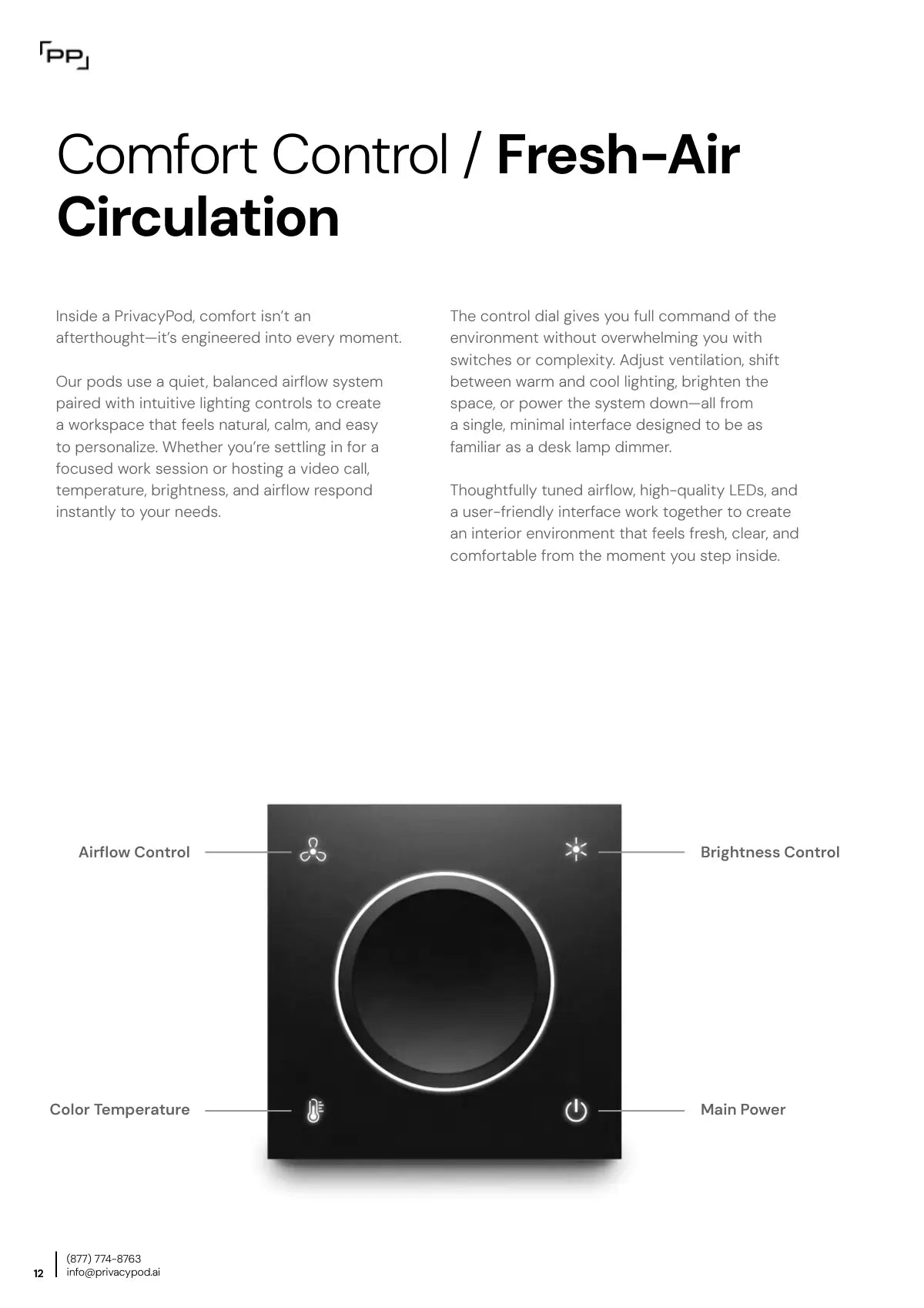
In a PrivacyPod, motion inside the pod wakes the ceiling lighting, and a wall dial tunes color temperature anywhere from 3000 K to 6000 K. A pod fixed at 6000 K reads as a walk-in cooler in a warm lit office, and fixed at 3000 K it is wrong for a video call.
So require a range rather than a value, with the control inside the pod within reach of the occupant. A color temperature only facilities can change is a specification that gets quietly ignored within a month.
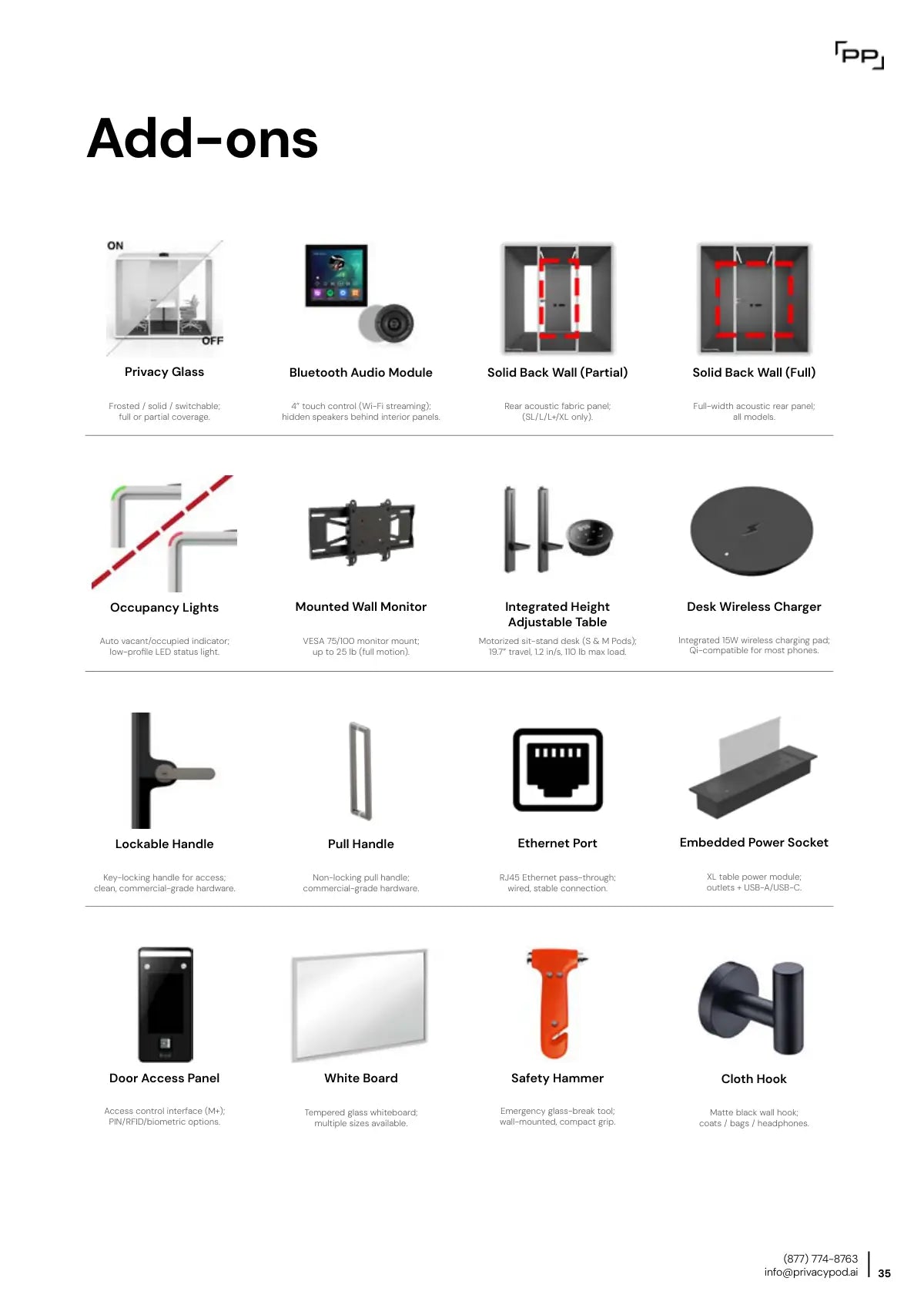
An occupancy indicator visible from the corridor belongs here too.
Write this. Pod lighting shall switch on from occupancy detection inside the pod, and the occupant shall be able to set color temperature across at least 3000 K to 6000 K from a control inside the pod, without tools, an app or a facilities request. An occupancy indicator shall be visible from outside the pod.
Ask this. Can the person sitting in the pod change the color temperature themselves, and across what Kelvin range?
Warranty and lead time: what to hold a vendor to
Require the warranty term in years and the written document with the bid. A PrivacyPod carries a 3-year limited warranty, and the text sits on the PrivacyPod warranty page.
Ask whether the electrical, the fan, the glass and the seat run as long as the enclosure, whether labor is included, and whether the clock starts at delivery or at invoice.
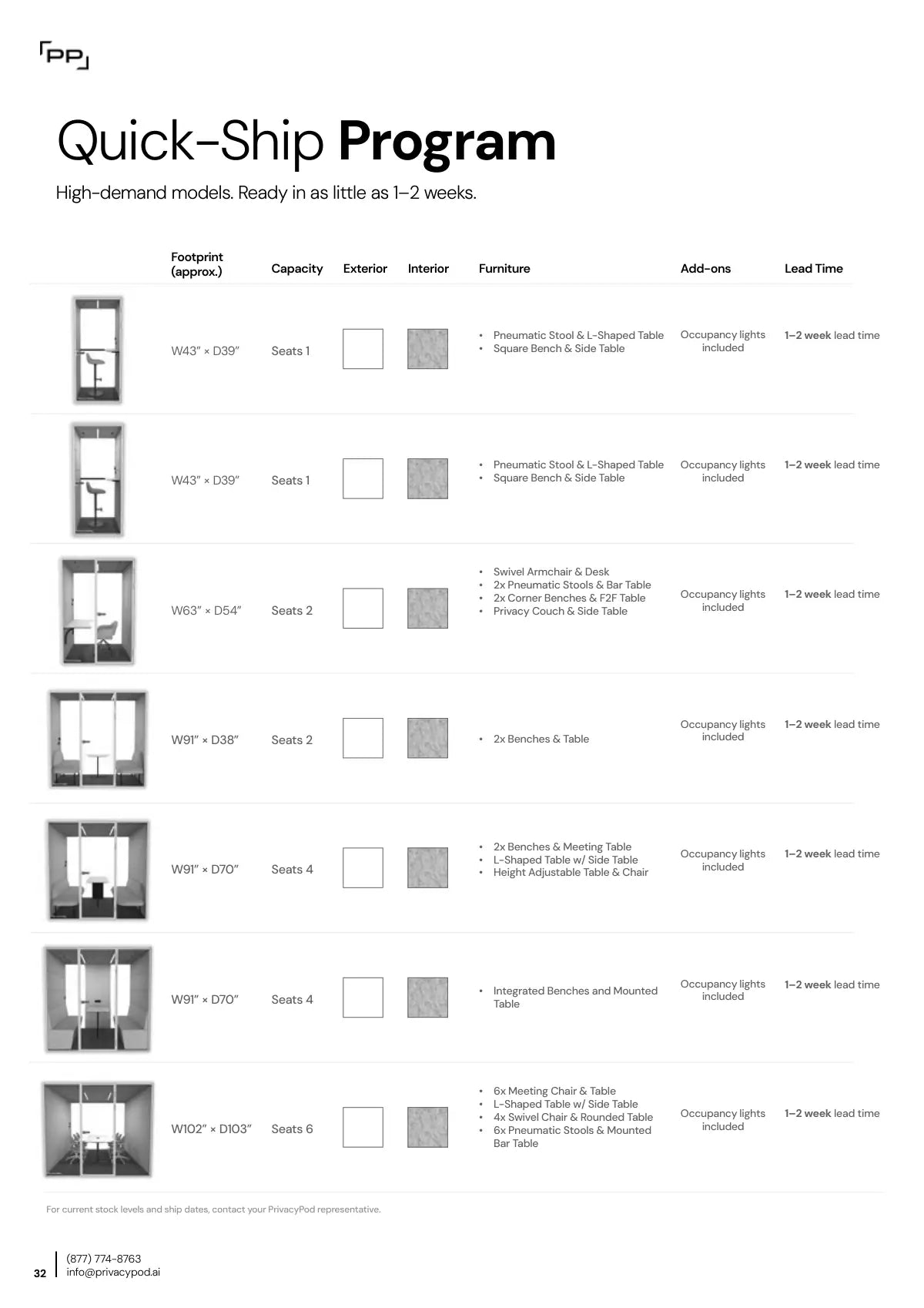
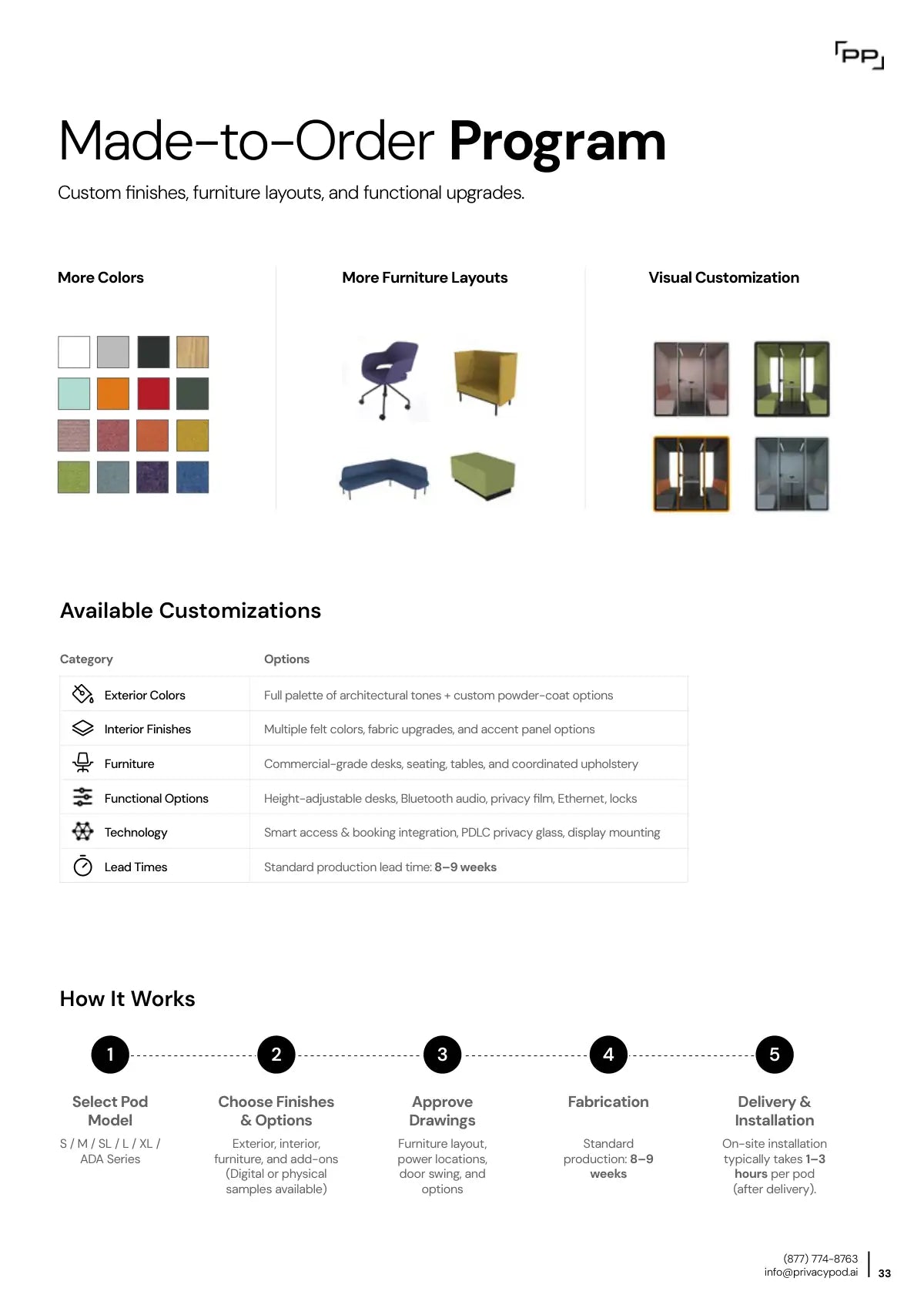
Require lead time in weeks from the purchase order, split between stocked and made-to-order configurations. PrivacyPod Quick-Ship models ship in 1 to 2 weeks and made-to-order builds run 9 to 11 weeks, and shipping is free on every order.
If a specification is being drafted now, send it to the PrivacyPod team and have it answered clause by clause.
Write this. The tenderer shall state the warranty term in years, supply the written warranty document with the bid, and state lead time in weeks from purchase order, separately for stocked and made-to-order configurations.
Ask this. Does the lead time run from the purchase order or from the deposit clearing, and what does the warranty cover in year three that it covers in year one?
Filed under Acoustics & certification
Back to the blog