The short version
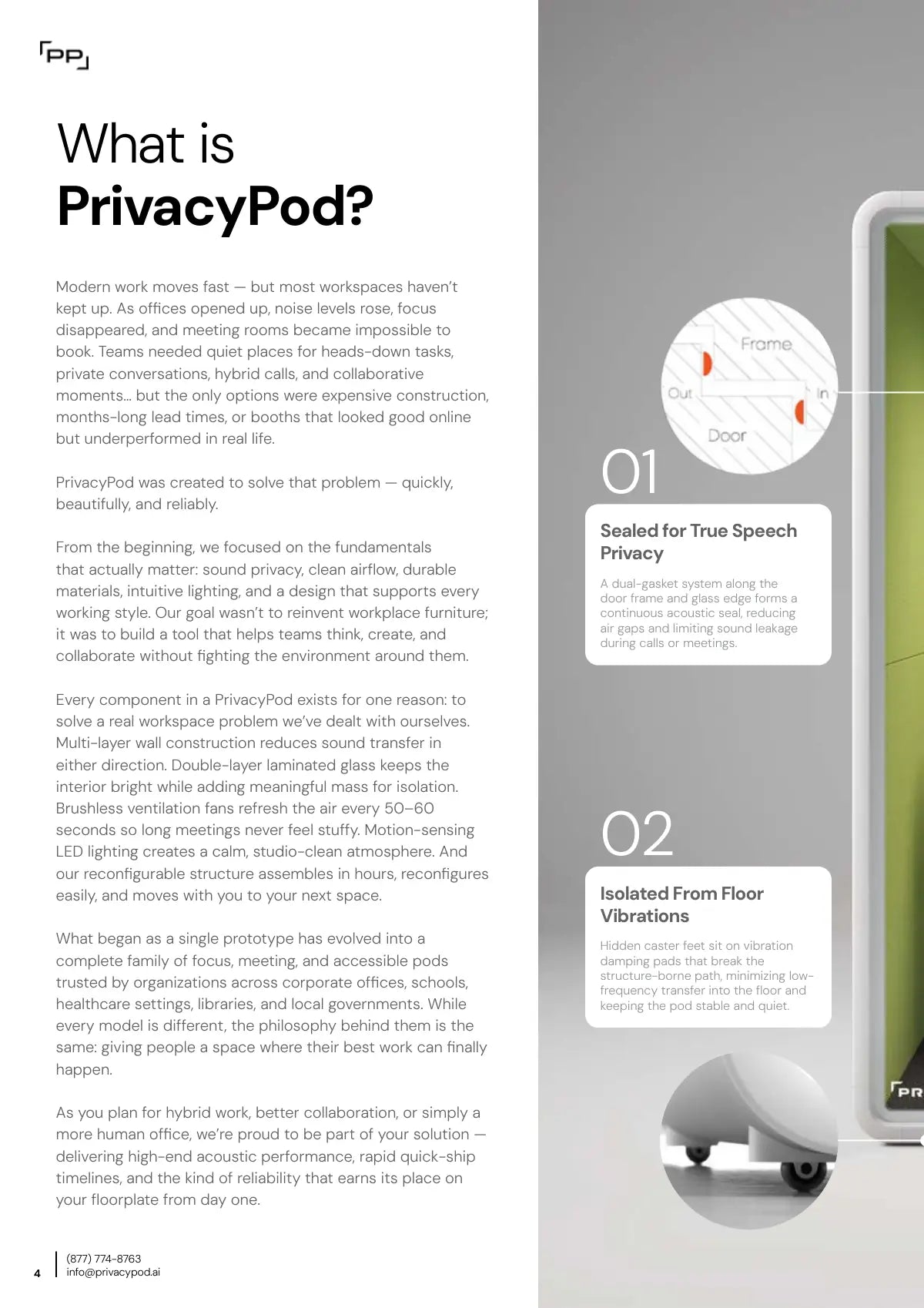
Acoustic office solutions do one of four jobs. Absorb echo with panels and baffles, block the sound path with doors and pods, cover speech with masking, or separate loud work from quiet work.
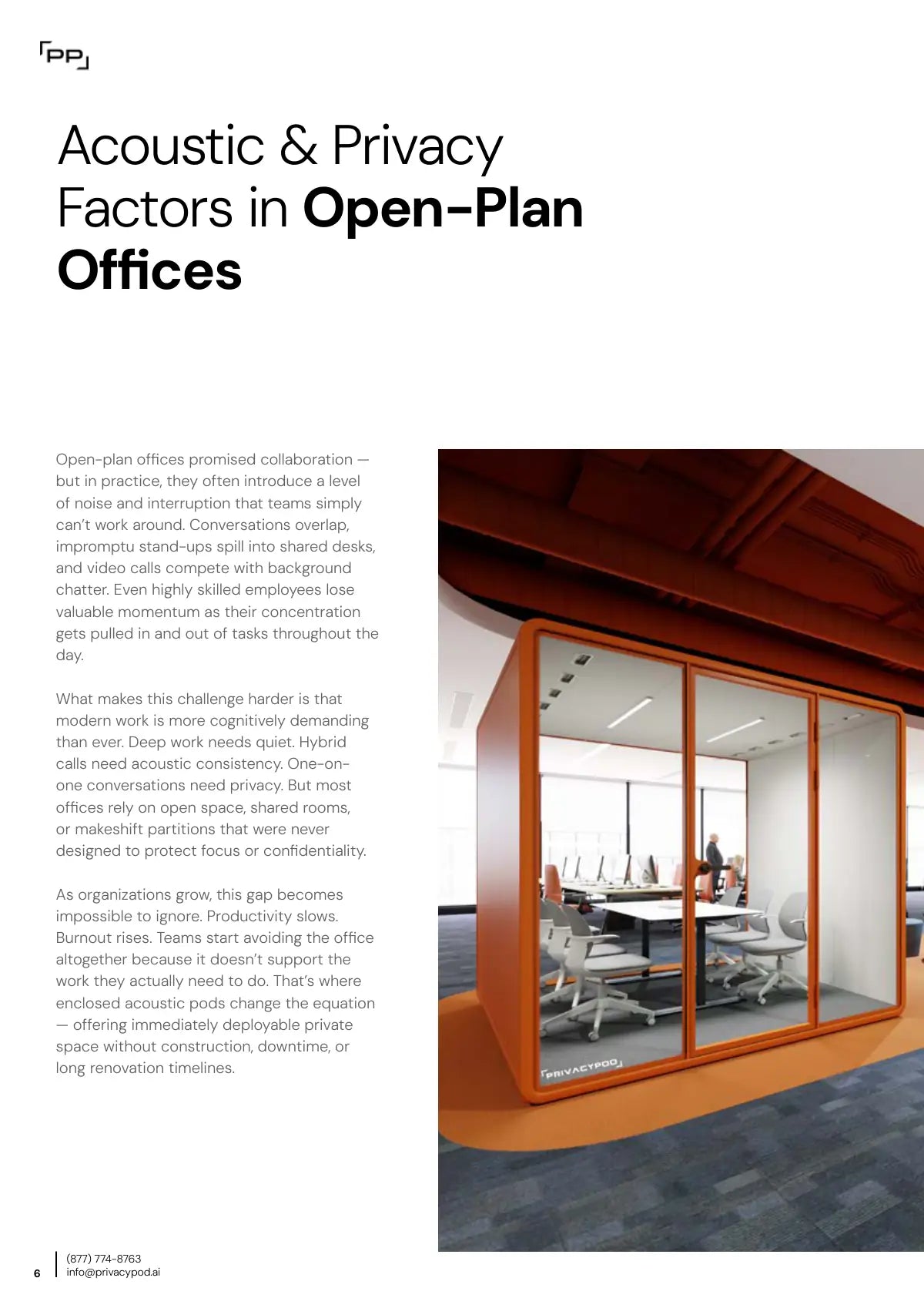
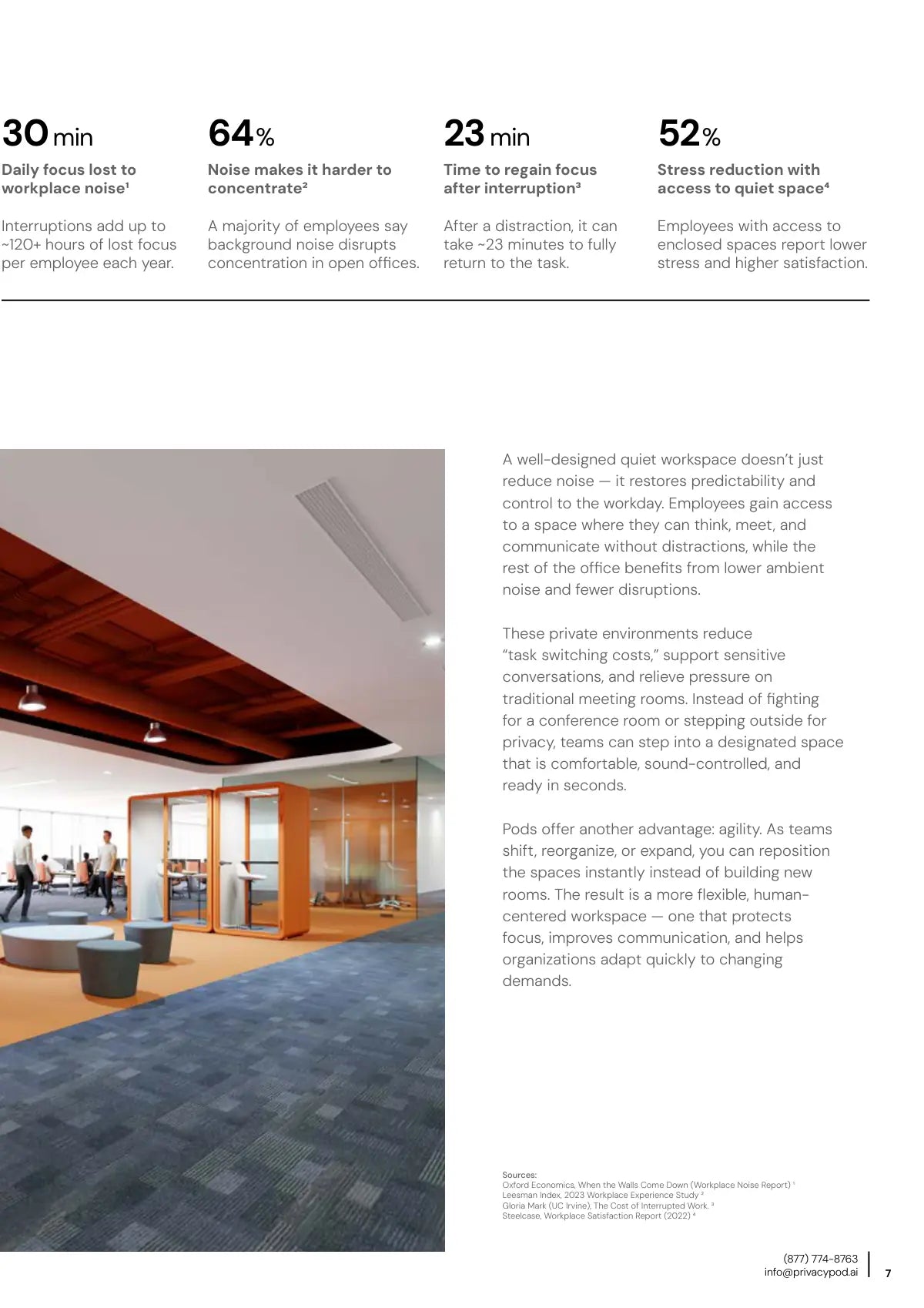
Open offices are loud because speech crosses the floor, and soft surfaces do not stop it. Only blocking keeps a call private, and a pod adds that block with no building work.
Why are open offices so loud?
Hard floors, glass and open ceilings let every voice travel. In a 2023 study of 617 office buildings, acoustics was the top source of dissatisfaction, named by 54 percent of 62,360 people (Common sources of occupant dissatisfaction).
Partitions do not fix it. In a 2013 study of 303 buildings, 49 percent of open-plan workers were dissatisfied with sound privacy, against 18 percent in private offices. High-partition cubicles were worst, at 59 percent, though the paper calls sound privacy's effect on overall satisfaction small (Workspace satisfaction).
Speech does the damage, not loudness. A 1982 lab study found that overheard talk hurts short-term memory no matter what the words mean (Disruption of short-term memory by unattended speech). In a 2021 test with 59 people, speech was more annoying and loading than plain noise at the same level (Speech is special).
What are the four ways to cut office noise?
Every acoustic product does one of four jobs, so sort each line of a quote into a column before you compare prices.
Absorption quiets a room. Only a door keeps a conversation in.
The same voice on the same open floor, treated four ways.
Soft surfaces
Absorb
Panels and baffles soak up reflections.
FixesA hard room that rings.
Cannot fixA voice crossing the floor.
Doors, pods
Block
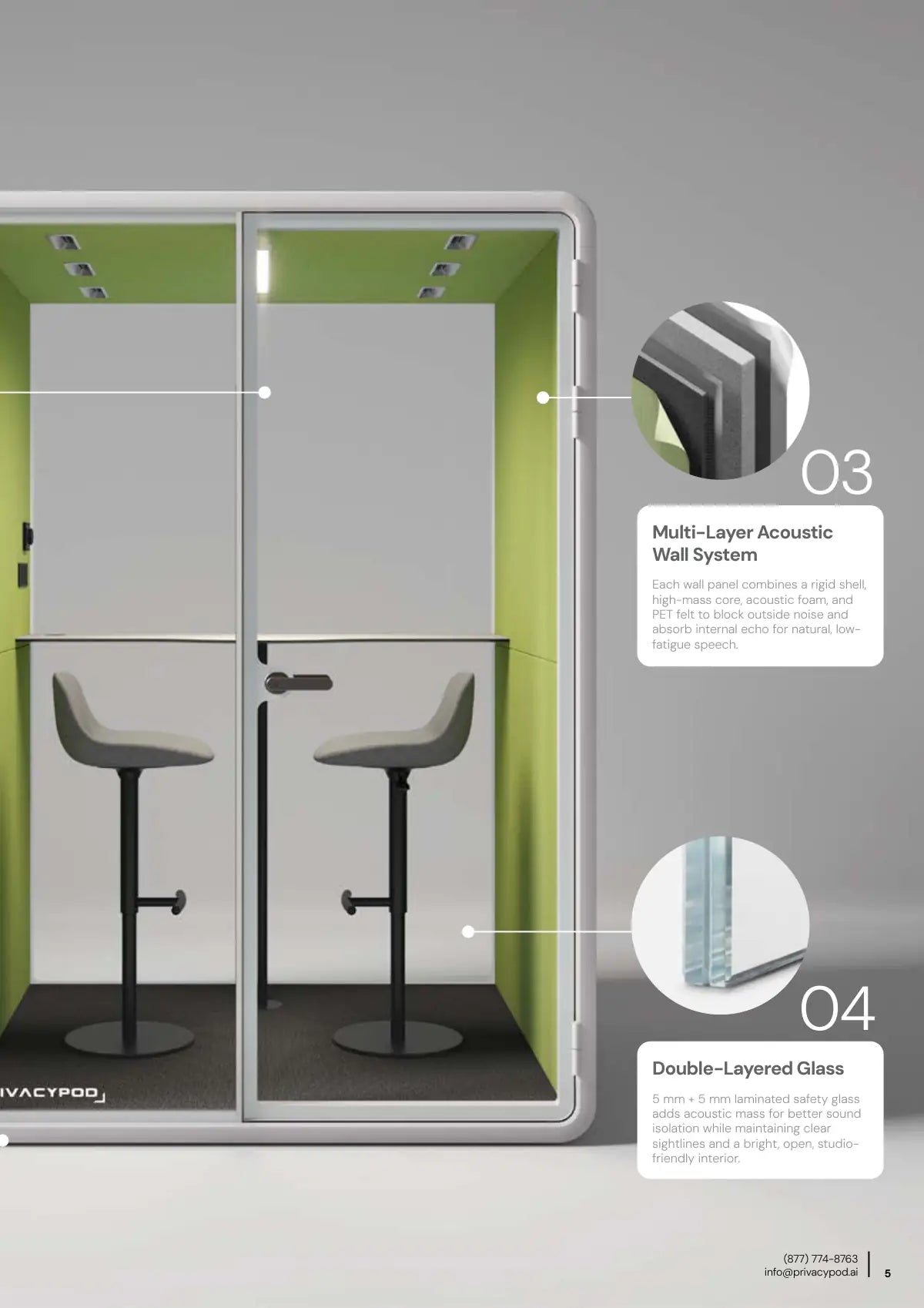
A sealed shell stops the sound path.
FixesA call heard at the next desk, both ways.
Cannot fixThe noisy floor outside the shell.
Sound masking
Cover
A steady hush for speech to blur into.
FixesHalf-heard talk across an open floor.
Cannot fixSpeech one desk over. Hidden, not removed.
Zoning
Separate
Loud work moves away from quiet work.
FixesCalls landing on the focus desks.
Cannot fixA call with nowhere quieter to go.
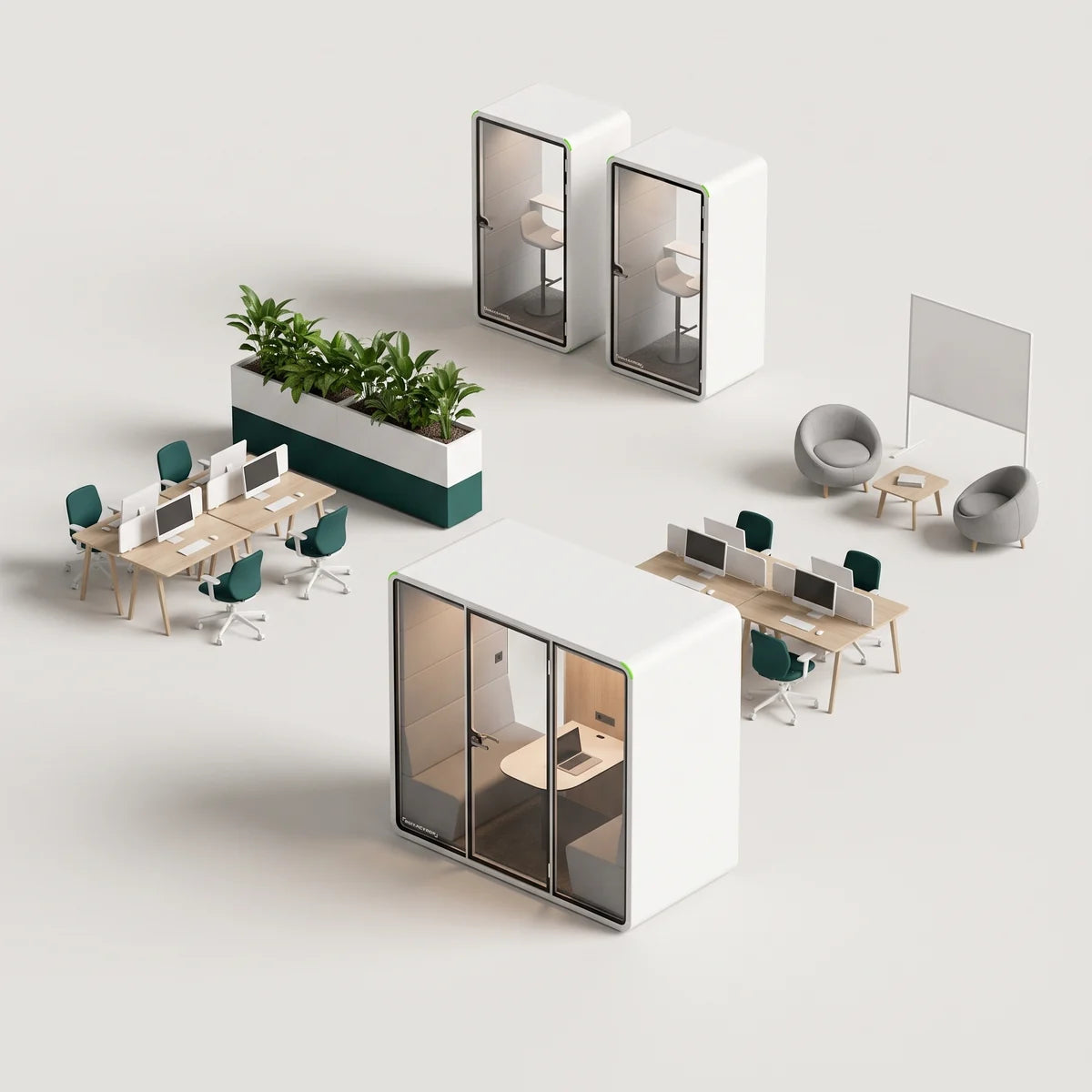
A pod is the block you can buy without construction.
Green: the one that stops the path. Schematic, not to scale.
Absorb and cover change how the floor sounds, while block and separate change where speech can go. A plan needs one from each pair.
Buyers reach for absorption first. In a 2005 UK survey of 88 open-plan workers, 40 percent proposed sound absorption and partitions and 19 percent quiet areas (Office noise and employee concentration). The 2013 partition figures above point the other way.
Which fix should you buy first?
Work from the sound path outward: the cheap fixes close gaps, and the costly ones move people.
- Seal first: a door sweep and sealant around outlet boxes stop noise that panels never touch.
- Then absorb. Carpet tile, ceiling baffles and fabric wall panels take the ring out of a hard room.
- Then separate: move call-heavy teams to the far end of the floor from the focus desks. In a 2017 study of 21 Finnish open-plan offices, the share highly disturbed by noise ran from 6 to 71 percent (Distraction distance predicts noise disturbance in open-plan offices). The share rose with distraction distance, how far a voice stays distracting.
- Mask last. The same Finnish study's target for low disturbance keeps background noise above 40 dB, and its authors advise against masking above 45 dB.
How much does a pod cut speech?
Ask for the ISO 23351-1 class, not a dB number with no method. The standard is the lab test for pods and booths; a NIC figure comes from an ASTM test and cannot be read against it.
A 2023 study found ISO 23351-1 the better fit when speech is the main source (Comparison of ASTM E596-96 and ISO 23351-1 methods for sound reduction measurements of working booths).
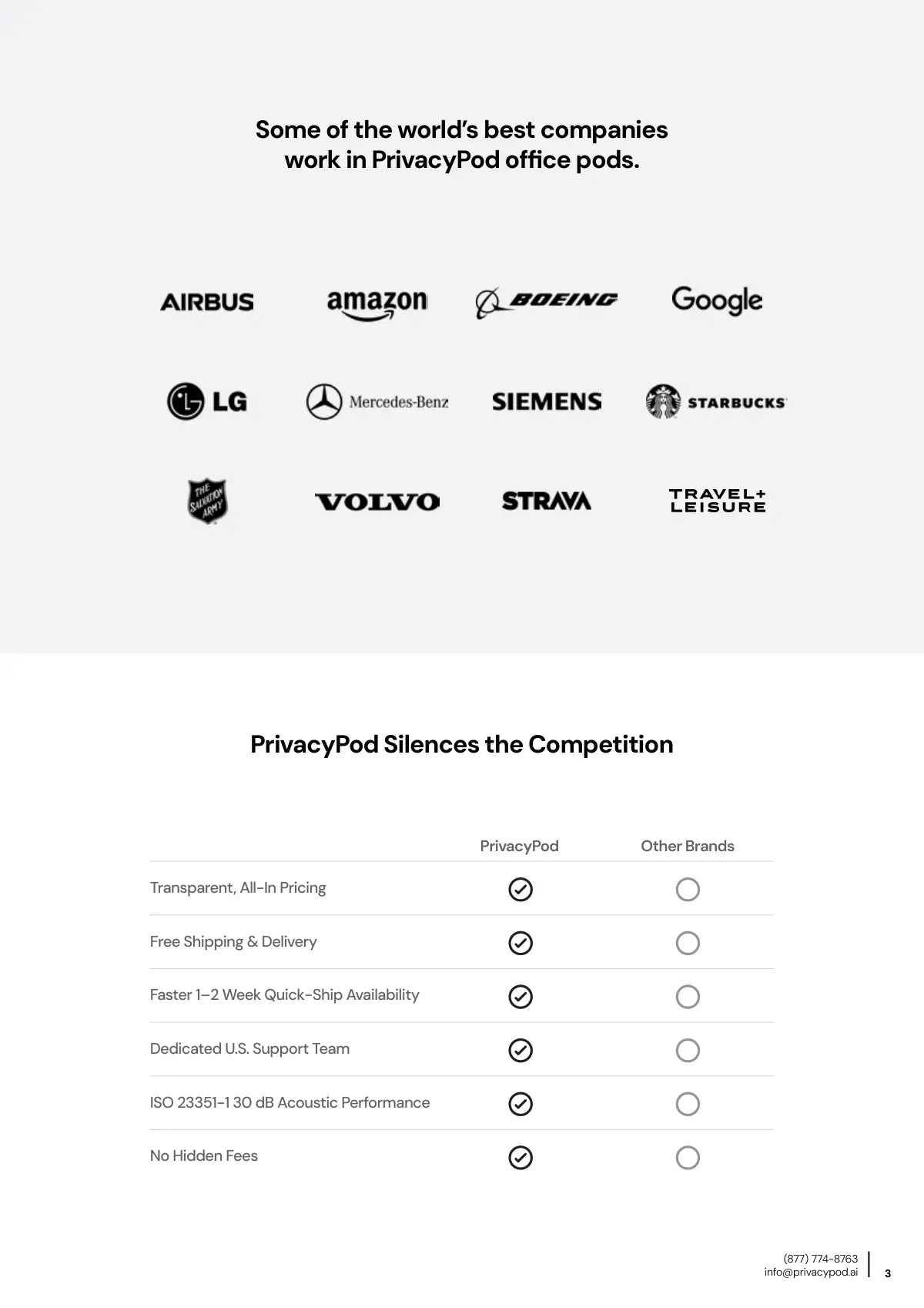
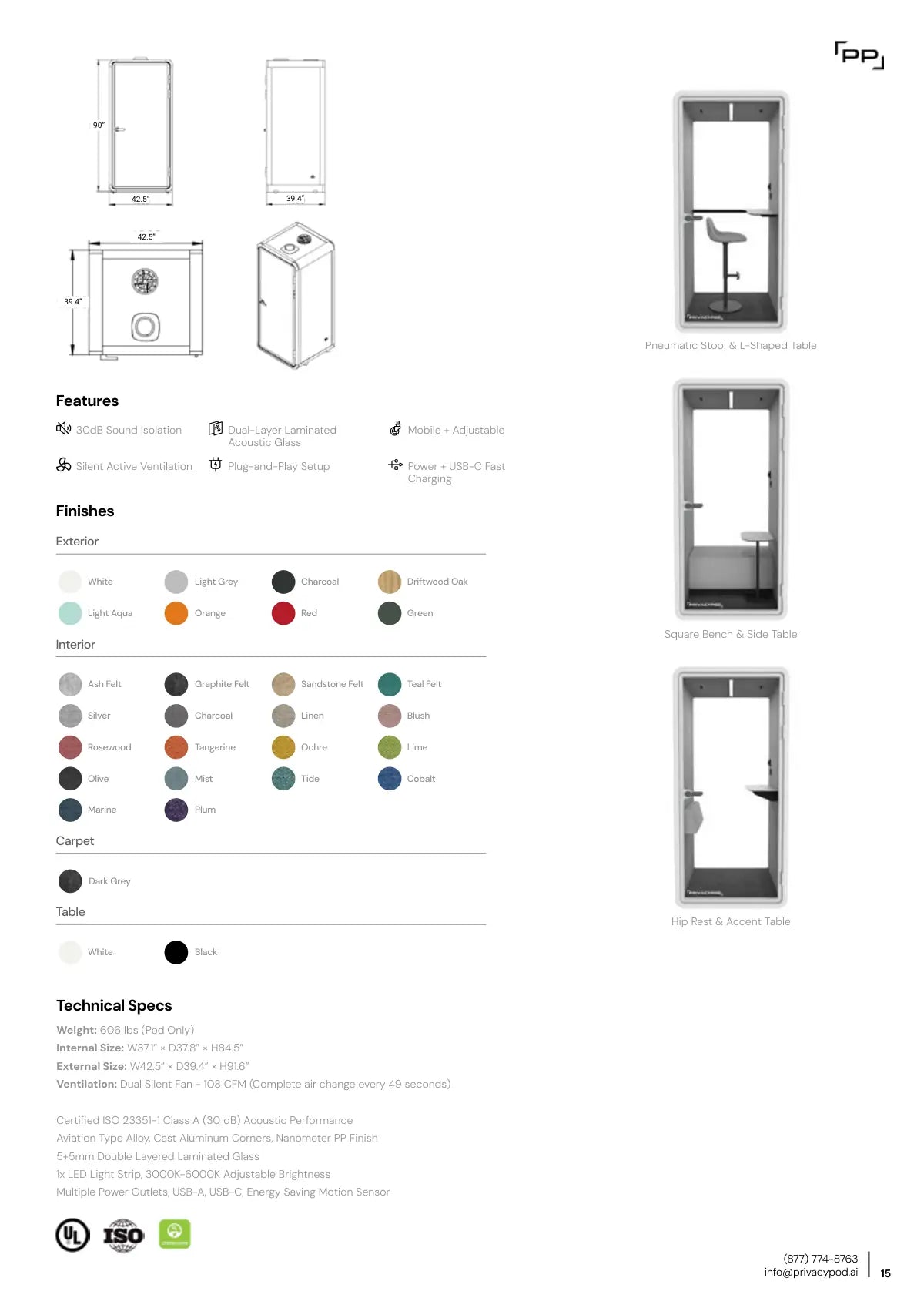
Class A starts at 30 dB. PrivacyPod is certified Class A.
Speech level reduction under ISO 23351-1, in decibels. A maker sits on this scale only where it names that standard for its figure.
Edges: our ISO post. Read 24 September 2026. Green marks the pick.
In a 2025 Finnish lab test, speech at the listener fell from 54 dB with no booth to 24 dB through a Class A booth. A Class C booth left 31 dB (Class A booth reduces stress due to office noise).
Where recall, workload and annoyance differed, the Class A booth won every time. The project was part-financed by Framery, a pod maker. The other ratings are covered in office pod acoustic ratings explained.
Can headphones replace a pod?
Headphones cover the wearer and do nothing for the talker. In a 2021 Finnish test, 55 people did recall tasks during speech. Closed noise-canceling headphones alone changed neither annoyance nor recall scores (Benefits of active noise-cancelling headphones in offices).
Only masking sound through the headphones, with noise canceling on, cut annoyance. Only the most noise-sensitive third recalled better.
Quiet rooms move the numbers. In the same 21 Finnish offices, the four with many quiet rooms ranged from 6 to 30 percent highly disturbed, against 17 to 71 percent in the other 17. The authors warn that the gap was not tested.
Which PrivacyPod do you need?
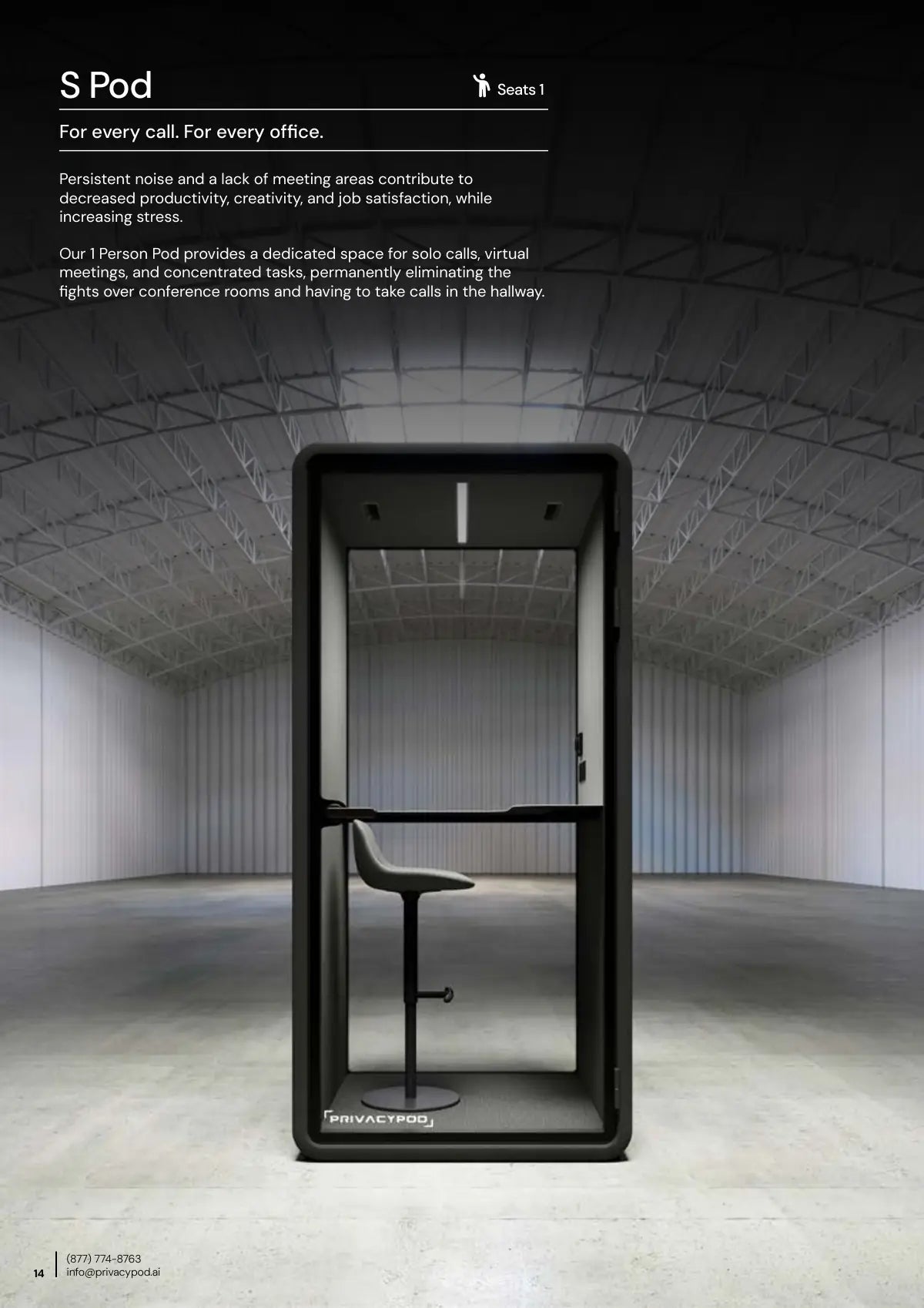
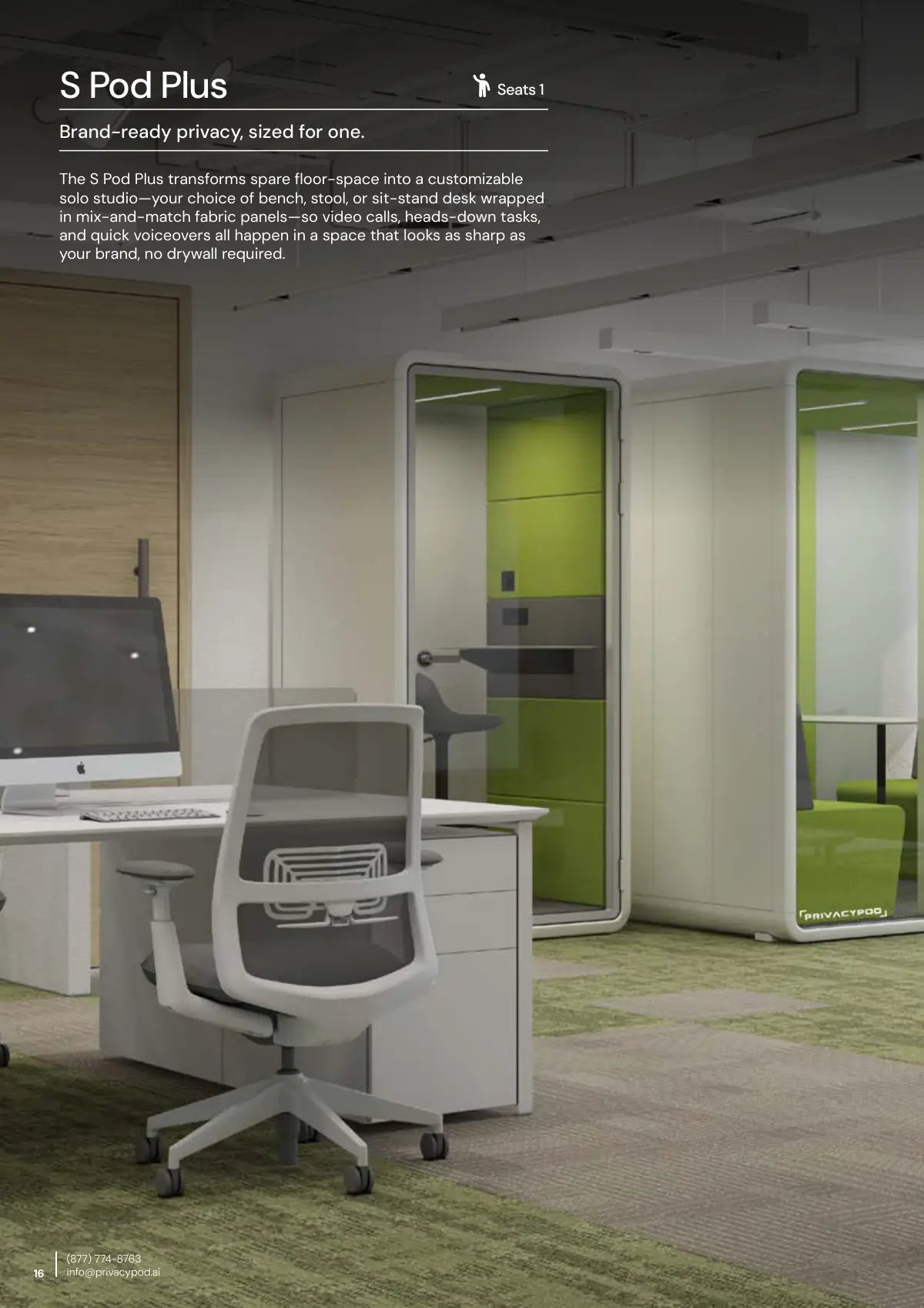
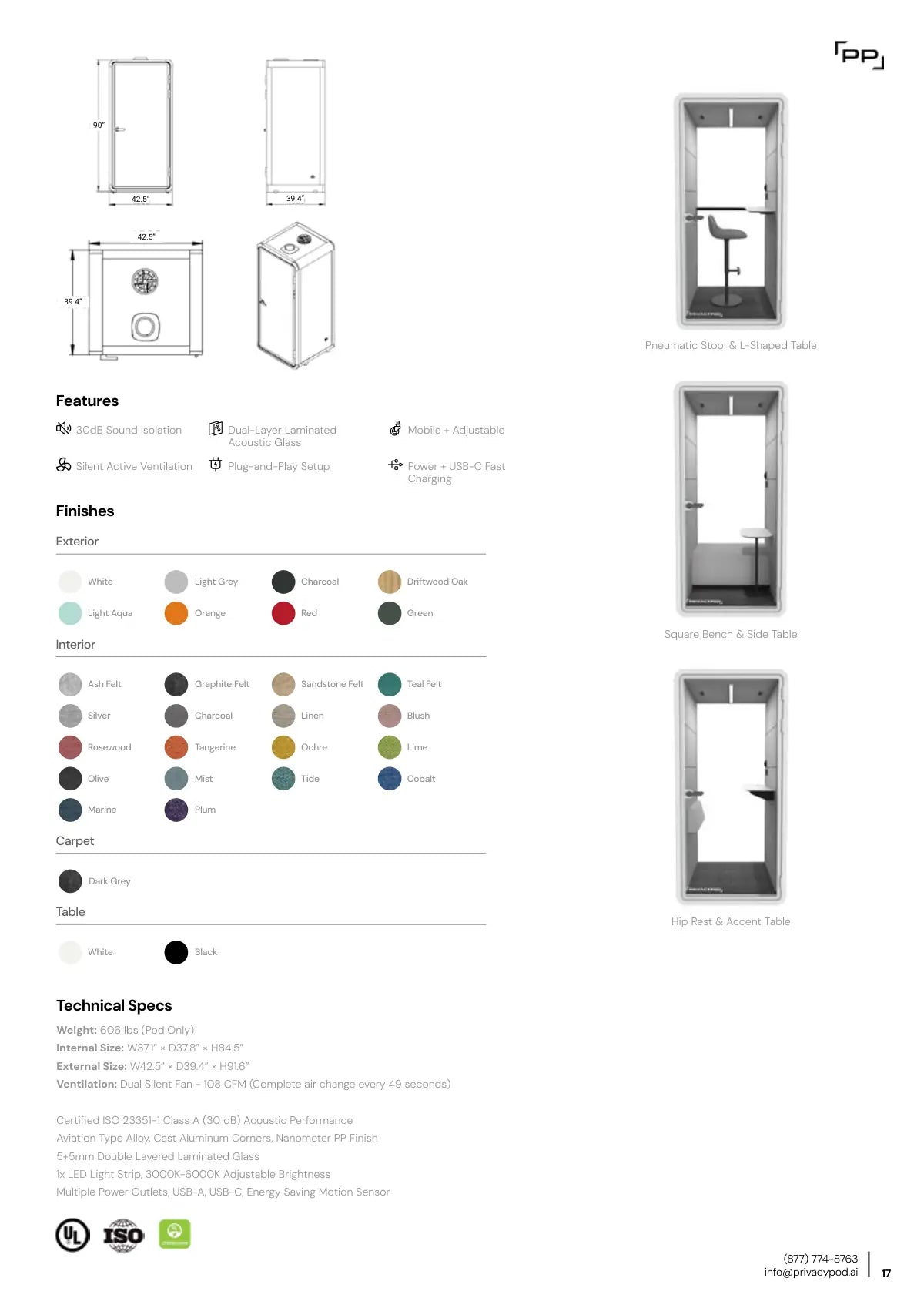
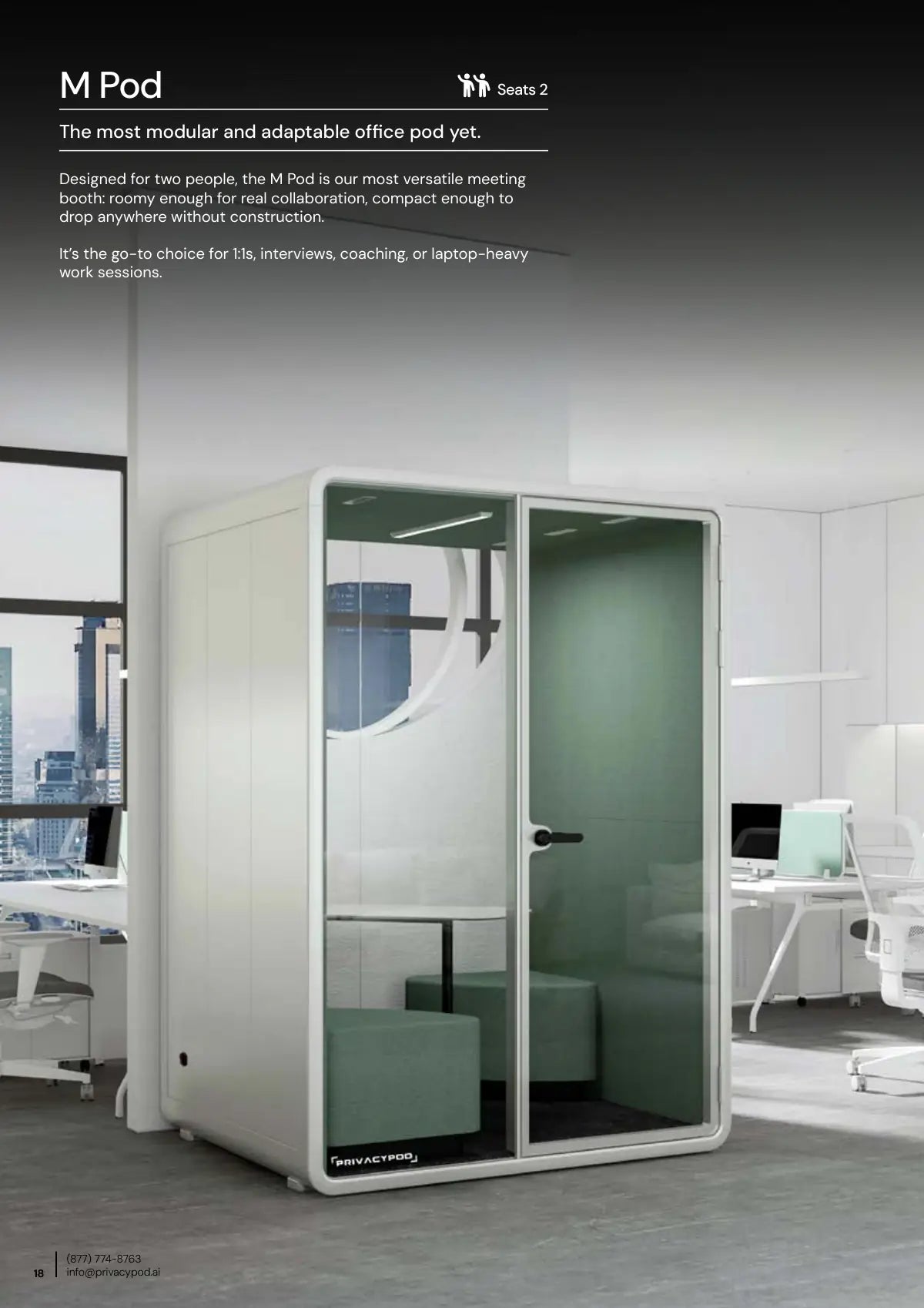
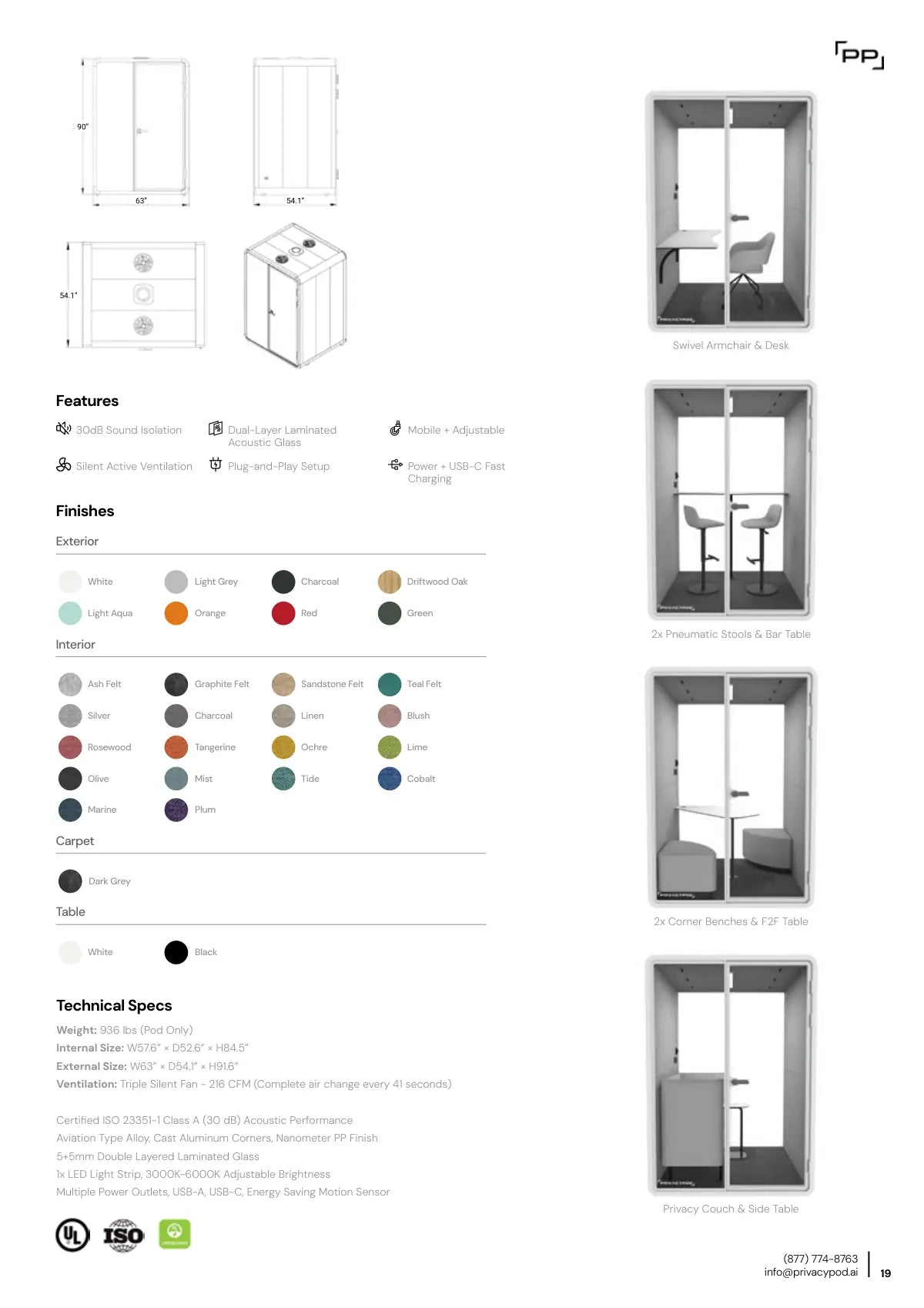
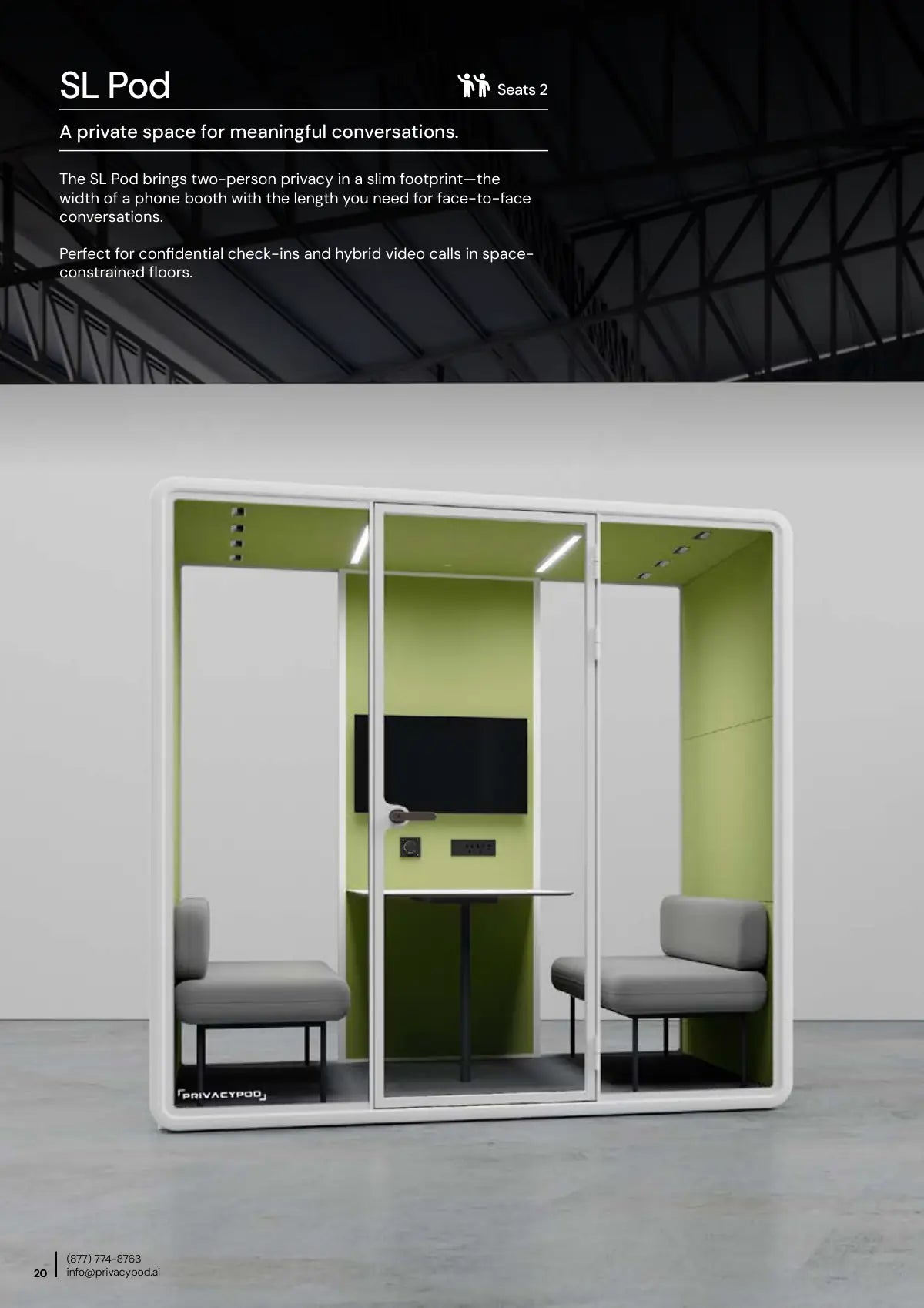
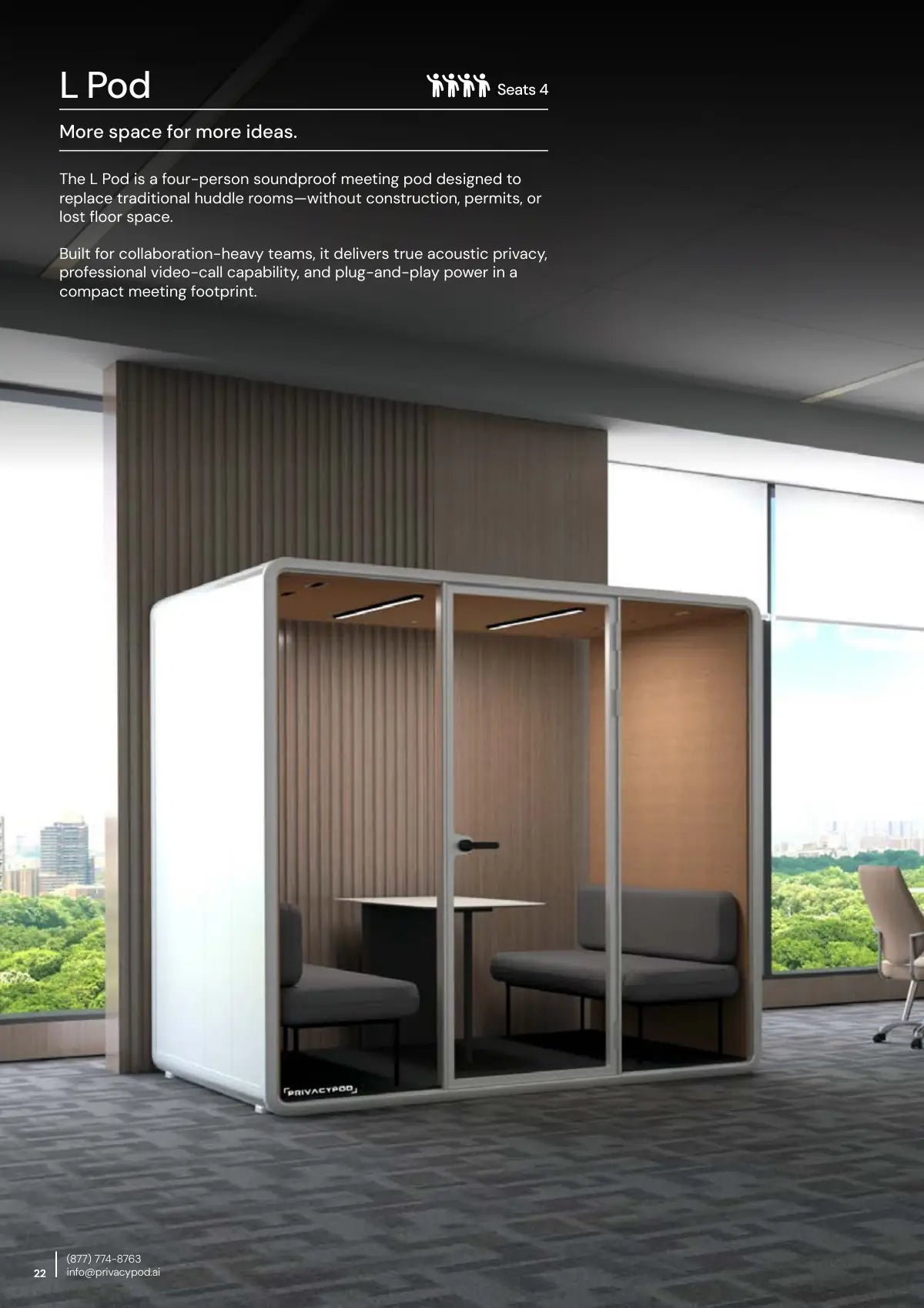
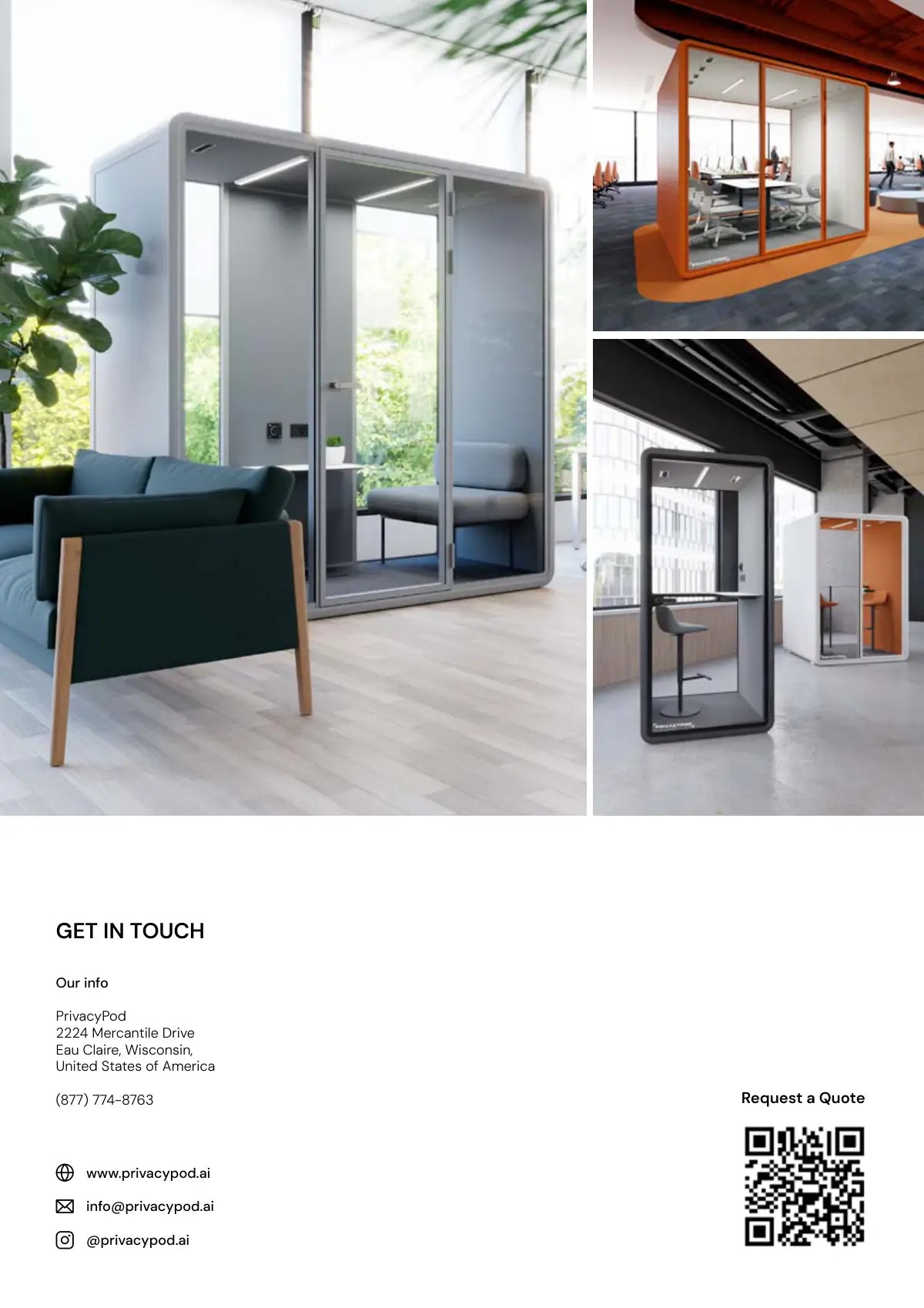
Pick the pod by who needs to be inside it: one caller takes the S Pod, and two or more take an office meeting pod.
| Pod | Seats | Floor area | Price |
|---|---|---|---|
| S Pod | 1 | About 12 sq ft | $6,395 |
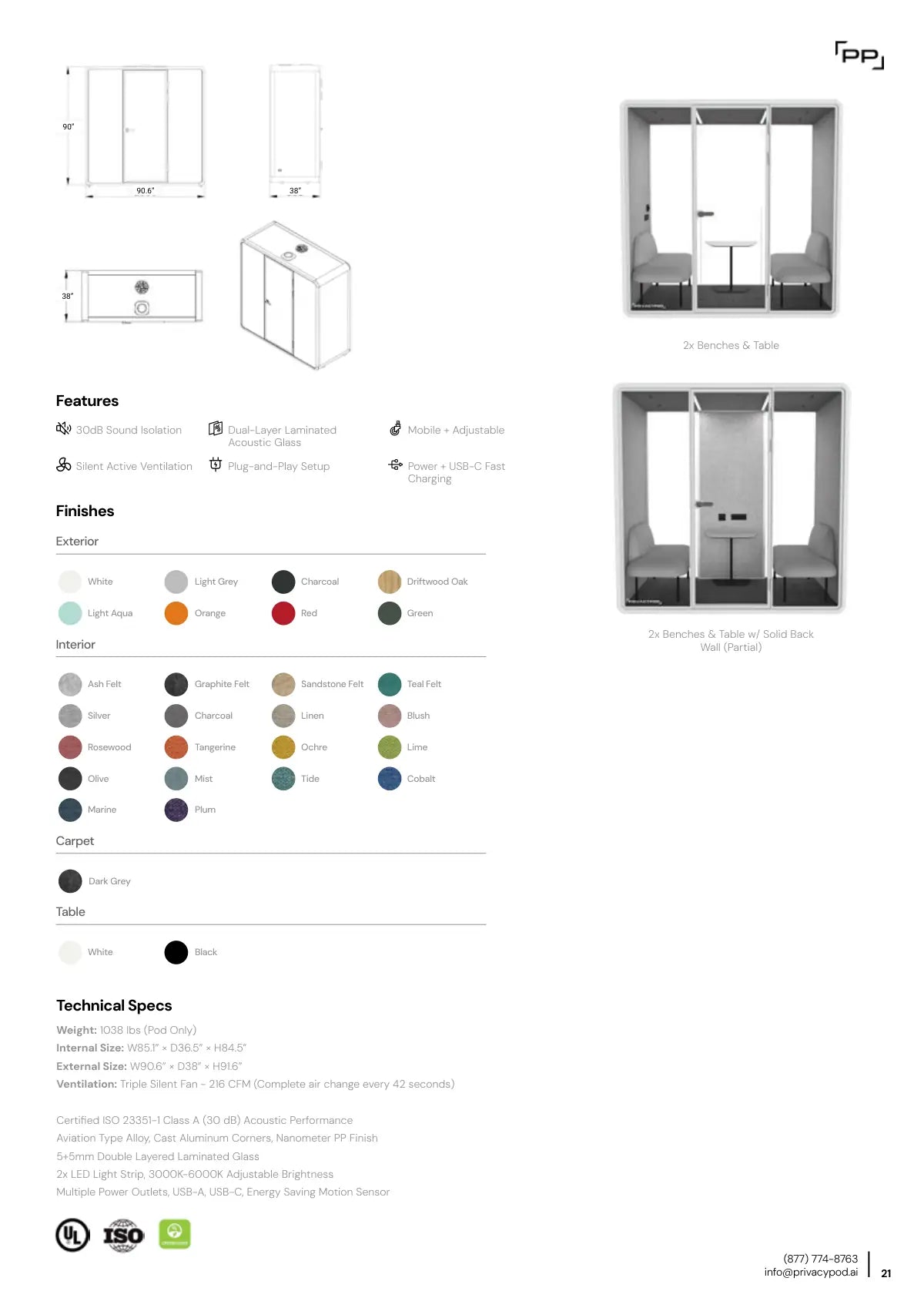
| M Pod | 2 | About 22 sq ft | $9,495 |
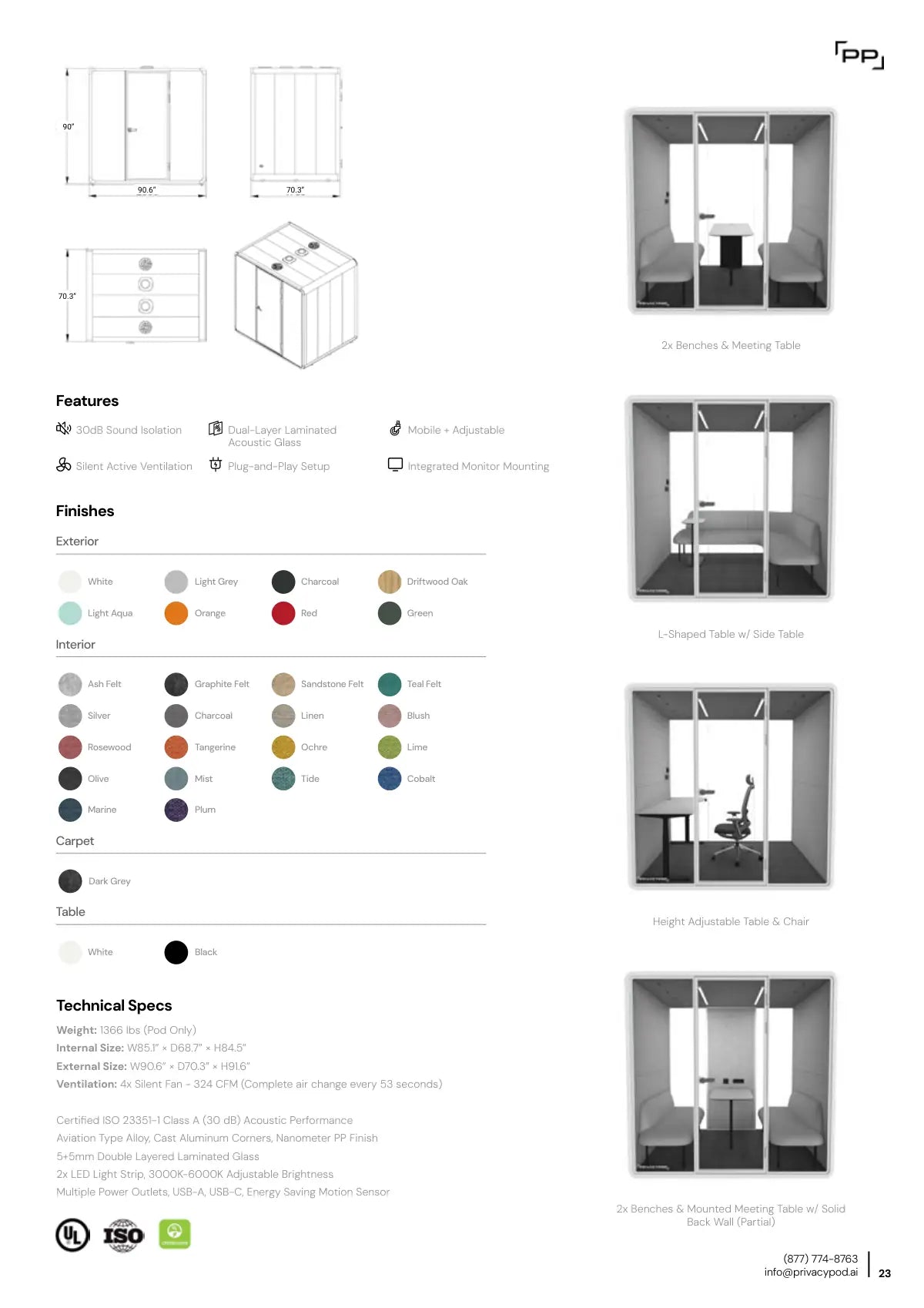
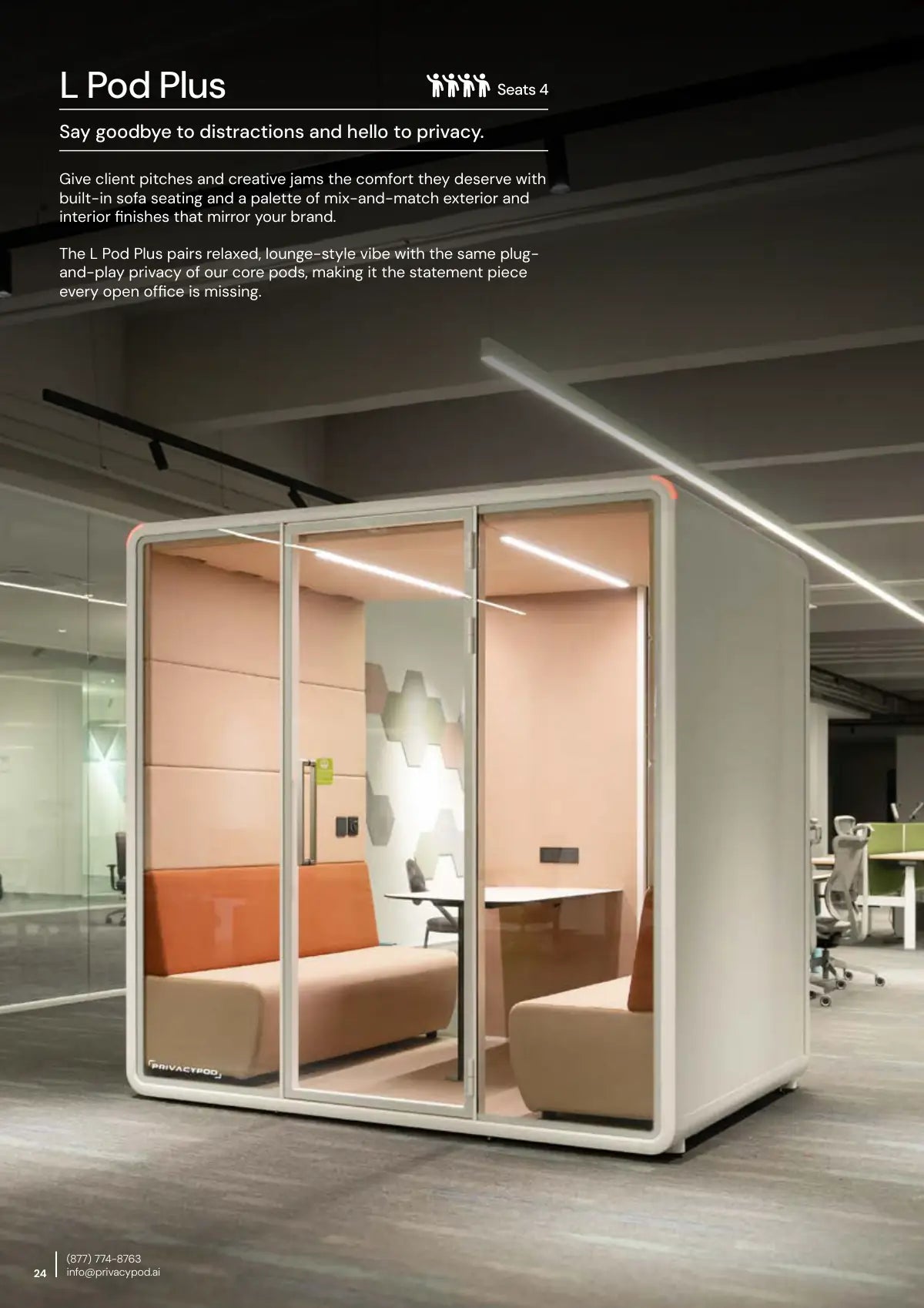
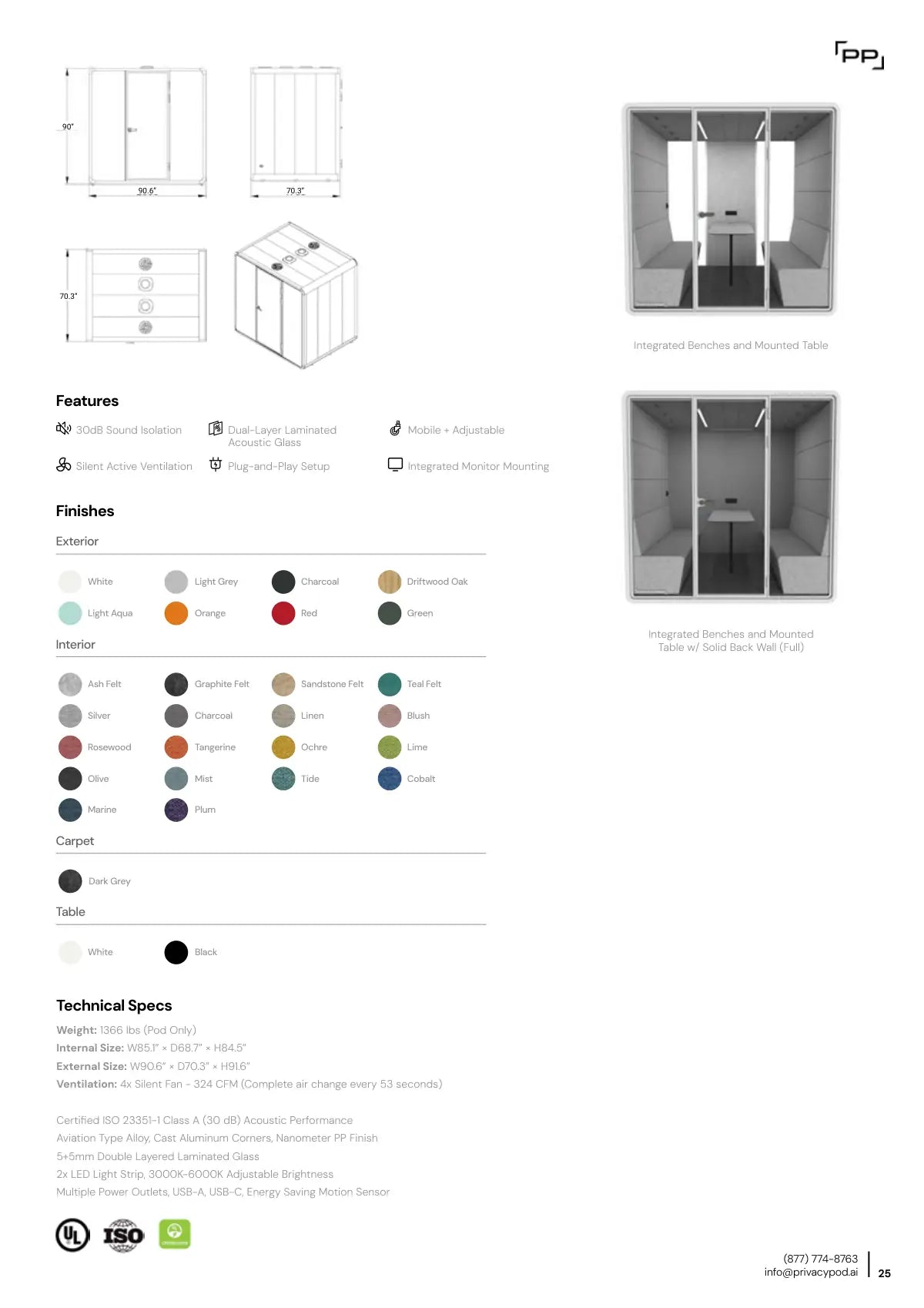
| L Pod | 4 | About 38 sq ft | $12,495 |
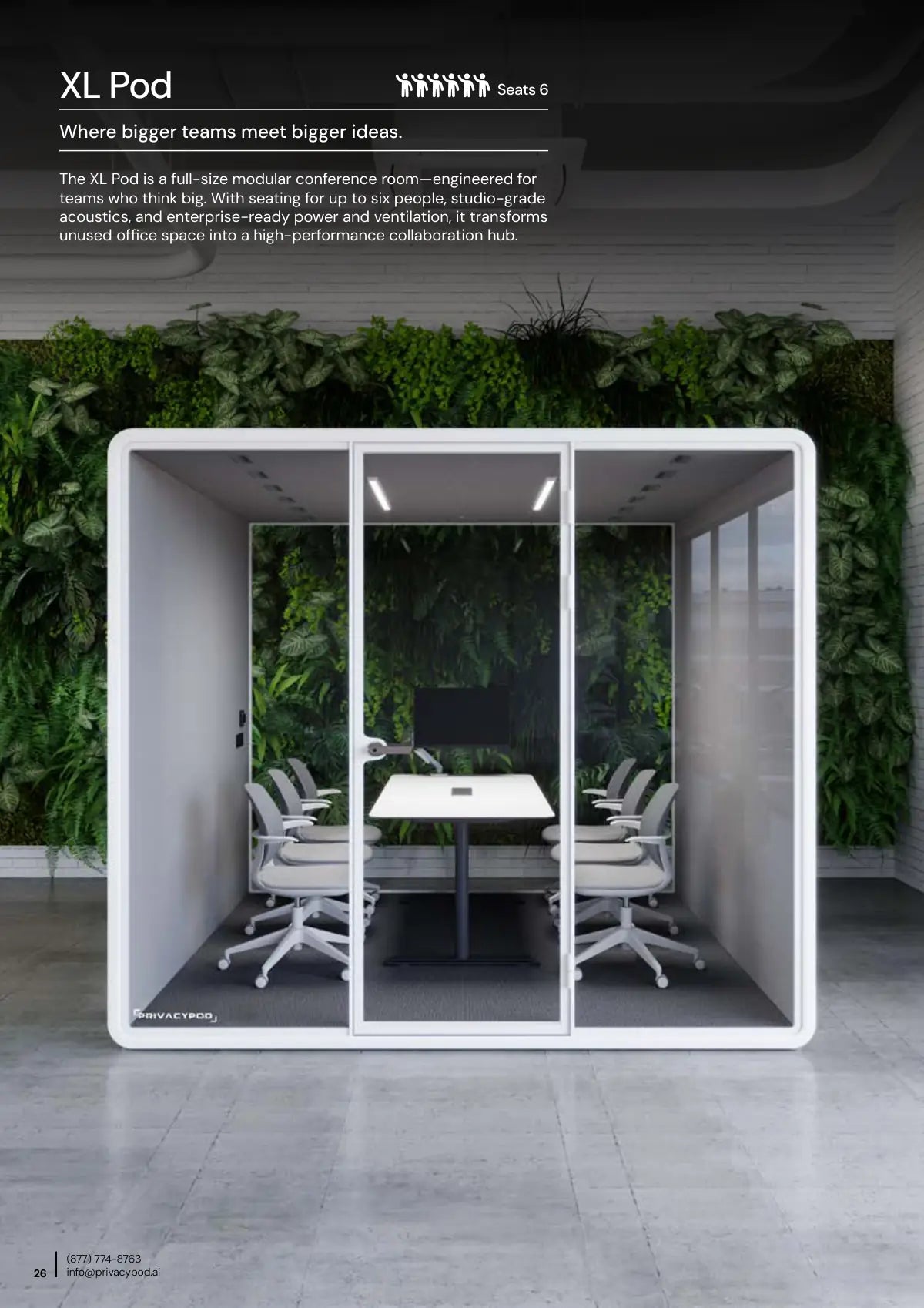
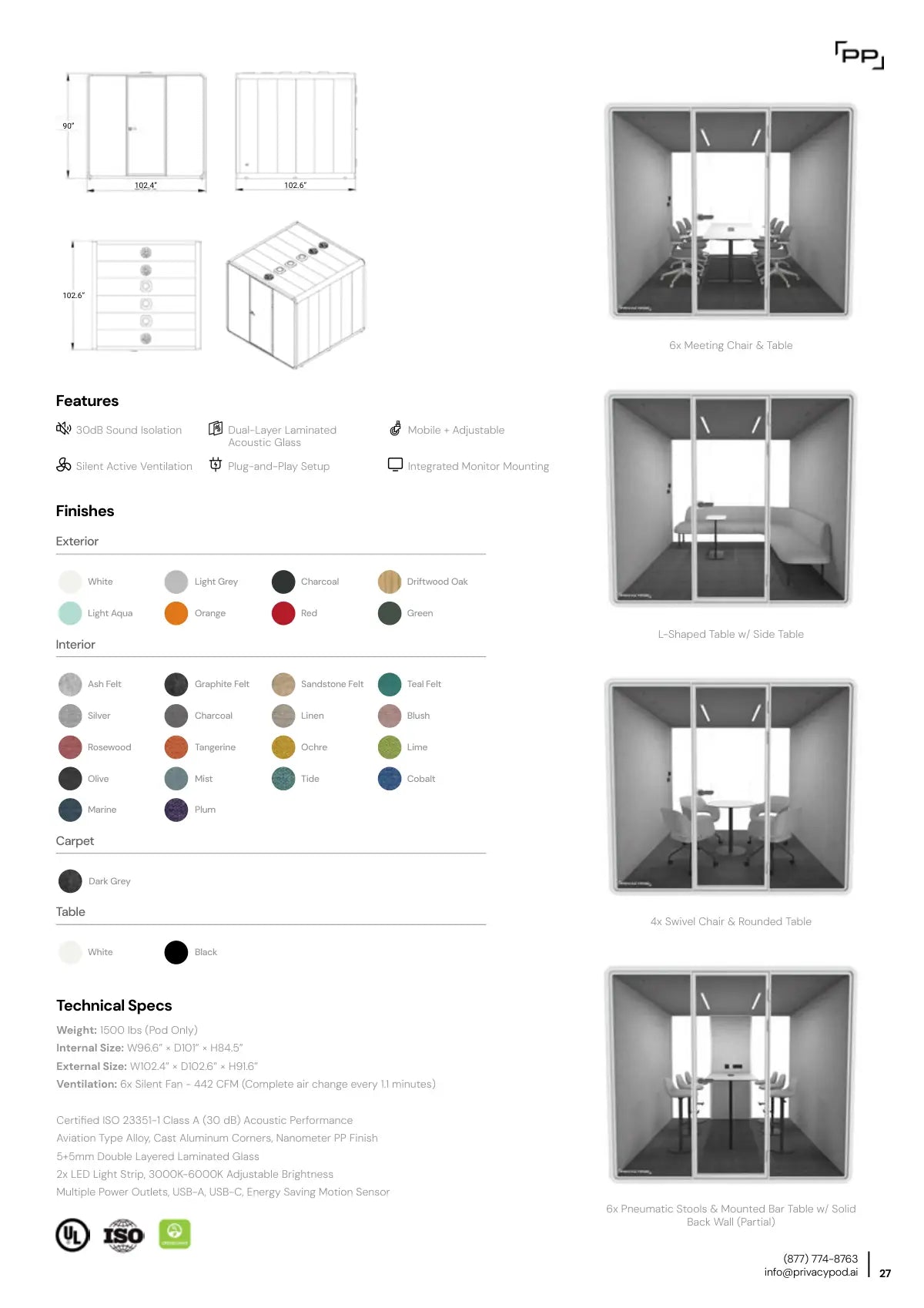
| XL Pod | 4 to 6 | About 72 sq ft | $14,995 |
- Acoustics: PrivacyPod's standard, Arc and ADA pods are ISO 23351-1 Class A certified, approximately 30 dB of speech level reduction.
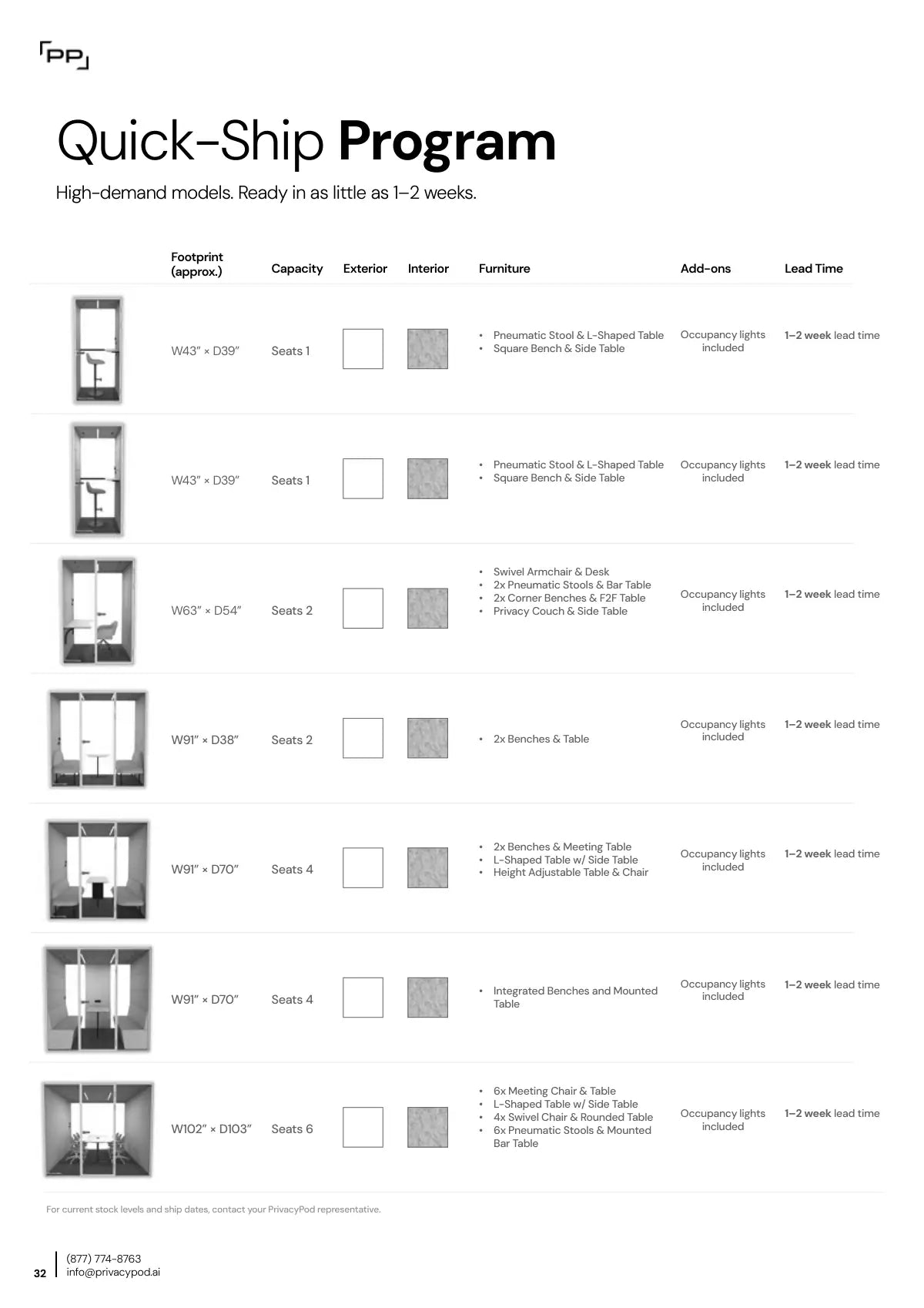
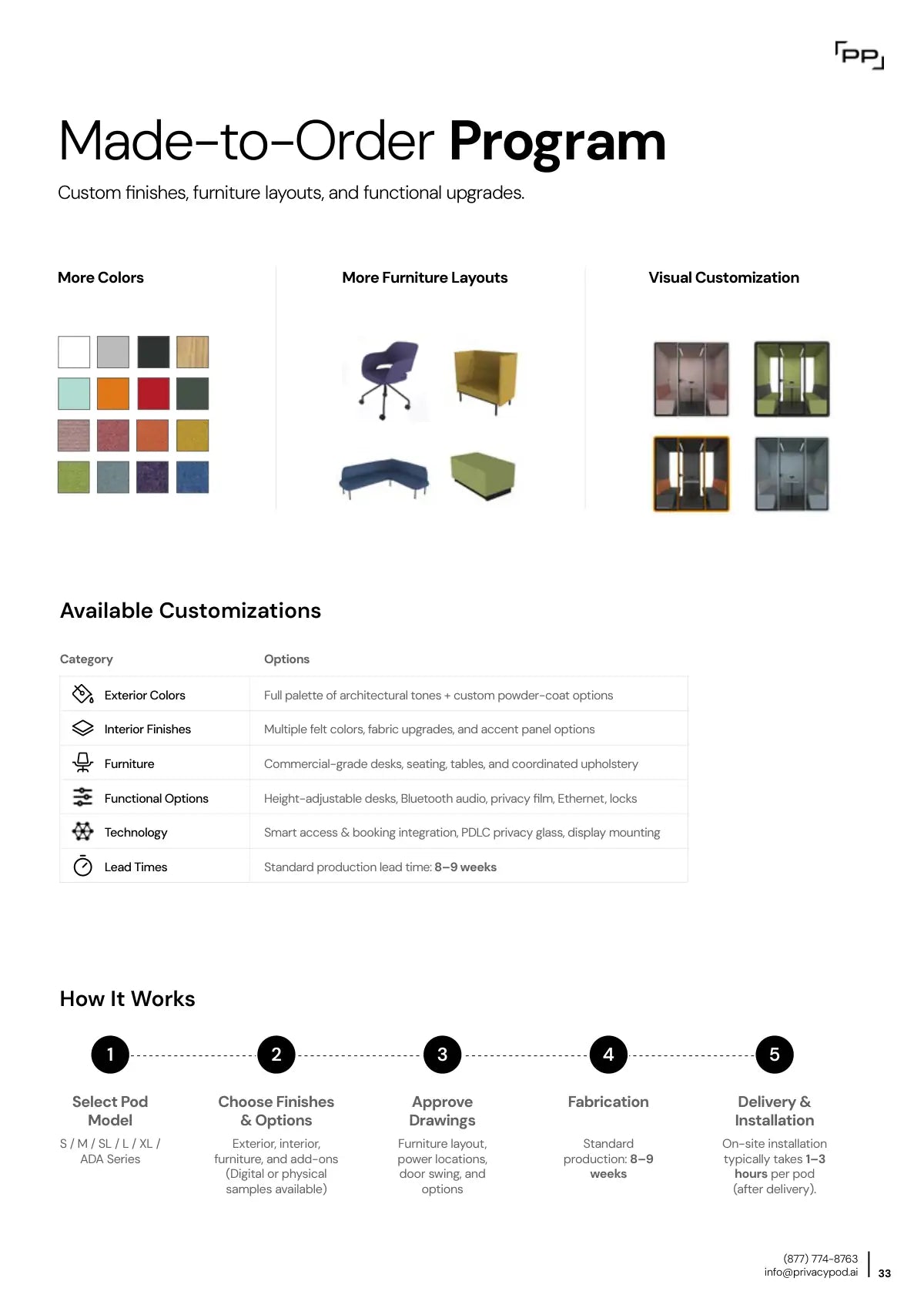
- Lead time: Quick-Ship ships in 1 to 2 weeks and covers the S through XL pods and the Arc pods in Haze. Other colors and the accessible line are made to order, 9 to 11 weeks.

Browse the office pod collection, or talk to a person at PrivacyPod, (877) 774-8763.
Questions
What is an ISO 23351-1 rating?
ISO 23351-1 is the lab test for how much a pod lowers speech. Labs measure a talker's sound power with and without the pod and report the drop in dB. PrivacyPod's standard, Arc and ADA pods are ISO 23351-1 Class A certified.
Do noise-canceling headphones replace an acoustic pod?
No, headphones cover the wearer and leave the talker on the open floor. In the 2021 Finnish test, noise canceling alone changed neither annoyance nor recall scores. A pod takes the call off the floor for everyone.
Does sound masking reduce office noise?
Masking raises the background level so distant speech blurs, and works only in a narrow window. The Finnish 21-office study advises against masking above 45 dB. Use it after sealing, absorbing and zoning, not instead of them.
How long does it take to install an office pod?
A one-person pod takes a two-person crew about 3 to 5 hours, with no building work. The install is quoted on its own, roughly $900 to $1,800 per pod, and every pod plugs into a standard 120V outlet.
Are PrivacyPod pods accessible?
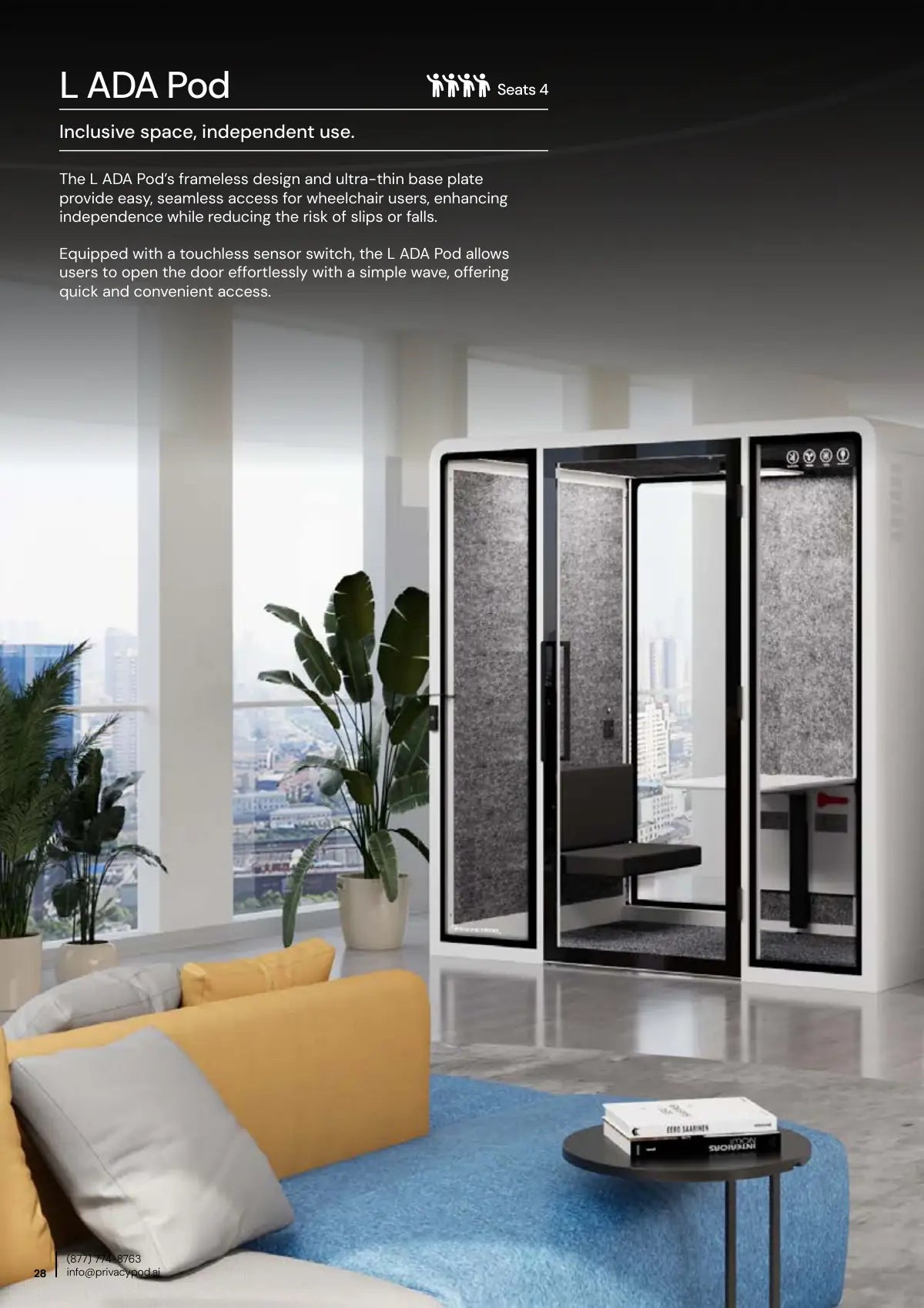
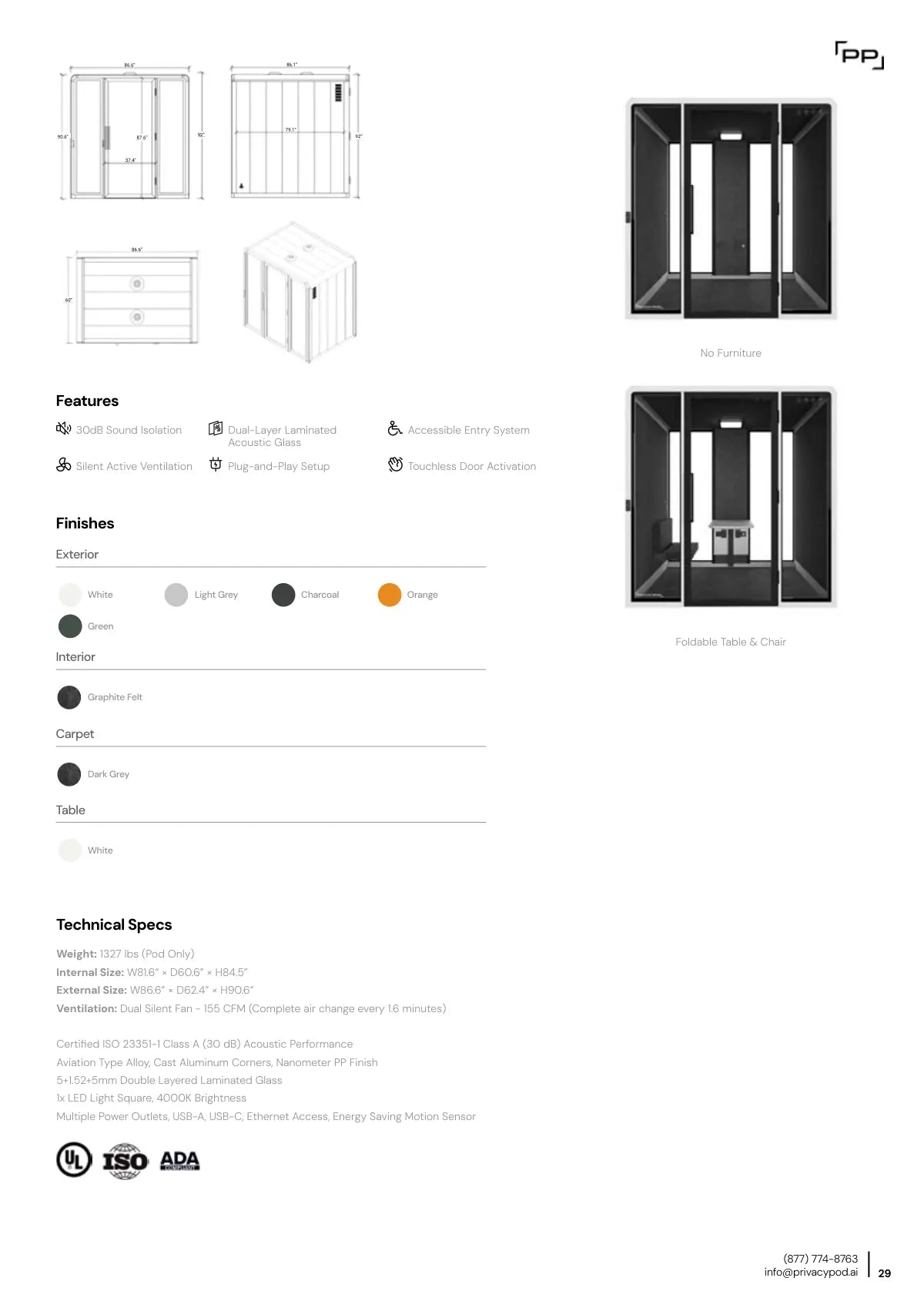
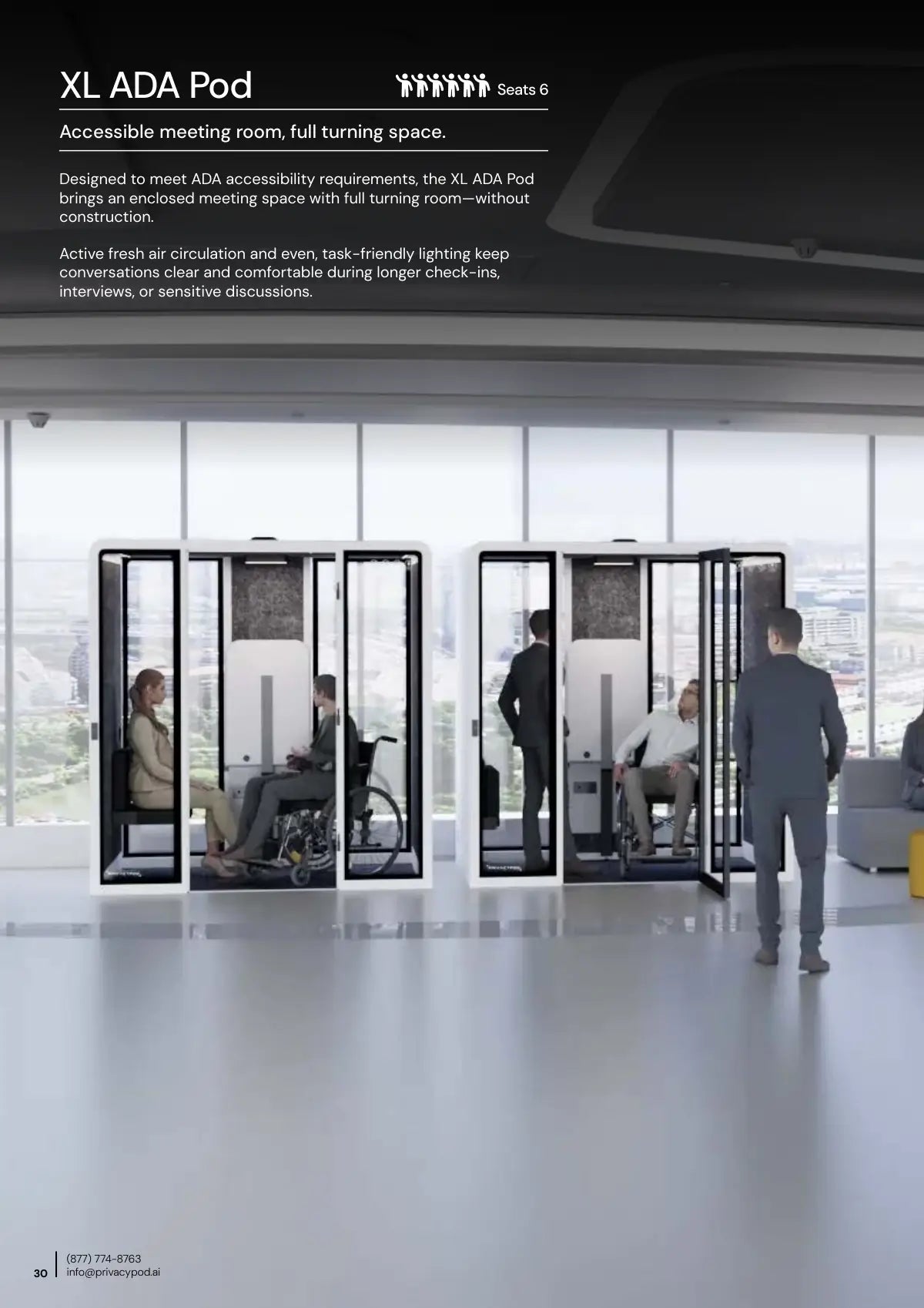
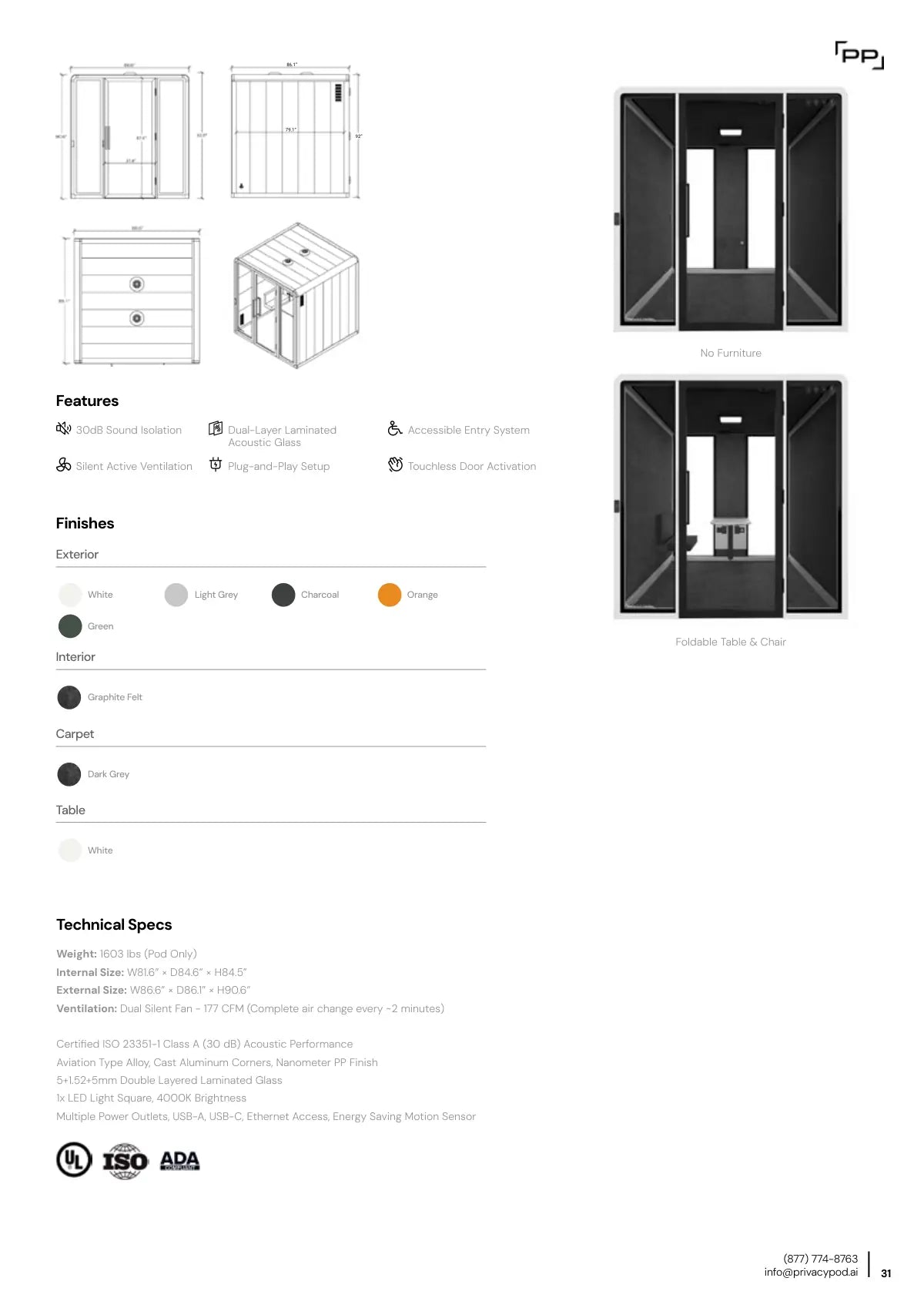
Yes, the L ADA Pod (from $24,795) and XL ADA Pod (from $29,795) are the accessible models, made to order in 9 to 11 weeks. Both are ISO 23351-1 Class A certified, like the standard pods.
Filed under Acoustics & certification
Back to the blog