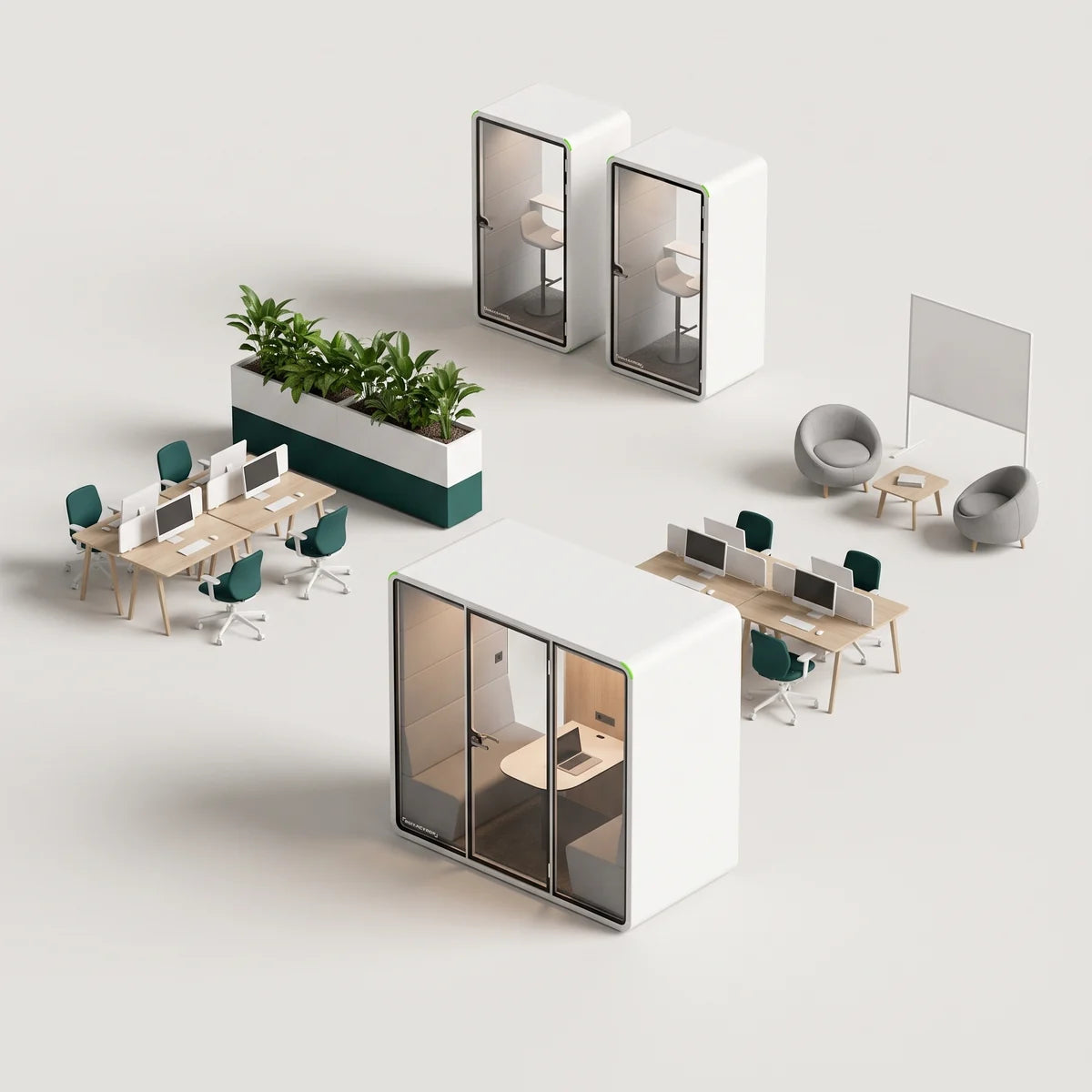
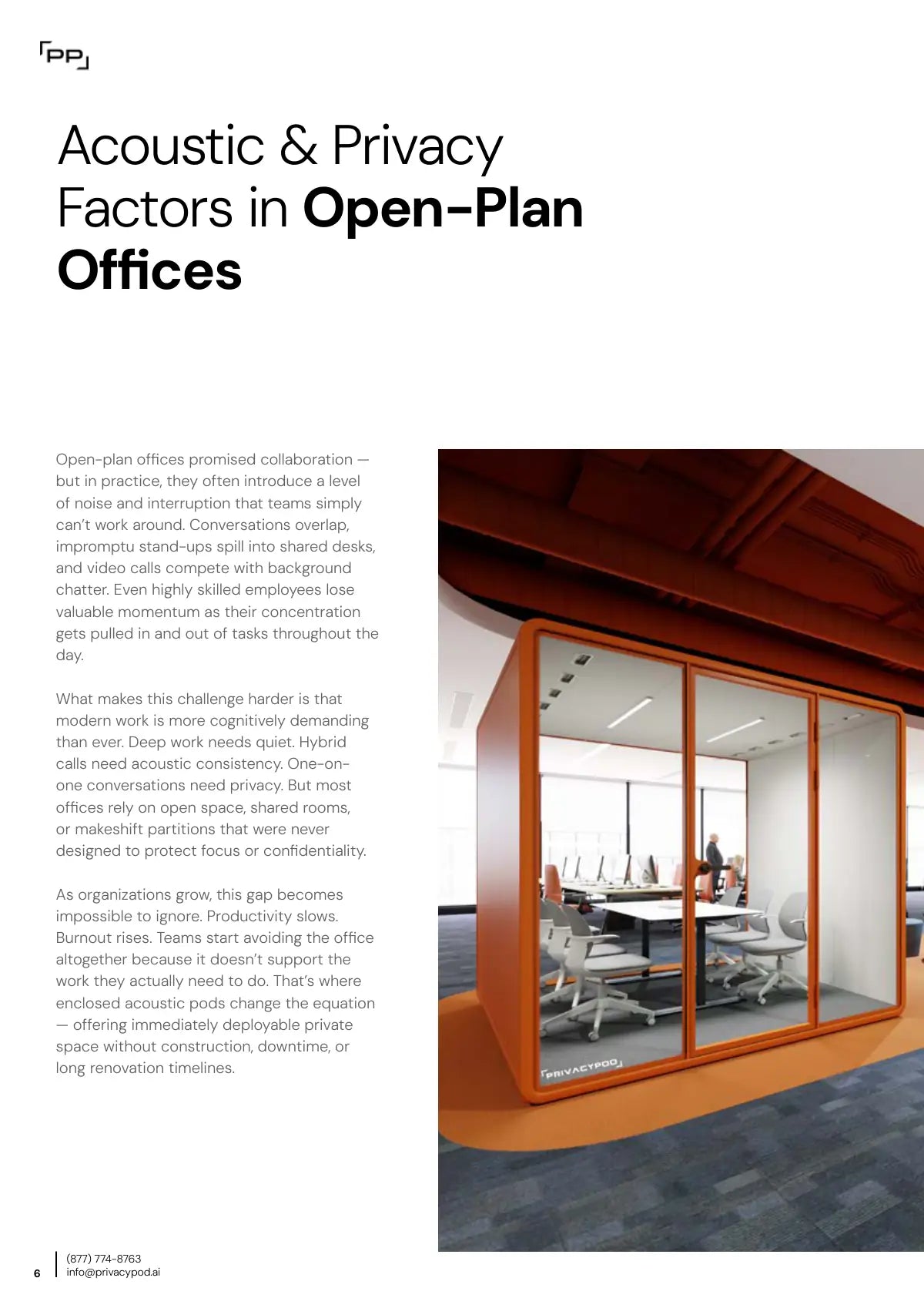
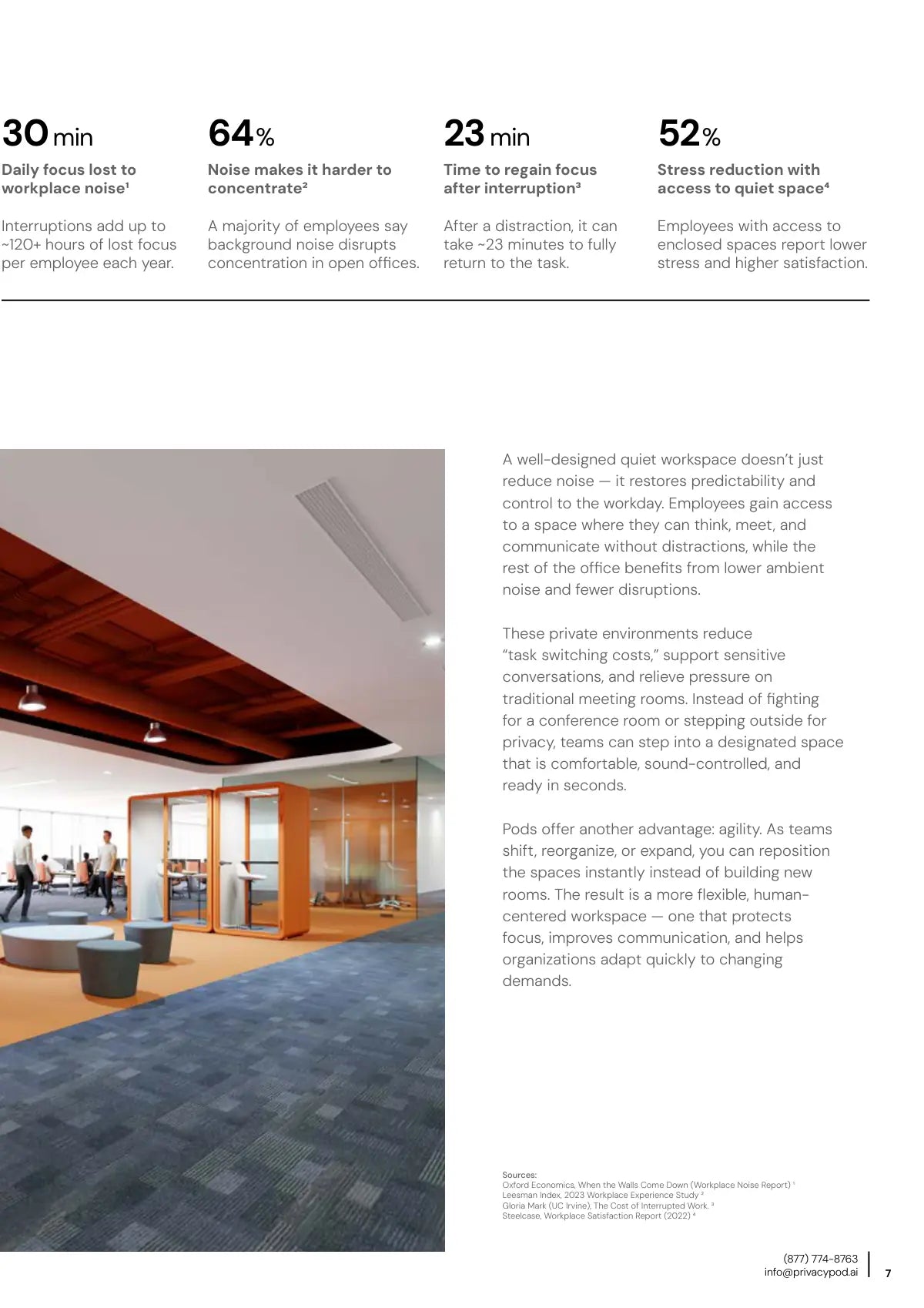
Great open offices do not fail because they are open. They fail when openness is the only thing the layout knows how to support. That is why office pod placement matters so much. The right office pods can preserve energy, sightlines, and collaboration while quietly adding the things most open layouts are missing: focus, privacy, acoustic relief, and faster transitions between work modes.
In other words, pods should not be treated like afterthoughts or decorative add-ons. They should be placed as part of the architecture of the floor. When you position them well, open spaces feel more navigable, more balanced, and more useful. A pod by the social hub changes how people recover from noise. A pod at the edge of a team zone changes how quickly people can move from brainstorming to decision-making. A pod near a window can soften a large space without closing it off. Thoughtful placement is what makes an open office feel intentional instead of exposed.
Quick take: the best office pod placement strategy is rarely “put them in the empty corner.” The strongest layouts place pods near the action, between zones, and throughout the floor so privacy is always close by. That is where PrivacyPod stands out: the lineup gives you solo, duo, and team-sized pods that can be distributed across an office without resorting to permanent construction.

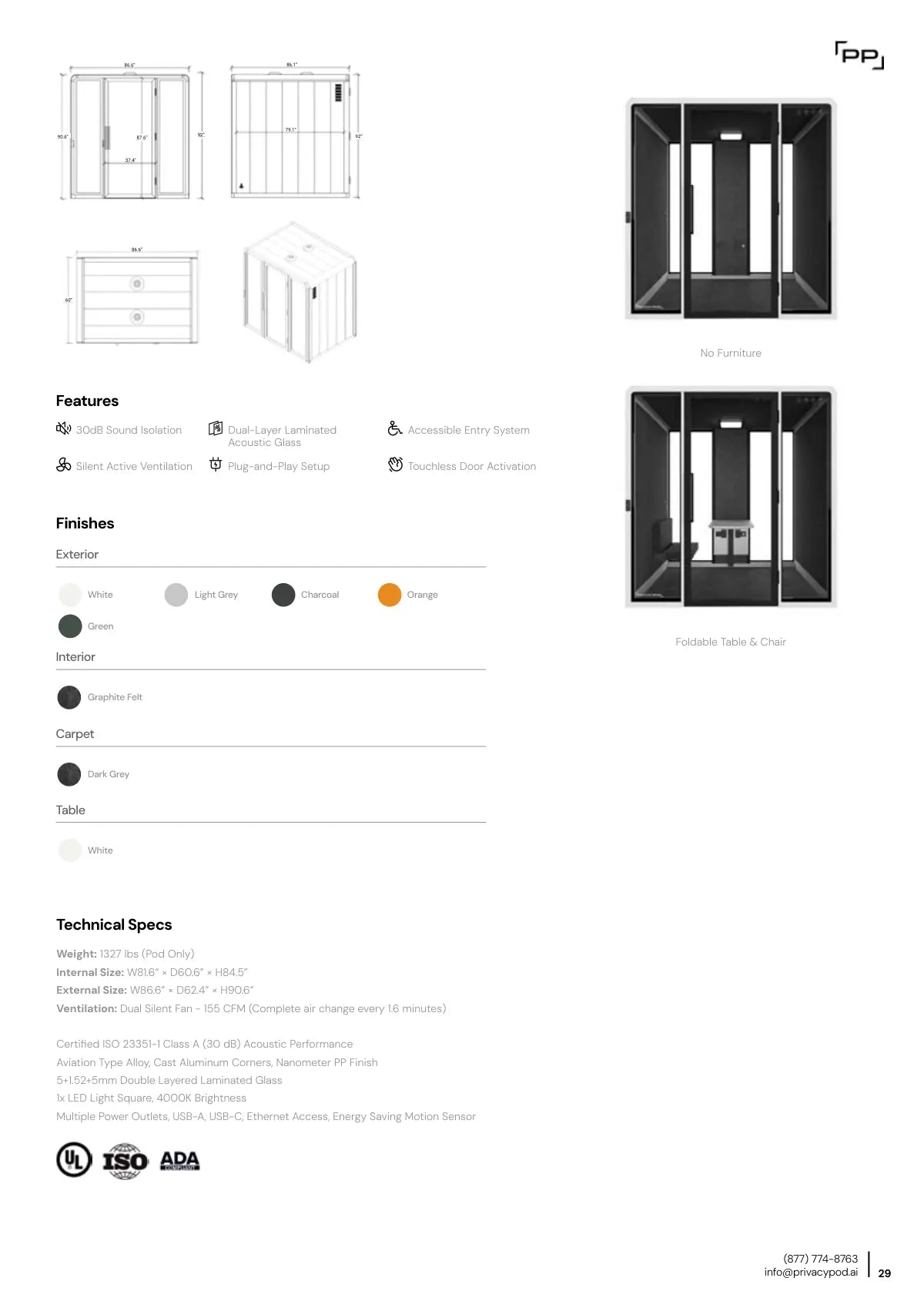
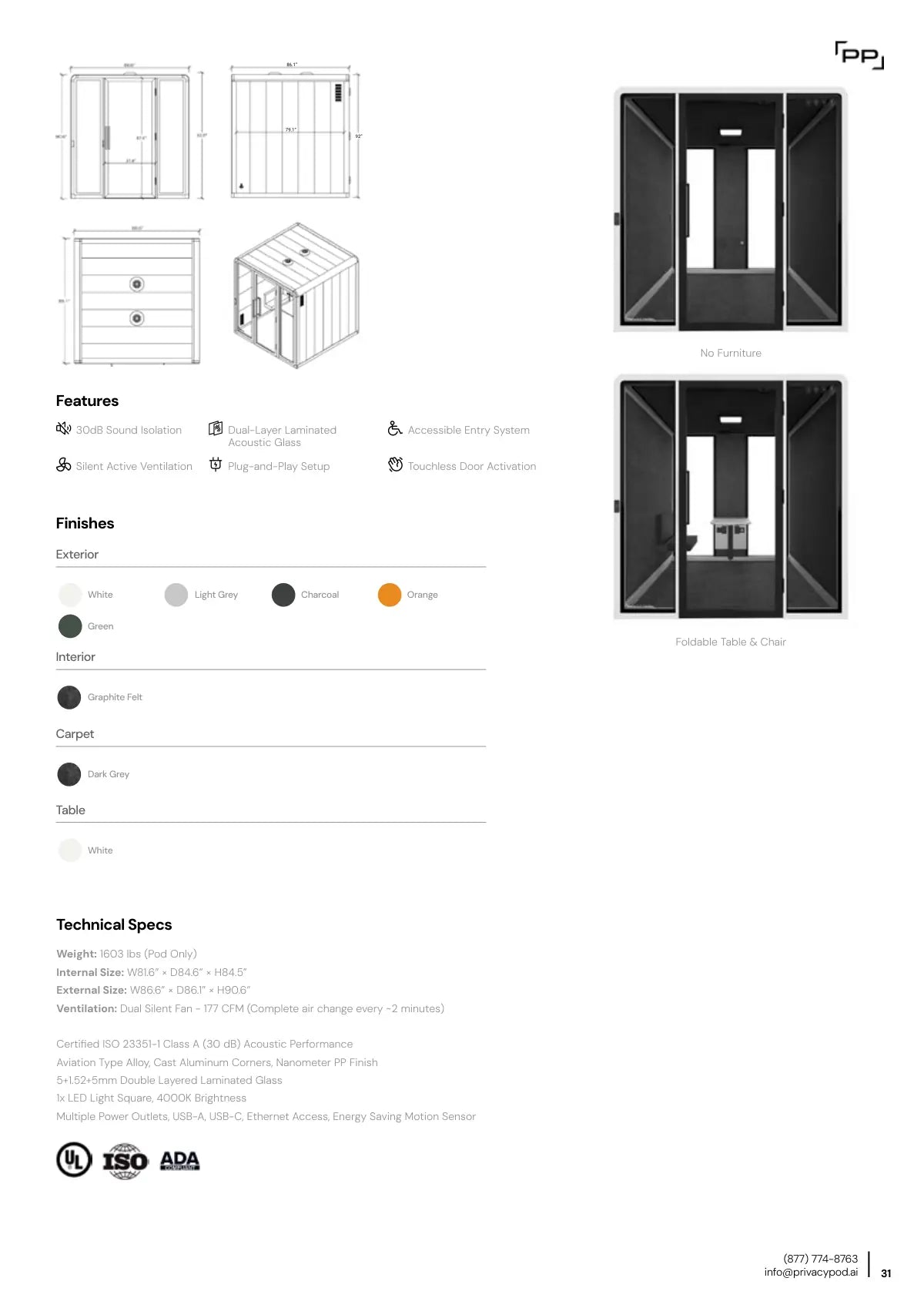
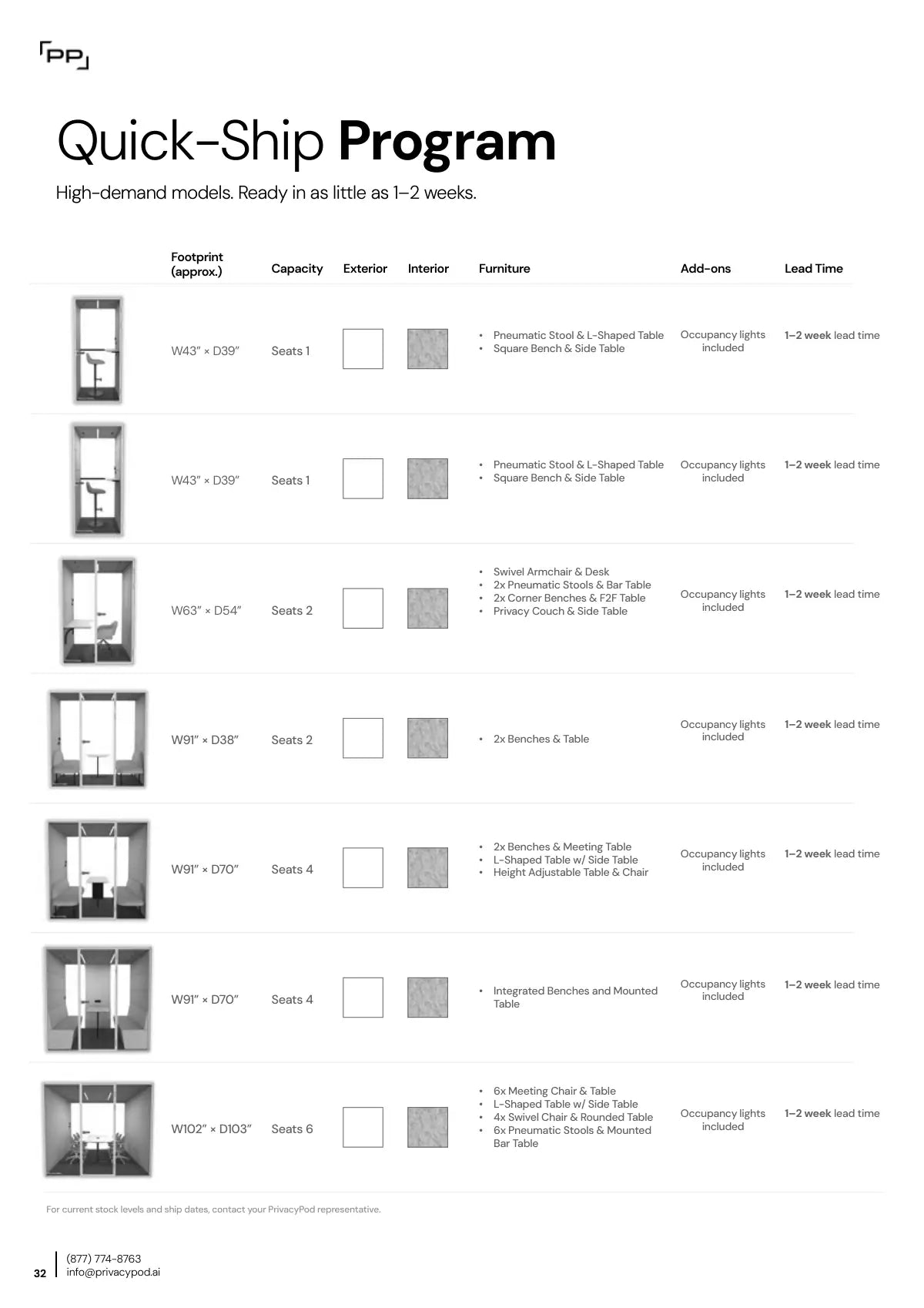
PrivacyPod models and where they work best
| Model | Best placement | Best use | Starting price |
|---|---|---|---|
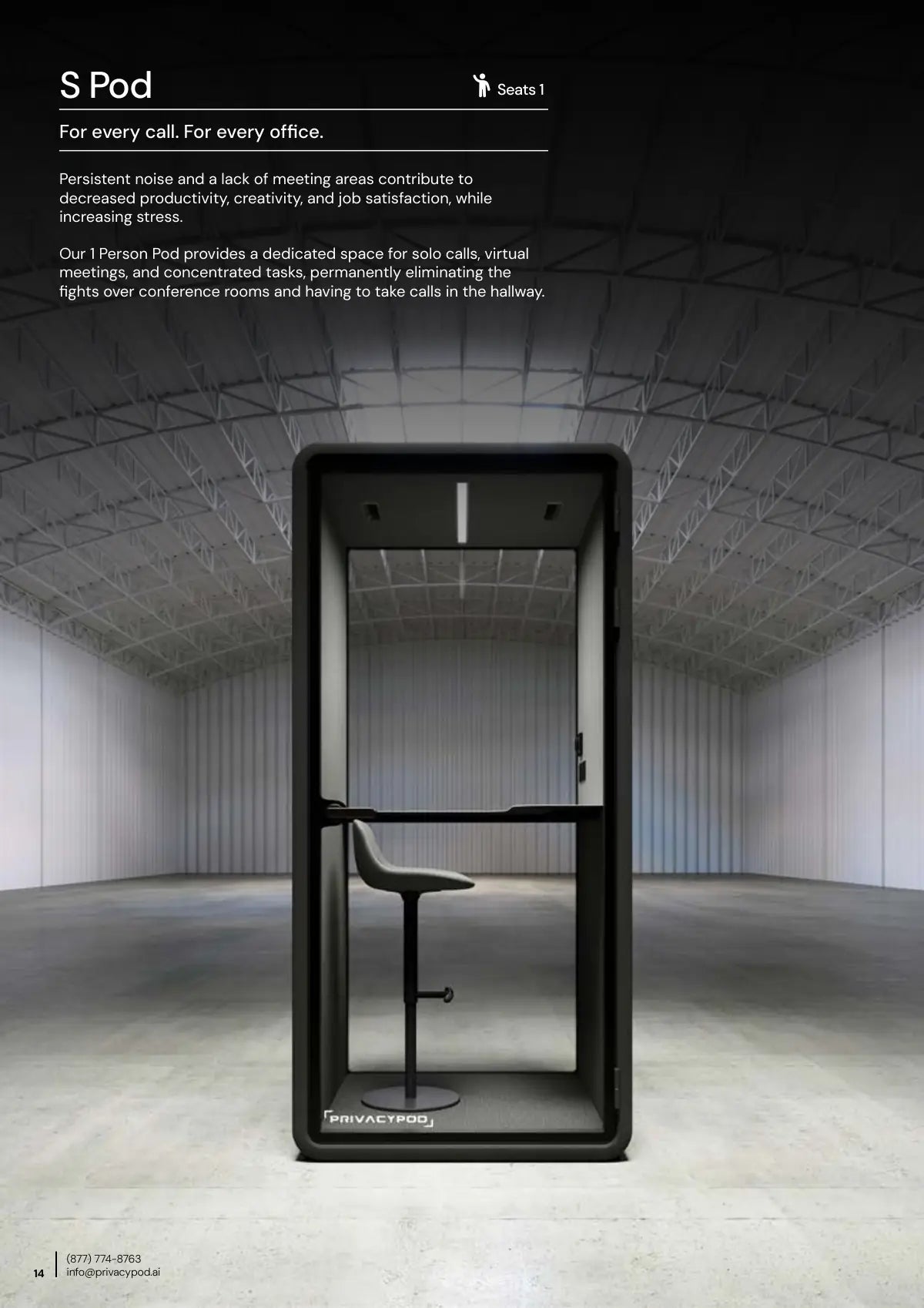
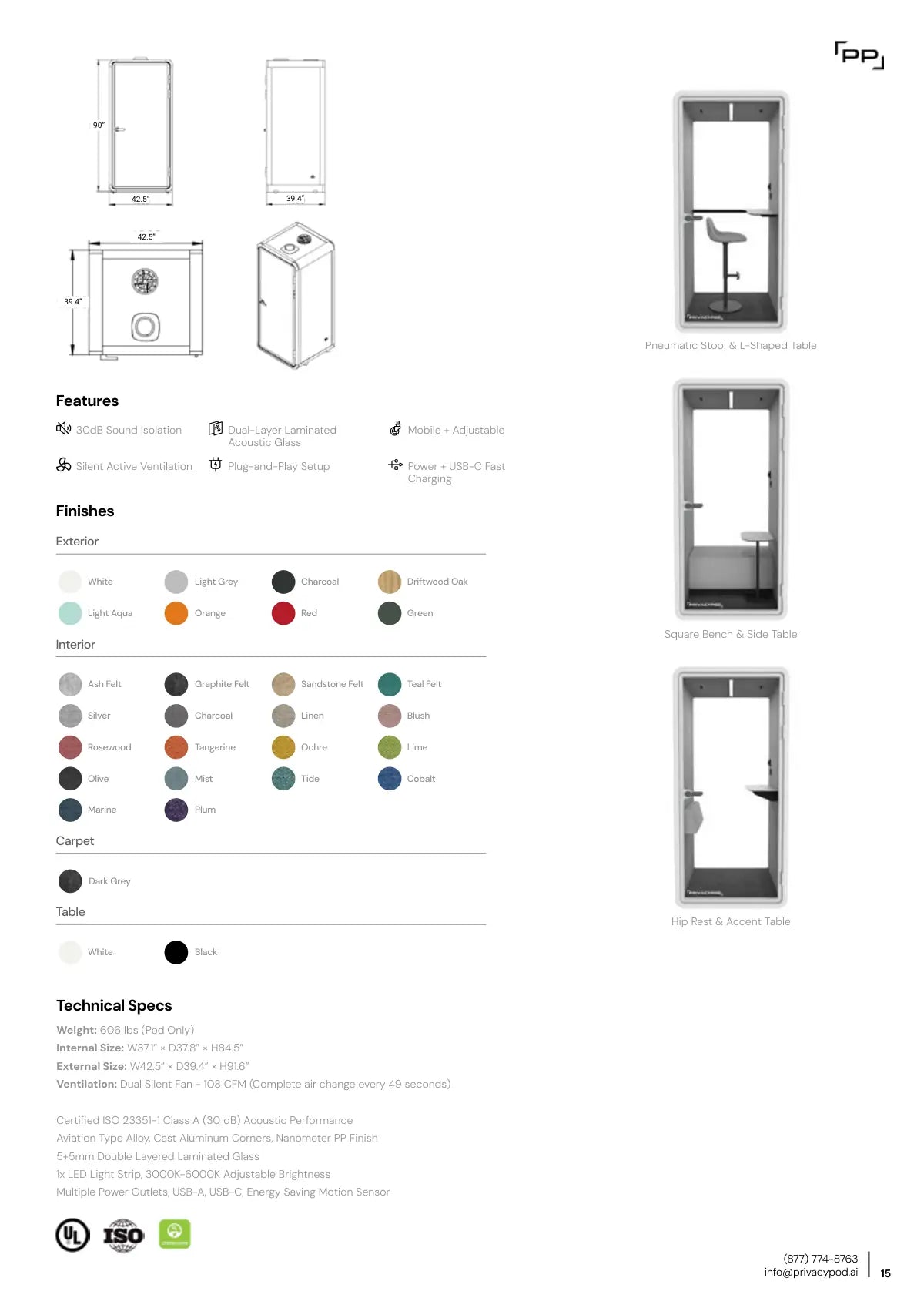
| S Pod | Along main circulation routes, near social zones, beside call-heavy teams | Calls, heads-down work, quick retreats from noise | $6,395 |
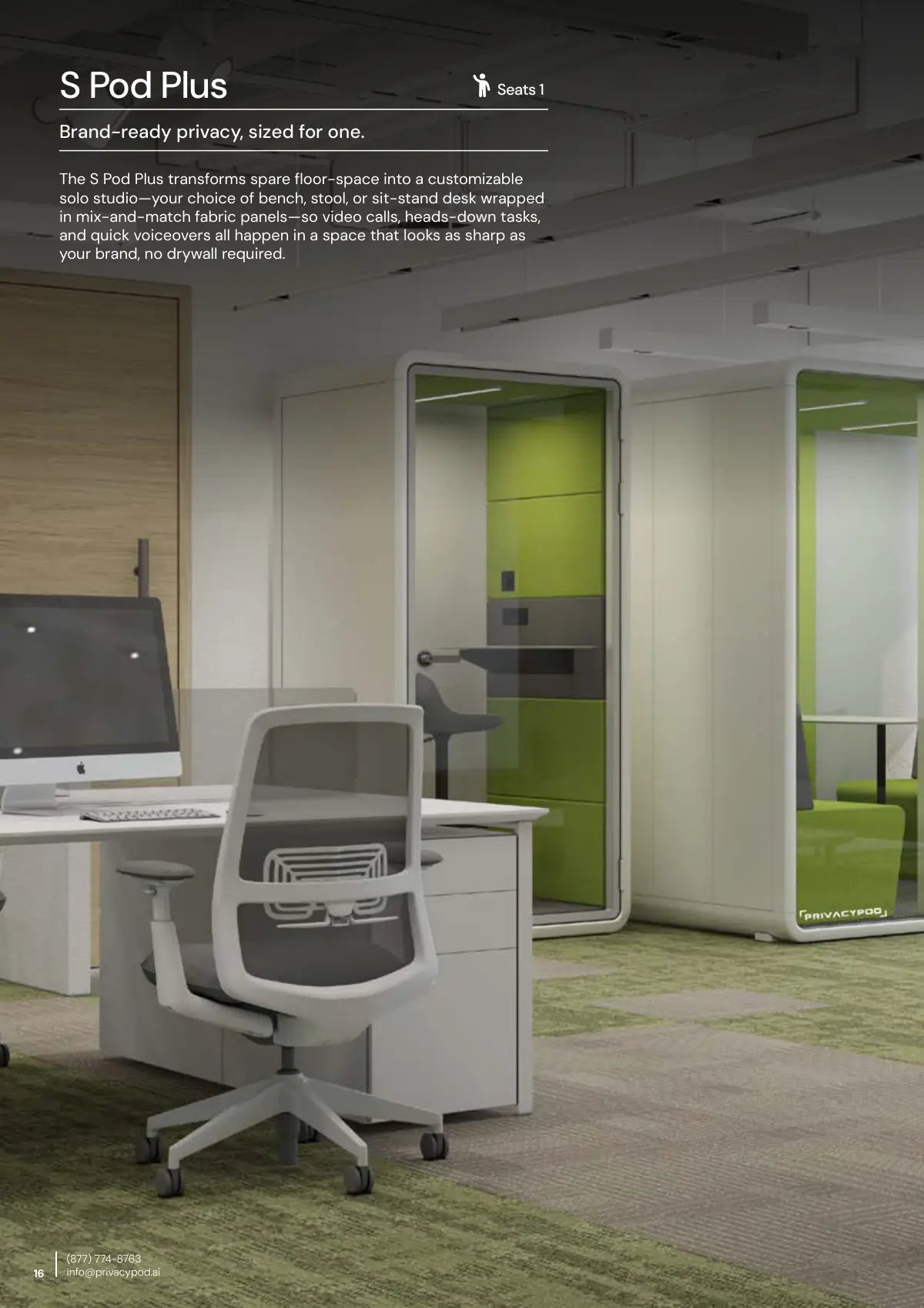
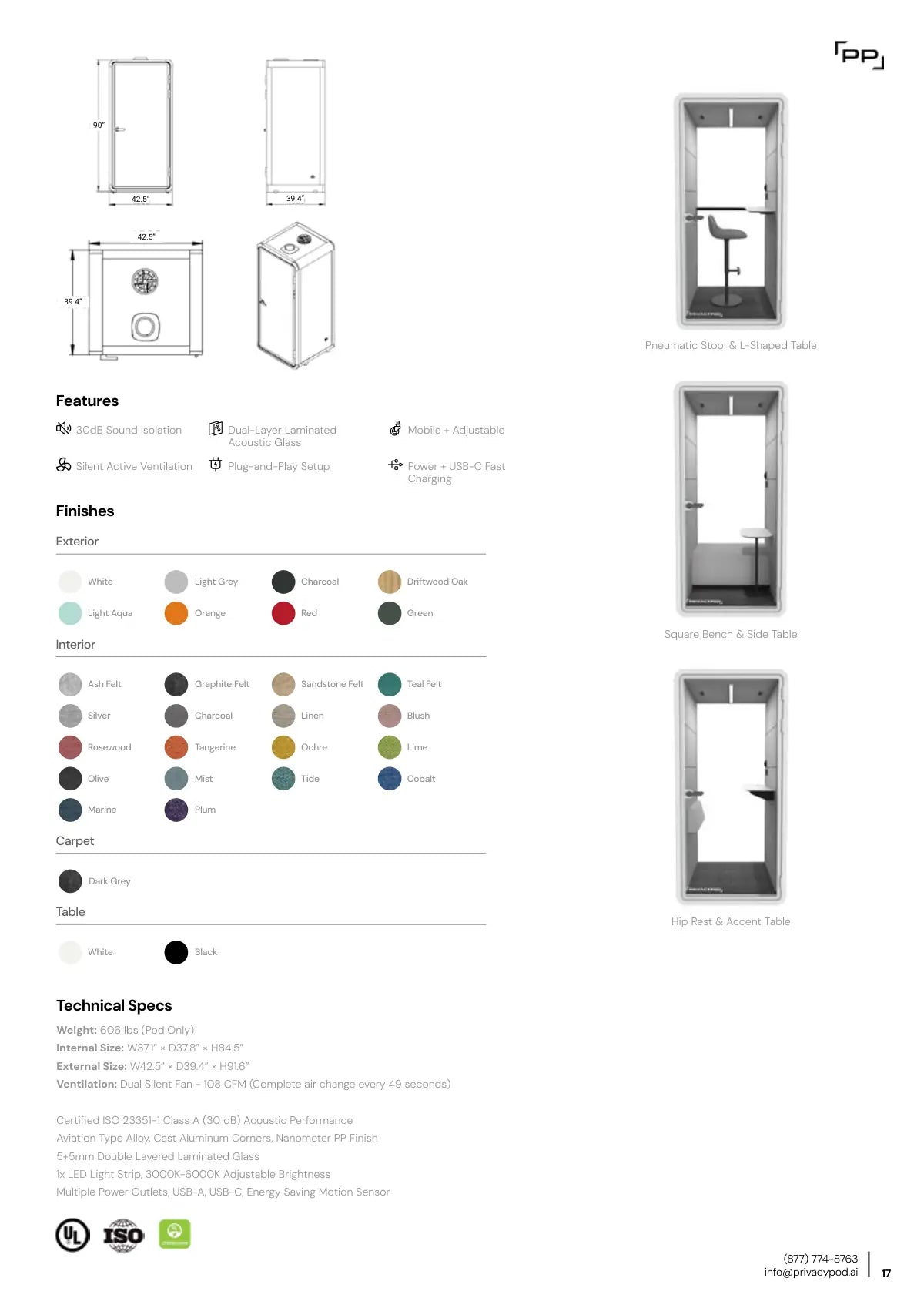
| S Pod Plus | Client-facing zones, executive areas, branded coworking settings | Premium solo work, video calls, design-forward private space | $6,995 |
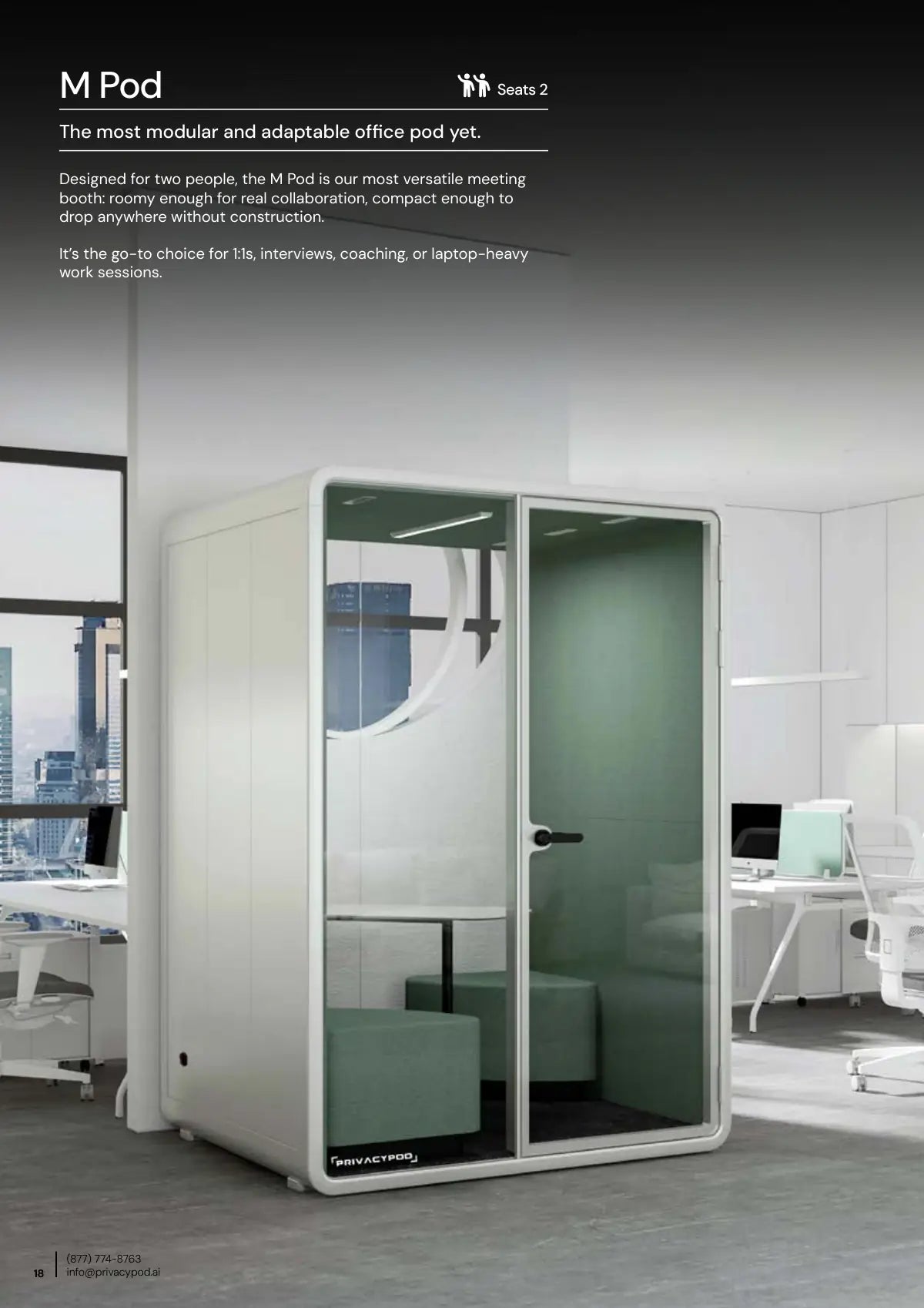
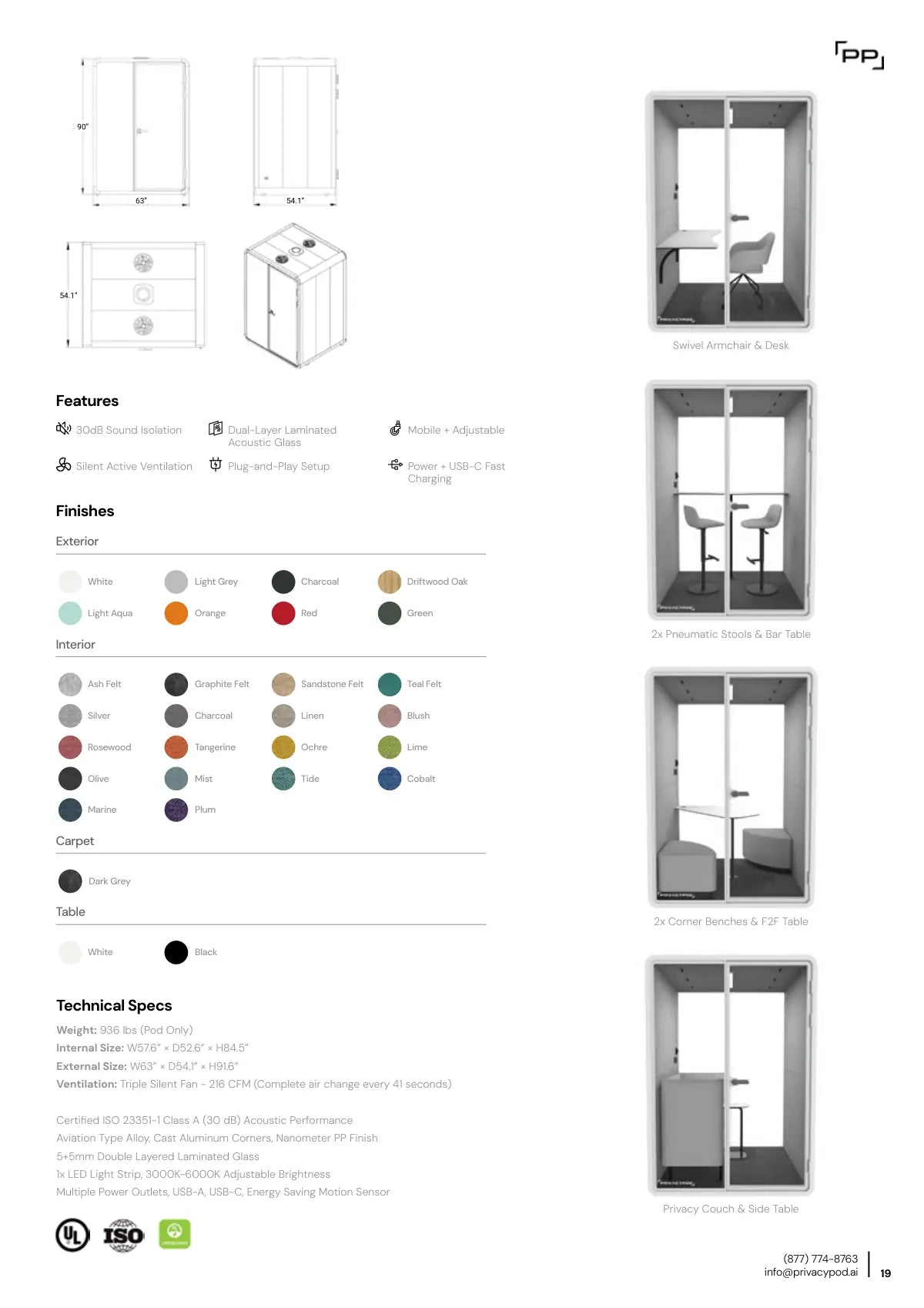
| M Pod | Between team neighborhoods, near whiteboards, beside breakout corners | Quick huddles, pair work, spontaneous strategy sessions | $9,495 |
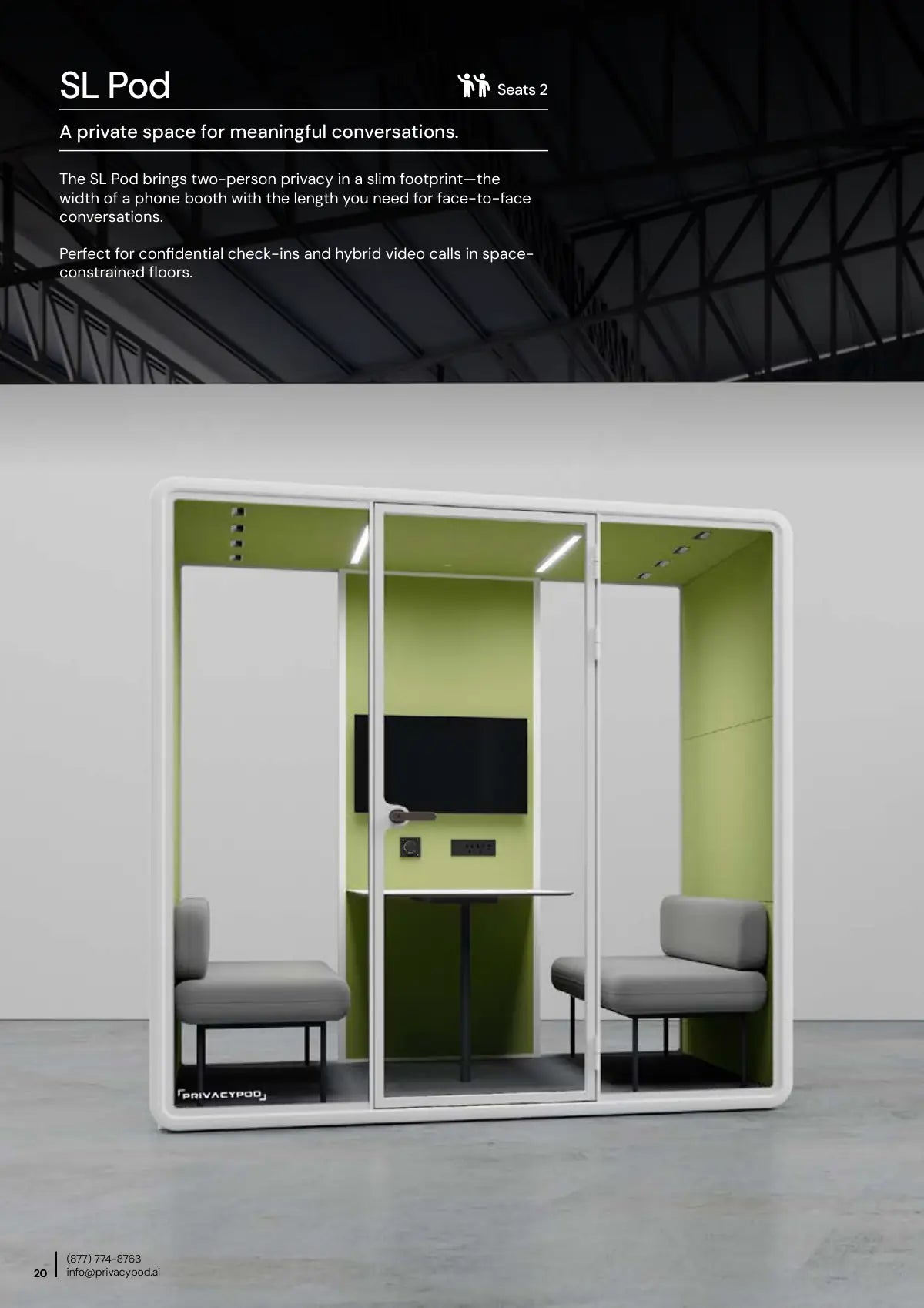
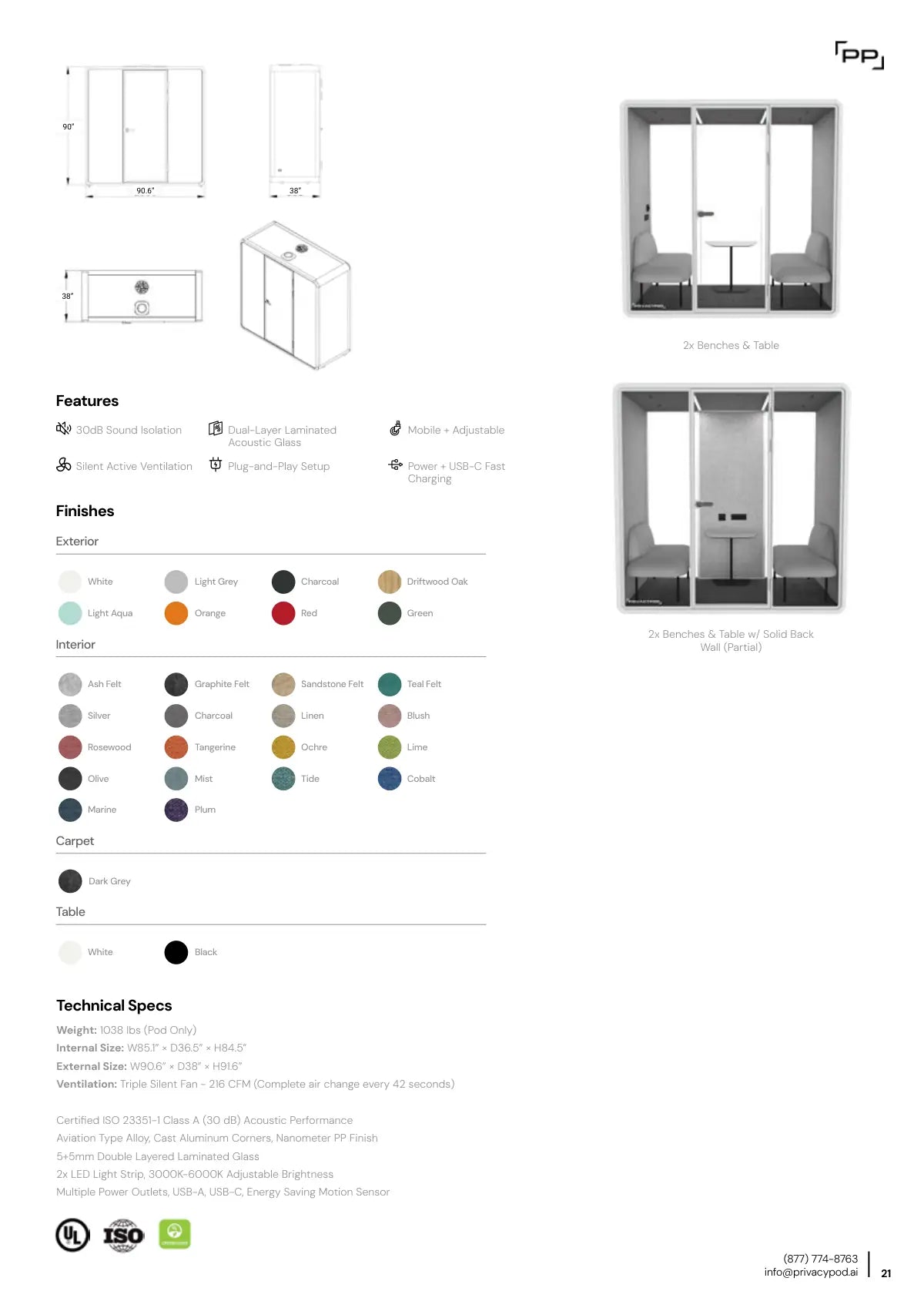
| SL Pod | Near HR, recruiting, sales, or interview-adjacent zones | One-on-ones, interviews, coaching, confidential conversations | $10,995 |
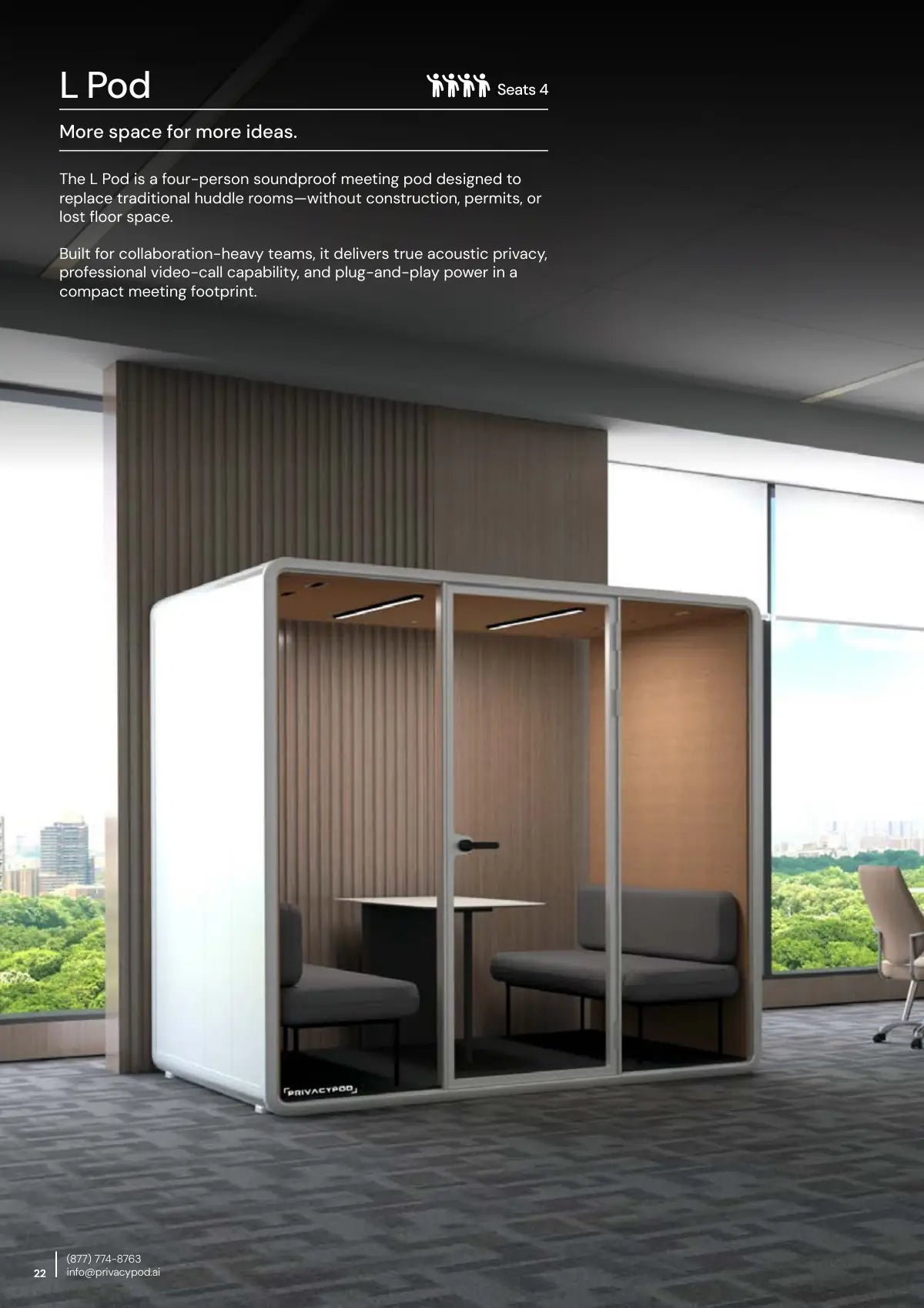
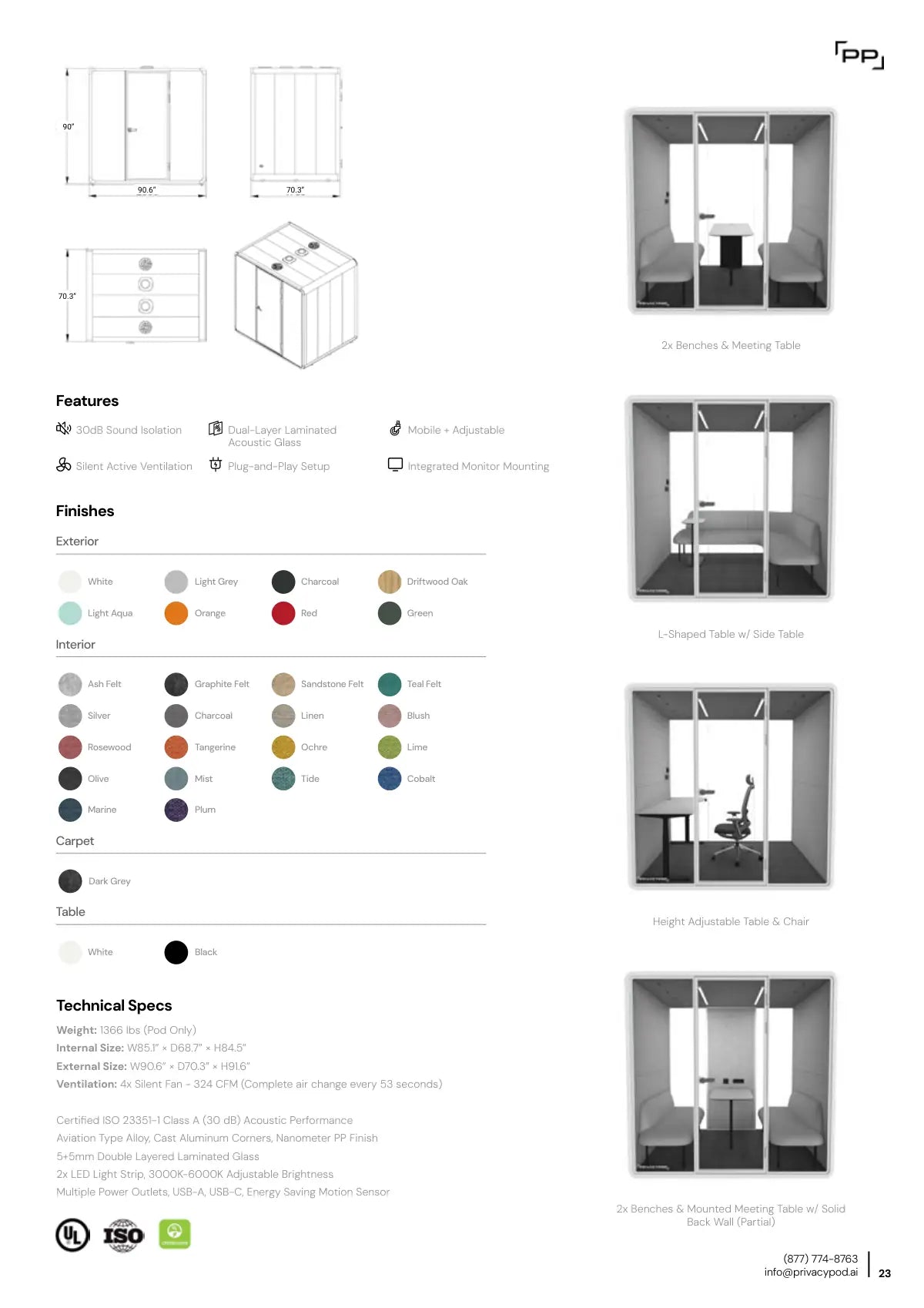
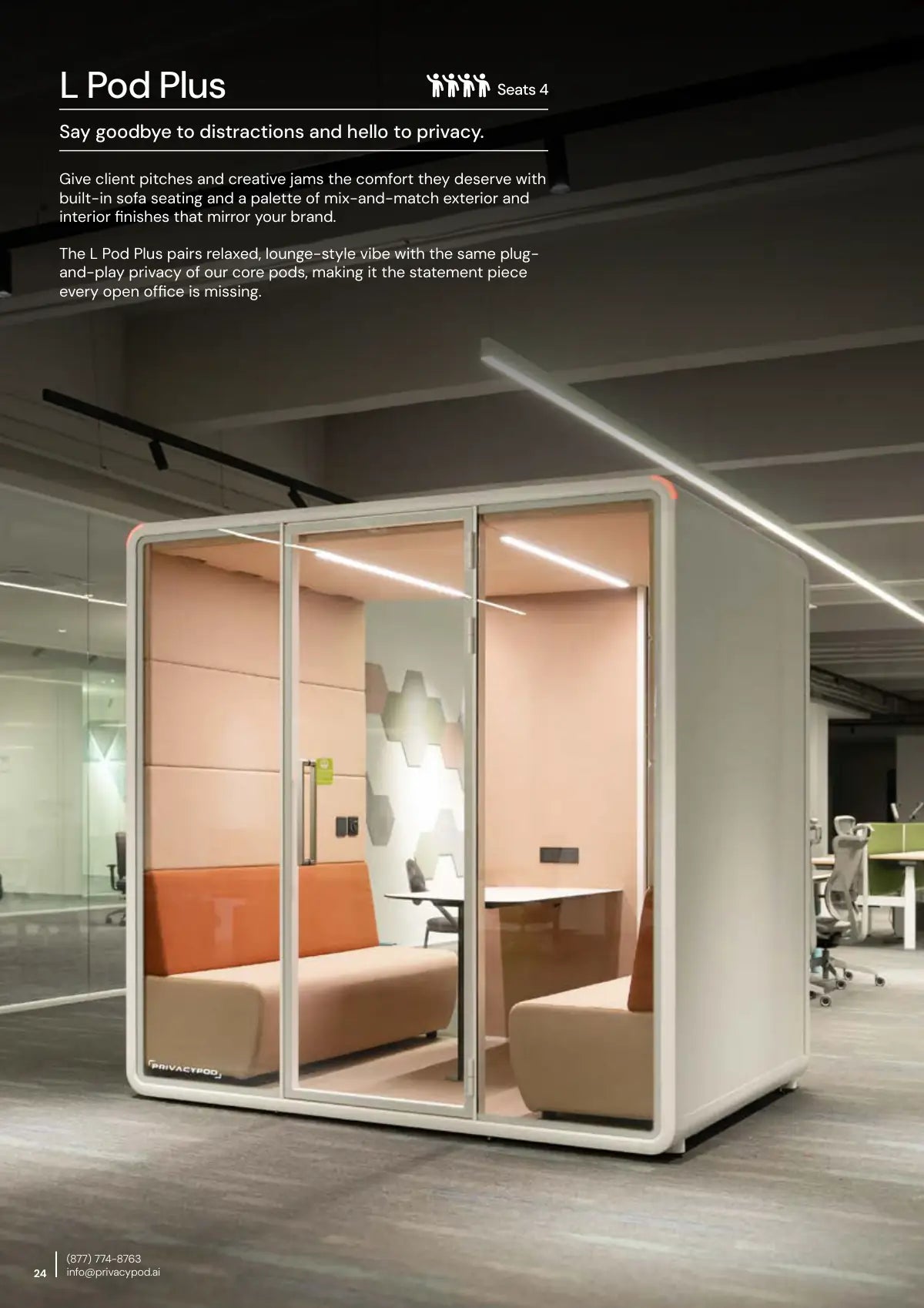
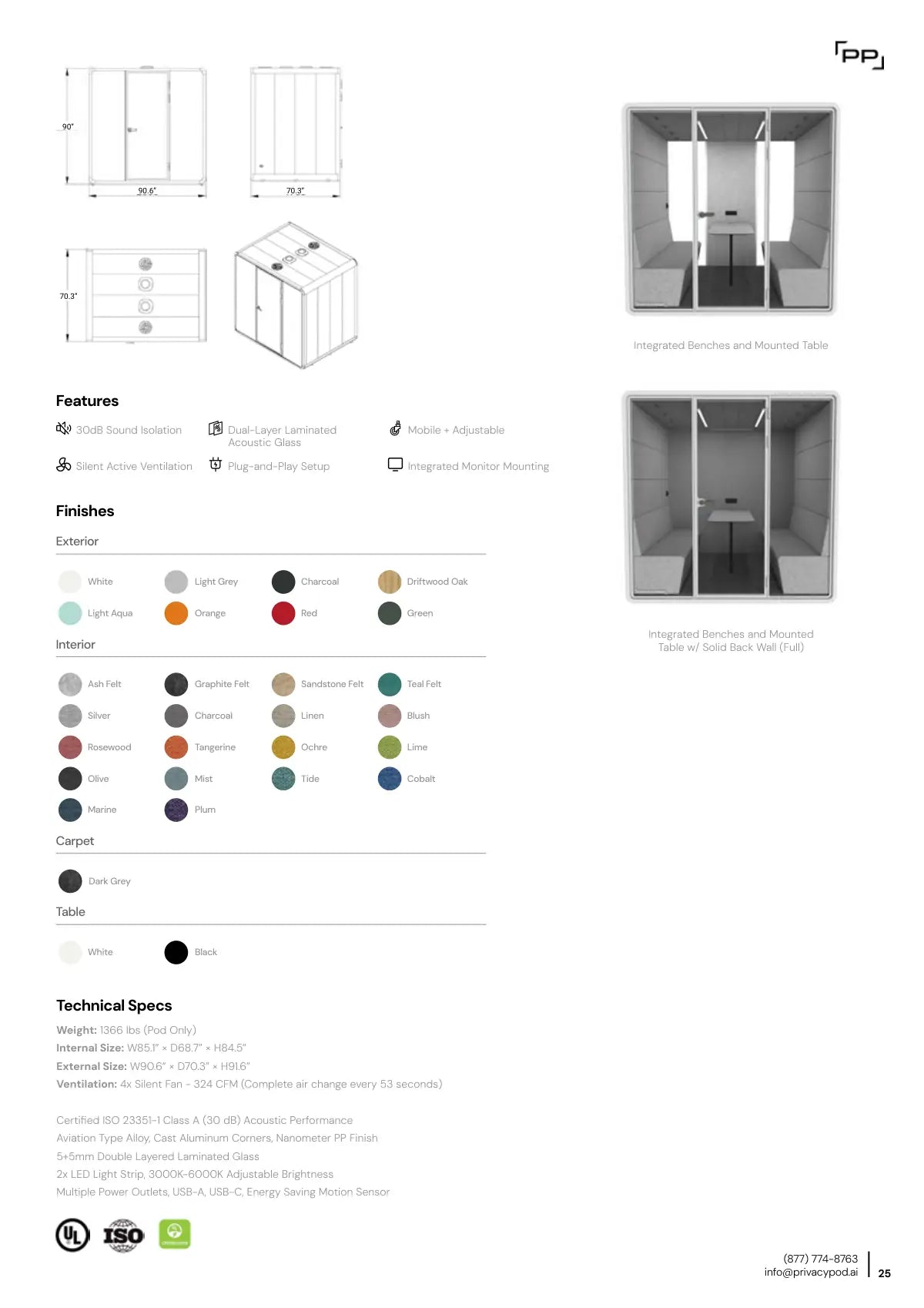
| L Pod | At the edge of collaboration hubs or between departments | 4-person meetings, hybrid sessions, project regrouping | $12,495 |
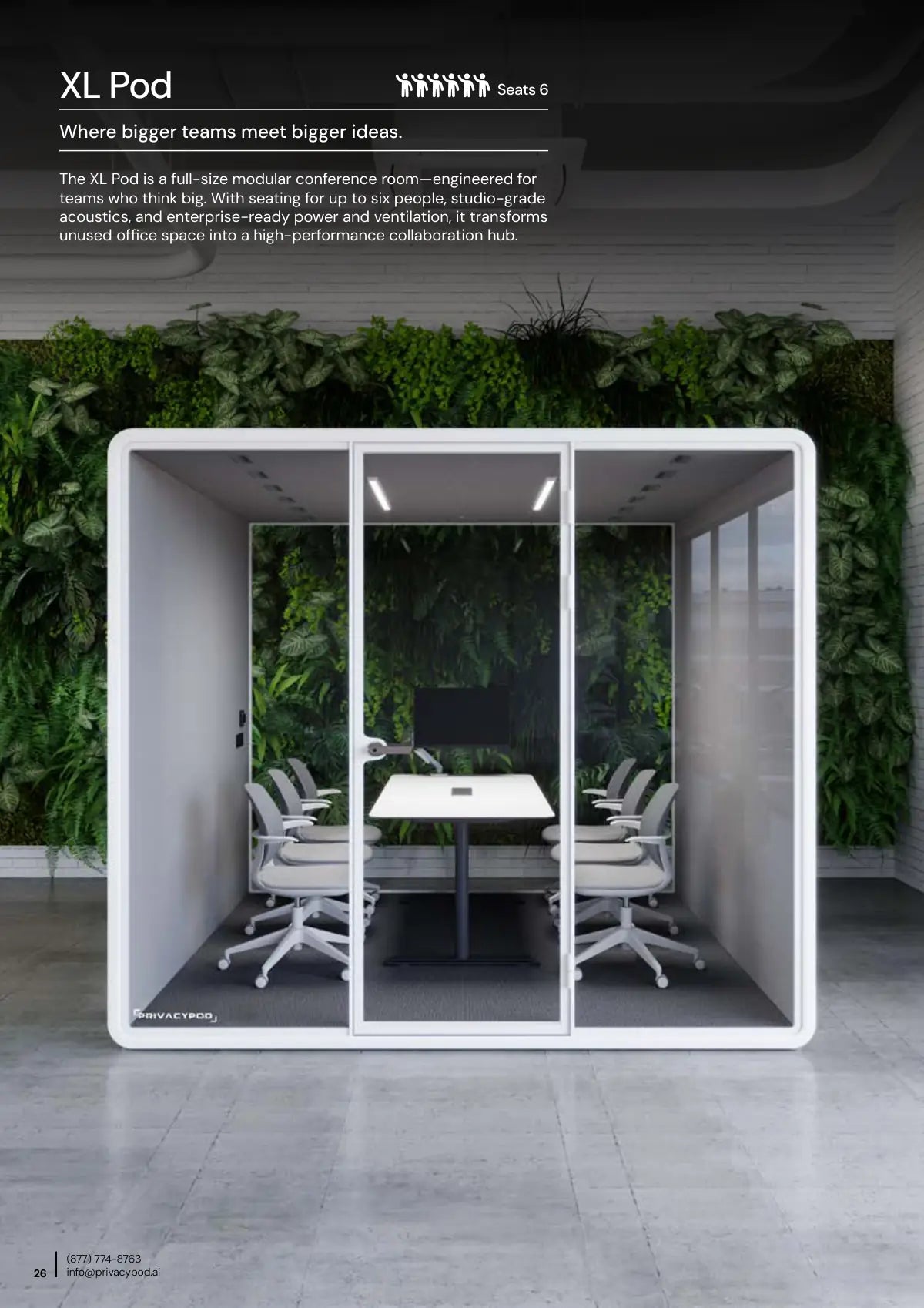
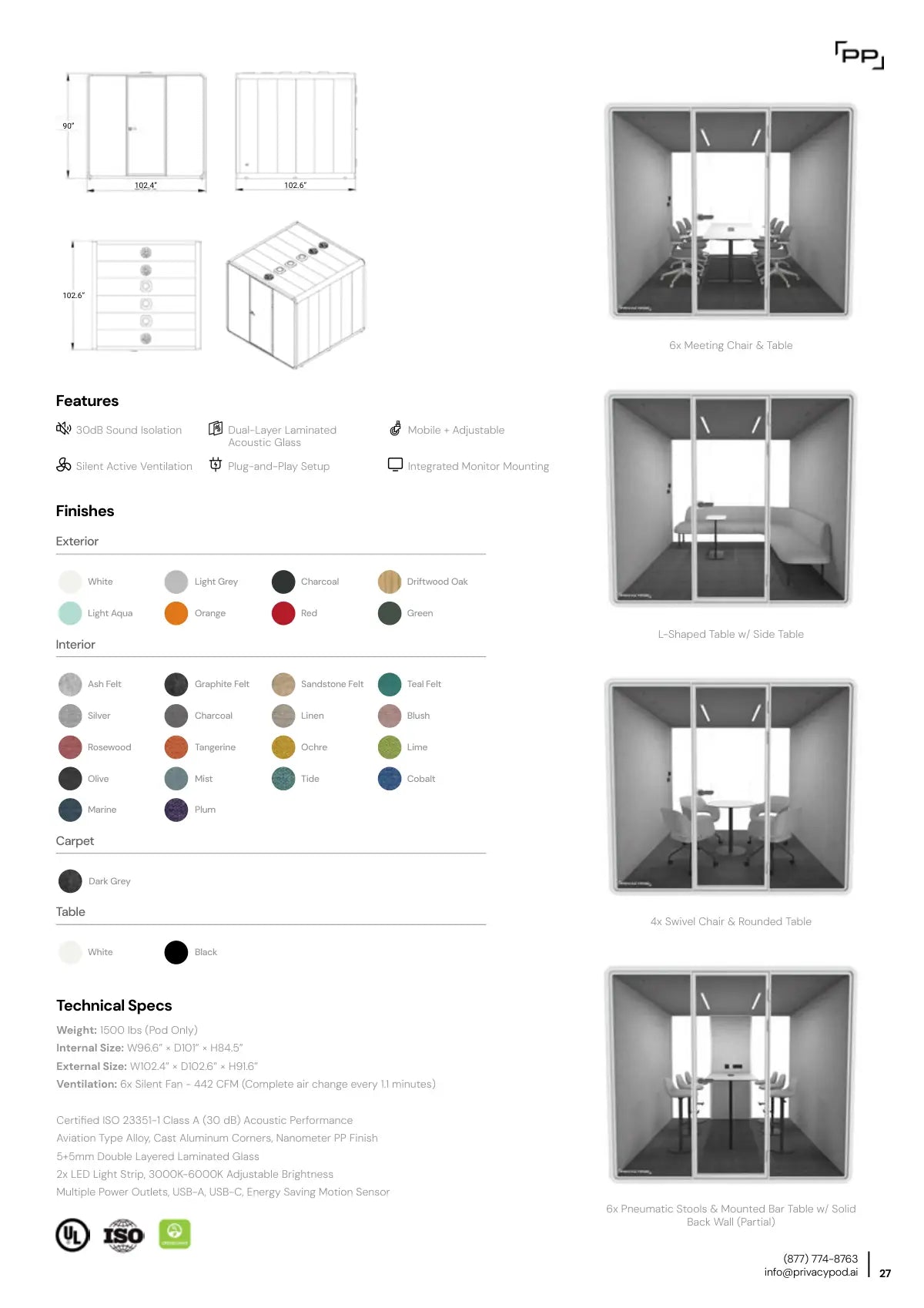
| XL Pod | As an anchor near shared project zones or central teamwork areas | Larger team sessions, client meetings, more intensive collaboration | $14,995 |
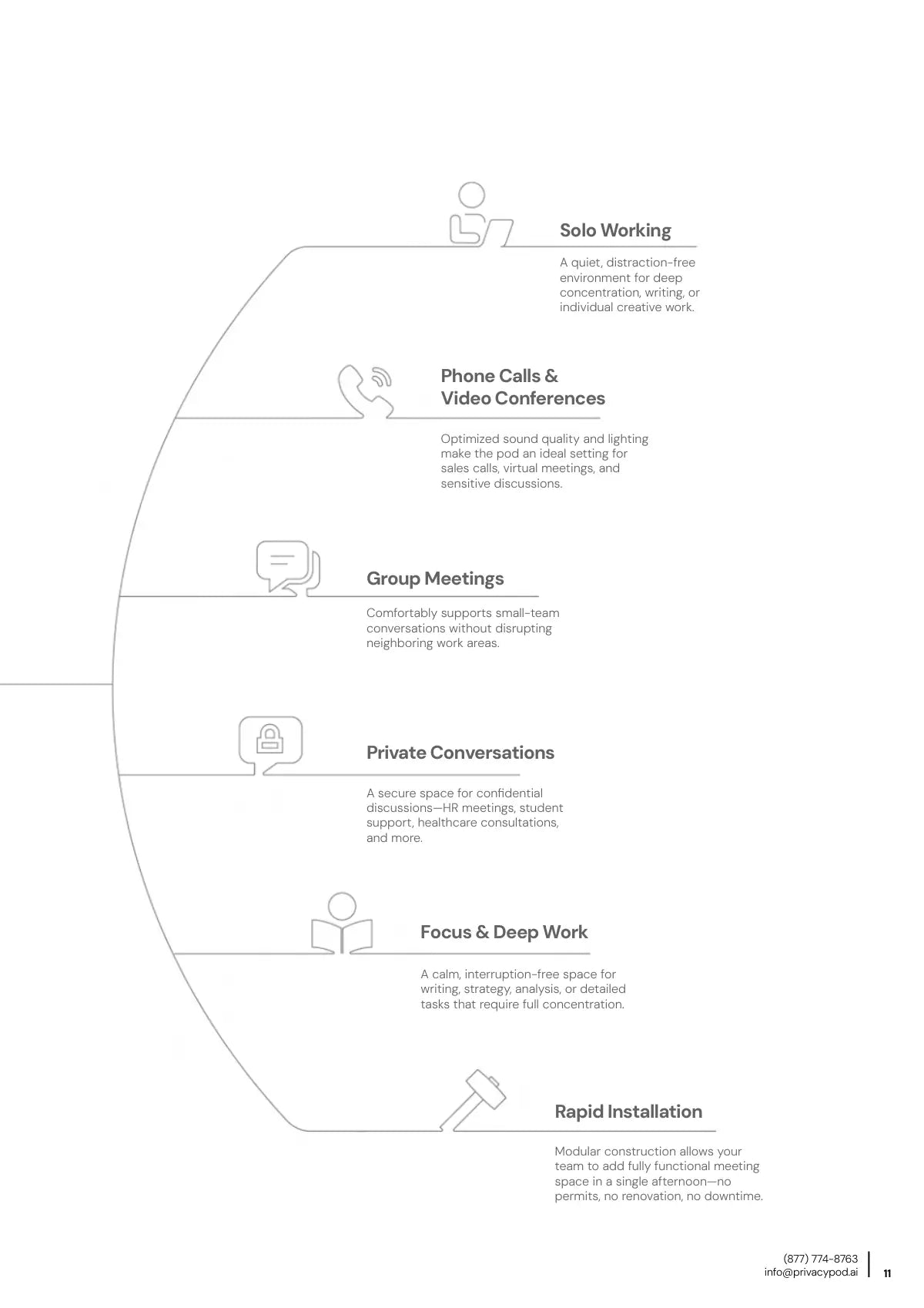
A useful rule of thumb: the smaller the pod, the closer it can usually sit to movement and noise. The larger the pod, the more it should act as a destination, anchor, or transition point within the open floor.
Why office pod placement matters more than most floor plans admit
The mistake many offices make is assuming privacy has to live on the edges of the floor, far from the places where work actually happens. But the best pod layouts do the opposite. They shorten the distance between activity and relief. Instead of making employees leave the action entirely to take a call, reset, or hold a quick private conversation, they give them nearby options that preserve momentum.
That is the real value of well-placed pods. They reduce friction. They let employees move fluidly between modes instead of forcing every task into the same shared environment. A strong open office does not make people choose between visibility and concentration. It gives them a range of spaces that feel connected to one another.

1. Flank busy communal zones with quiet relief
One of the smartest placement moves in an open office is putting solo pods along the perimeter of busy communal areas. That gives employees a fast exit from noise without disconnecting them from the social core. It is especially useful near lounge seating, pantry zones, and informal gathering spaces where energy is good for culture but not always good for concentration.
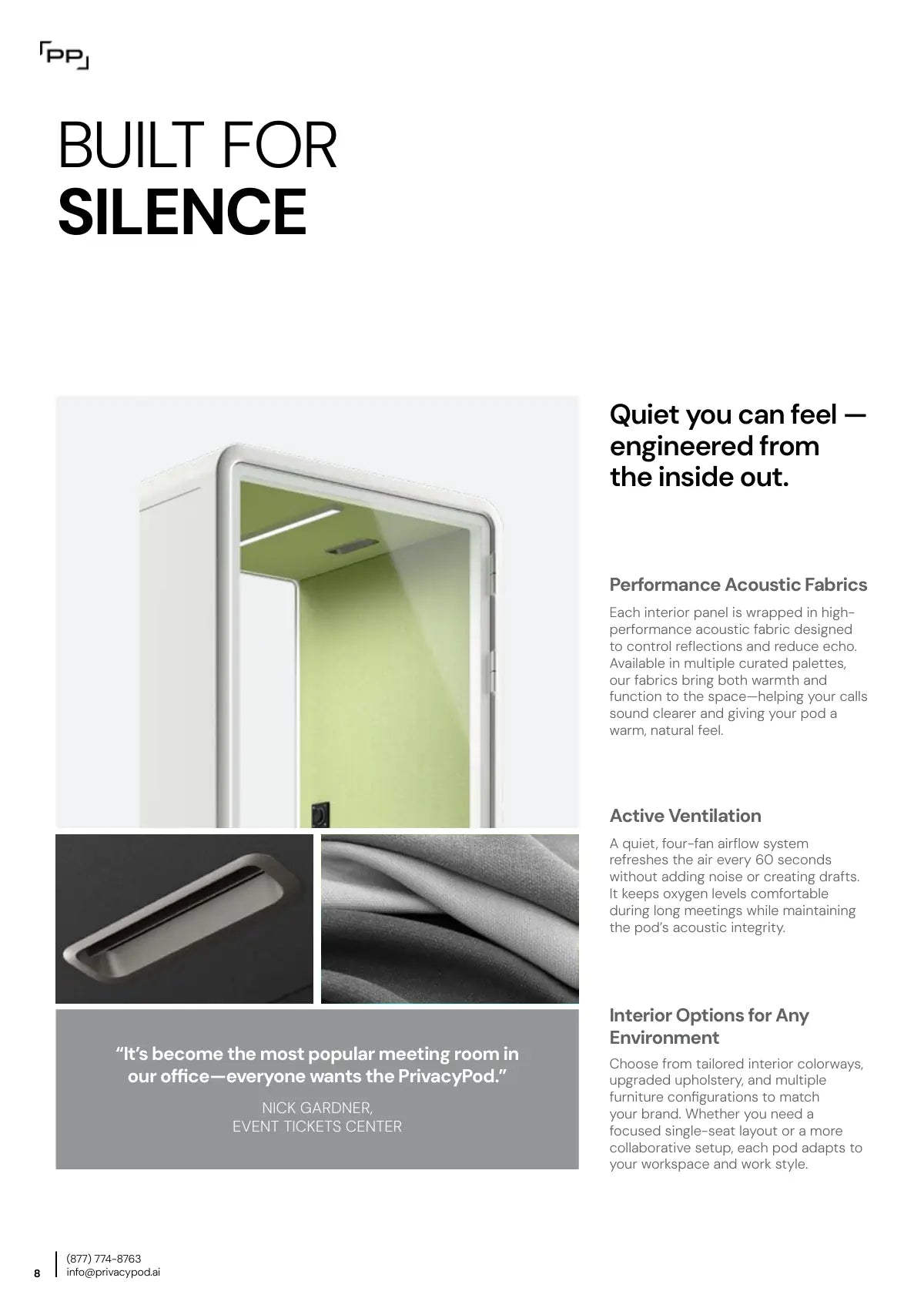
This is where the S Pod makes immediate sense. It gives employees a place to step into for a call, a focused task, or a quick mental reset without trekking to the far end of the office. In more design-led environments, the S Pod Plus does the same job while adding a more elevated interior story.
2. Build islands of focus inside open-plan work areas
Pods do not always belong at the edge of the floor. In many layouts, the better move is to place mid-sized or larger pods right inside the open plan as islands of calm. This breaks up visual monotony, gives teams privacy within reach, and makes the floor feel more human-scaled.
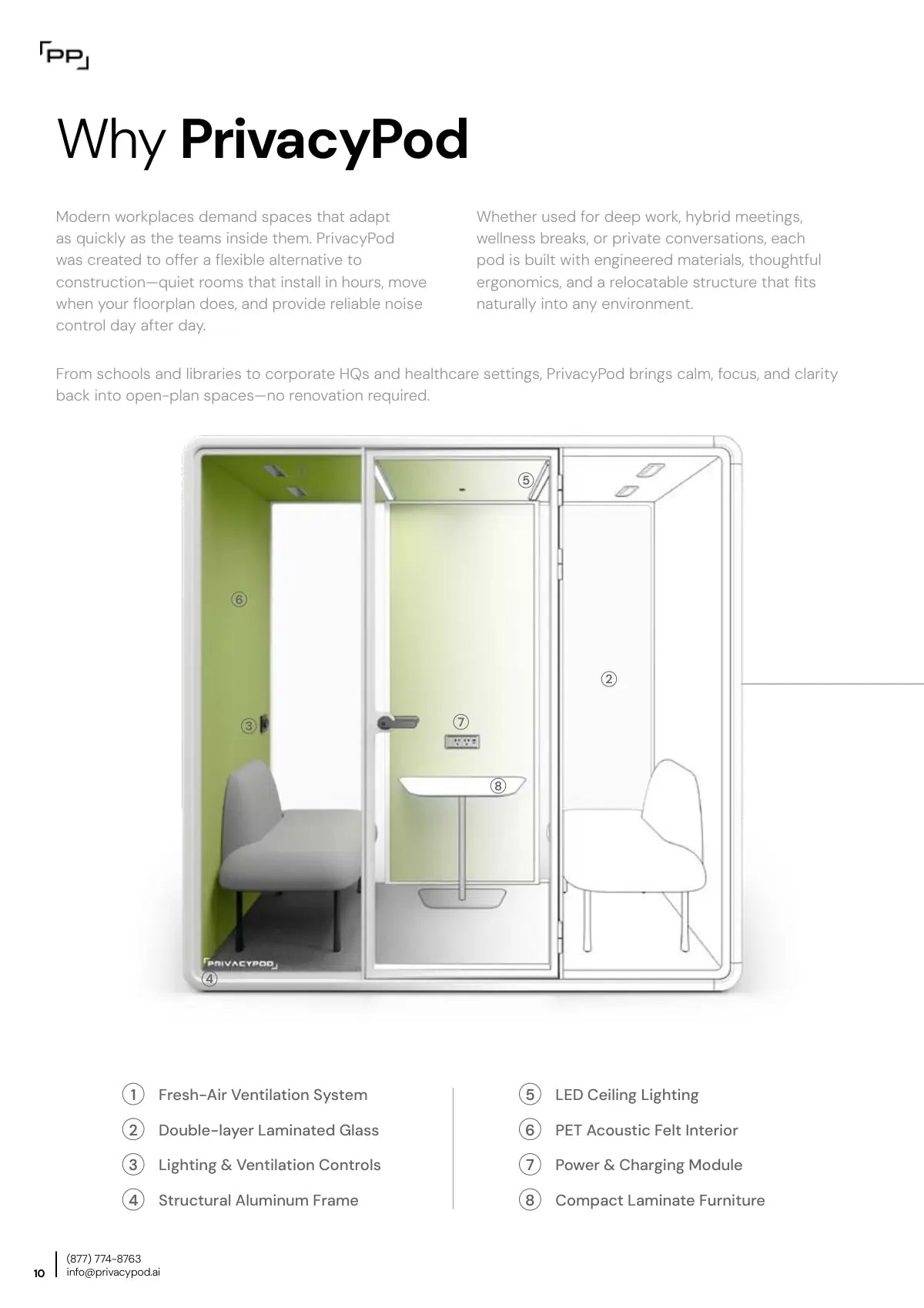
The L Pod is particularly effective here because it is large enough to serve as a real meeting room substitute without overpowering the floor. When a team needs something more substantial near an active project zone, the XL Pod can act as a central collaboration anchor that still preserves the openness around it.

3. Use pods as transition buffers between loud and quiet zones
A pod placed between two zones does more than offer privacy. It helps the office regulate itself. When you place a pod at the transition between a busy collaboration area and a quieter focus zone, it acts as a soft acoustic and behavioral buffer. The space shifts more naturally, and employees instinctively understand that they are moving into a different kind of environment.
This is a strong placement for the M Pod or the SL Pod. Both models are compact enough to sit between neighborhoods of activity but substantial enough to absorb real use. The SL Pod is particularly good where the conversations tend to be more sensitive or face-to-face, like recruiting, HR, or client discussions.
4. Put two-person pods two steps from the work they support
Two-person pods are at their best when they are close to the work that triggers them. If teams are constantly stepping away from a whiteboard, a project table, or a bank of desks to have a quick private conversation, the solution is not a conference room across the building. It is a duo pod nearby.
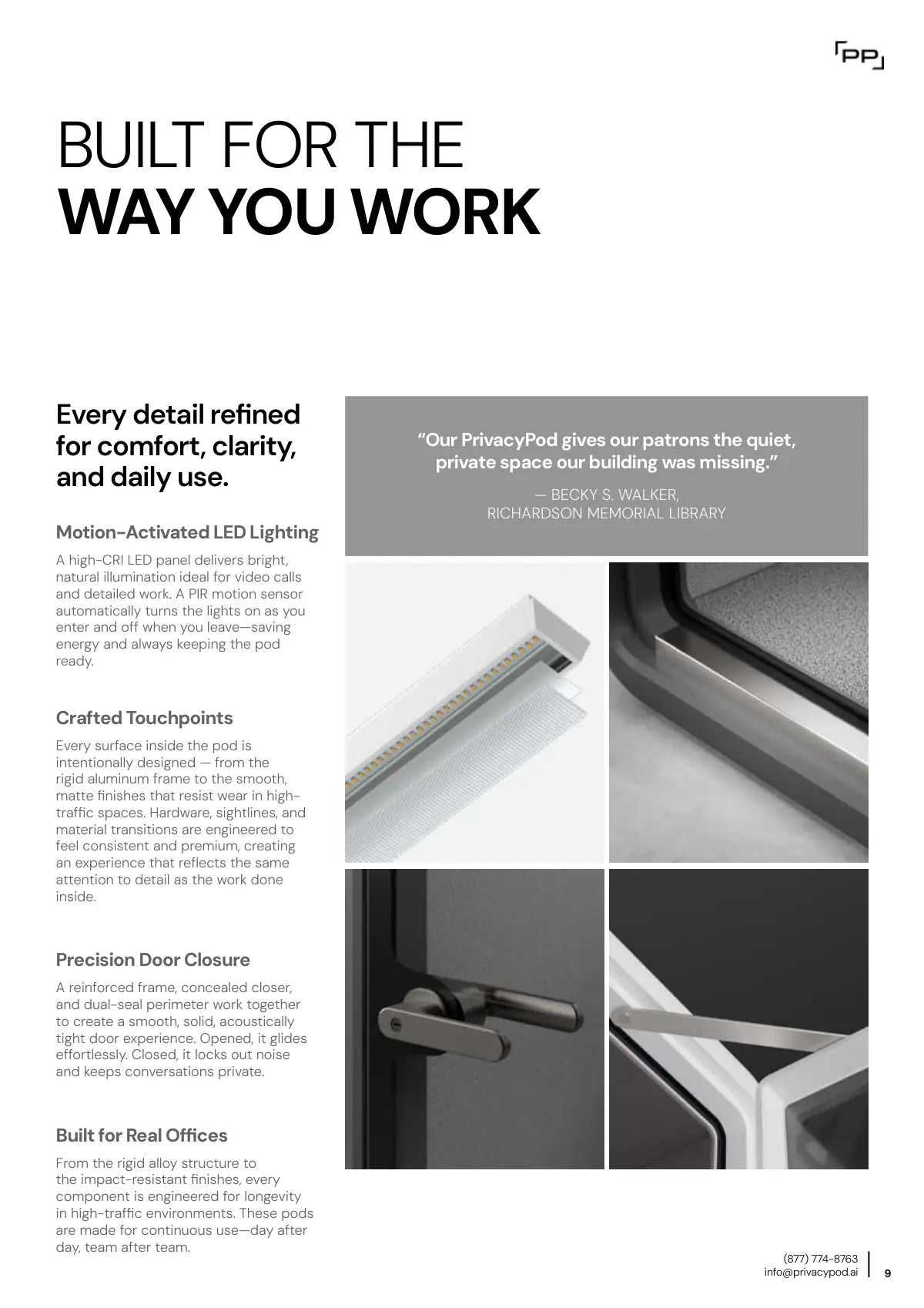
The M Pod works especially well beside active team zones because it can serve as a pop-up strategy room. The SL Pod is excellent for coaching, interviews, and one-on-ones because its footprint stays efficient while still feeling intentional and professional.

5. Turn awkward corners and underused edges into productive microzones
Many offices have small pieces of floor that do almost nothing well: shallow recesses near columns, extra depth at a corridor bend, or underused corners beside storage and circulation. Those are ideal spots for solo pods. They transform dead space into something employees genuinely need without demanding major rework of the floor plan.
The compact footprint of the S Pod makes it a strong candidate for these placements. In more premium or client-facing environments, the S Pod Plus lets those microzones feel more curated and integrated into the office design language.
6. Let larger pods act as landmarks and neutral ground
In large open offices, people benefit from obvious landmarks. A well-placed meeting pod can do double duty here: it becomes both a destination workspace and a visual anchor that helps the floor feel easier to read. That matters for employees, guests, and anyone trying to navigate a busy workplace without unnecessary cognitive effort.
This is where the L Pod and XL Pod shine. Positioned at the boundary between departments or near shared resources, they create neutral territory for cross-team conversations without pulling people into a formal boardroom atmosphere.

7. Distribute privacy evenly instead of concentrating it in one zone
One cluster of pods in one part of the office is better than nothing, but it often creates the same old problem in a new form: privacy exists, just not near everyone who needs it. A better strategy is to distribute pods throughout the floor so no one is ever far from a private call, a quick huddle, or a reset point.
This is one of the biggest advantages of working with a full family of products from PrivacyPod. You can mix solo booths, duo pods, meeting pods, and larger team pods across the office without breaking design continuity. That makes the open floor feel balanced rather than lopsided.
Special-use spaces should be placed with the same intention
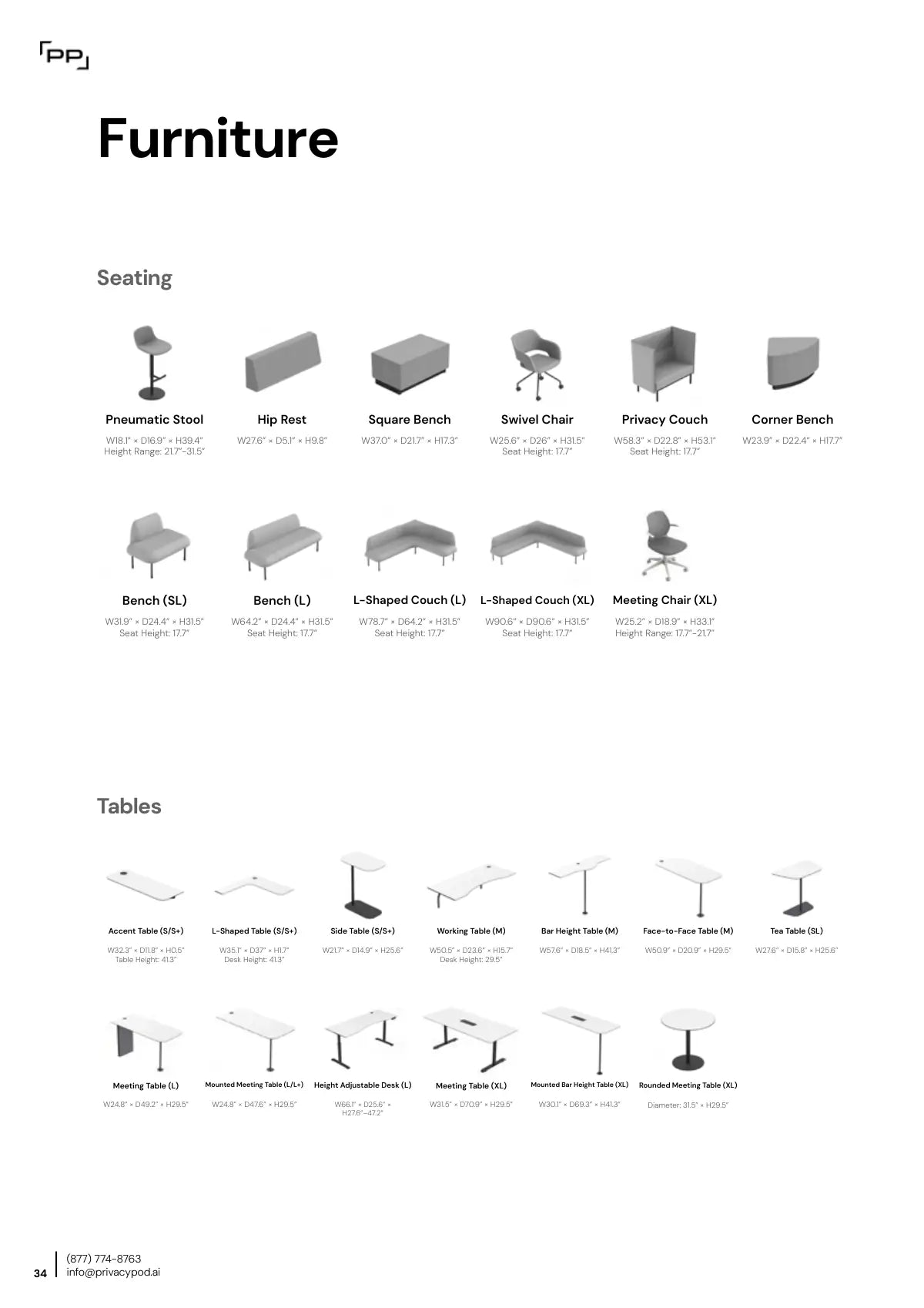
Pod placement is not only about calls and meetings. In many offices, the most overlooked placements are the ones tied to inclusion and well-being. An accessible pod or XL accessible pod should sit where it is easy to reach, not buried as an afterthought. A Solo Lactation Pod or XL Lactation Pod should be close enough to daily work to feel convenient, but private enough to feel respectful and calm.
The common thread is simple: place the pod near the behavior it is meant to support. The closer the pod is to the real need, the more often it gets used and the more naturally it fits into the office rhythm.
Common office pod placement mistakes to avoid
The first mistake is putting every pod in the least visible corner of the floor. That can make the office feel tidier on paper, but it often leads to underuse. The second is clustering every pod in the same area, which leaves the rest of the office underserved. The third is choosing placement based only on what fits physically rather than what supports workflow. A pod that technically fits but sits far from the work it should serve will always underperform.
The best layouts think in terms of behavior, not just geometry. Where are calls happening now? Where do quick side conversations already break out? Where does noise spike? Where do people need recovery points? Those questions usually produce a better pod plan than simply hunting for empty square footage.
Why choose PrivacyPod
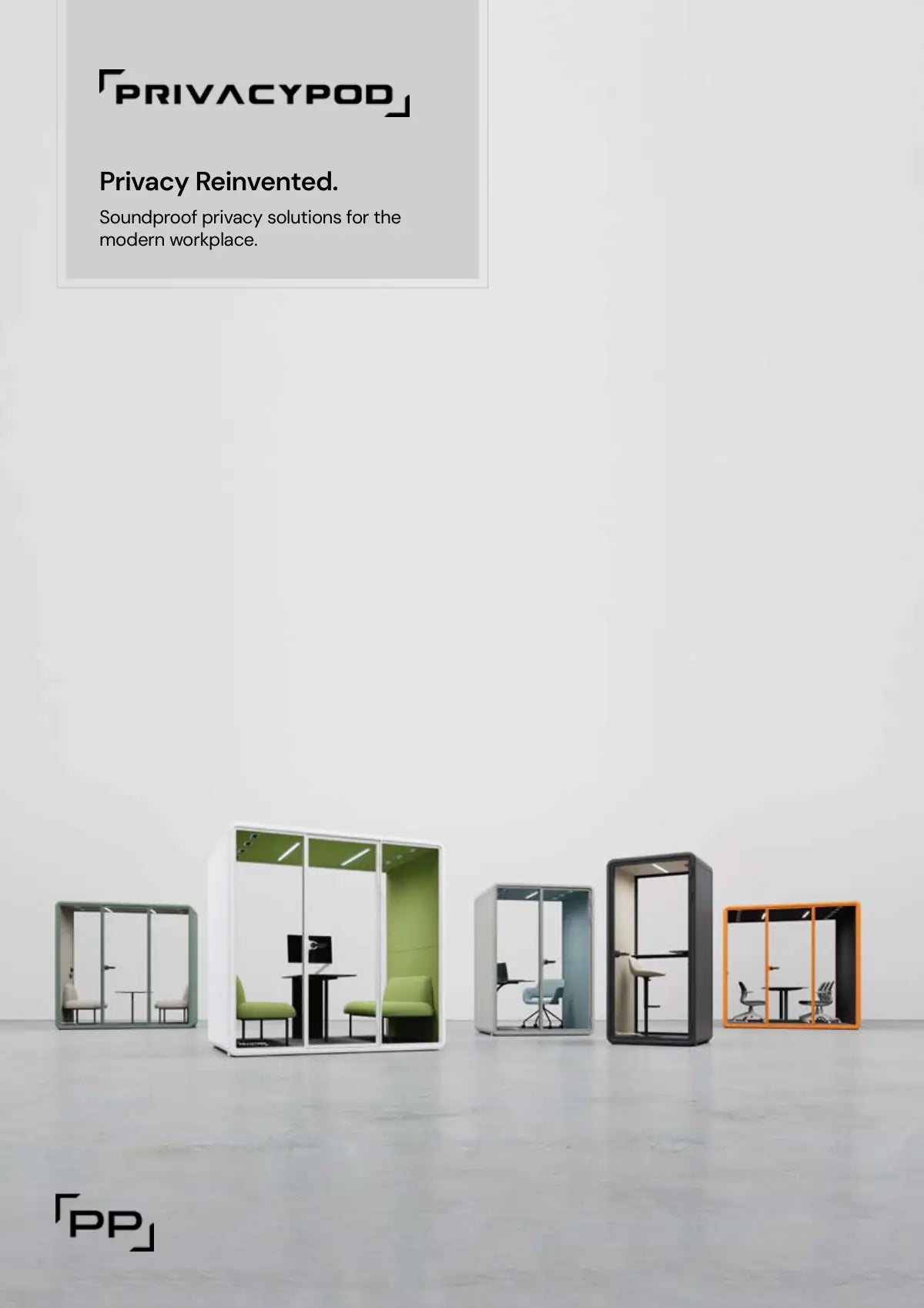
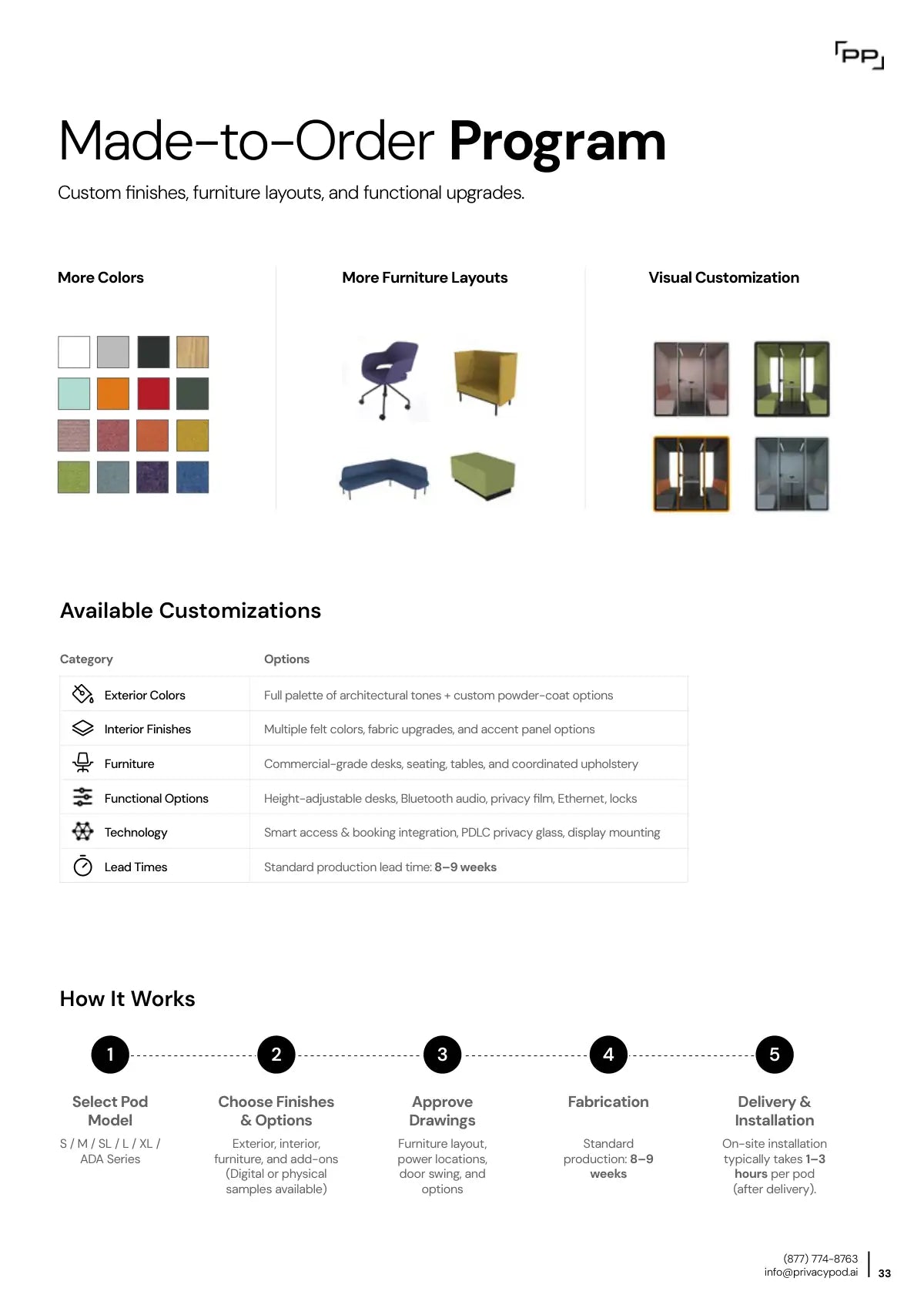
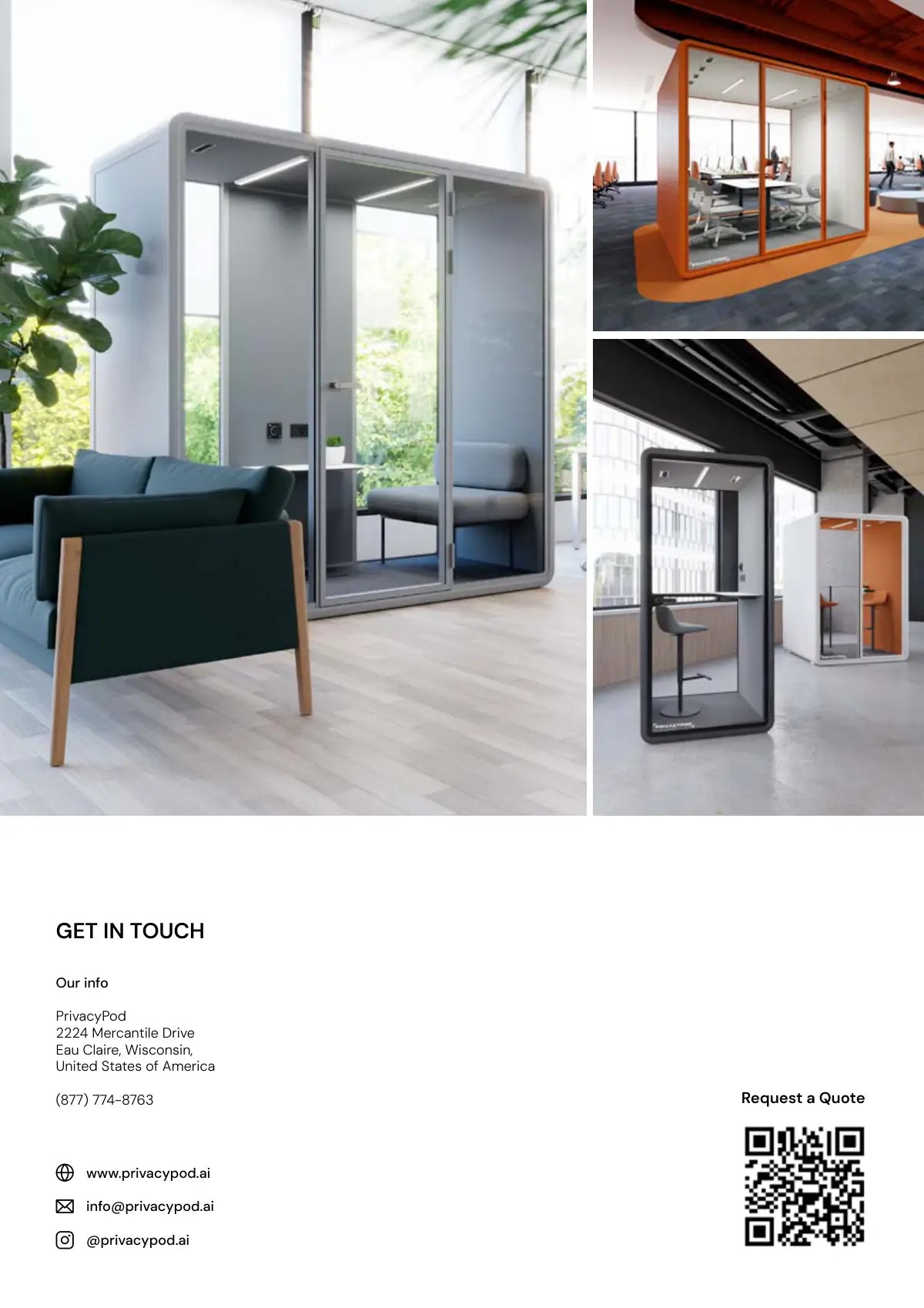
PrivacyPod works especially well for open-office planning because the brand gives you a full set of modular privacy tools instead of a one-size-fits-all product. The S Pod and S Pod Plus help with solo calls and deep focus. The M Pod and SL Pod support quick private conversations. The L Pod and XL Pod give teams real enclosed meeting space without renovation.
That breadth matters because the best pod placement strategy is almost never about one pod. It is about giving the office the right mix of privacy points, collaboration rooms, and quiet retreats so employees can move smoothly through the day. PrivacyPod makes that easier with a modular family, strong customization, and products built to fit modern workplaces rather than fight them.
FAQ: office pod placement in open offices
Where should office pods go for maximum impact?
The most effective placements are usually near the work they support: solo pods near call-heavy or noisy areas, duo pods near team collaboration zones, and larger meeting pods near project hubs or shared intersections. Good placement reduces walking, preserves momentum, and keeps privacy close at hand.
Will office pods make an open office feel smaller?
Not if they are placed strategically. In fact, pods often make open offices feel more usable because they create structure without shutting down sightlines. A well-placed pod can break up a large floor, soften noise, and give the space more rhythm without making it feel closed off.
What is the biggest placement mistake companies make?
The most common mistake is treating pods like leftovers that should be hidden wherever there is extra room. Pods perform best when they are positioned intentionally around actual work patterns, not just wherever they happen to fit.
How do I know which PrivacyPod model should go where?
A good starting point is to match pod size to behavior. Use the S Pod for solo privacy near movement and noise, the M Pod or SL Pod for pair conversations near teams, and the L Pod or XL Pod where small-group collaboration already happens.
Want help planning pod placement for your office?
Explore the full PrivacyPod office pod collection, compare options on the pod comparison page, browse past projects in the showcase, or contact PrivacyPod for a layout recommendation. You can also email info@privacypod.ai or call (877) 774-8763.
Filed under Workplace planning
Back to the blog