Study pods for education
Study pods for schools and campuses: focus for every student.
PrivacyPod study pods give schools, colleges, and universities certified-quiet rooms for focused study, testing accommodations, advising, and counseling privacy inside existing buildings. Every pod is ISO 23351-1 Class A certified at approximately 30 dB of speech level reduction, installs without construction; shipping is free and Quick-Ship models deliver in 1 to 2 weeks.
- ISO 23351-1 Class A quiet
- 1 to 2 week Quick-Ship
- From middle schools to universities
- Installed in 4 to 6 hours
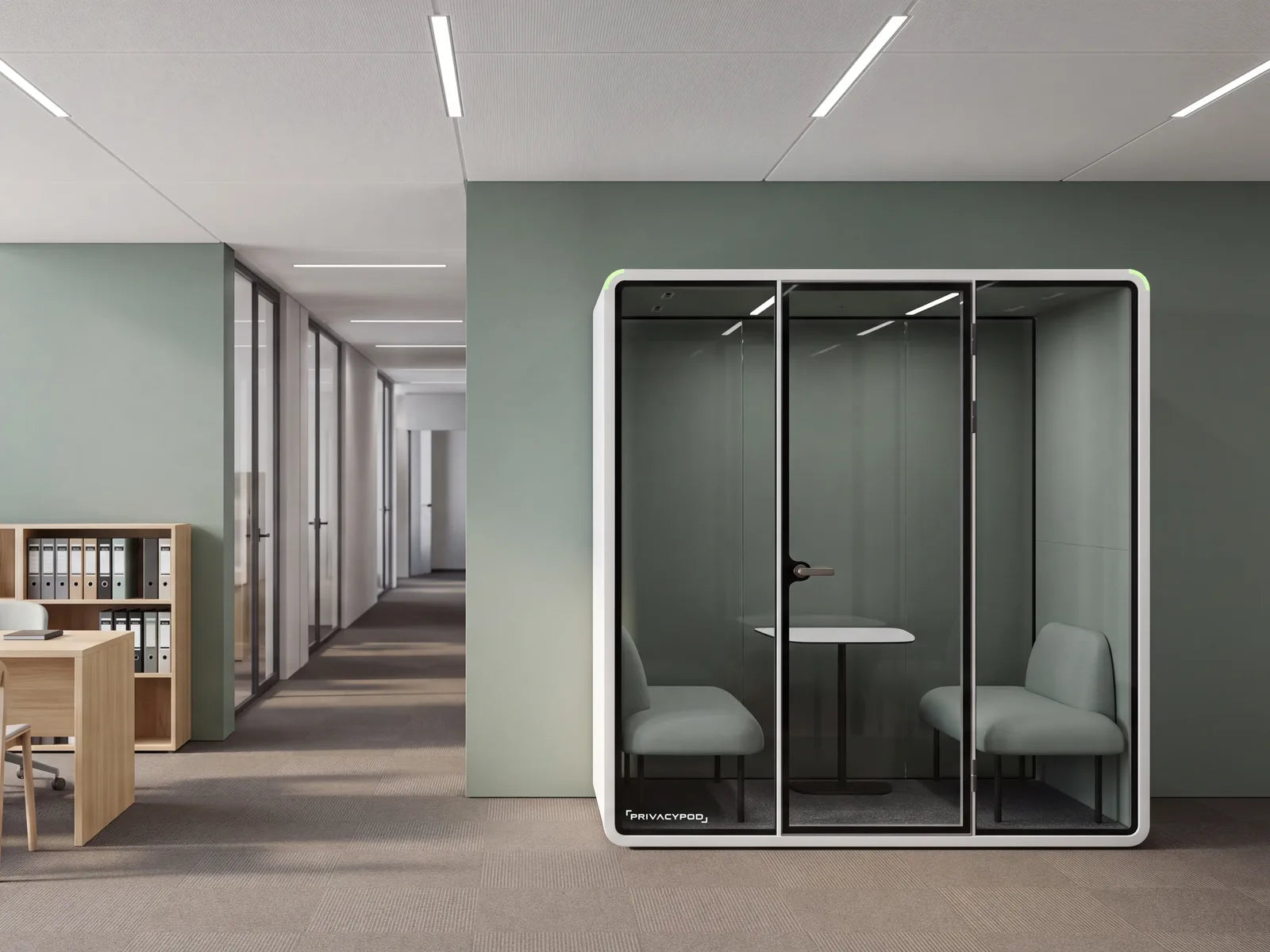
Every level of education
One lineup, three kinds of campus.
The student services question
Can pods handle testing accommodations and counseling privacy?
Yes. A certified pod gives student services a distraction-controlled, speech-private room without a construction project: it puts approximately 30 dB of speech level reduction, certified to ISO 23351-1 Class A, between an advising session, a test sitting, or a telehealth conversation and the room outside, and an RT60 of 0.25 seconds keeps the interior calm to sit in.
That is why the same lineup serves such different rooms: bookable study booths in a college library, reset rooms in an academy, testing space near disability services. PrivacyPod works with numerous schools, districts, colleges, and universities across the country, from middle schools to research universities.
The campus spec sheet
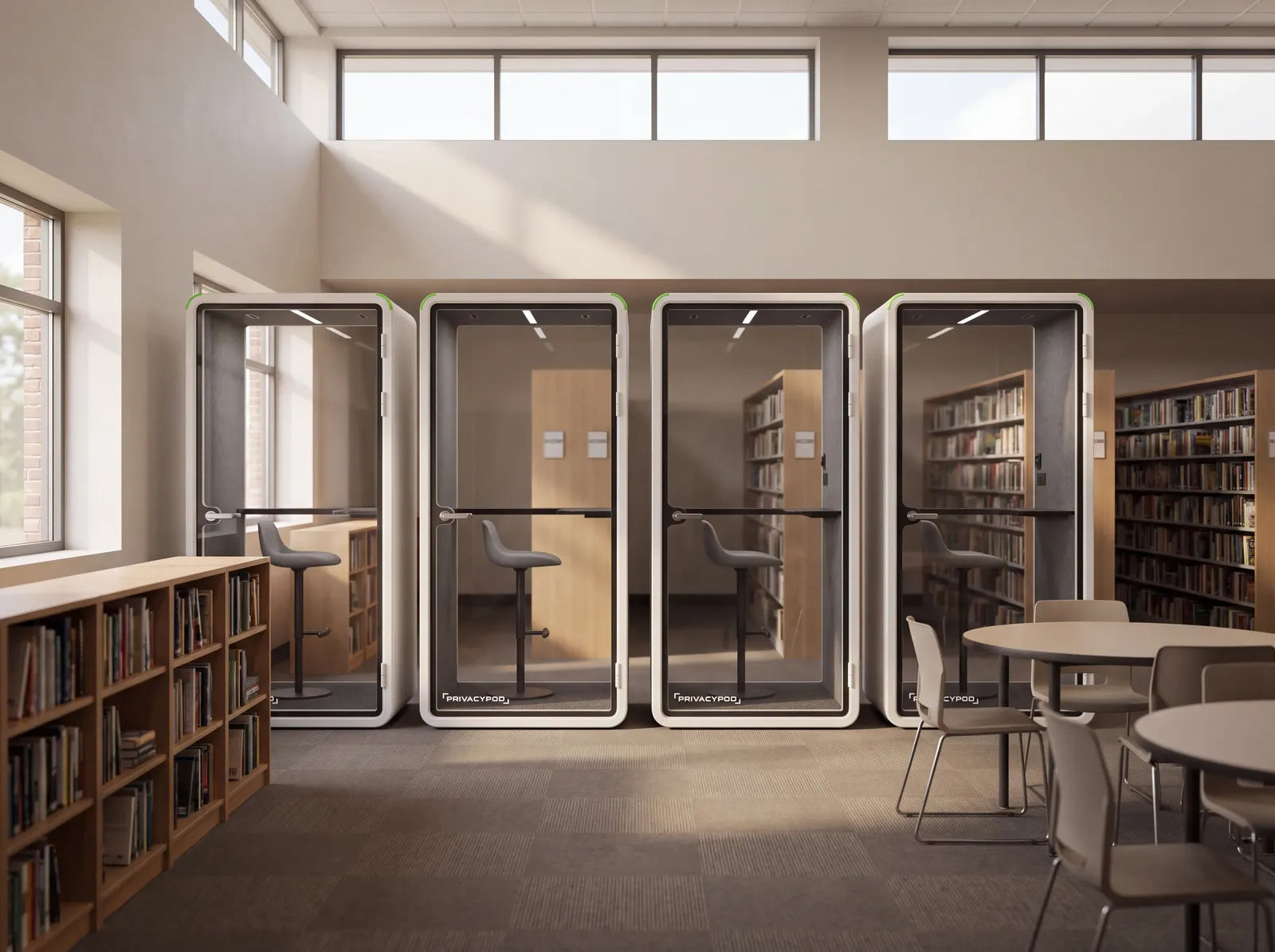
Bookable, visible, easy to find.
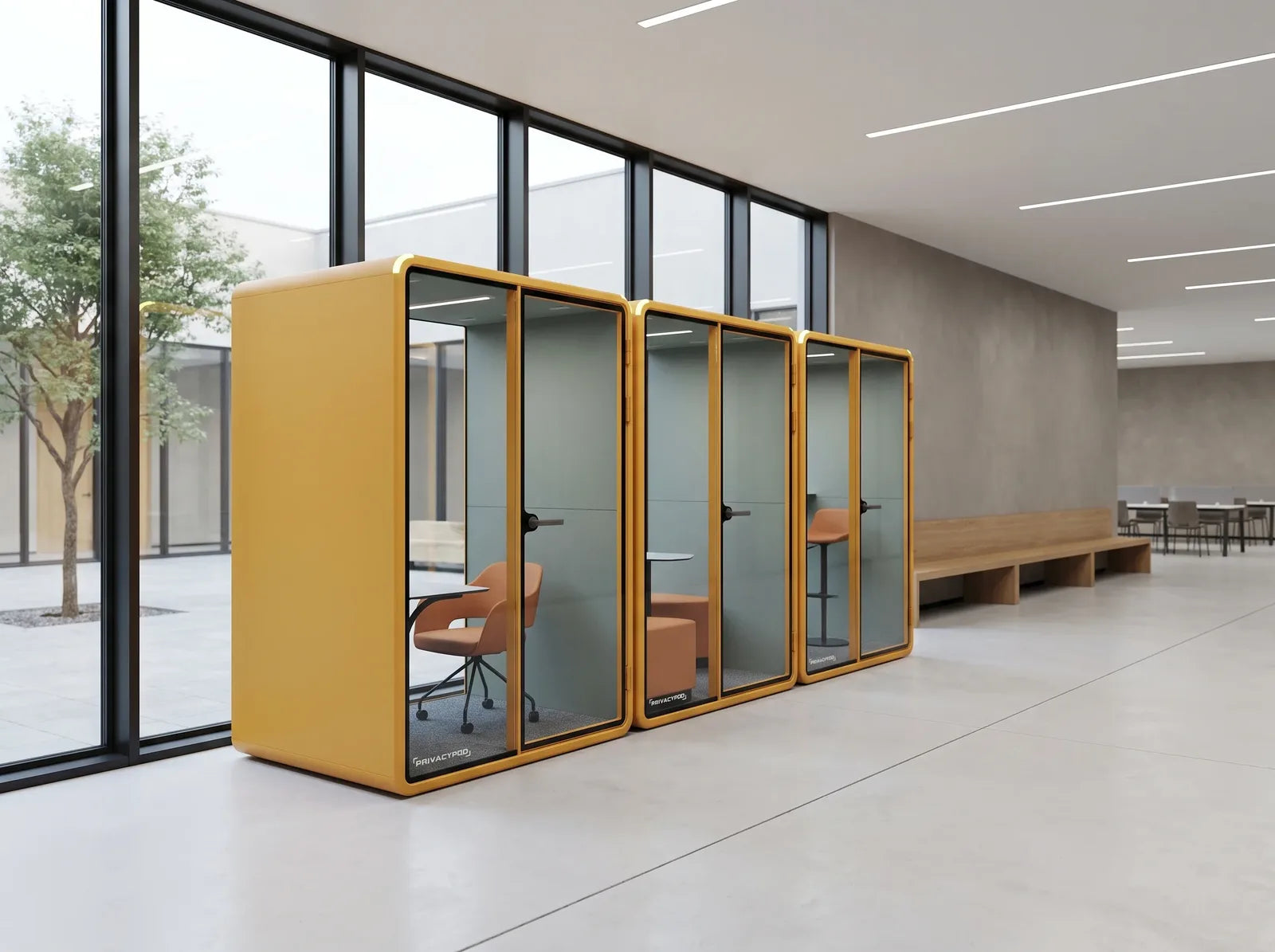
Private by certification, not by drywall.
A delivered install
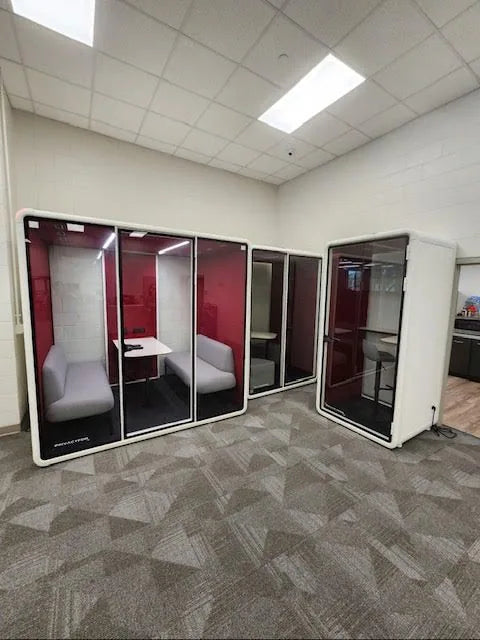
They're almost always occupied. Students use them for Zoom calls, video lectures, and focused work.
To expand quiet study capacity without construction, the college installed four S Pods in its library as bookable private workspaces.
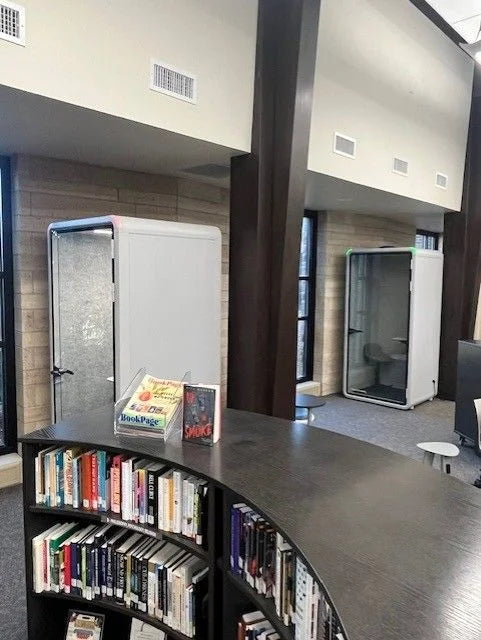
Photographed on the library floor.
Two of the four S Pods.
Pods versus renovations
Quiet capacity, by semester start.
A renovation waits on drawings, bids, permits, and a summer window. A pod waits on a purchase order. These are the numbers facilities teams plan around.
Quick planning rule: Start where demand is already visible, the library and learning commons, then add pods where advising and testing hit peak load.
The placement playbook
Where pods work on campus.
Privacy has to be easy to find without disrupting circulation, study zones, or supervision. Five placement rules that keep pods busy, and the two mistakes that kill utilization.
- Library and learning commons: capture deep-focus study and remote-exam demand where students already go.
- Student success and career services: coaching, advising, and interviews without fighting for meeting rooms.
- Adjacent to health and counseling: private telehealth and check-in space with supervision maintained.
- Design for flow and access: comfortable door clearance and accessible circulation paths; L ADA and XL ADA models add floorless entry.
- Plan for power and wayfinding: a standard outlet nearby and clear signage, so students find pods fast.
Layout mistakes to avoid
Queues, doors, and main corridors create constant interruptions.
If students cannot tell whether a pod is free or how to book it, utilization drops even when demand is high.
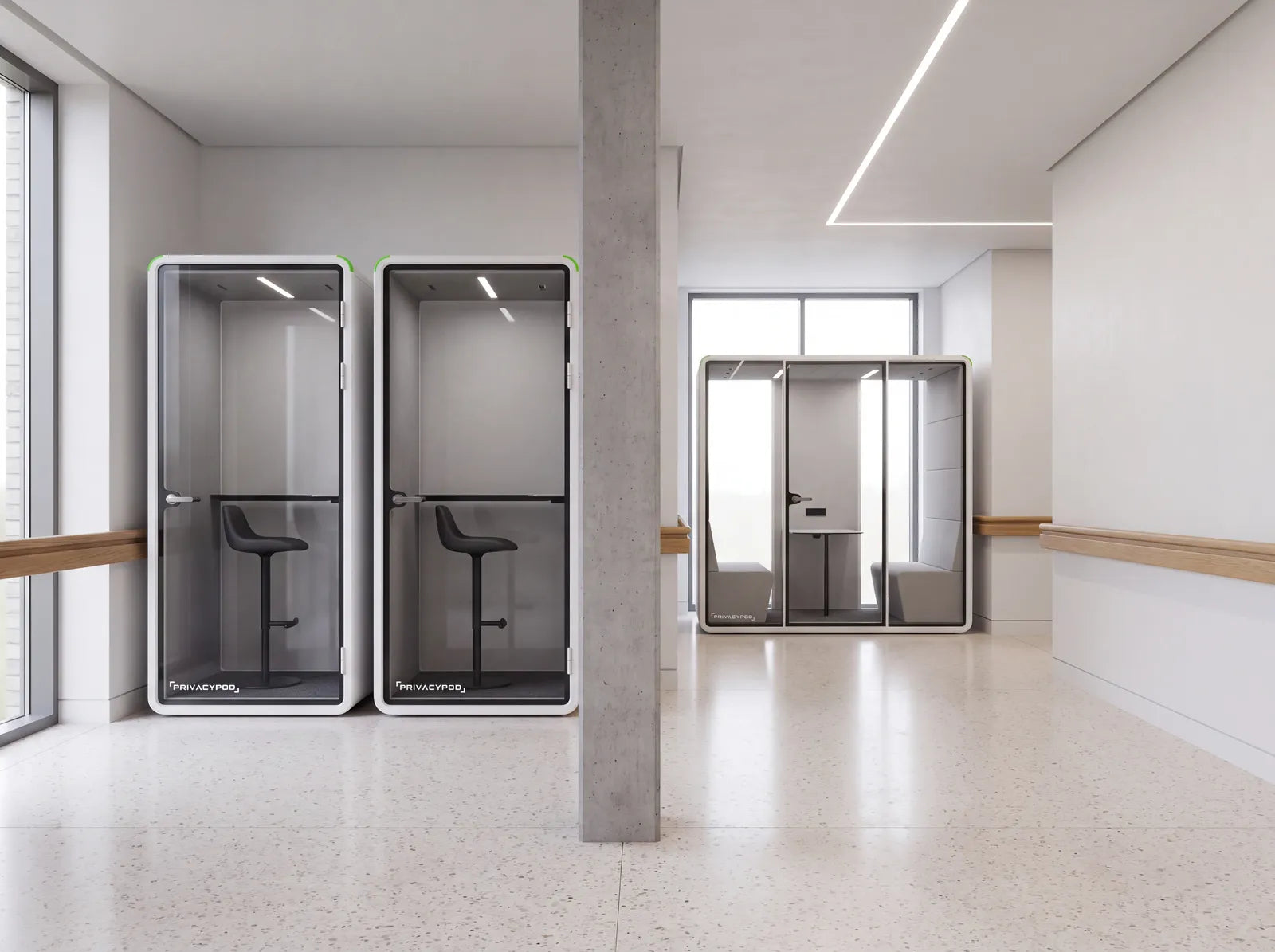
Utilization follows visibility.
| Campus need | Best placement |
|---|---|
| Quiet study and deep focus | Library and learning commons, outside silent zones |
| Remote exams and proctoring | Near testing and disability services |
| Advising and career interviews | Student success center and career services |
| Counseling and telehealth | Adjacent to health services, supervision considered |
| Wellness and reset rooms | Near student support offices, within staff sight |
The recommendation
The campus four, on one purchase order.
Published 2026 list prices.
Free shipping on every order.
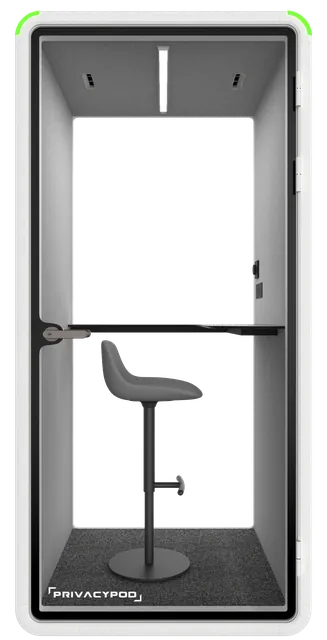 S Pod$6,395
Seats 1
S Pod$6,395
Seats 1
The bookable single-student study booth.
View specs →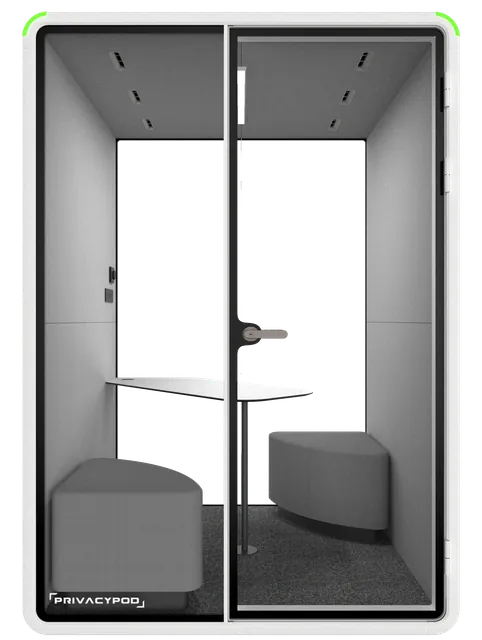 M Pod$9,495
Seats 2
M Pod$9,495
Seats 2
Advising, tutoring, and 1:1s across a table.
View specs →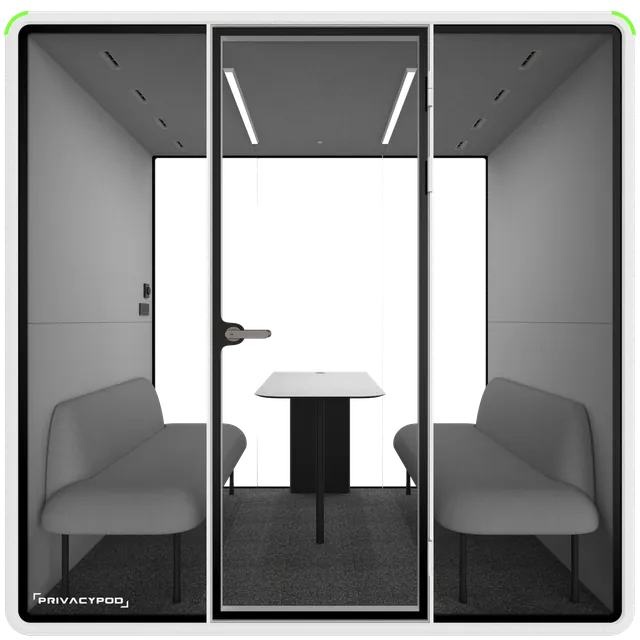 L Pod$12,495
Seats 4
L Pod$12,495
Seats 4
Group study and testing room, no renovation.
View specs →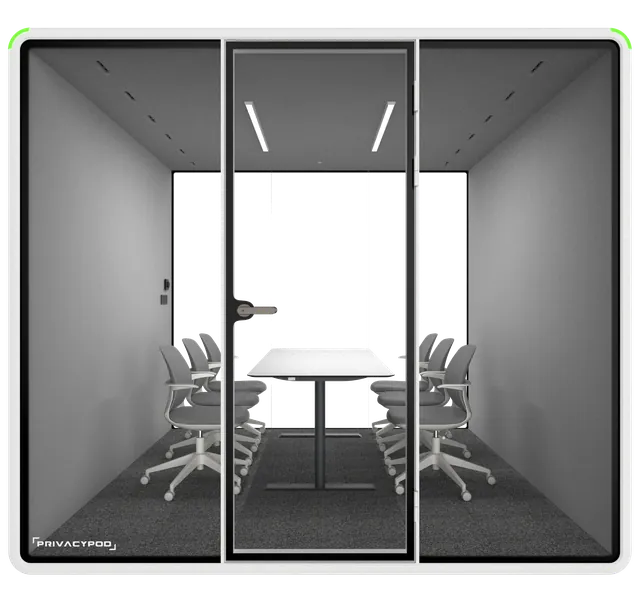 XL Pod$14,995
Seats 6
XL Pod$14,995
Seats 6
Seminar-scale room inside an existing building.
View specs →| Building | Mix | List total |
|---|---|---|
| School library | 2x S Pod | $12,790 |
| Learning commons | 4x S Pod + 1x L Pod | $38,075 |
| Student center | 2x S Pod + 1x M Pod + 1x L Pod | $34,780 |
Published 2026 list prices with free shipping. Professional installation runs from $1,000 to $1,800 per pod for these models, quoted with the order. Mixes are starting recommendations; booking data should size the next order. Reset-room build from the PURE Academy story: the S Pod Plus with thicker 2-inch acoustic panels, $6,995 list.
Frequently asked
What education buyers ask first.
Procurement, proctoring, durability, and ADA.
How do schools, districts, and universities purchase pods?
As furniture, on a standard purchase order: published list prices run from $6,395 for the 1-person S Pod to $14,995 for the 6-person XL Pod, shipping is free, and installation is quoted with the order. Our team supplies the specification sheets, warranty terms, and W-9 paperwork procurement offices ask for, and supports multi-building phased deliveries.
Can pods be used for remote exams and proctoring?
Yes. With approximately 30 dB of certified speech level reduction and a distraction-controlled interior, pods work as remote-exam and proctoring rooms near testing or disability services. Occupancy-sensing lighting and ventilation run only while a student is inside, and glass fronts keep proctoring sightlines available where policies require them.
Can students reserve pods, and can we control access?
Pods run like bookable study rooms: most campuses add them to the existing room-reservation system with clear session rules posted on the glass. Because each pod is freestanding furniture, it can also move to another building when demand shifts.
How durable are pods in high-use student spaces?
Interior walls are lined with PET acoustic panels, and the glass, laminate, and hard surfaces take a standard wipe-down, built for back-to-back daily sessions. Every pod carries a 3-year warranty. A Colorado school district had students in its L Pods the day after install; the materials are chosen for exactly that kind of daily use.
Are pods ADA compliant for campus buildings?
PrivacyPod offers dedicated accessible models: the L ADA Pod and XL ADA Pod feature a floorless ultra-thin base for near-flush wheelchair entry, a wide automatic door, touchless controls, and foldable furniture for full interior maneuverability. Placement planning keeps accessible clearance and circulation paths around every model.
What is the timeline from purchase order to installed pod?
Shipping is free on every order. Quick-Ship pods deliver in 1 to 2 weeks from order confirmation, and a 2 to 3 person crew installs each pod in roughly 4 to 6 hours with no construction. Made-to-Order configurations with custom finishes deliver in 9 to 11 weeks, which is the timeline to plan around for a semester-start opening.
Plan the campus
Send us your floor plan.
Share a floor plan or a simple sketch plus your peak usage patterns, and our team sends back a placement layout, a right-sized mix, a lead time, and a quote your procurement office can read.