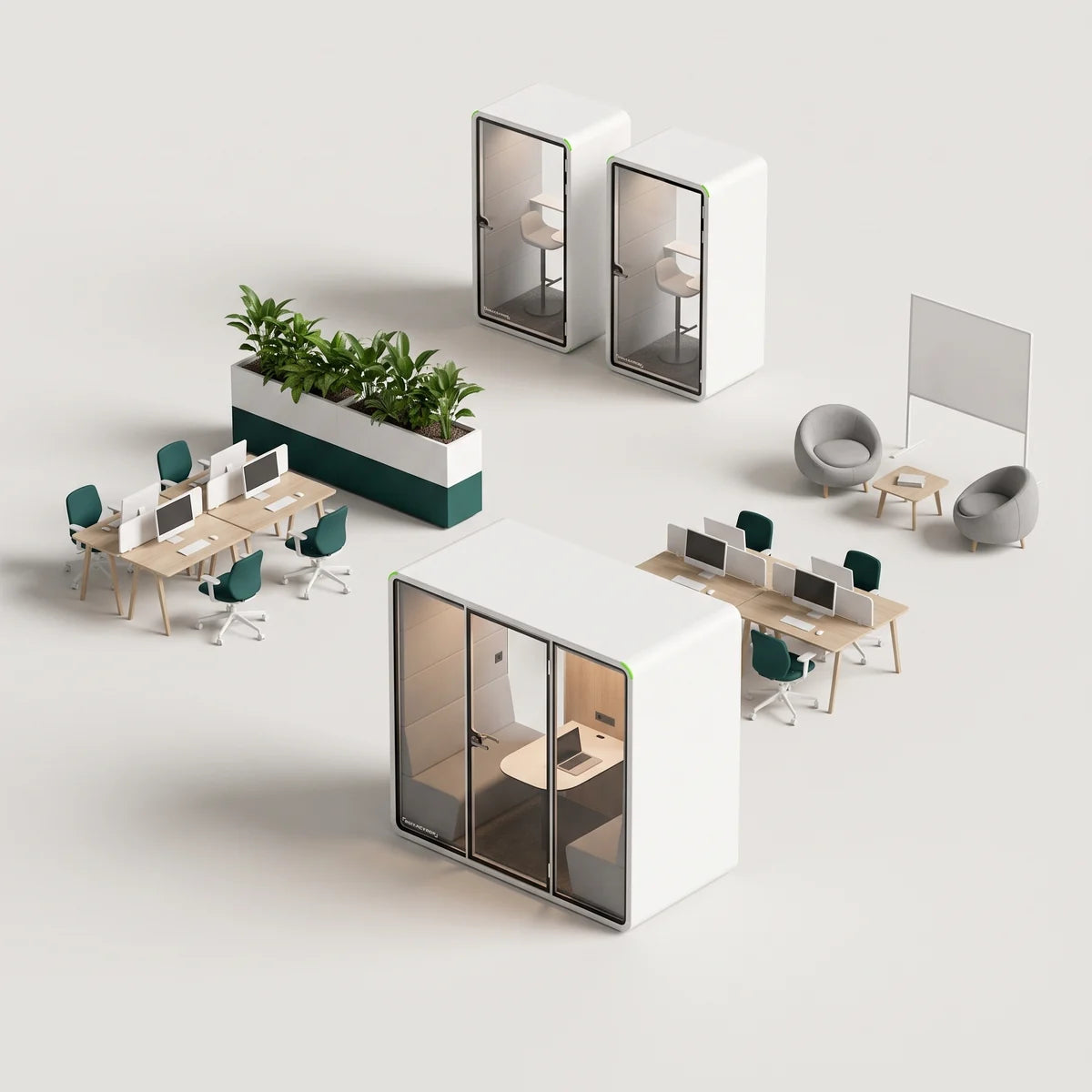
PrivacyPod office pods
Office Pods for Calls, Meetings and Focus
Rooms that move in. Noise that stays out.
- From $6,395
- Quick-Ship 1 to 2 weeks
- ISO 23351-1 Class A
- 3-year warranty
-
 Seats 1Quick-Ship
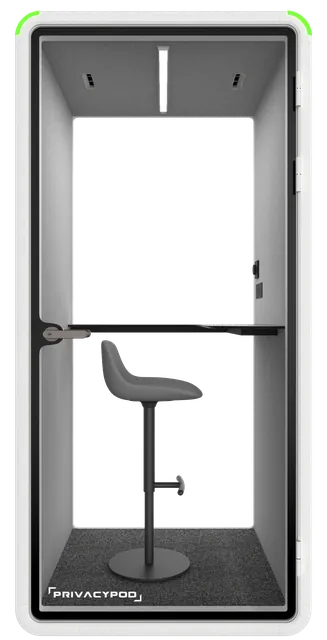
S Pod
Phone booth for calls and focus.
Regular price $6,395Regular priceUnit price per$0Sale price $6,395 -
 Seats 1Quick-Ship
S Pod Plus
Thicker acoustic panels, same footprint.
Regular price $6,995Regular priceUnit price per$0Sale price $6,995 -
 Seats 1Quick-Ship
Arc S Pod
Curved birch shell with bench seating.
Regular price $6,495Regular priceUnit price per$0Sale price $6,495 -
 Seats 2Quick-Ship
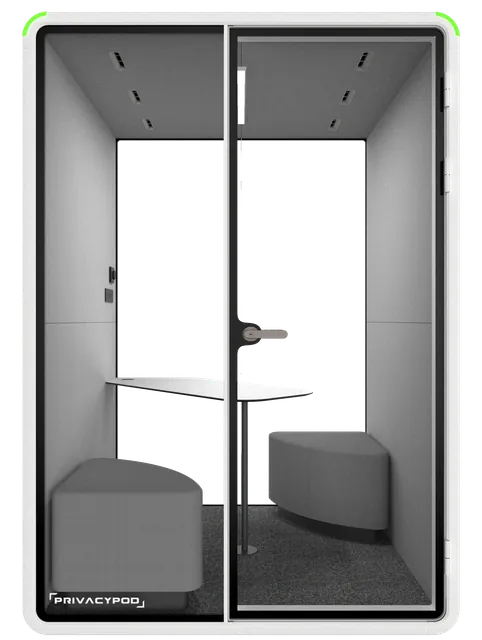
M Pod
Two seats, a desk, a door that closes.
Regular price $9,495Regular priceUnit price per$0Sale price $9,495 -
 Seats 2Quick-Ship
SL Pod
Two seats in a corridor-friendly footprint.
Regular price $10,995Regular priceUnit price per$0Sale price $10,995 -
 Seats 2Quick-Ship
Arc SL Pod
Curved two-seat meeting pod.
Regular price $10,995Regular priceUnit price per$0Sale price $10,995 -
 Seats 4Quick-Ship
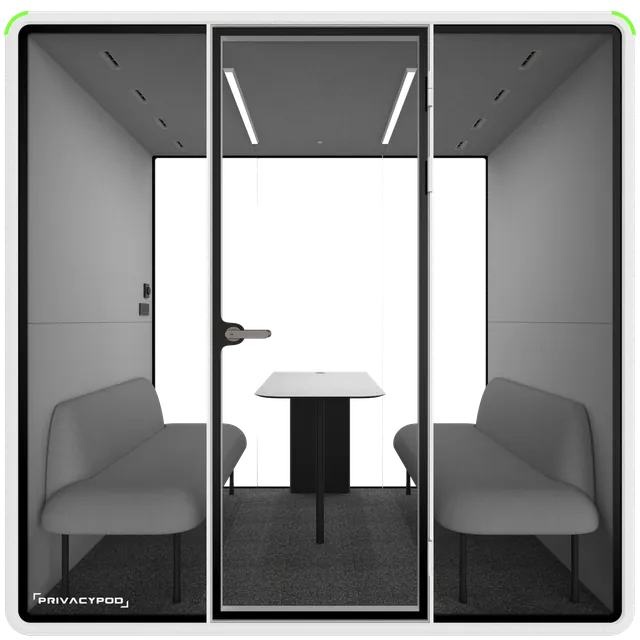
L Pod
A meeting room without the drywall.
Regular price $12,495Regular priceUnit price per$0Sale price $12,495 -
 Seats 4Quick-Ship
L Pod Plus
Built-in seating and table, ready on day one.
Regular price $13,995Regular priceUnit price per$0Sale price $13,995 -
 Seats 4Quick-Ship
Arc L Pod
Curved four-seat meeting room.
Regular price $12,495Regular priceUnit price per$0Sale price $12,495 -
 Seats 4
L ADA Pod
Accessible four-seat meeting room.
Regular price From $24,795Regular priceUnit price per$0Sale price From $24,795 -
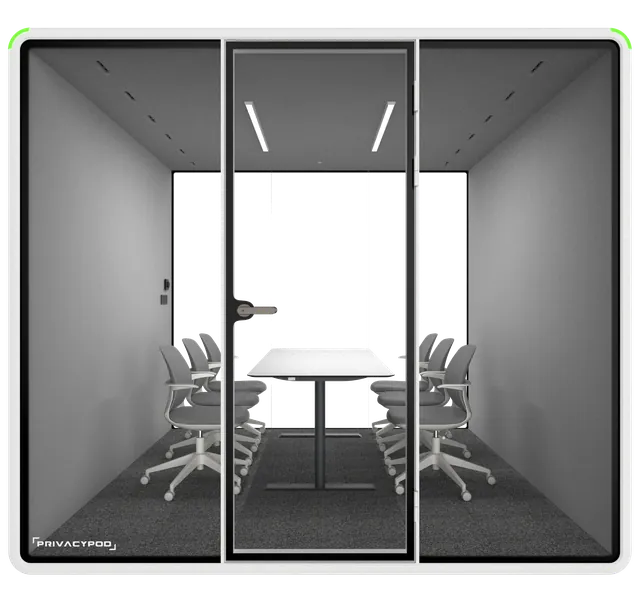
 Seats 6Quick-Ship
XL Pod
Six seats, no construction.
Regular price $14,995Regular priceUnit price per$0Sale price $14,995 -
 Seats 6
XL ADA Pod
Accessible six-seat conference room.
Regular price From $29,795Regular priceUnit price per$0Sale price From $29,795
The definition
What is an office pod?
An office pod is a freestanding, enclosed room that stands inside an open office for private calls, meetings, and focused work, with no construction. PrivacyPod pods seat 1 to 6 people, from the 1-person S Pod to the 6-person XL Pod, and every one is ISO 23351-1 Class A certified with about 30 dB speech level reduction.
The whole line shares one certified shell. Whether you call them acoustic office pods, soundproof work pods, or focus pods, what changes is size and interior, from a one-person booth to a six-person meeting room. Start with headcount, then pick the footprint that fits the floor.
The office pod range
Speech reduction
~30 dB, ISO 23351-1 Class A
Capacity
1 to 6 people
Footprint
3.5 by 3.3 ft to 8.5 by 8.6 ft
Power
Standard wall outlet
Quick-Ship
1 to 2 weeks, free shipping
Warranty
3-year limited
Built into every pod
Quiet, powered, and on wheels.

Acoustics
Your calls stay inside the pod.
A normal conversation inside is a murmur outside. Every model carries the same certified acoustics.
ISO 23351-1 Class A, about 30 dB speech level reduction
Mobility
Roll it to where work happens.
Hidden casters move it through a standard door. Leveling feet lock it down on carpet, concrete, or raised floors.
No tools, no crew
Ventilation
Fresh air, no fan noise.
Silent fans replace all the air in the pod in under a minute, so long calls stay comfortable.
Full air change every 41 to 66 seconds, model-dependentInstalled across North America
Where they work.


Next step
Not sure which pod?
Pick a headcount, then see every brand side by side.
FAQ
Questions, answered.
Straight answers on cost, acoustics, permits, delivery and moving pods.
How much do office pods cost?
PrivacyPod office pods start at $6,395 for the one-person S Pod, and every product page lists its price. A two-person M Pod is $9,495, a four-person L Pod $12,495 and a six-person XL Pod $14,995. Shipping is free on every order, and furniture is priced separately.
Are office pods soundproof?
Acoustic performance varies by brand, so look for ISO 23351-1 certification rather than a marketing claim. PrivacyPod booths are ISO 23351-1 Class A certified with about 30 dB of speech level reduction, which turns a normal conversation inside into a murmur outside.
Are office pods worth it?
They usually are when calls and small meetings have nowhere quiet to go. Building a small conference room typically runs $40,000 to $65,000 and takes one to three months, while a four-person L Pod is $12,495, ships free and installs in a few hours. A pod also moves with you when the lease ends. The office pod vs conference room cost breakdown shows the full math.
How long do office pods take to deliver?
Shipping is free on every PrivacyPod order. Quick-Ship pods deliver in 1 to 2 weeks from a US warehouse: the standard pods in white with the Ash interior and the Arc pods in Haze, in any furniture configuration. Custom colors, back walls, switchable glass and desks are made to order and deliver in 9 to 11 weeks. Professional installation takes hours, not days.
Can office pods be moved after installation?
Yes. PrivacyPod office pods roll on hidden casters through a standard door and lock in place on leveling feet, so facilities teams can reposition them during a restack or take them to the next office. No tools or crew are required to move one.
Do office pods need a permit?
Office pods usually need no building permit because they are freestanding furniture: no walls are cut, no wiring is run, and the pod plugs into a standard outlet. Placement still has to respect fire and egress rules, so confirm clearances with building management. If the fire marshal asks for sprinkler coverage, which usually applies to the larger pods, we can spec a sprinkler drop-through or a self-contained suppression unit on the quote.
Talk to our team
Send us a floor plan.
We reply within four business hours and follow with a layout, a lead time, and a quote.