The short version
Workplace culture is the pattern of basic assumptions a company teaches new hires as the right way to think and act at work. Culture decides who stays and how much gets done. Executives know it: 92 percent of 1,348 surveyed in a 2022 Journal of Financial Economics study say a better culture would raise firm value.
Four levers set it: leaders, rules, the office itself and how news travels.
What is workplace culture?
Culture shows at three levels. Schein's 1990 paper Organizational culture separates what you can see, what people say they value and what they assume without saying. The last level is the culture; the other two are how it shows.
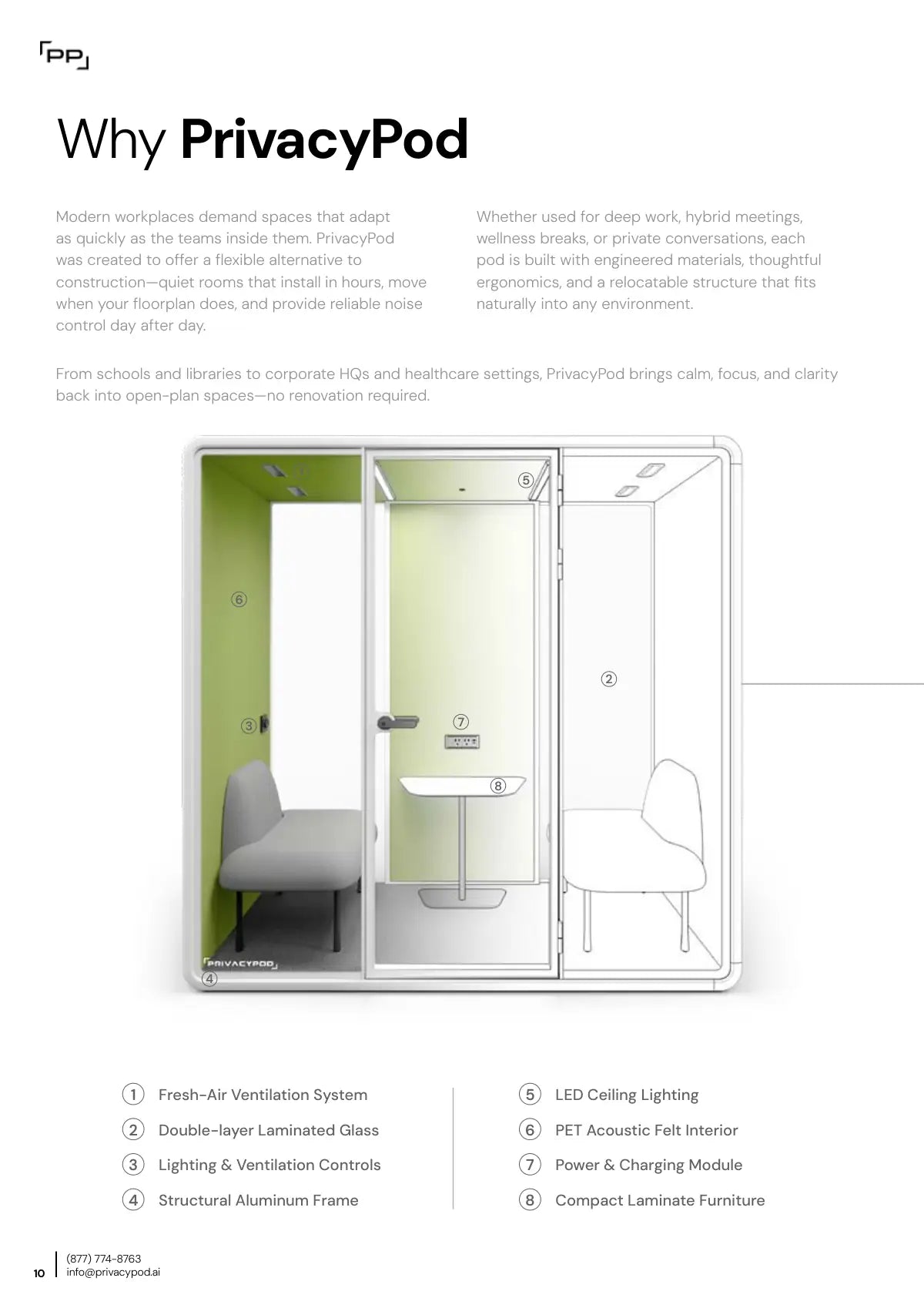
Our team at PrivacyPod works on the visible level, the floor plan, and the floor plan fixes nothing if the other three levers pull the wrong way.
Why does workplace culture matter?
People leave over it. An MIT Sloan Management Review analysis (Toxic Culture Is Driving the Great Resignation) ranked what predicted quitting in 2021, using 34 million employee profiles and 1.4 million Glassdoor reviews.
Toxic culture beats pay over ten to one at predicting who quits
How strongly each factor predicted a company's industry-adjusted attrition rate, as a multiple of compensation, which ranked 16th of 172 topics.
MIT Sloan Management Review figure: Culture 500 companies, April to September 2021.
The firms studied employ nearly a quarter of US private-sector workers, so the ranking is hard to dismiss.
The work suffers too. Gallup, which sells the Q12 survey, compared 183,806 business units in a 2024 study (Q12 Meta-Analysis). The most engaged quarter of units had 23 percent higher profitability and 78 percent lower absenteeism than the least engaged.
What shapes workplace culture?
Each of the four levers has a tell a manager can spot on a normal weekday.
Culture is set by four levers, and one of them is the floor plan
For each lever: what it sets, the tell when it is wrong, and what fixes it.
Leadership and management
What it setsWhat gets rewarded and what gets excused.
The tellThe stated values and the promotions disagree.
The fixPromote the people who act on the values.
Practices and policies
What it setsHow work gets done on a normal day.
The tellRules on paper that nobody follows.
The fixKeep the rules you enforce. Drop the rest.
The physical environment
What it setsWhether a person can think, meet or take a call.
The tellHeadphones at every desk. Calls from the stairwell.
The fixQuiet desks, and a booth a short walk away.
The one lever you can buy in weeks.
Communication and trust
What it setsWhether people hear news from you or by rumor.
The tellDecisions land as surprises.
The fixGive the decision, the reason and the date, early.
Four levers. Only the green one comes with a lead time.
Schein put the physical layout first on his list of what you can see of a culture. The dress code and how people address each other came after it.
Leadership and management
Managers carry the culture to each team: in Gallup's State of the Global Workplace: 2026 Report, manager engagement fell from 27 to 22 percent between 2024 and 2025. Gallup has never recorded a larger one-year drop. A manager who has checked out cannot model the values on the wall.
Practices and policies
Policy is what people can count on. In the same Culture 500 data, lateral career moves predicted who stayed 12 times more strongly than promotions did. A predictable schedule was six times more powerful than a flexible one at keeping front-line staff.
A hybrid office policy belongs on the list: it changes the calendar and the floor plan at once.
The physical work environment
Noise is the complaint that never closes: across 601,570 Leesman survey responses from 2022 to 2025, 70 percent of workers rated noise levels important (Noisy spaces, quiet consequences). Only 35 percent were satisfied with them. Leesman sells the survey, not pods.
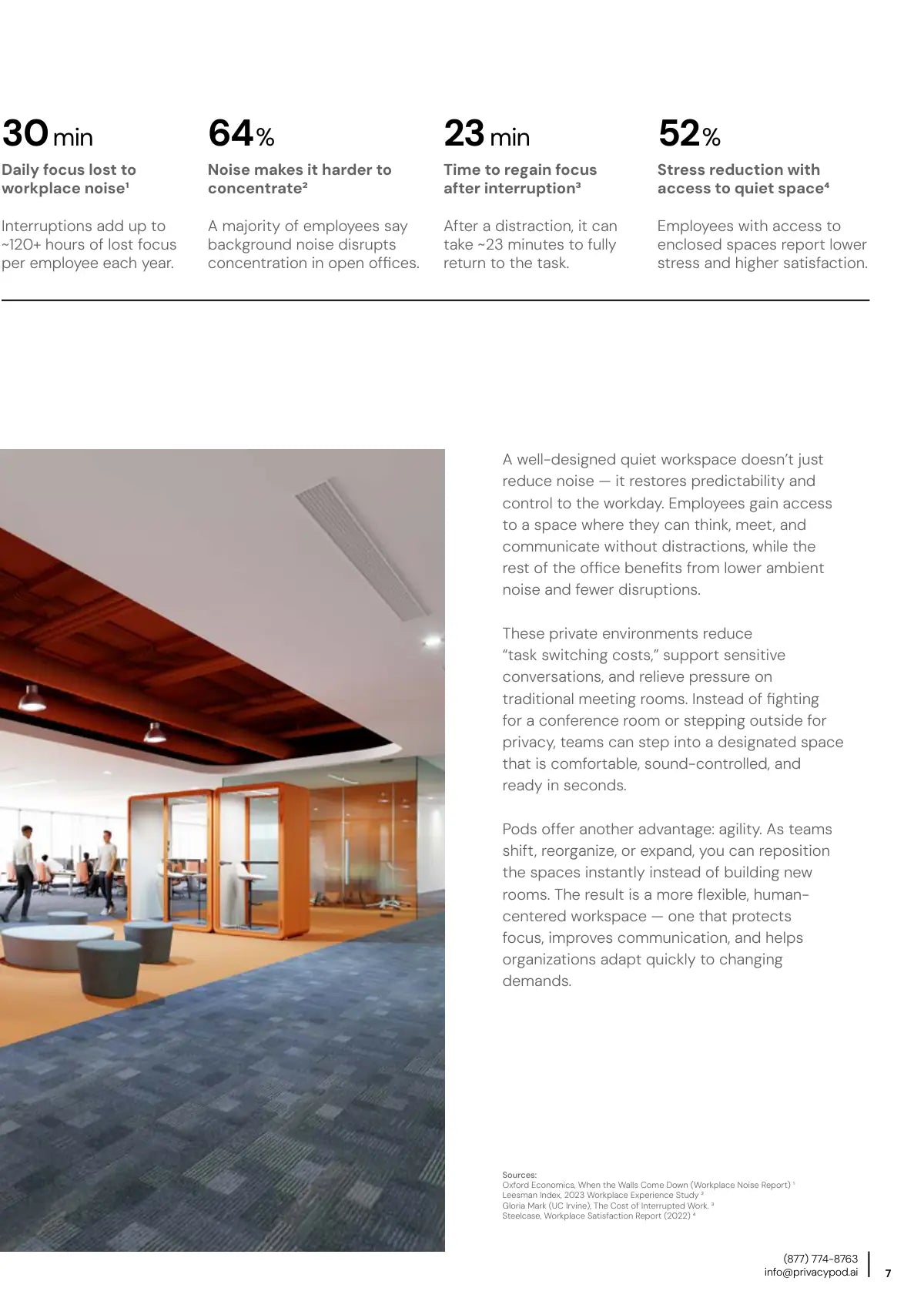
A place to go counts for more than the sound level. A 2025 field study added seven pods, lent by Framery, to a 58-person office at the University of Oulu in Finland. Job satisfaction was higher afterward, and the measured sound level had not changed.
What a facilities lead can change without construction:
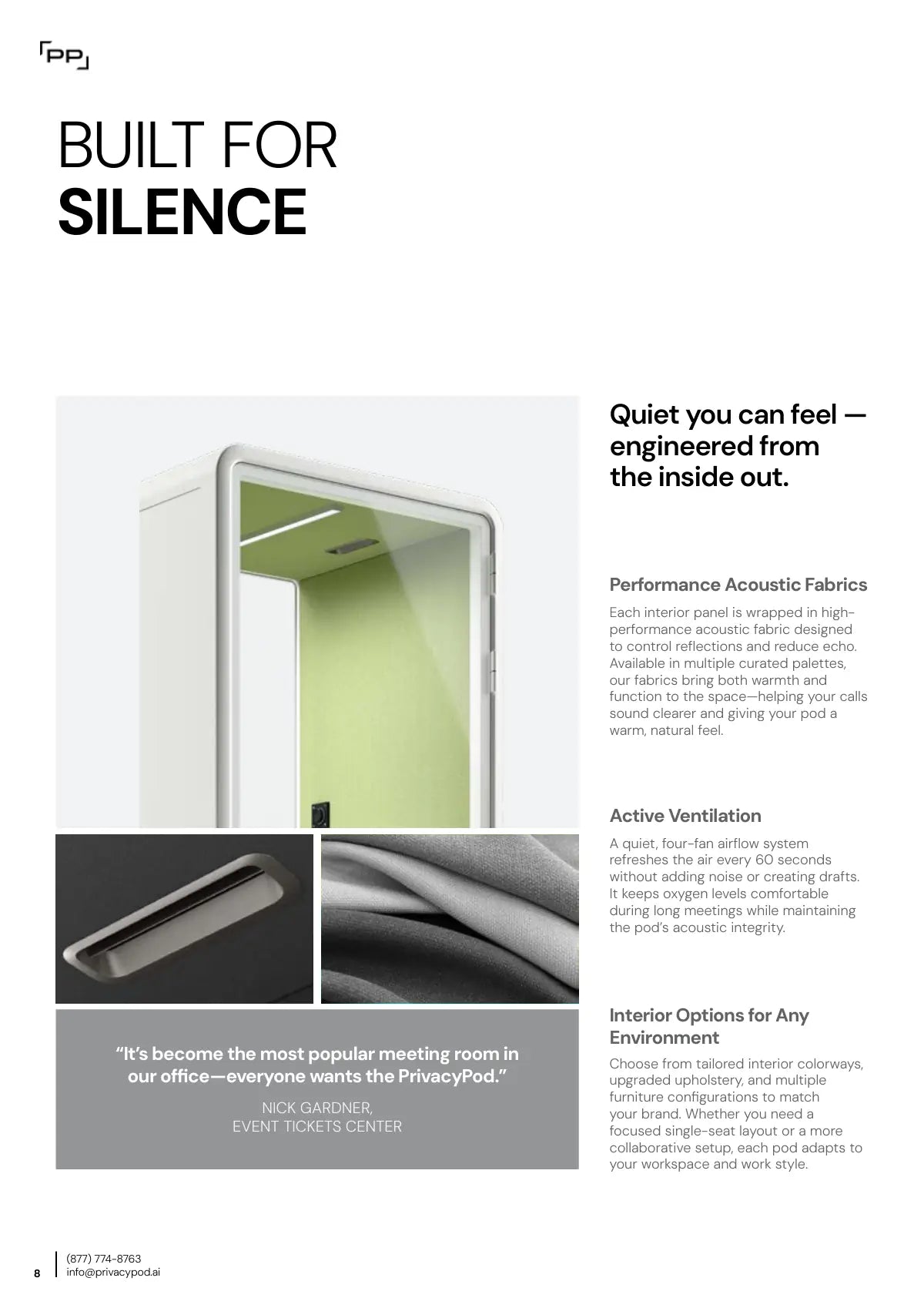
- Calls: one-person privacy booths a short walk from every desk bank.
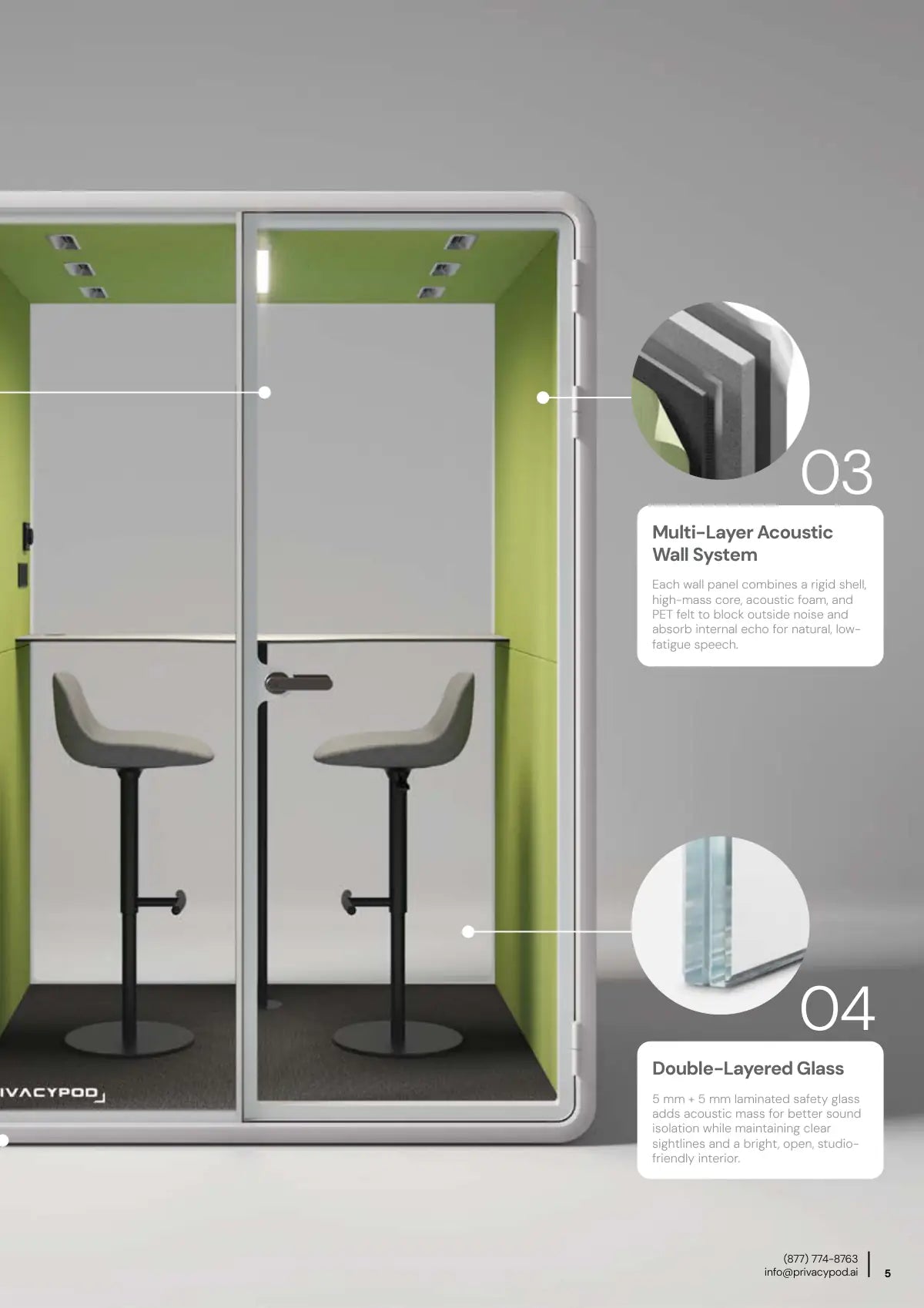
- Focus: working pods with a door, for the work that headphones cannot protect.
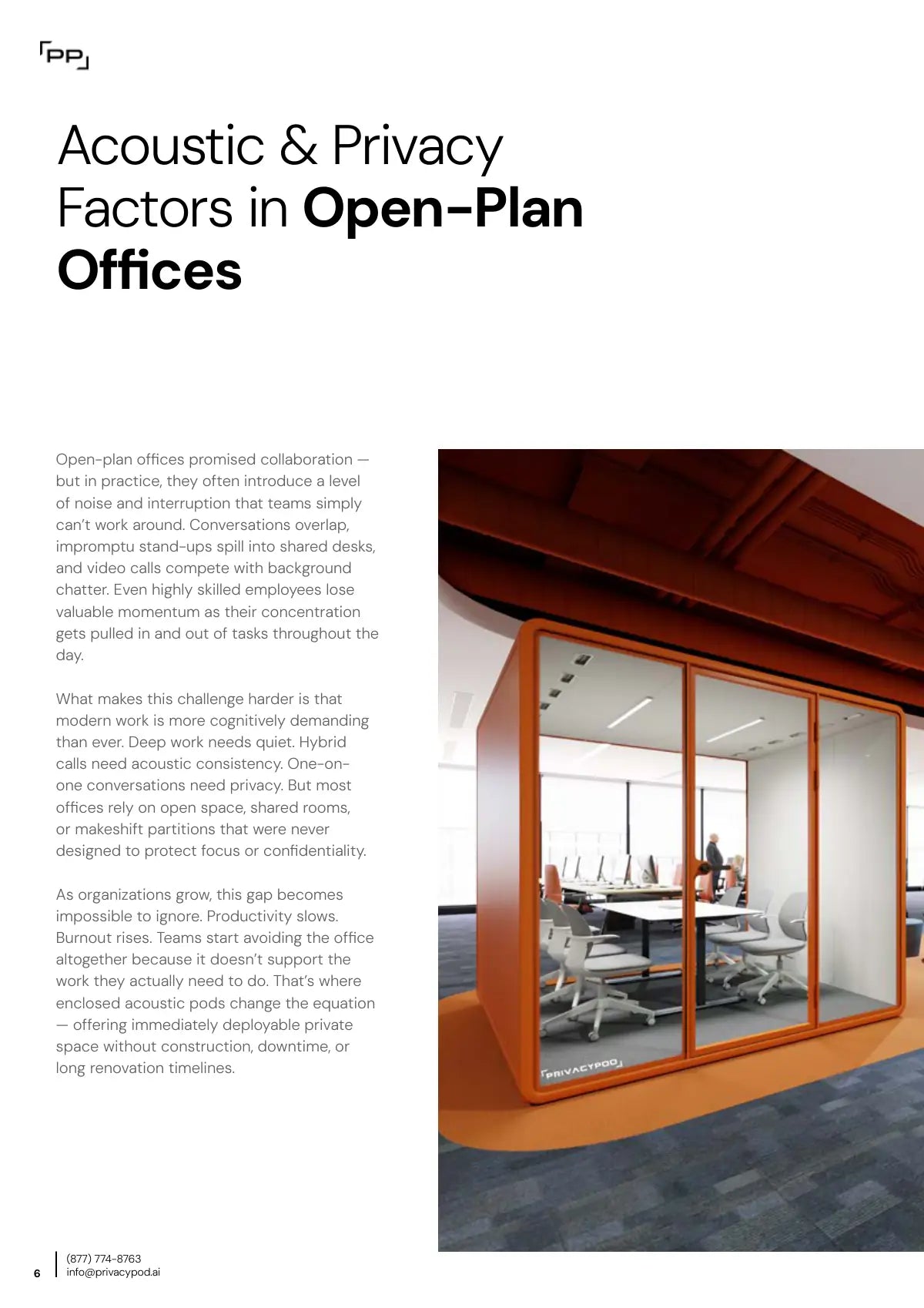
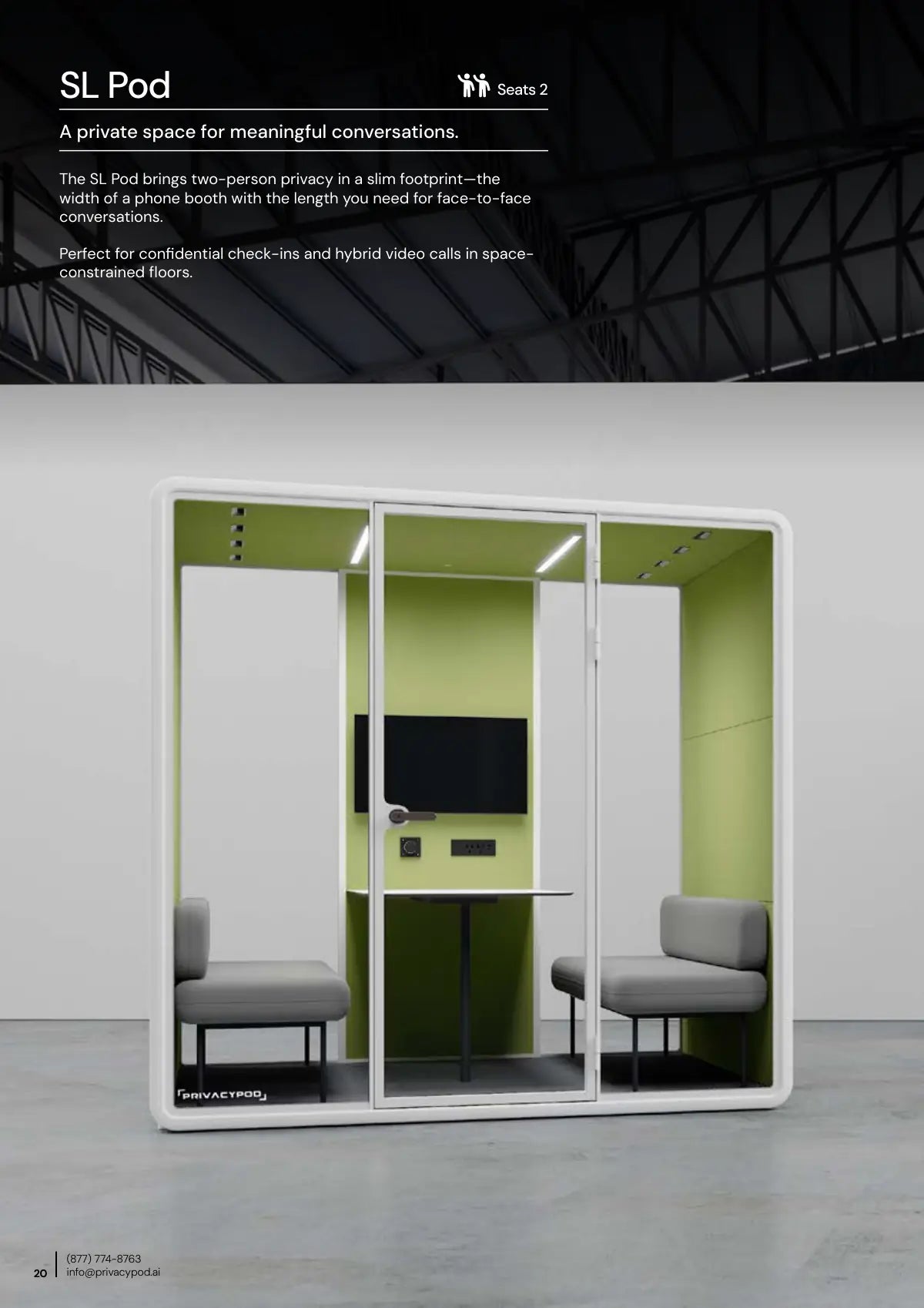
- Small meetings: walk-up meeting pods for two to six people, so a check-in stops taking a boardroom.
- The open floor: acoustic furniture where a door is more than the job needs.

Communication and trust
Trust is built in the talks the floor allows. Face-to-face time fell by about 70 percent when two Fortune 500 headquarters went open plan in a 2018 badge-tracking study (The impact of the open workspace). People sent more email and instant messages instead of walking over.
In the Finnish pod study, the authors credit the gain to control, and to trust in supervisors who acted on the speech privacy complaints.
How do you define and strengthen a workplace culture?
Write the values, then measure the norms. The 2022 survey Corporate culture: Evidence from the field splits culture into values, the ideals employees strive for, and norms, whether they walk the talk. Values fit on a page; norms show up in who gets promoted, what exit interviews say and where people go to take a call.
Then test each lever in turn:
- Leadership: sort last year's exit interviews by reason. Disrespect or ethics near the top means the fix starts with promotions.
- Policies: take the three rules people complain about most and check what behavior each one produced.
- The floor: log complaints the way office space planning does: noise, no room, nowhere to take a call. Fix the top line first.
- Communication: ask a handful of people what the last big decision was and why. Different answers mean the news never landed.
- Repeat the same counts a quarter later.
Questions
What is workplace culture?
Schein's 1990 definition: a pattern of basic assumptions a group learns while solving its problems. The group passes it to new members as the correct way to perceive, think and feel. In plain words, how things are done here.
Why does workplace culture matter?
Retention and output both follow it. In Gallup's US panel survey, 31 percent of workers were engaged in the first half of 2026 and 18 percent were actively disengaged. Gallup puts the lost output at about $2 trillion a year.
What factors shape workplace culture?
Four levers: leaders, policies, the office and how news travels. Research ties each one to who stays or how satisfied people are. Managers move engagement, schedules keep front-line staff, noise drives complaints and open floors cut talk in person.
How can a company define its workplace culture?
A values statement is the easy half. The harder half is checking the norms. Promotions, exit interviews and where people take calls show whether employees walk the talk, which is the 2022 survey's test of a norm.
Does office design affect workplace culture?
Yes. In a 2013 survey of 42,764 occupants in 303 office buildings, 49 percent in open plan were dissatisfied with sound privacy, against 18 percent in private offices. The floor tells a new hire whether private talk is normal here.
How can a business improve a negative workplace culture?
The MIT Sloan Management Review analysis found three marks of a toxic culture. The marks are disrespect, unethical behavior and a failure to promote diversity, equity and inclusion. Those are leadership problems, so fix who gets promoted before buying anything, including a pod.
Filed under Workplace planning
Back to the blog