Inclusive design stopped being a nice extra some time ago. Offices, schools, libraries and clinics are all being asked to work for a person who uses a wheelchair, for a person who finds an open floor plan genuinely hard to think in, and for everyone in between. Those two needs usually arrive as separate questions: does this space meet ADA requirements, and does it actually work for a neurodivergent employee? This page answers both, because most buyers are solving for both at once.
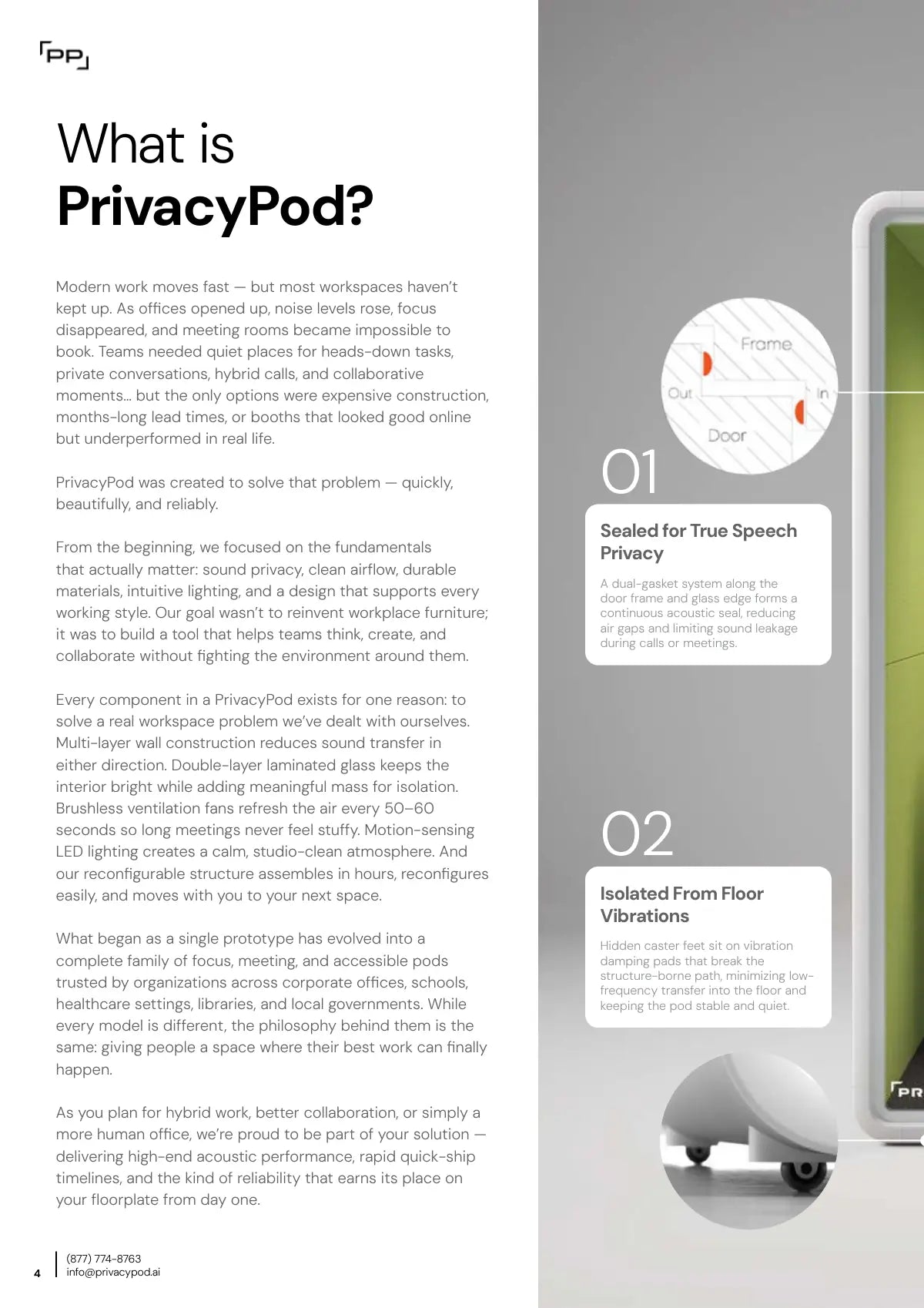
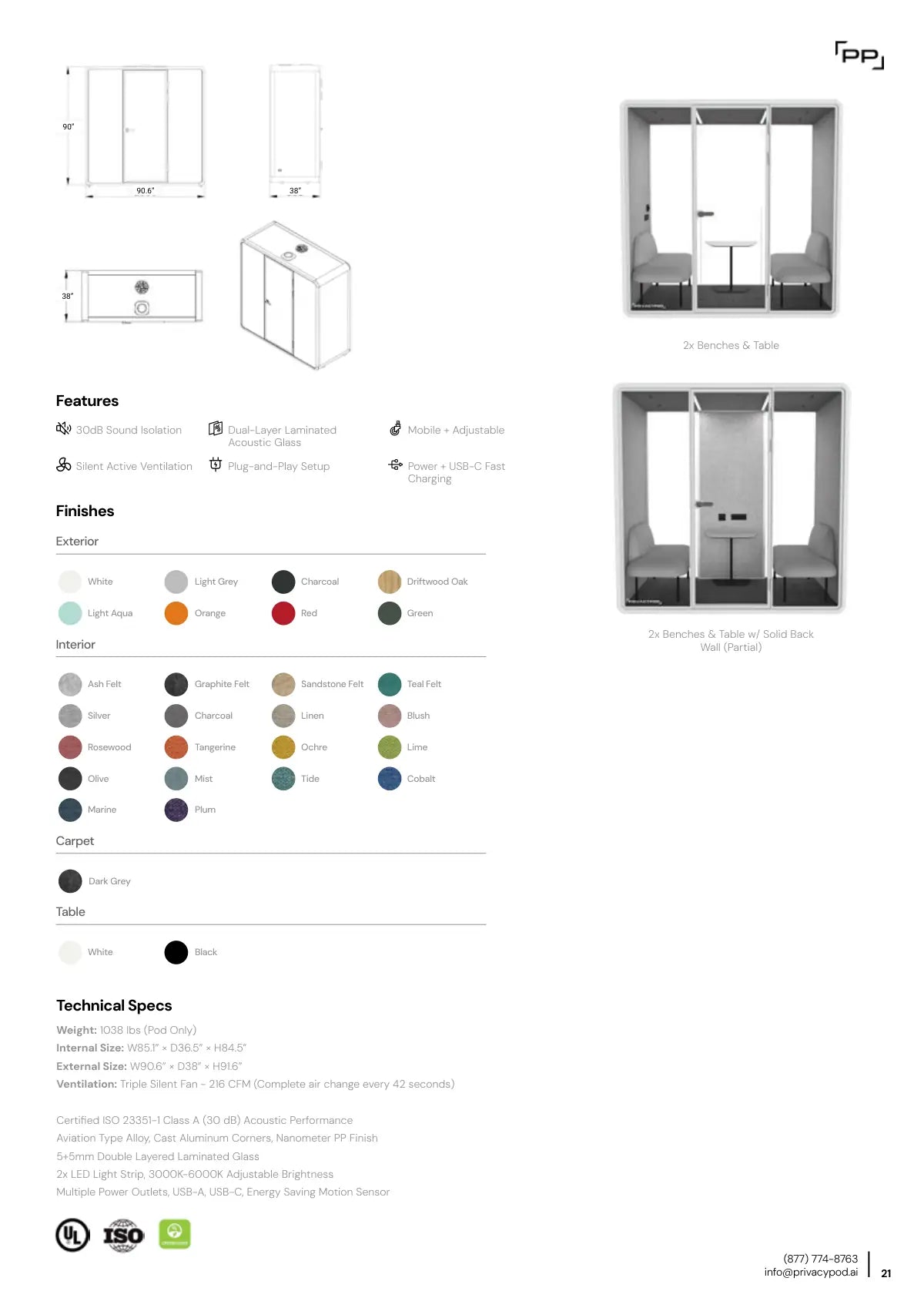
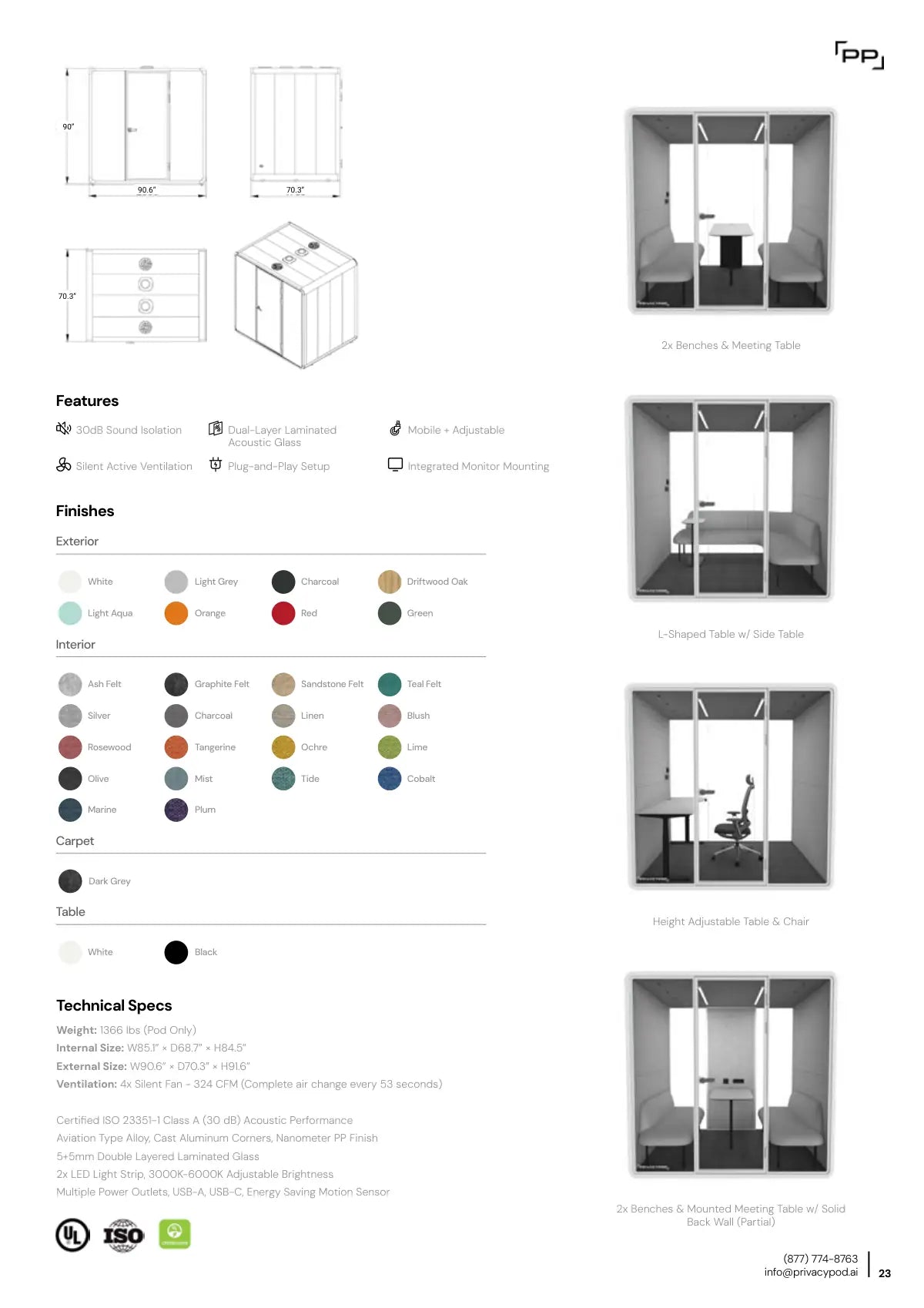
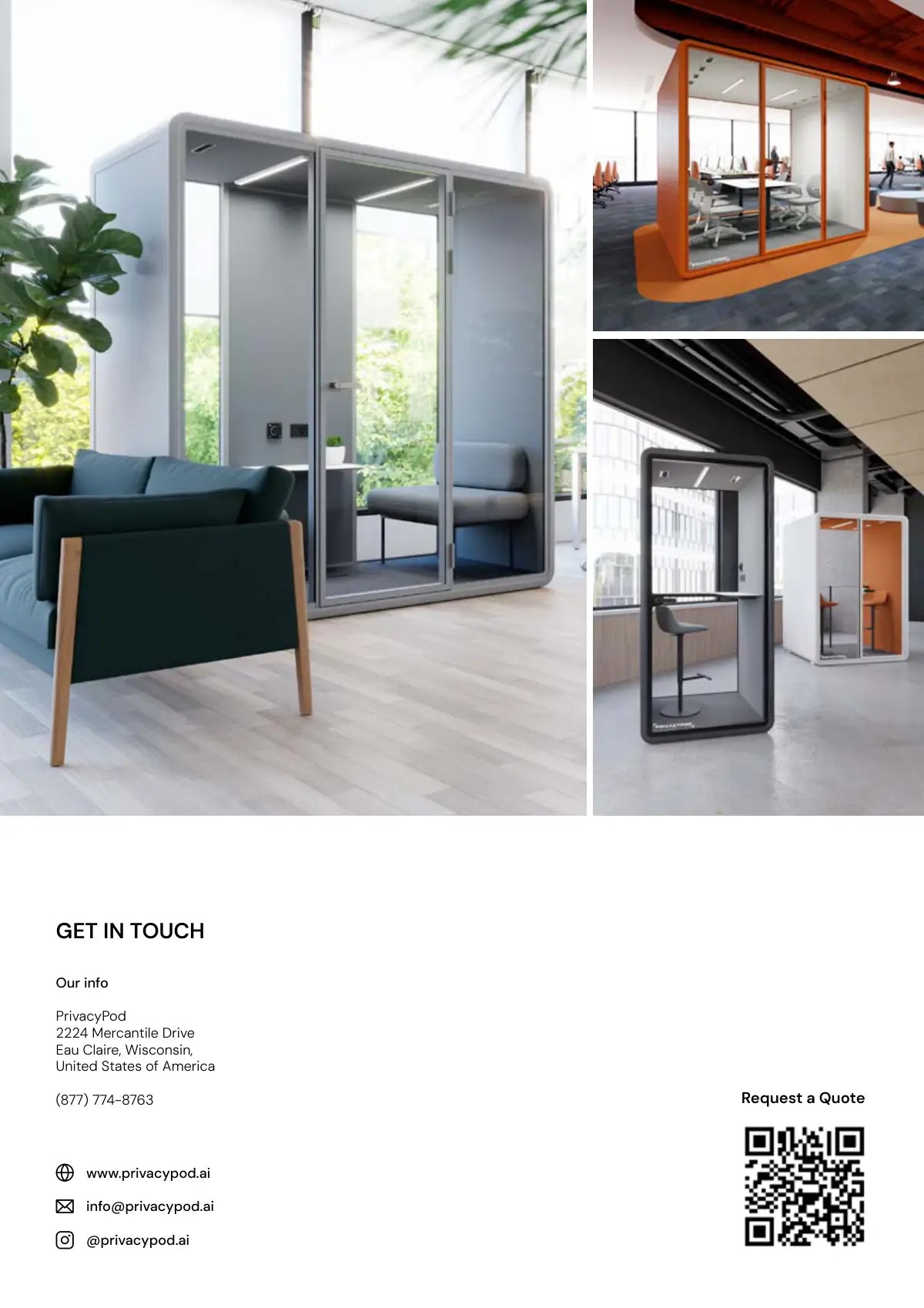
PrivacyPod builds acoustic office pods that drop into a floor plan you already have, with no construction. Every pod in the line is ISO 23351-1 Class A certified and delivers approximately 30 dB of speech level reduction. That includes the accessible models.
What a sensory-friendly space has to do
Sensory-friendly design serves people with heightened sensitivity to noise, light or crowding. That covers autistic employees, people with ADHD or sensory processing differences, and anyone working through stress, migraine or recovery. In practice it comes down to three jobs:
- Lower the sensory load, especially unpredictable noise.
- Let a person change their environment instead of enduring it.
- Stay usable at every mobility level, not just most of them.
A pod does all three inside the footprint you already lease.
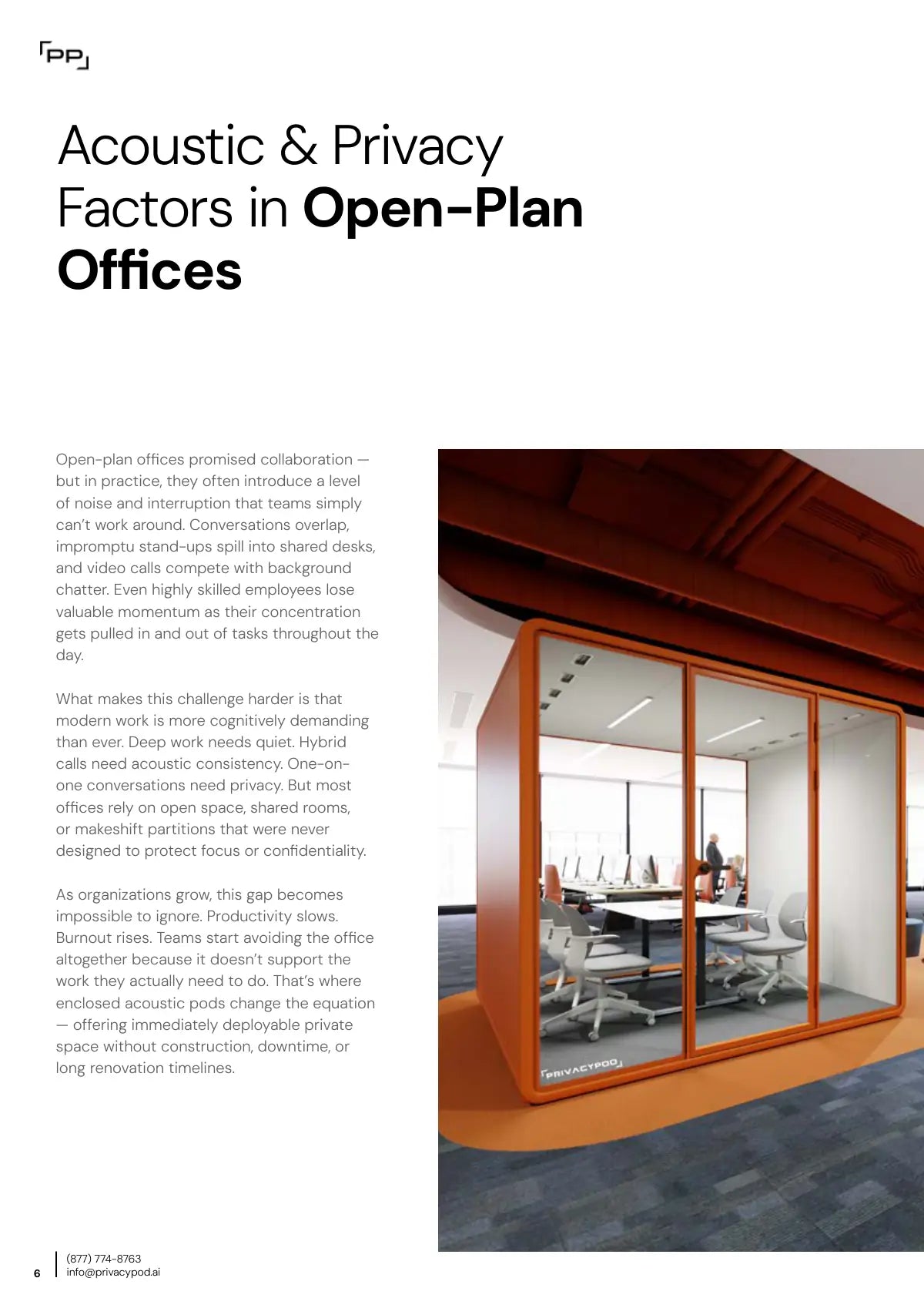
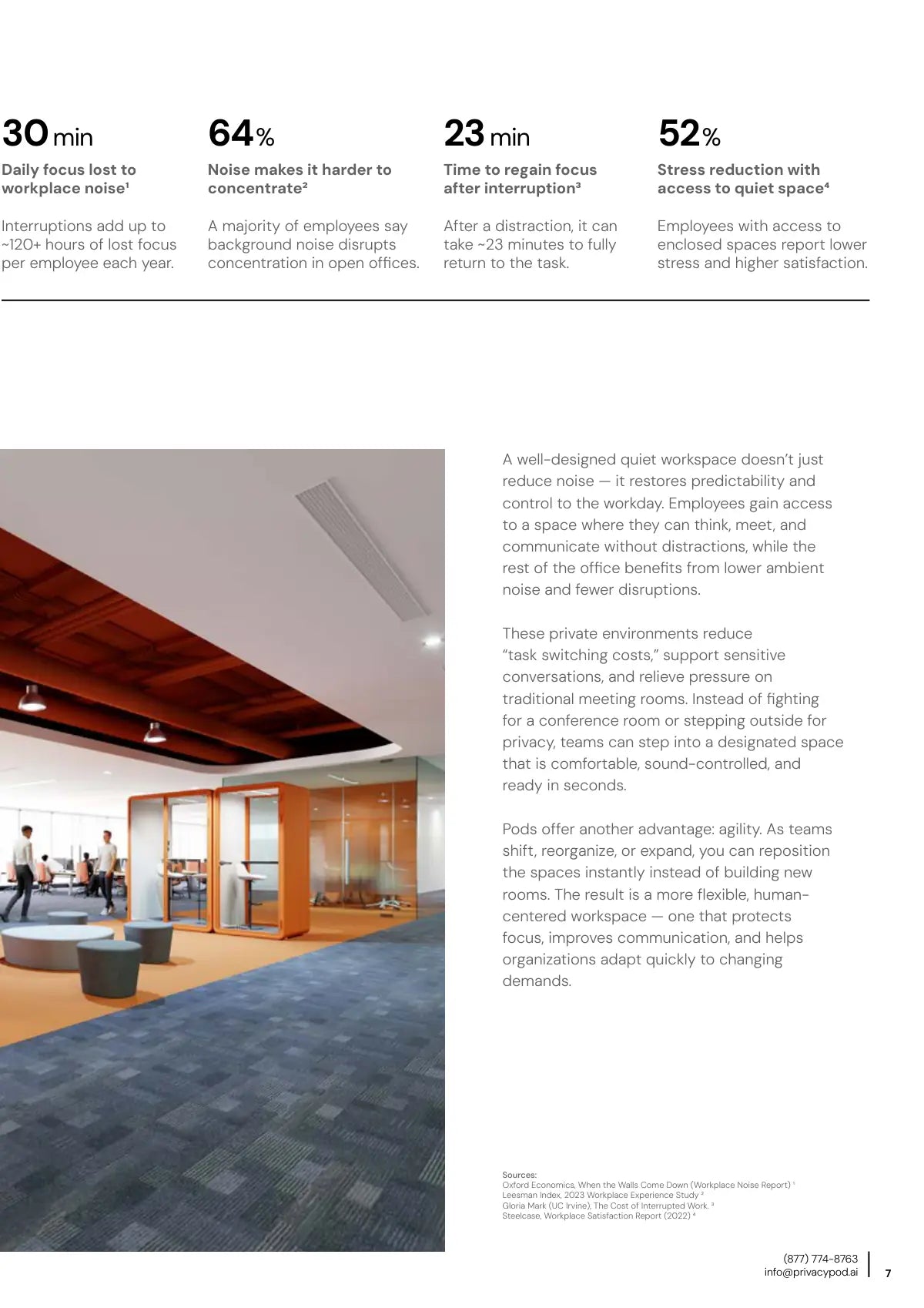
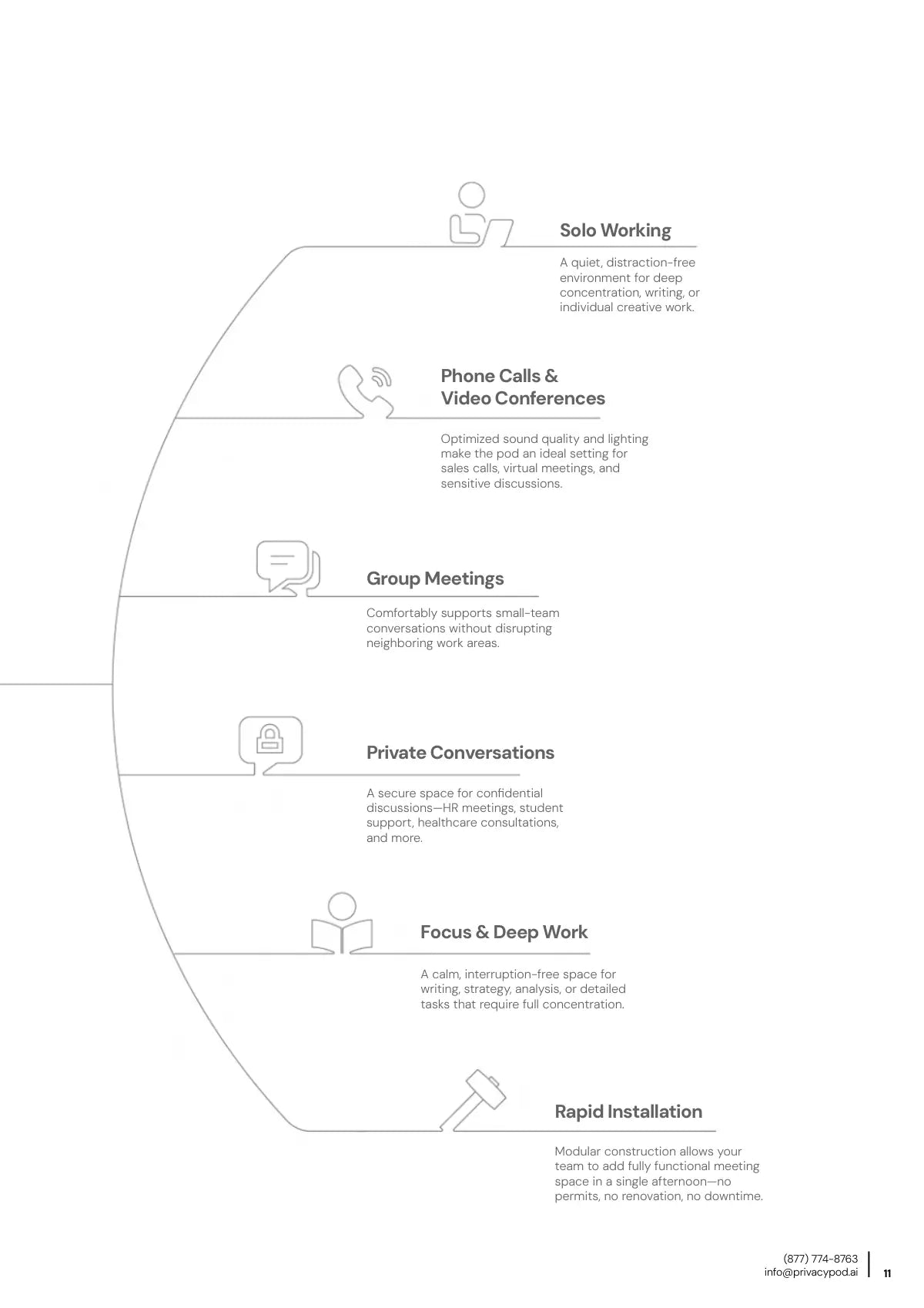
Quiet zones for focused work
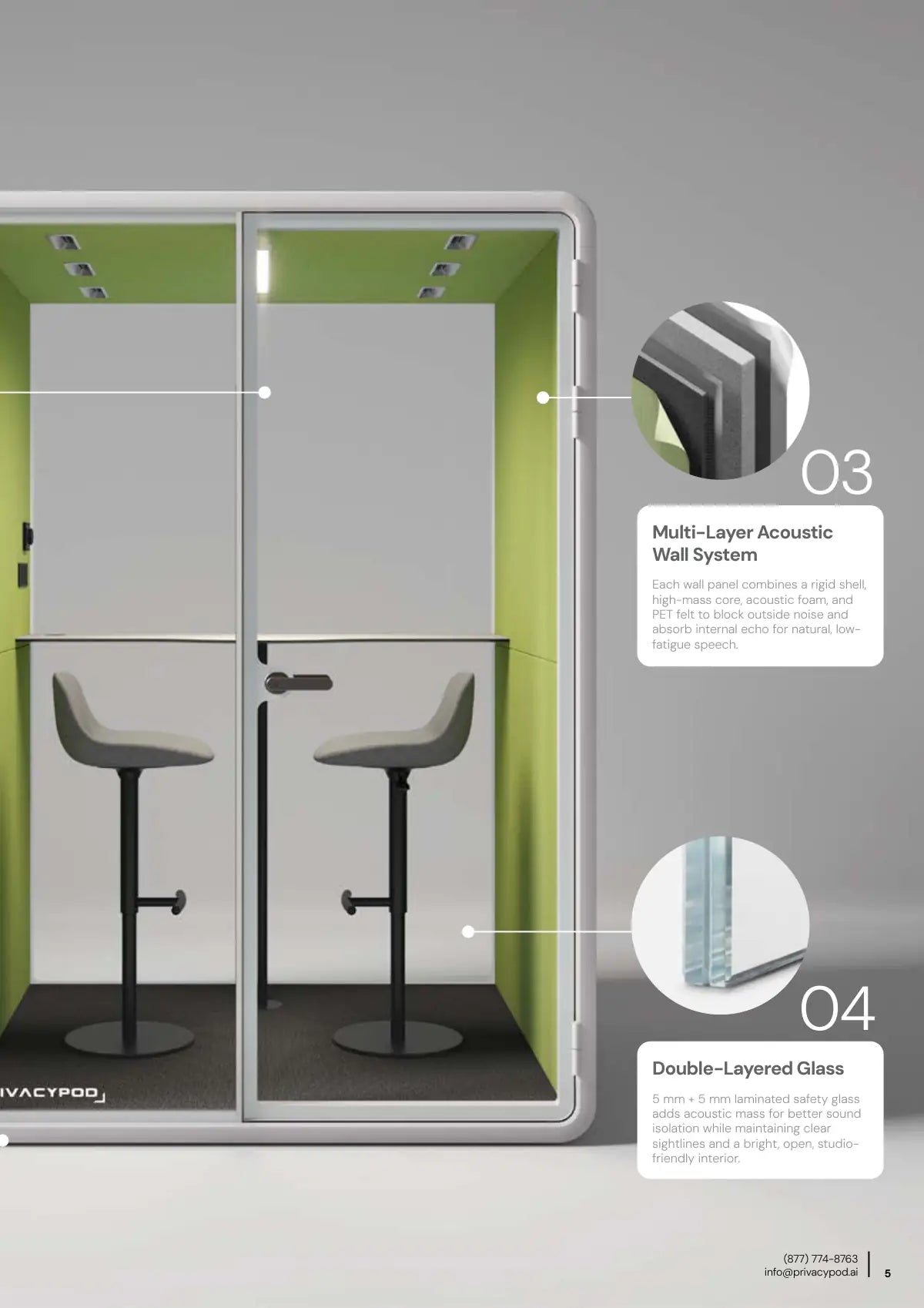
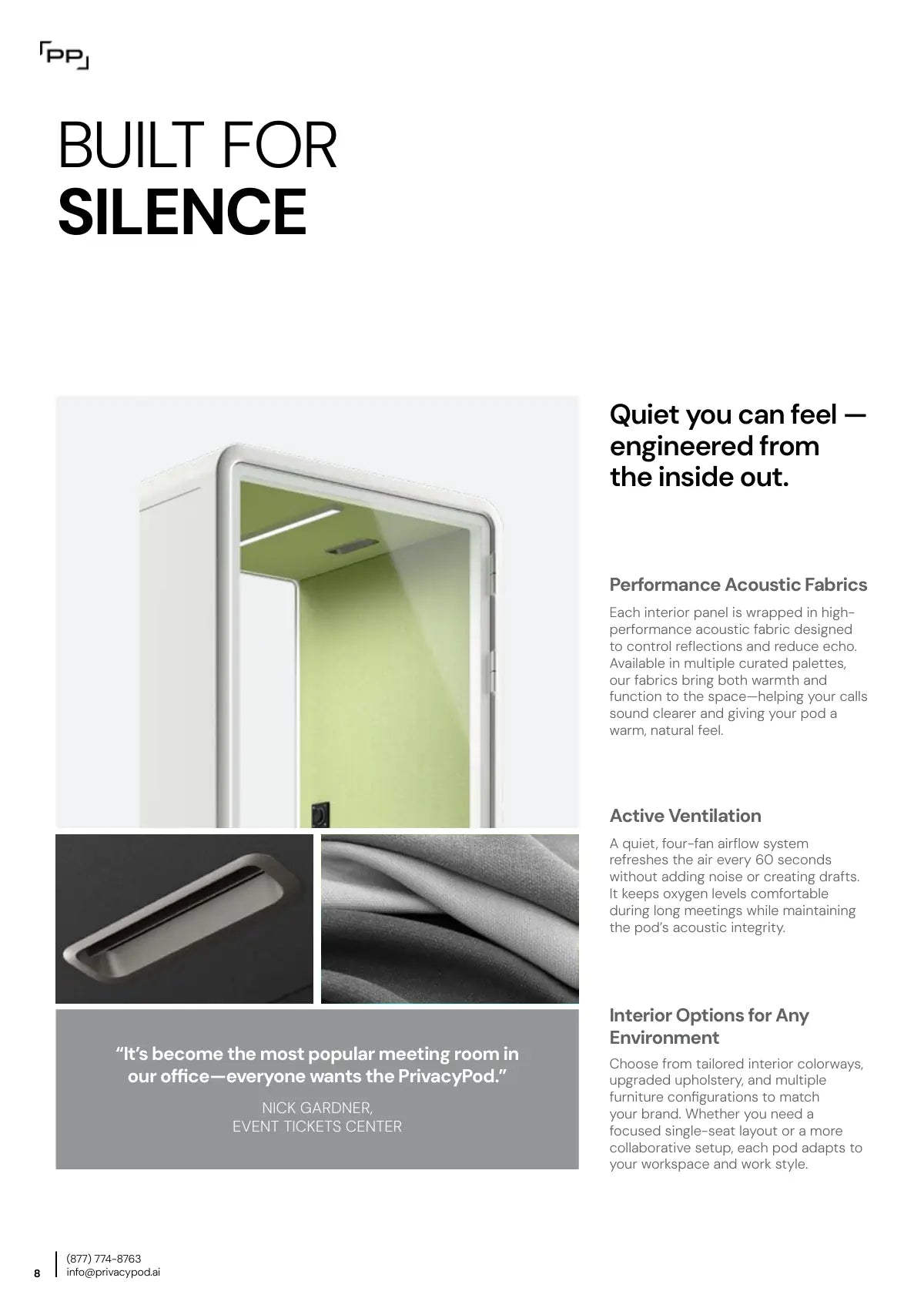
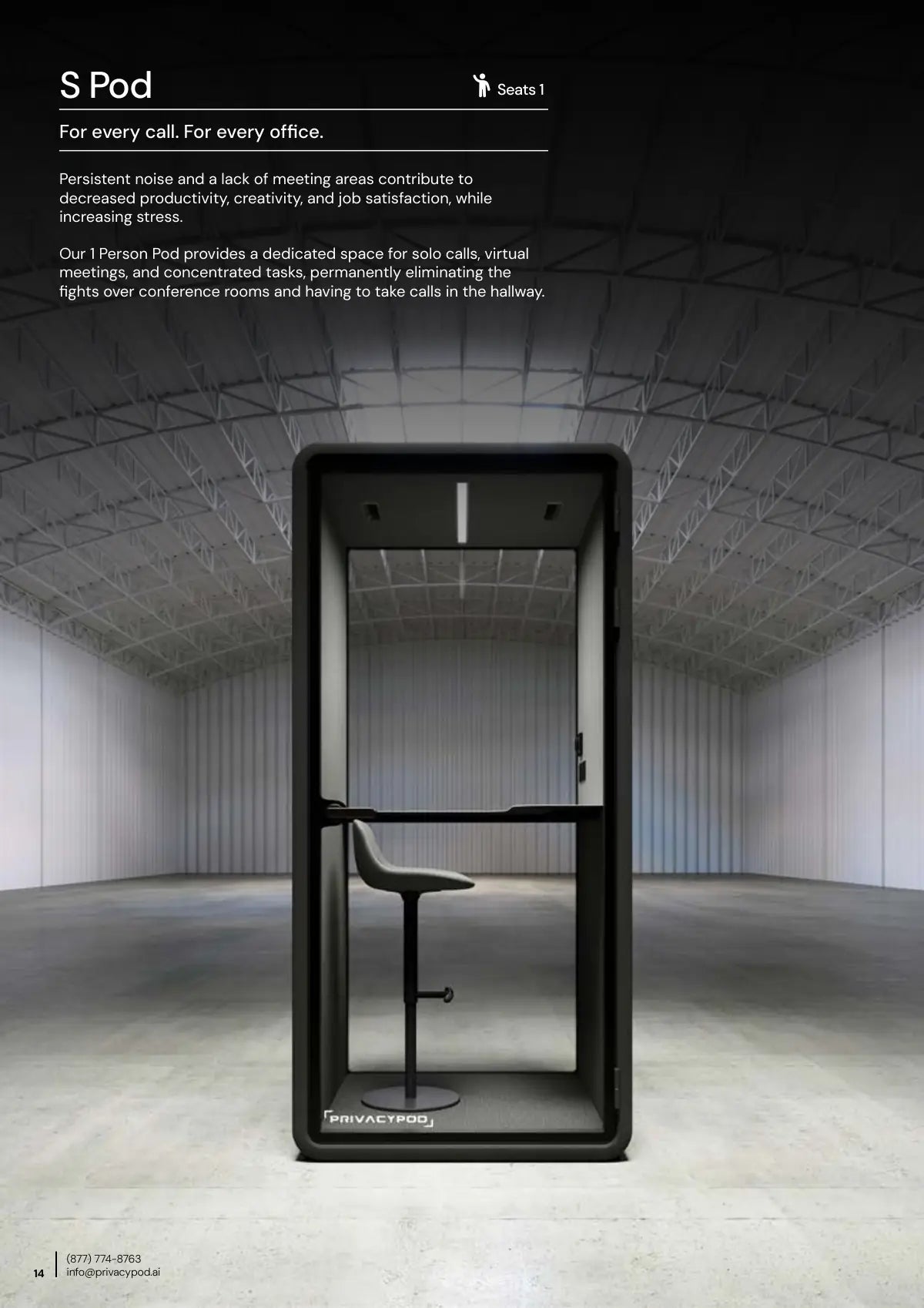
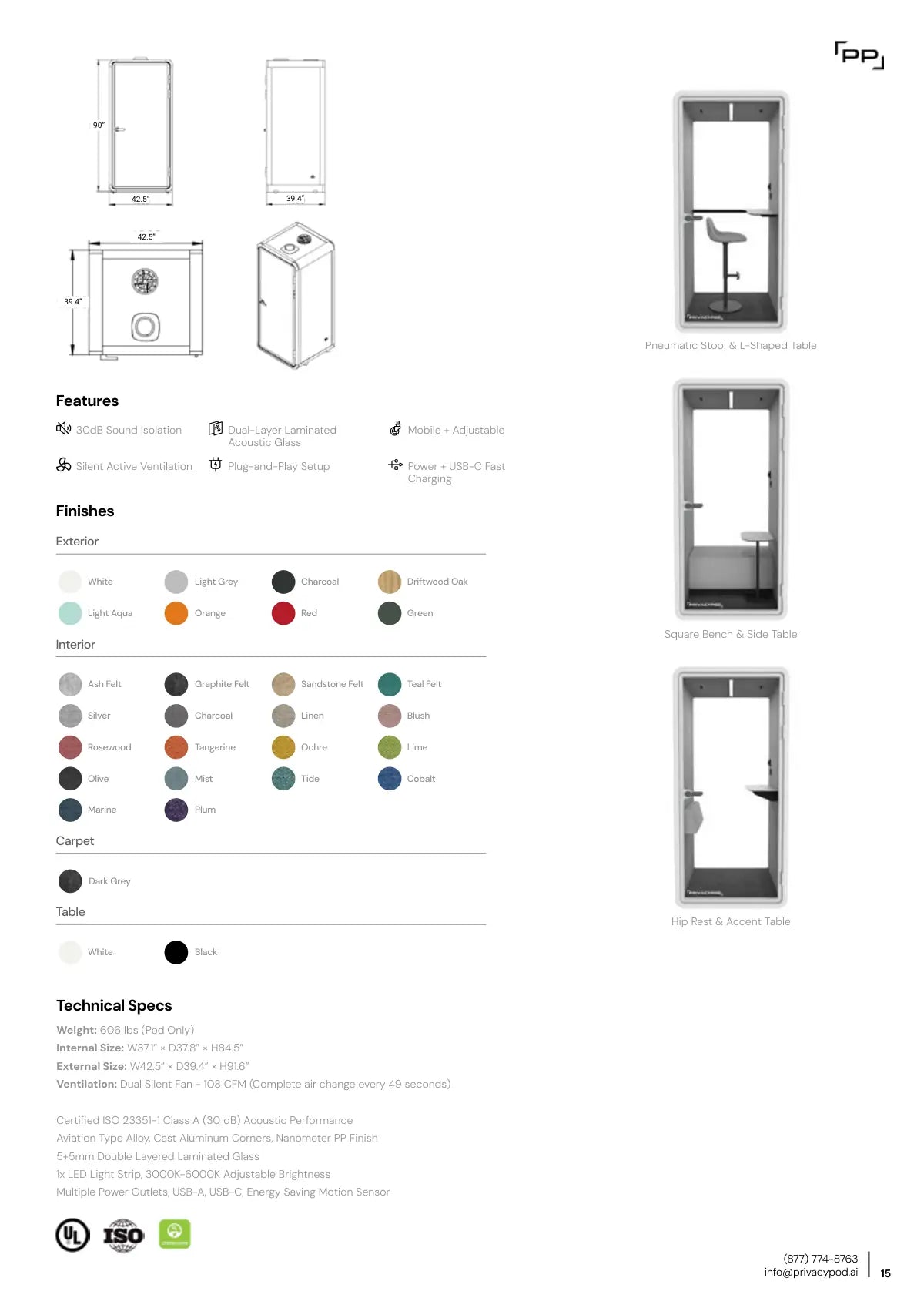
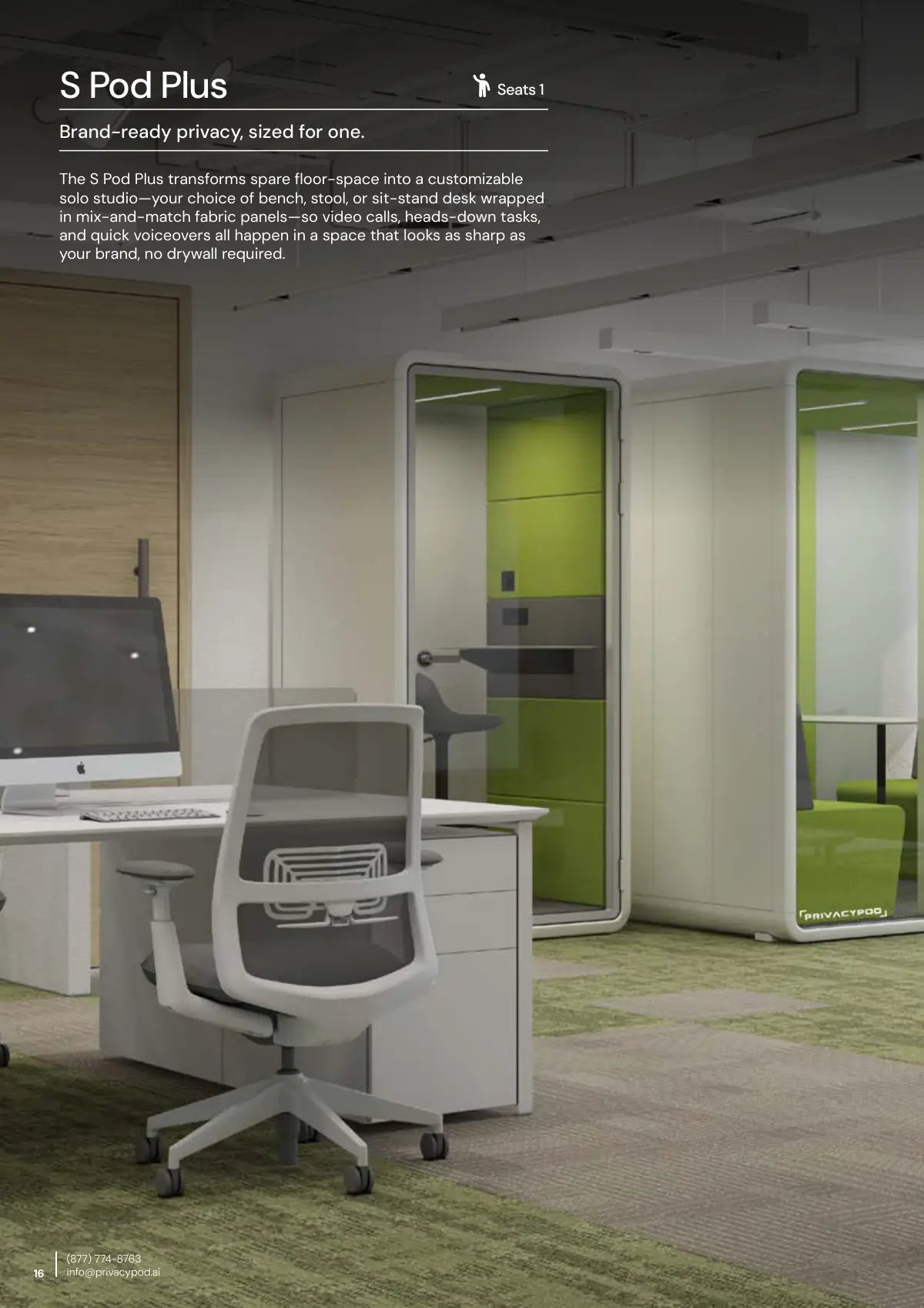
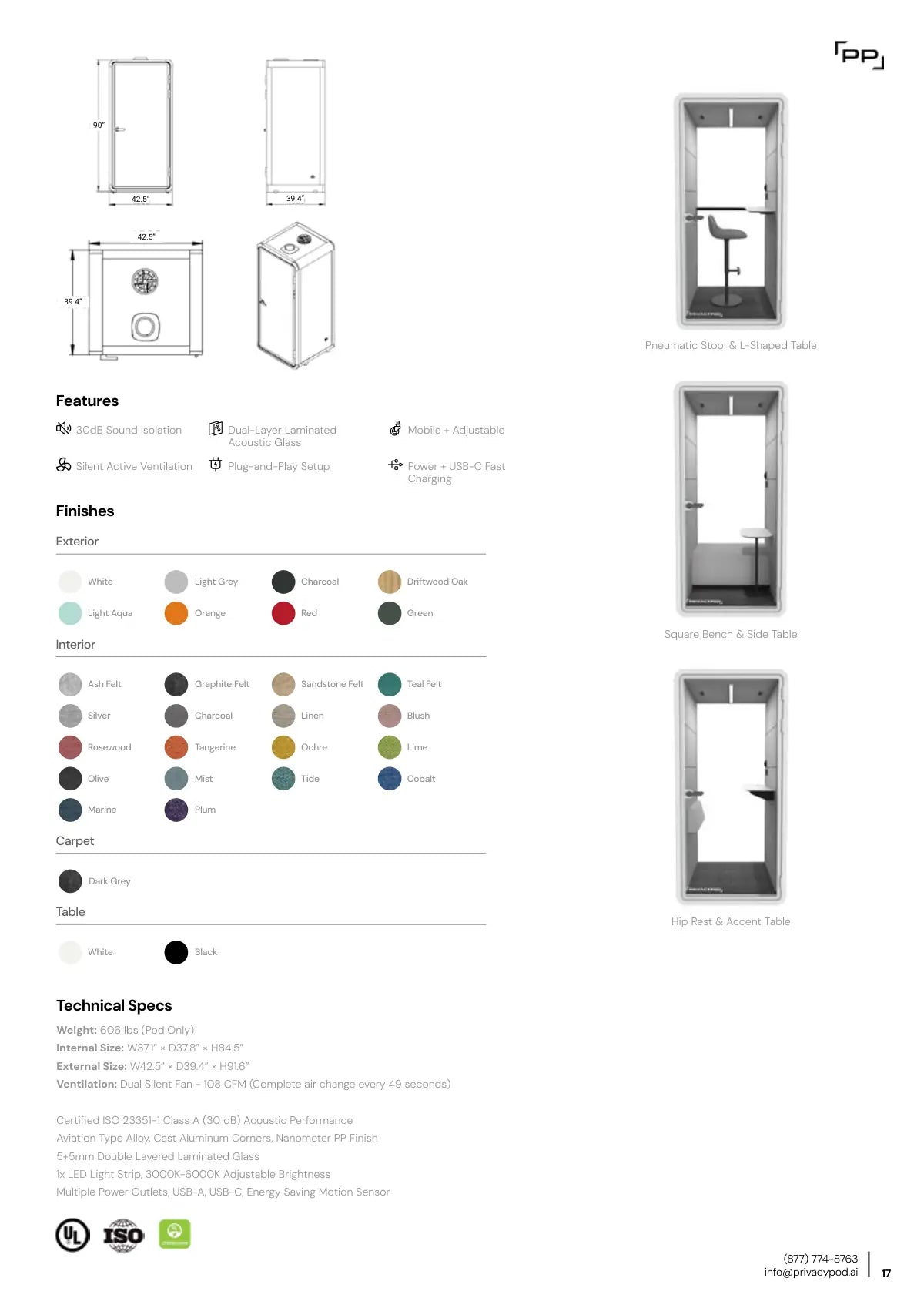
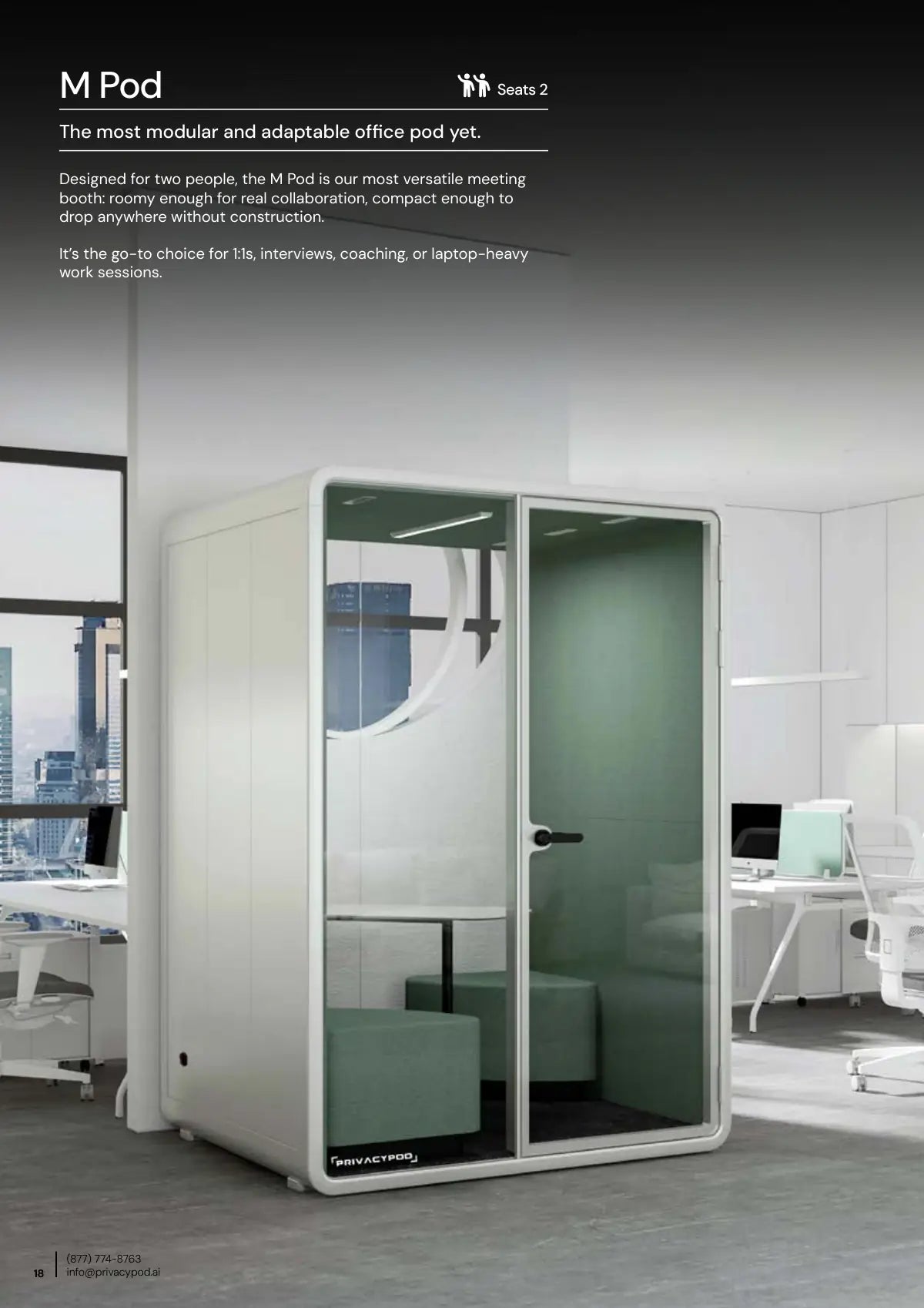
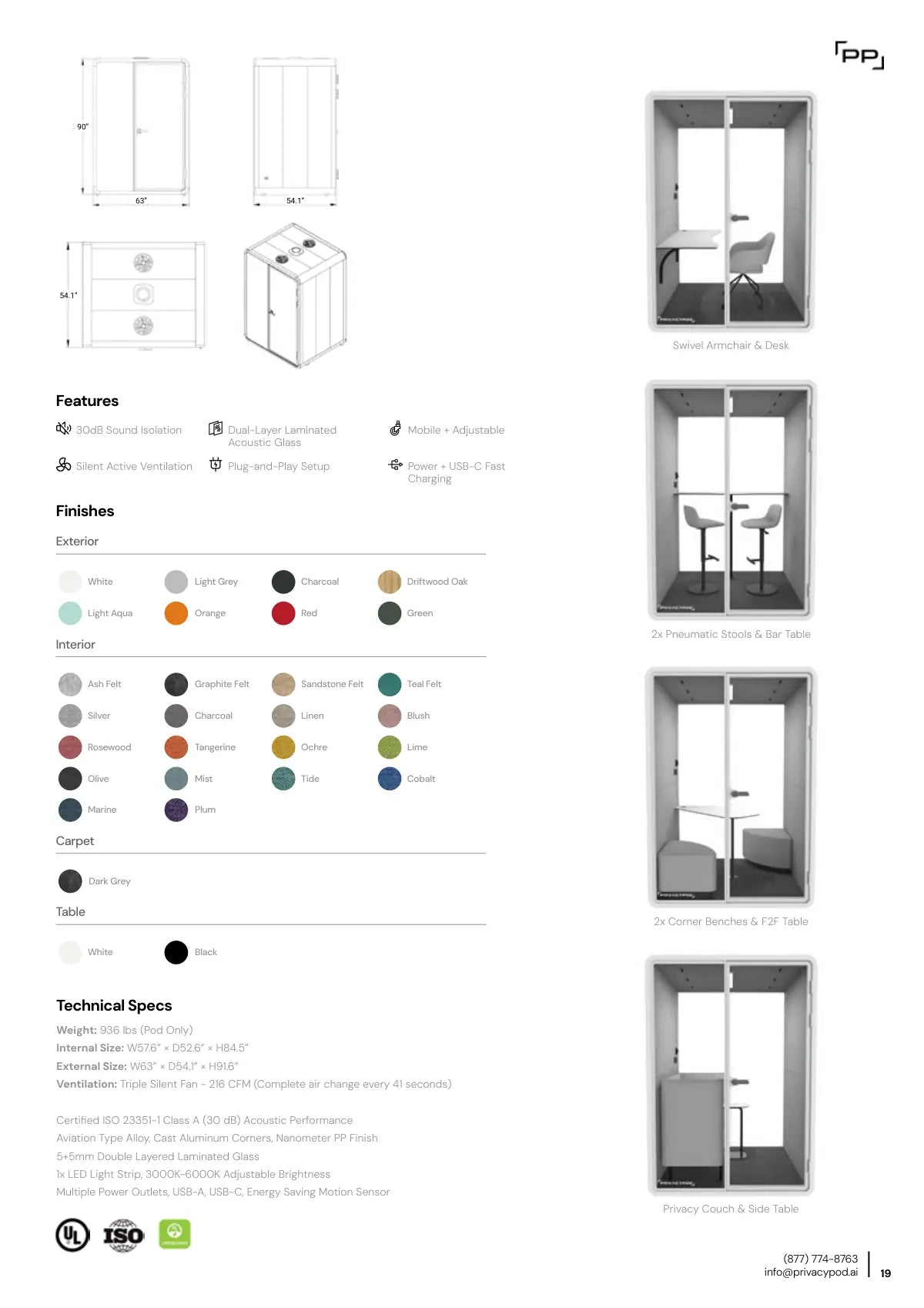
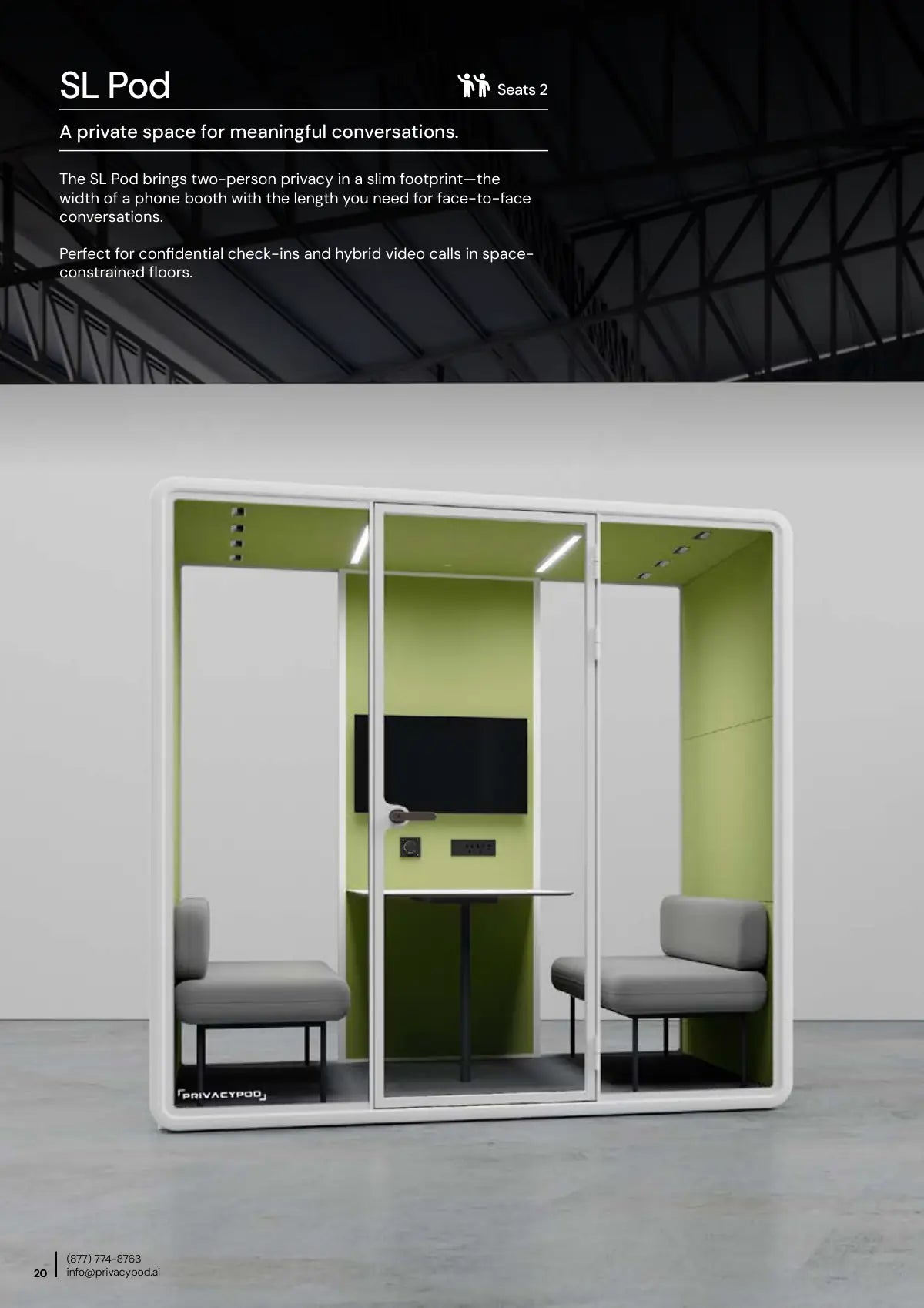
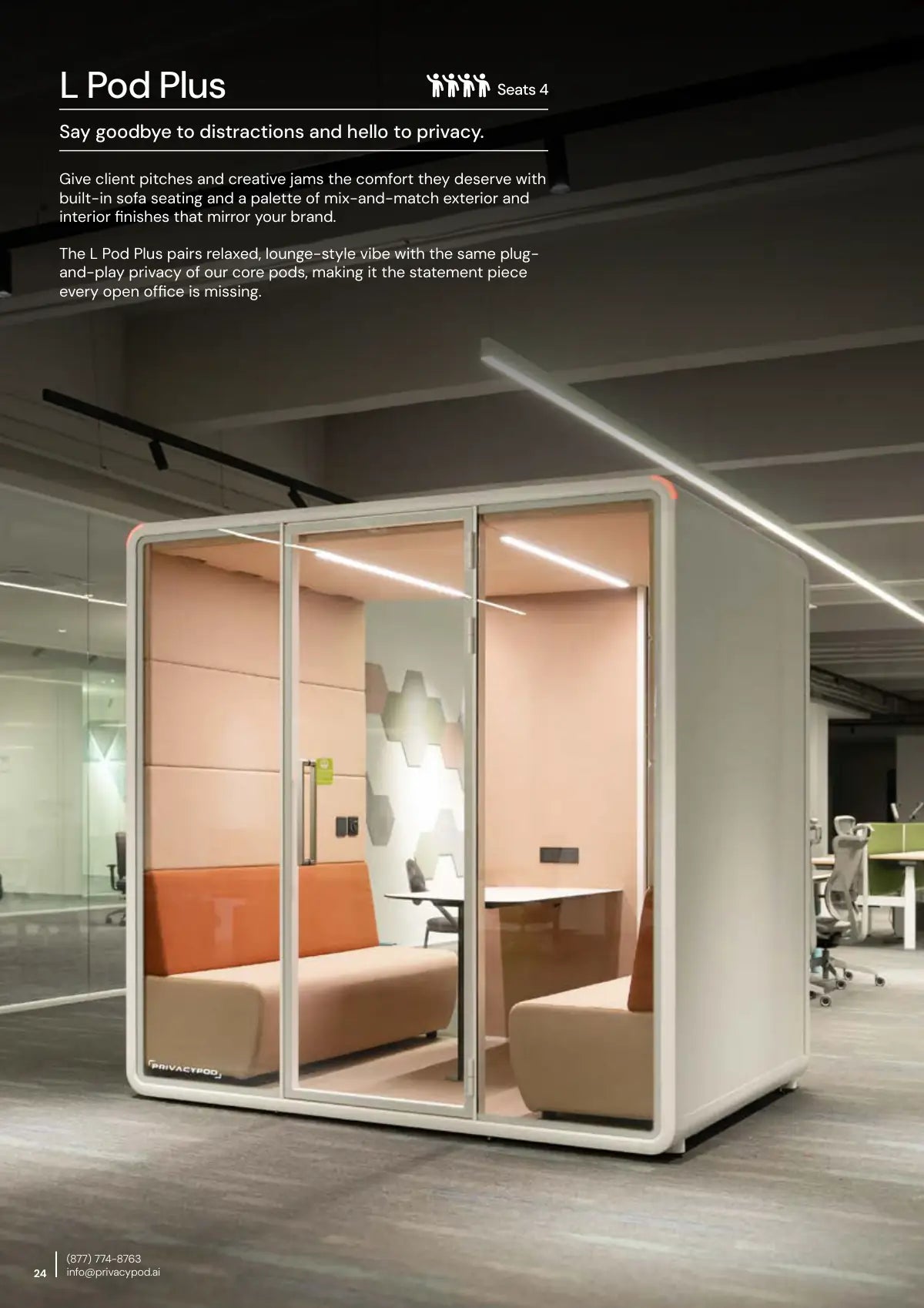
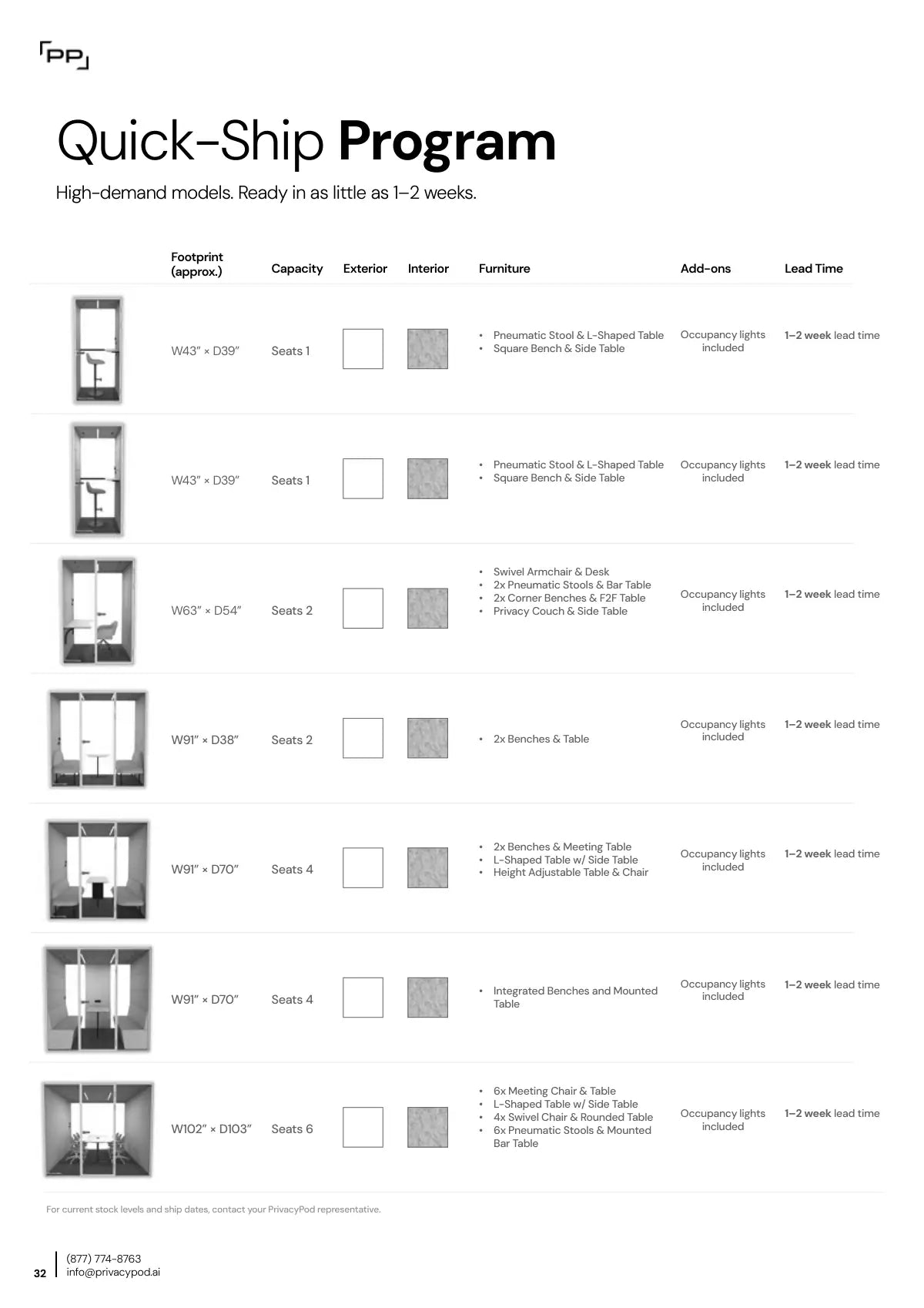
Open offices are loud by design. The S Pod at $6,395 gives one person an enclosed room for a call, a review or an uninterrupted hour of writing. The M Pod at $9,495 does the same for two. Both carry the same acoustic rating as the rest of the line: ISO 23351-1 Class A certified, approximately 30 dB of speech level reduction.
Inside, the details are what make an hour bearable:
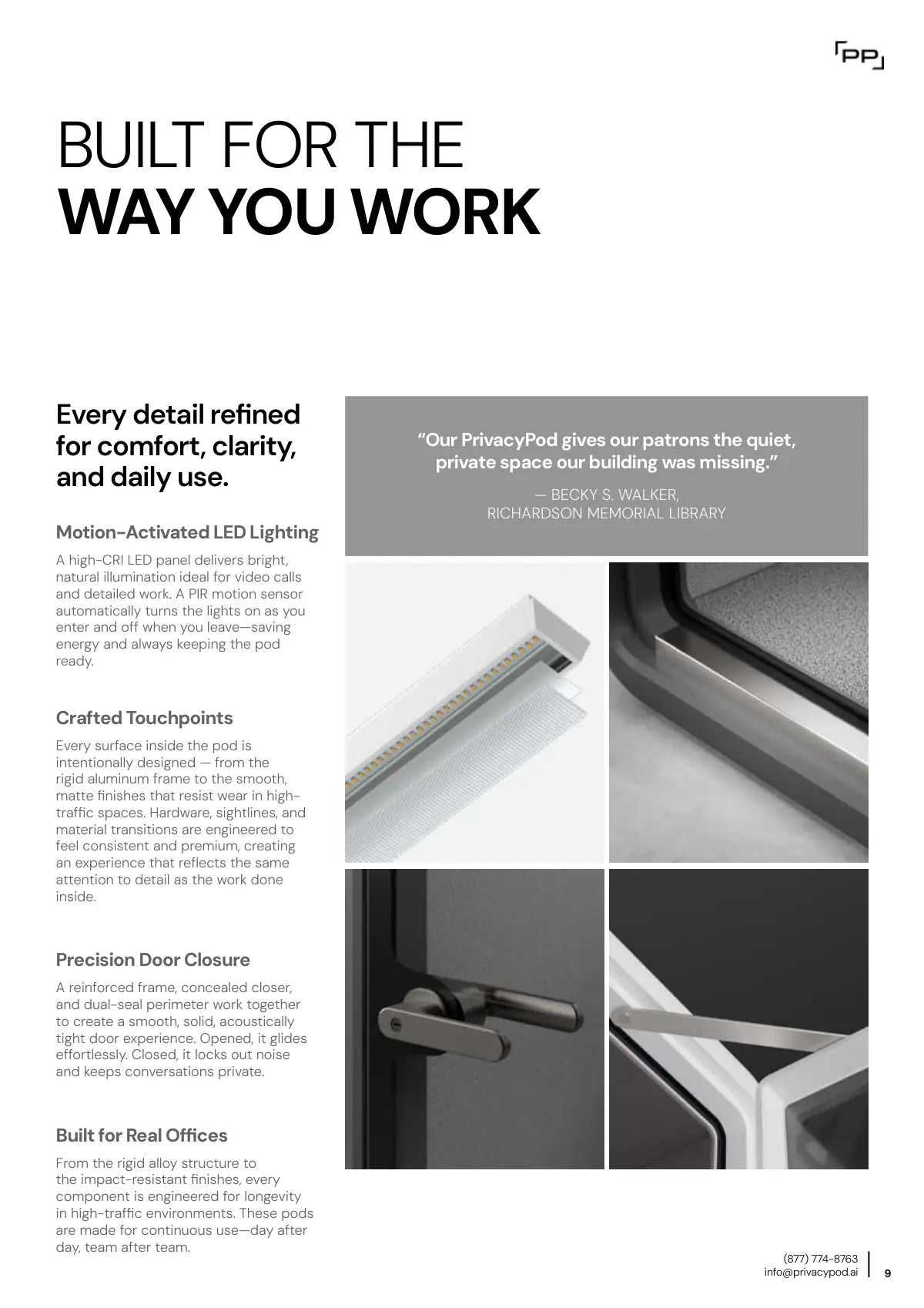
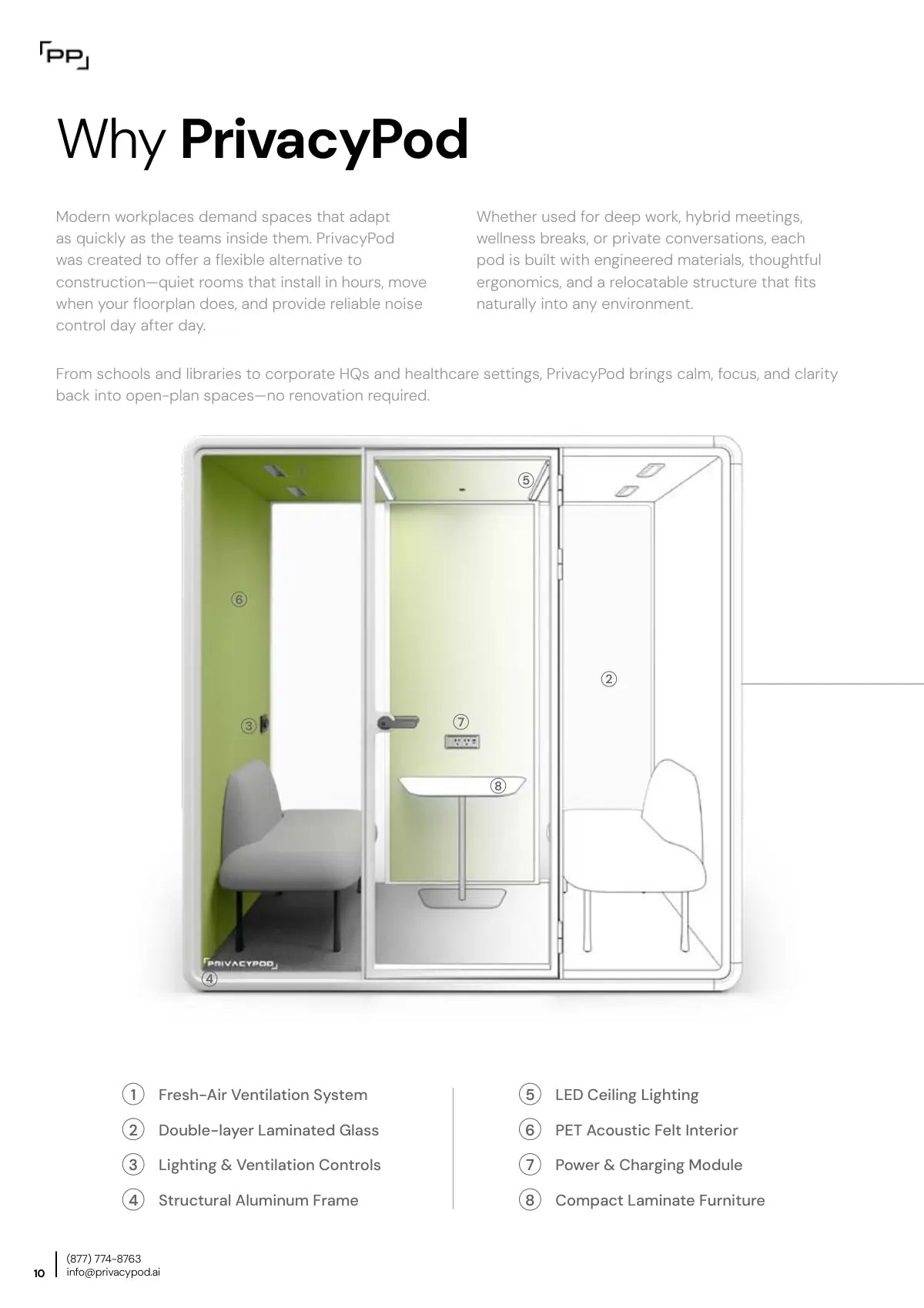
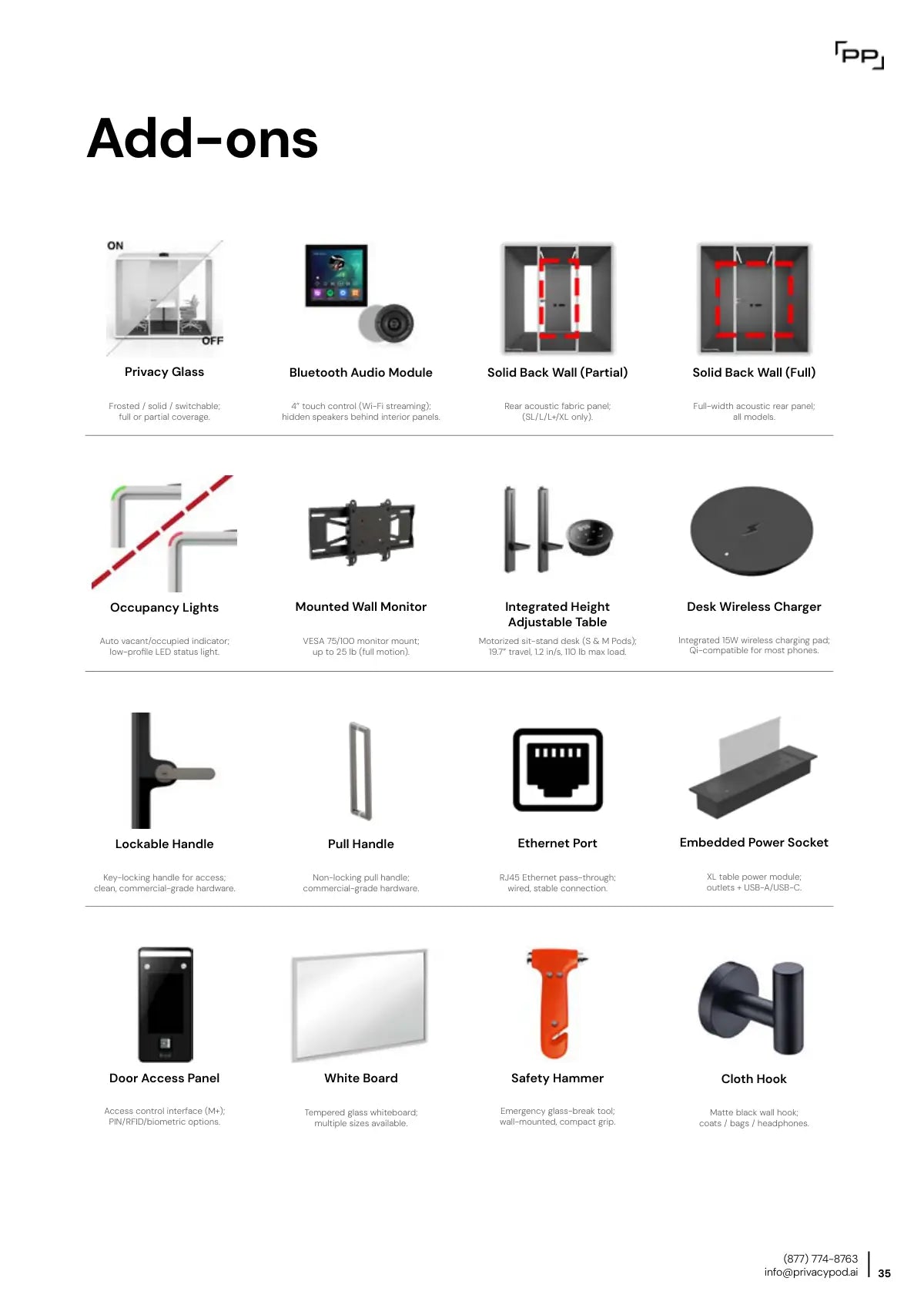
- Power where the work happens. Outlets and USB ports at the desk, plus a network connection option.
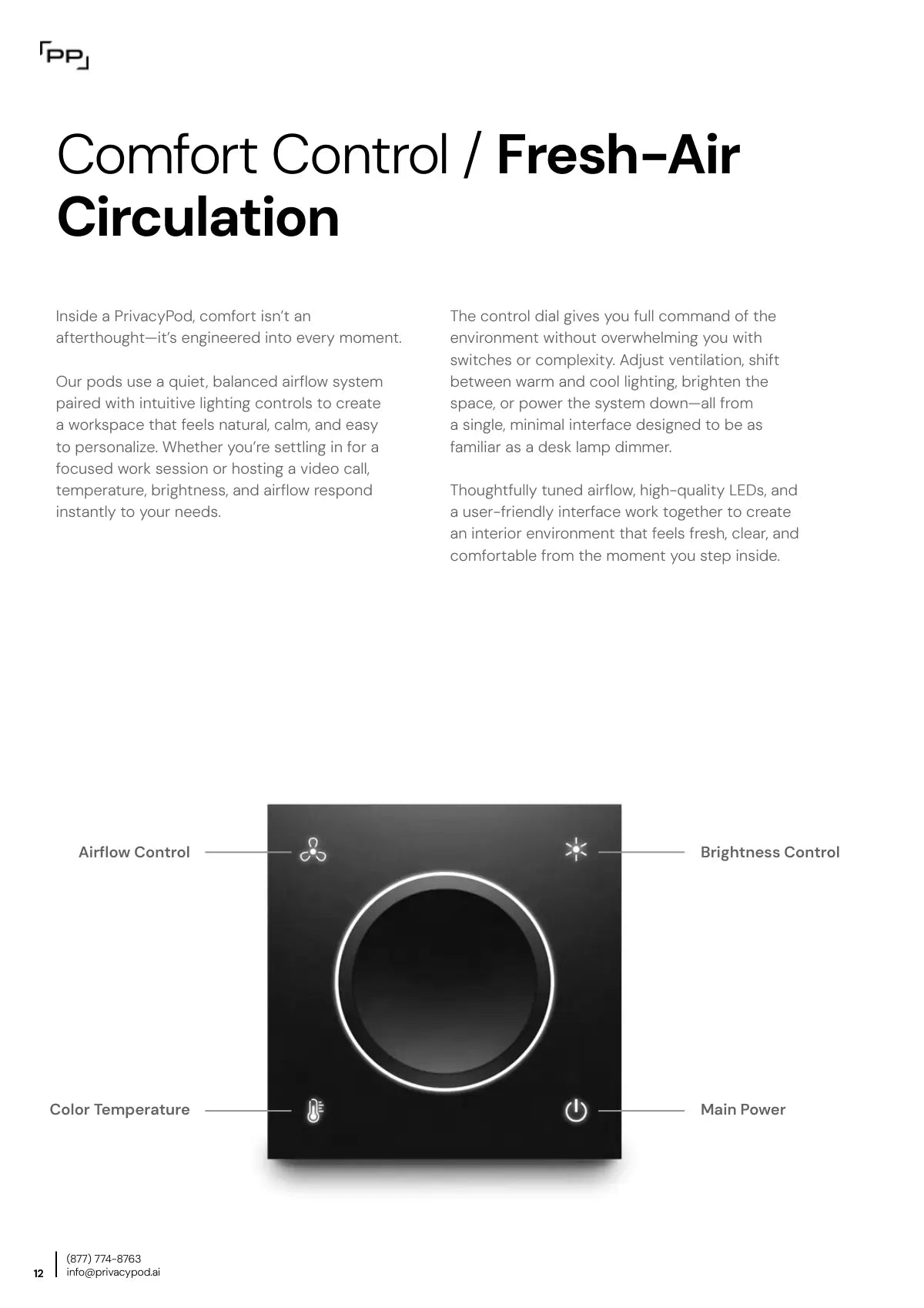
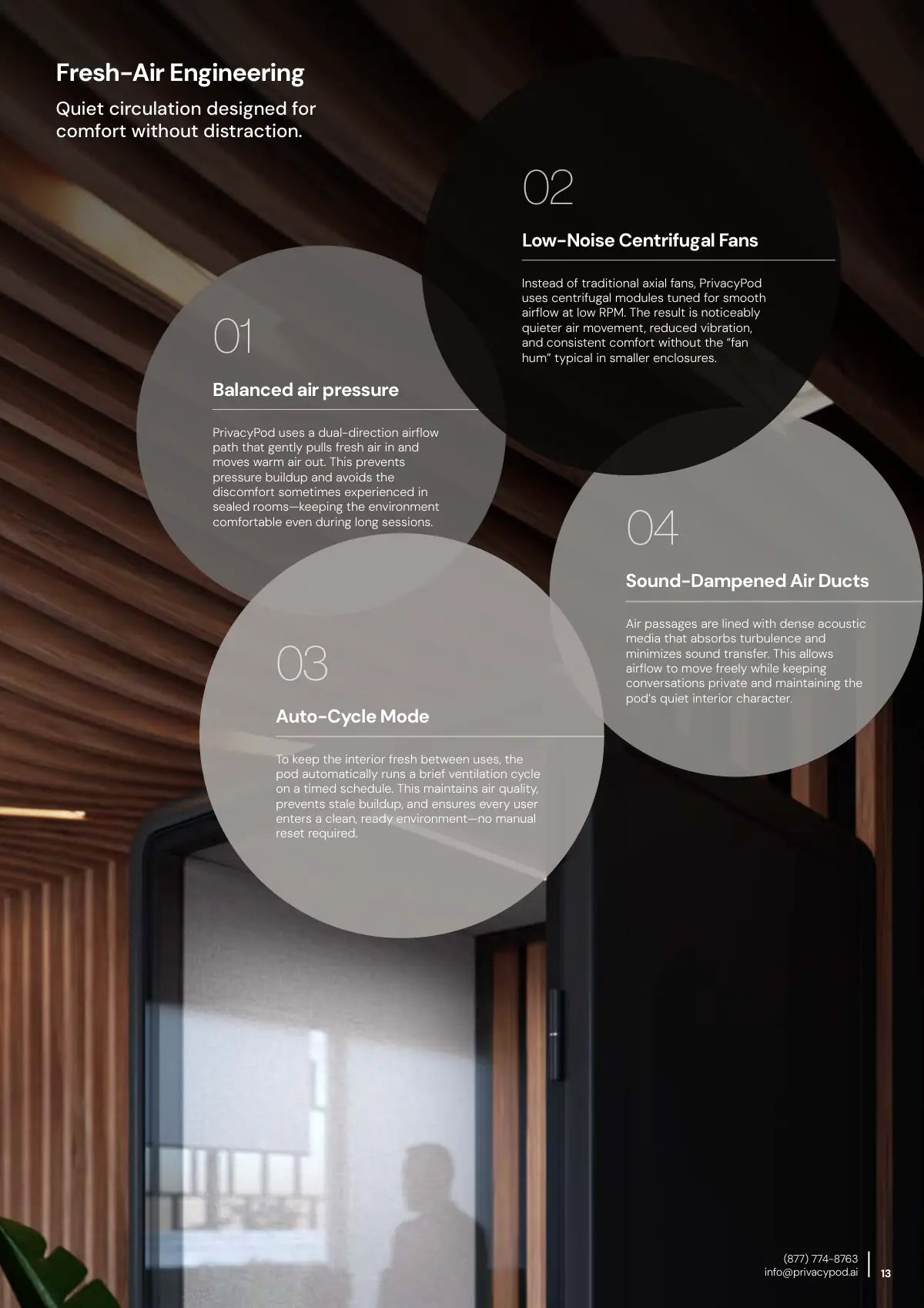
- Continuous ventilation. Fresh air moves through the pod the whole time it is occupied.
- Adjustable lighting. Dimmable LED lighting, so the pod is not simply a second source of glare.
Supporting neurodivergent employees
Neurodiversity and ADA compliance are related but they are not the same project. An accessible doorway does nothing for an employee whose attention breaks every time a cart rolls past. That employee needs a different accommodation, and it is usually a cheaper one.
What ADHD looks like in an open office
Attention-deficit/hyperactivity disorder affects concentration, time management and impulse regulation. In a busy office that tends to show up as three specific frictions:
- Focus that resets every time something moves in peripheral vision.
- Task and time management that degrades as the day loses its edges.
- A much shorter path from background noise to real stress.
None of that is a performance problem. It is an environment problem, and environments are the part an employer can change.
Four accommodations that hold up
- Bookable quiet zones. A pod an employee can reserve, or simply walk into, beats a policy asking everyone else to be quieter.
- Flexible layouts. Pods disassemble and relocate, so the quiet zone can follow the team instead of being designed around once and then resented.
- Somewhere to take a break. Short, frequent breaks help. They only happen if there is a place to take one that is not the parking lot.
- Written expectations. Clear goals and instructions in writing pair well with a quiet room to do the work in. Neither substitutes for the other.
For the acoustic reasoning behind all of this, see our guide to designing for neurodiversity with acoustic architecture.
Accessibility and ADA compliance
The Americans with Disabilities Act, signed in 1990, sets the floor for physical access. Furniture and enclosed rooms are covered by it, and the requirements are specific enough to design against.
The numbers to design against
- Work surfaces between 28 and 34 inches above the finished floor.
- Toe clearance extending at least 17 inches beneath the work surface and knee clearance at least 11 inches deep, within the 25 inch maximum the standard counts, and at least 30 inches of clear width.
- Door openings with at least 32 inches of clear width.
- Handles, pulls and latches operable with one hand, with no tight grasping, pinching or twisting, and no more than 5 pounds of force.
The complete requirements are published in the 2010 ADA Standards for Accessible Design.
How the accessible pods meet them
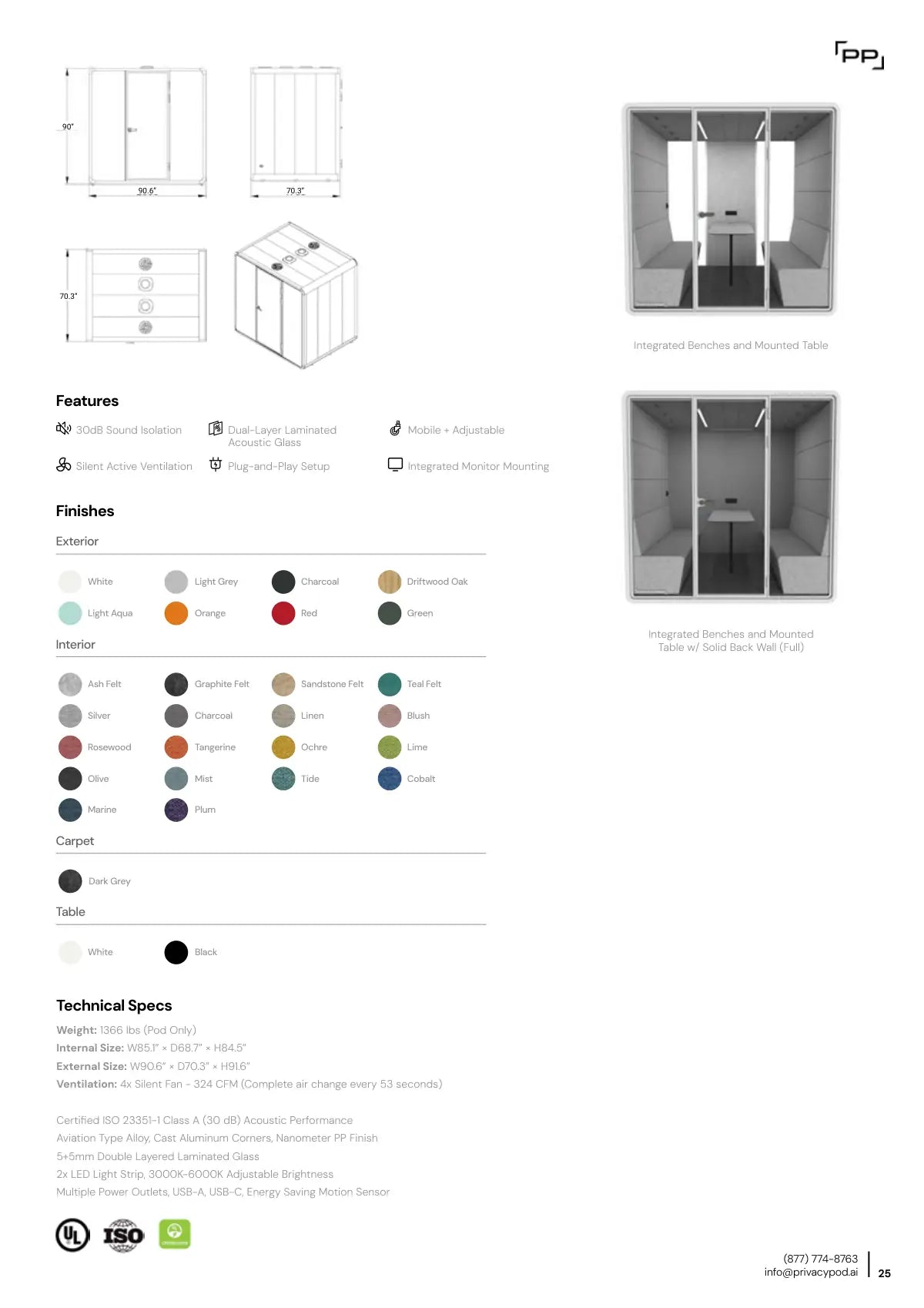
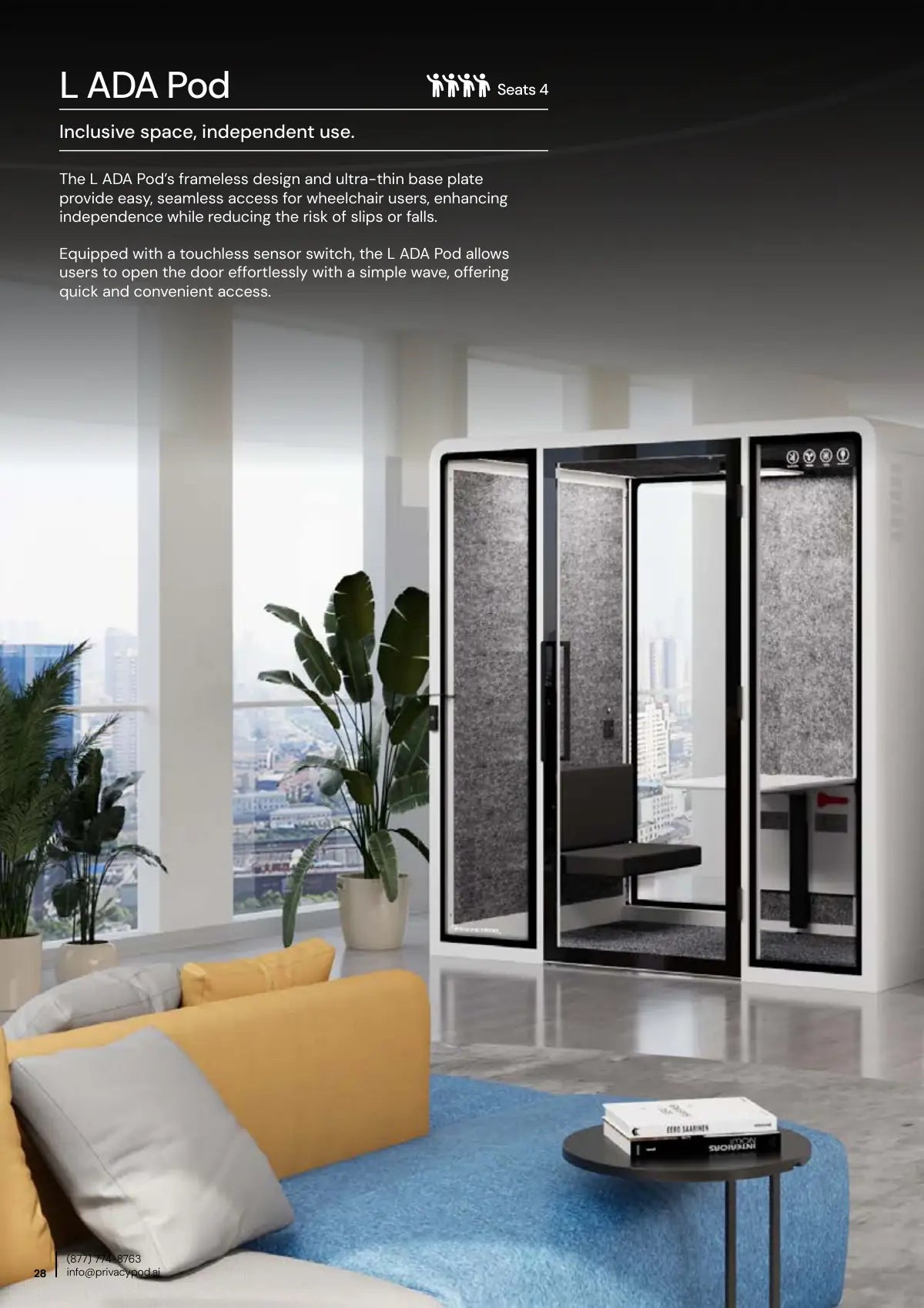
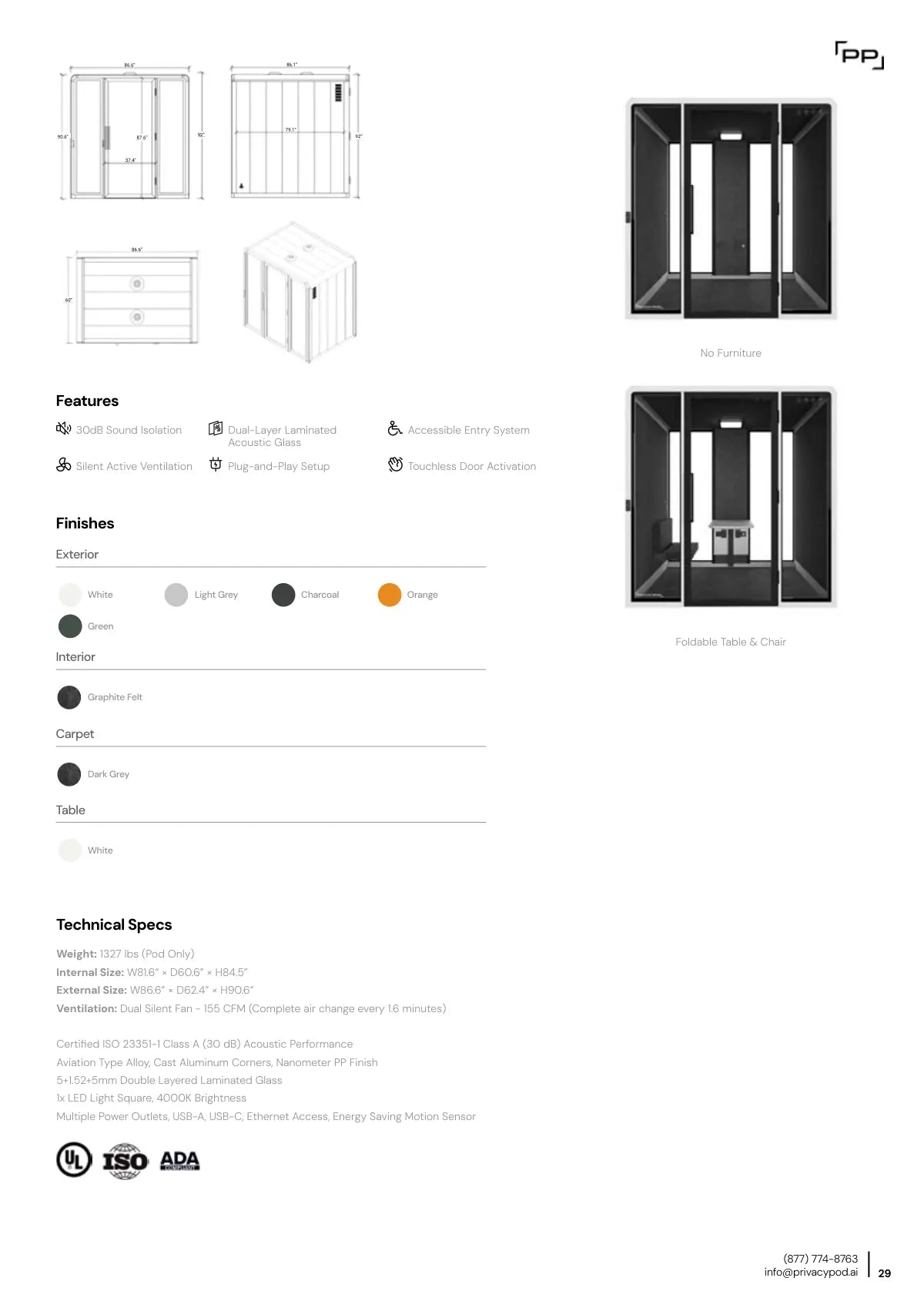
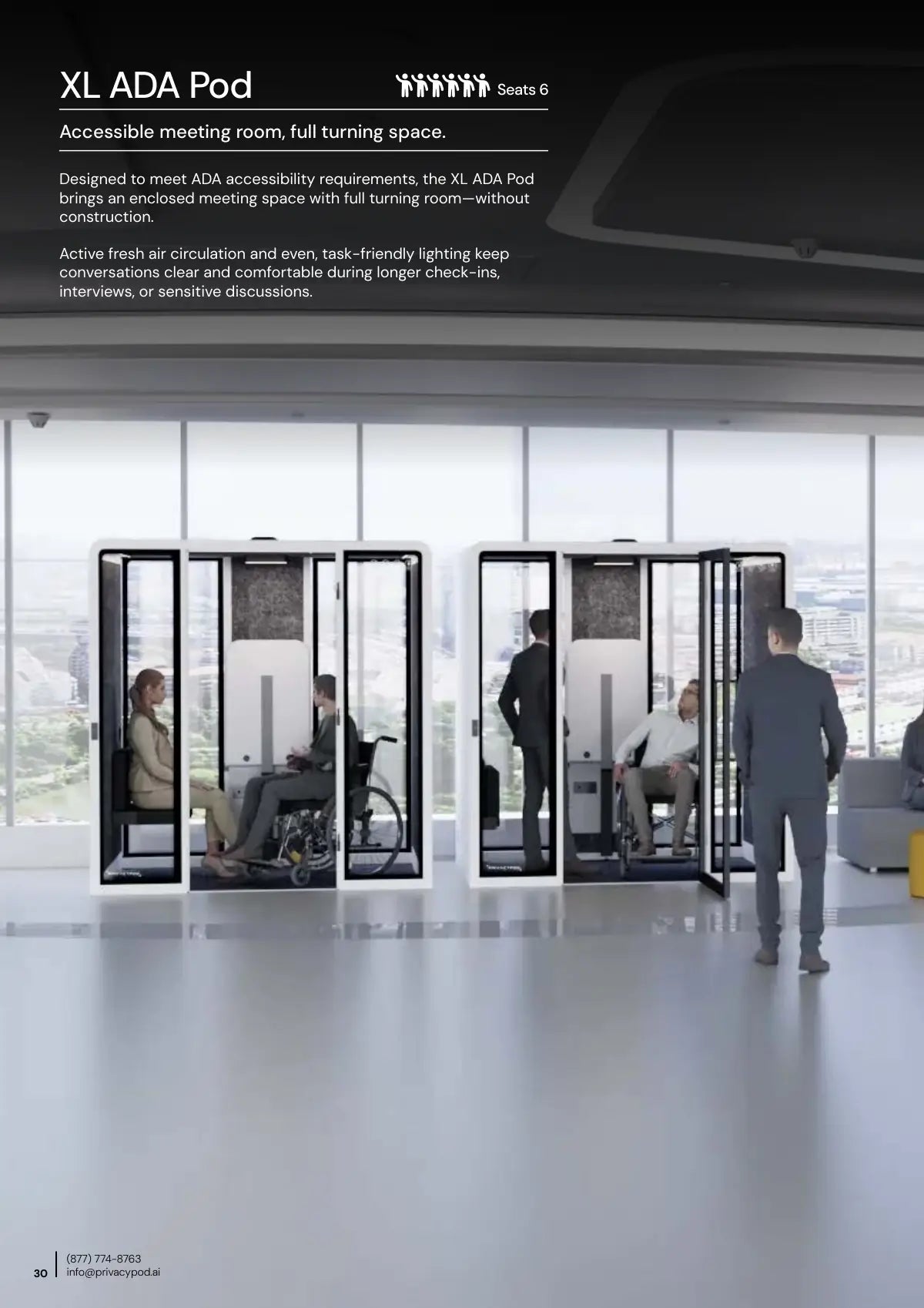
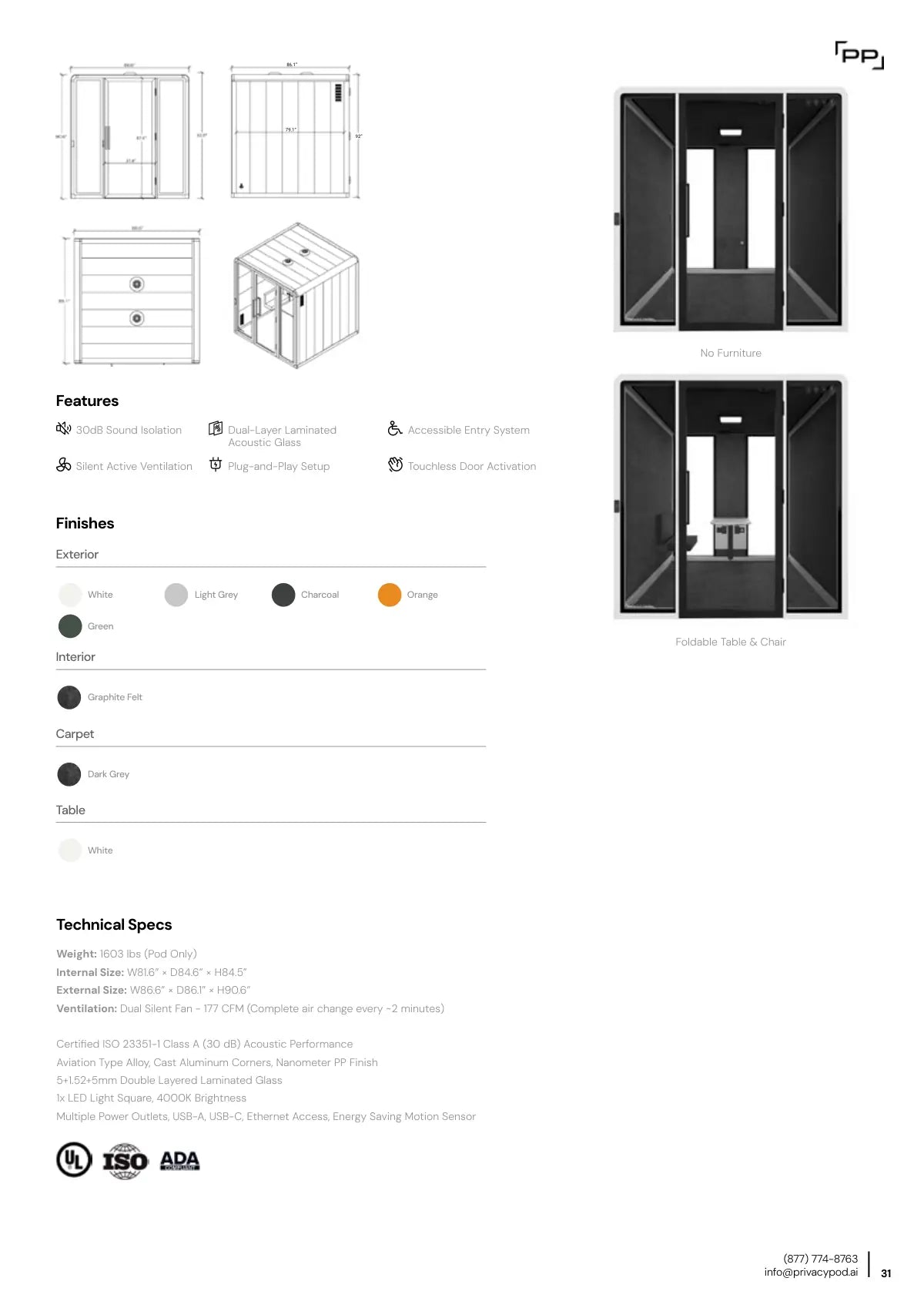
The L ADA Pod at $24,795 and the XL ADA Pod at $29,795 are built to that standard rather than adapted toward it:
- A frameless, ultra-thin base plate. There is no threshold to climb and nothing to catch a caster or a toe.
- An automatic door opener with a touchless sensor switch. Entry needs no grip, no pull and no second person.
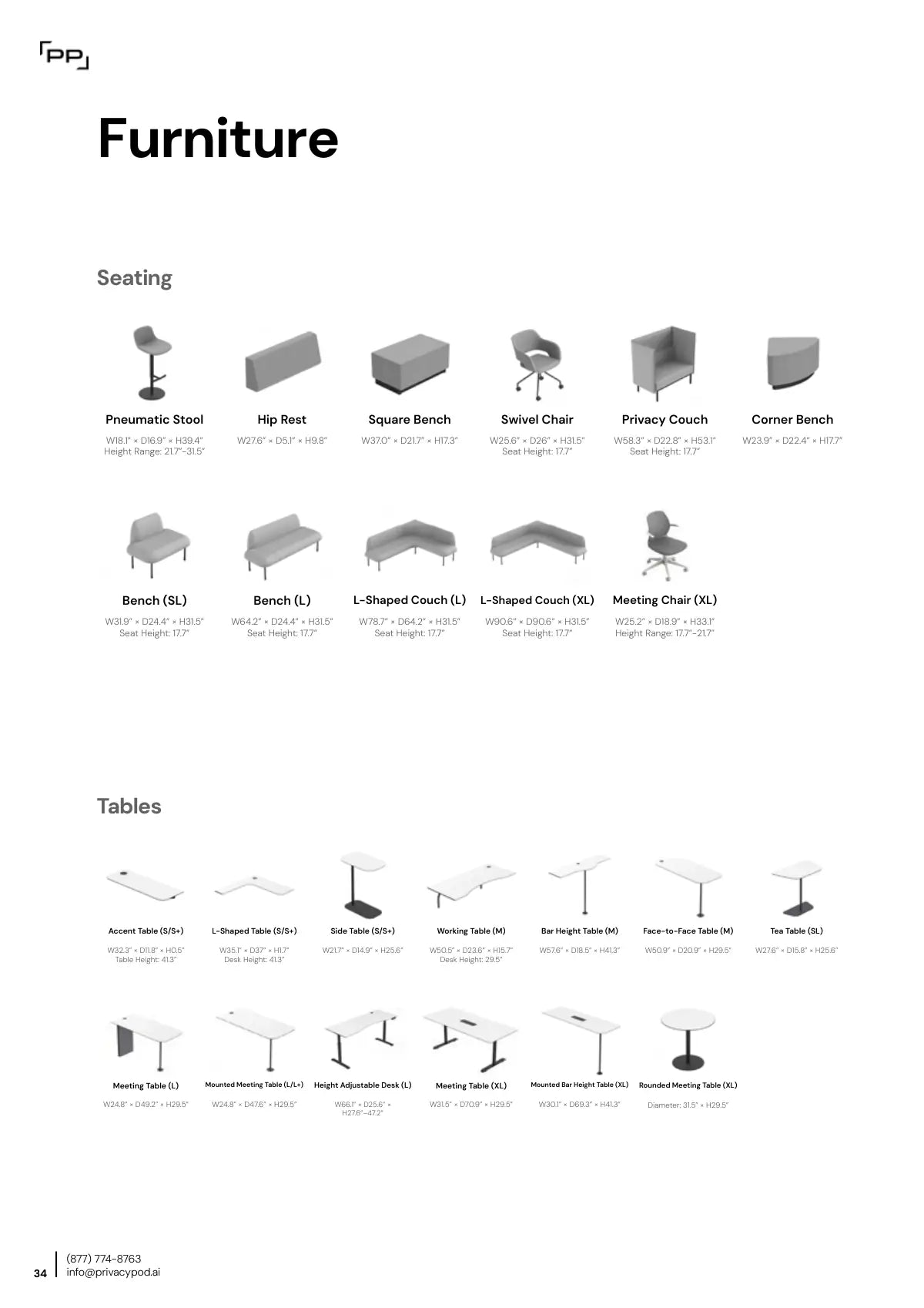
- Room to turn around. Wide interiors with foldable table and seating, so the pod can be a meeting room, a focus room or a quiet room without anything being dragged out of the way. The L ADA Pod seats four.
One thing worth stating plainly, because it is often assumed otherwise: the accessible pods are not acoustically lesser. The L ADA Pod and the XL ADA Pod are ISO 23351-1 Class A certified and deliver approximately 30 dB of speech level reduction, exactly like the standard line. Full specifications for each are on the L ADA Pod and XL ADA Pod product pages.
Where inclusive pods earn their place
- Schools. The M Pod gives students a distraction-free room for exam prep or a one-on-one session with a counselor, and the same adjustable lighting and ventilation that helps a neurodivergent adult helps a neurodivergent fifteen-year-old. More on pods in education.
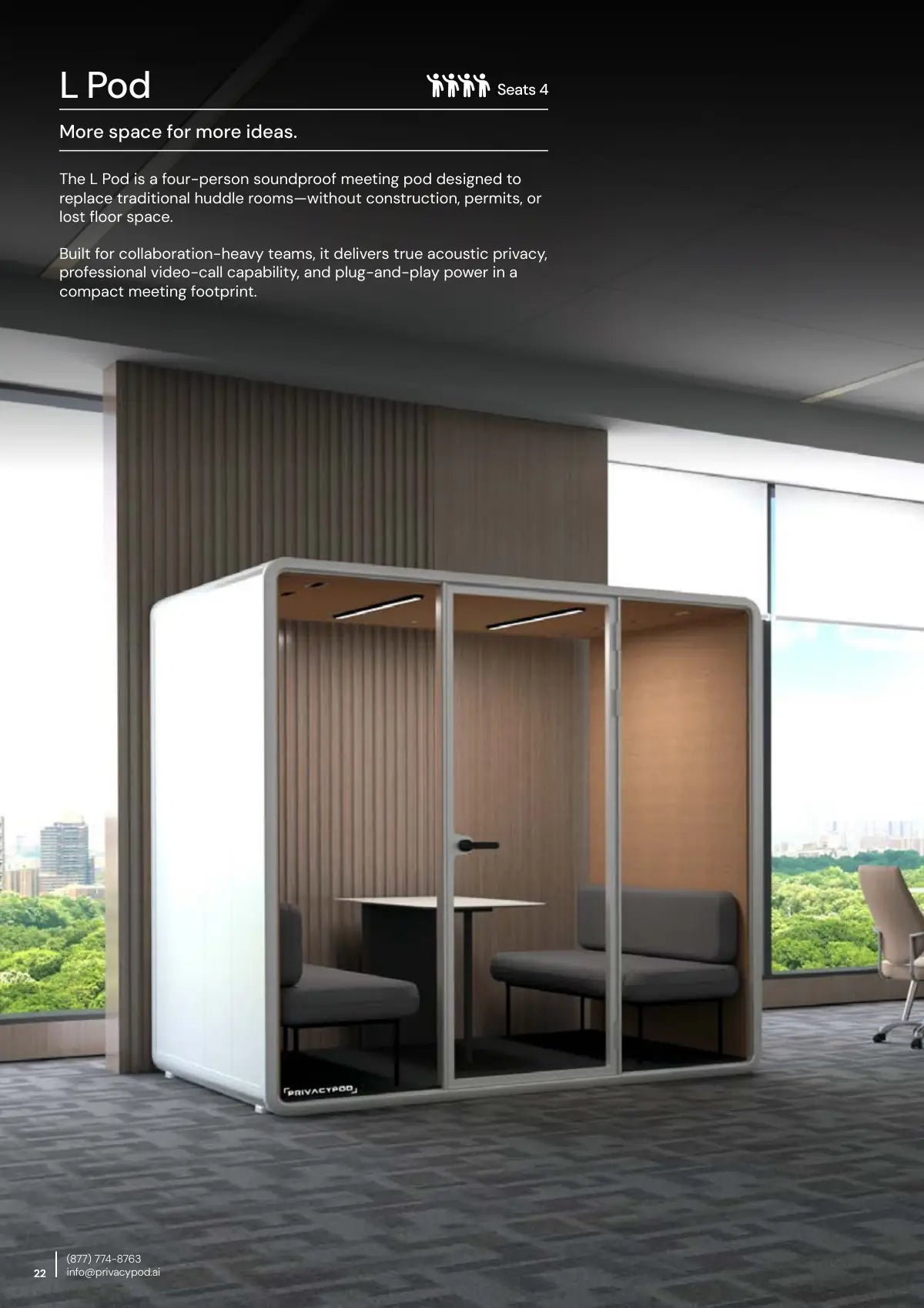
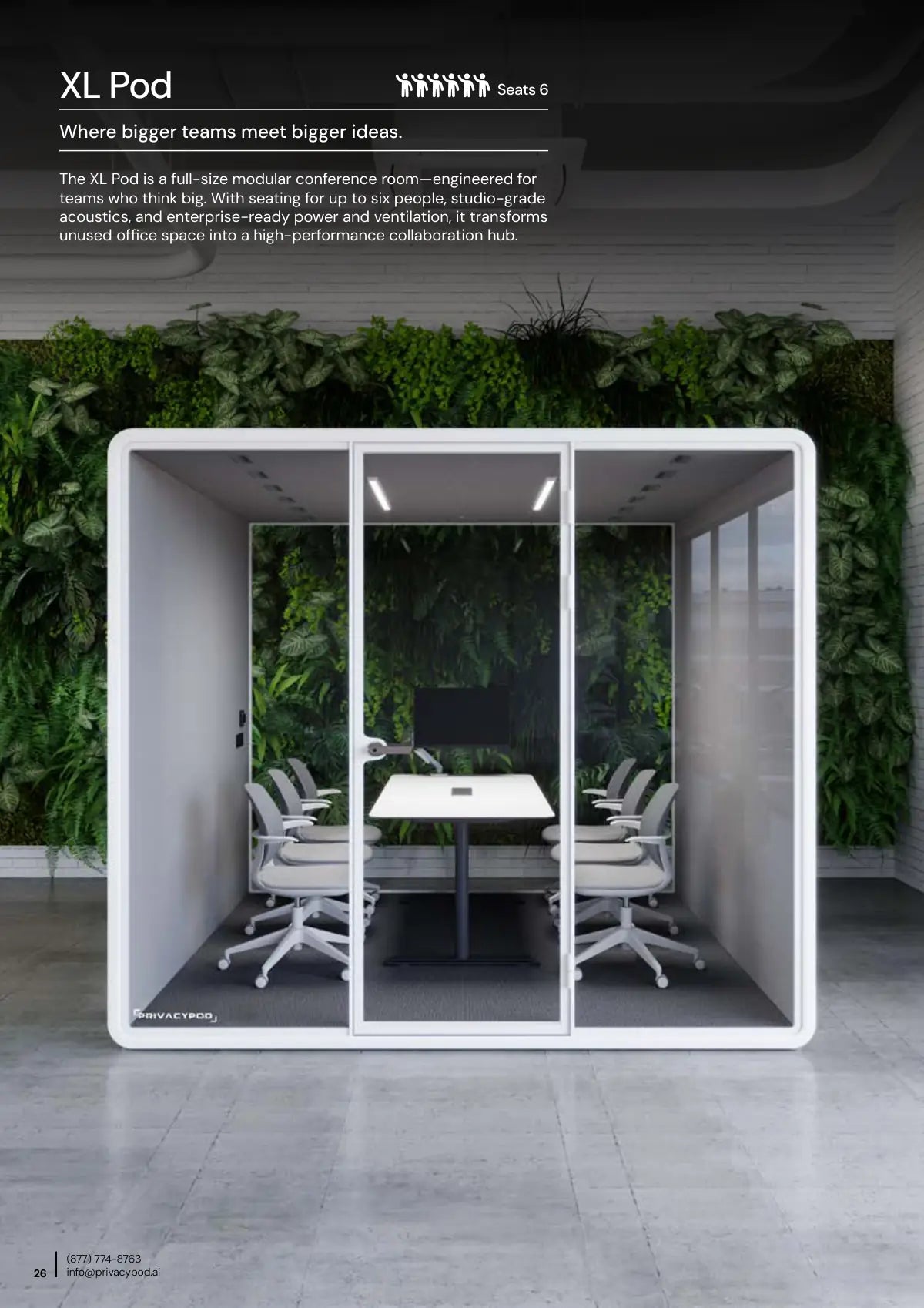
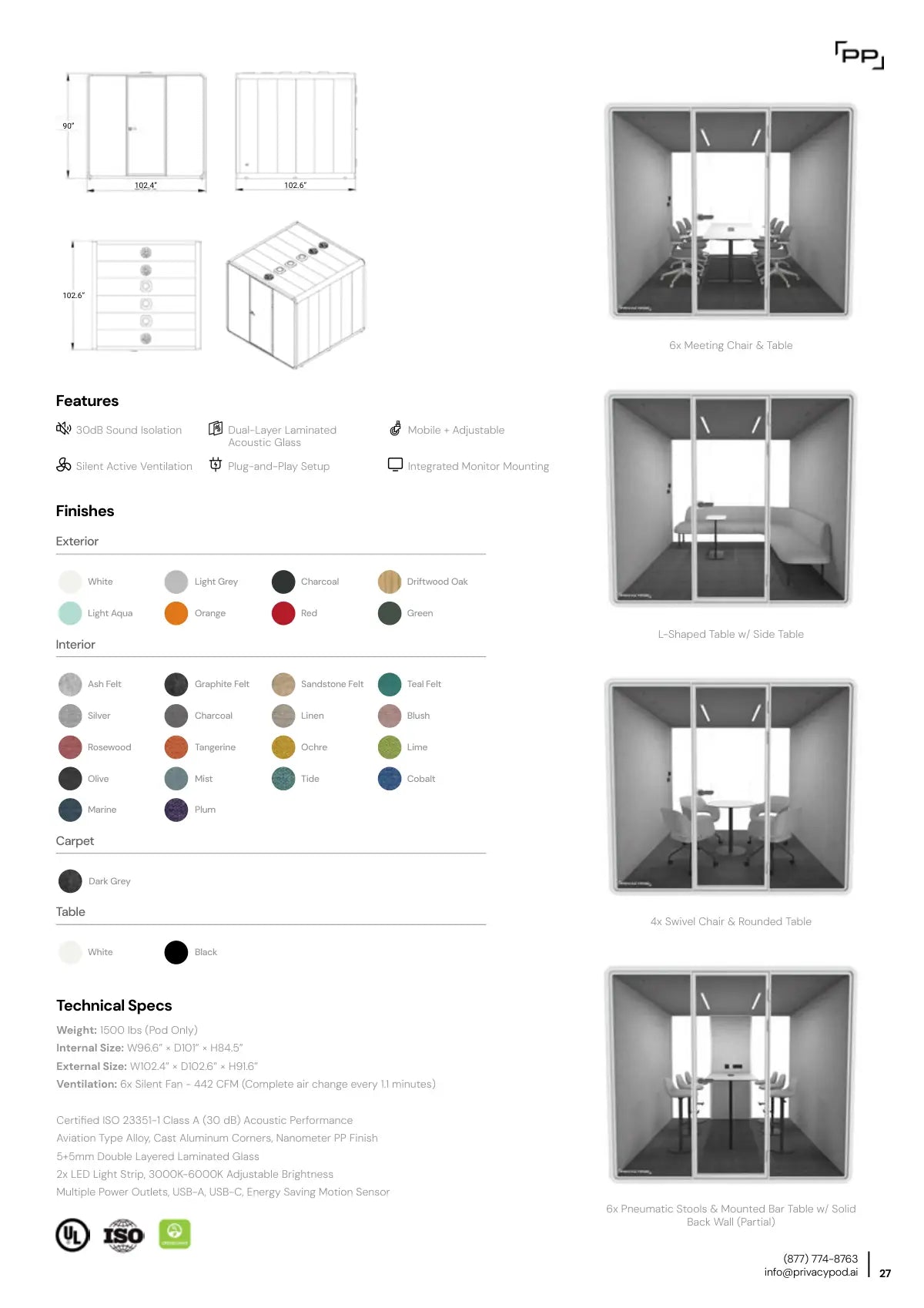
- Libraries. The XL Pod at $14,995 holds a study group or a virtual class without the rest of the floor hearing it.
- Healthcare. Hospitals are stressful buildings. The Solo Lactation Pod and XL Family Lactation Pod give staff and visitors a private, clean room, and an accessible pod gives a patient or family member somewhere to take a hard phone call.
- Community centers. Telehealth appointments, benefits interviews and private counseling all need a door that closes and a conversation that does not carry.
Built to move, built to last
Pods are modular. They disassemble, relocate and reassemble, which means an inclusive workspace decision made this year is not stranded by next year's floor plan. Installation requires no renovation. The pods are built with recycled materials and energy-efficient components, so the accessibility case and the sustainability case point the same direction. Free shipping applies to every order.
Frequently asked questions
How do PrivacyPod booths support sensory-friendly environments?
Adjustable lighting, continuous ventilation and ISO 23351-1 Class A acoustic performance, approximately 30 dB of speech level reduction, combine to lower sensory load. The user controls the light and the door, which matters as much as the specification does.
Are the ADA pods as quiet as the standard pods?
Yes. The L ADA Pod and the XL ADA Pod are ISO 23351-1 Class A certified and deliver approximately 30 dB of speech level reduction, the same as the standard and Arc pods.
What does the ADA require for work surfaces and doorways?
Work surfaces should sit 28 to 34 inches above the floor, with toe clearance at least 17 inches deep and knee clearance at least 11 inches deep beneath them, within the 25 inch maximum the standard counts, and at least 30 inches of clear width. Door openings need at least 32 inches of clear width, and handles must work with one hand at no more than 5 pounds of force.
How does a pod actually help an employee with ADHD?
It removes the two triggers that do the most damage in an open office, unpredictable noise and visual movement, and it gives the employee a decision they can make on their own without asking a manager for anything.
Can the pods be customized?
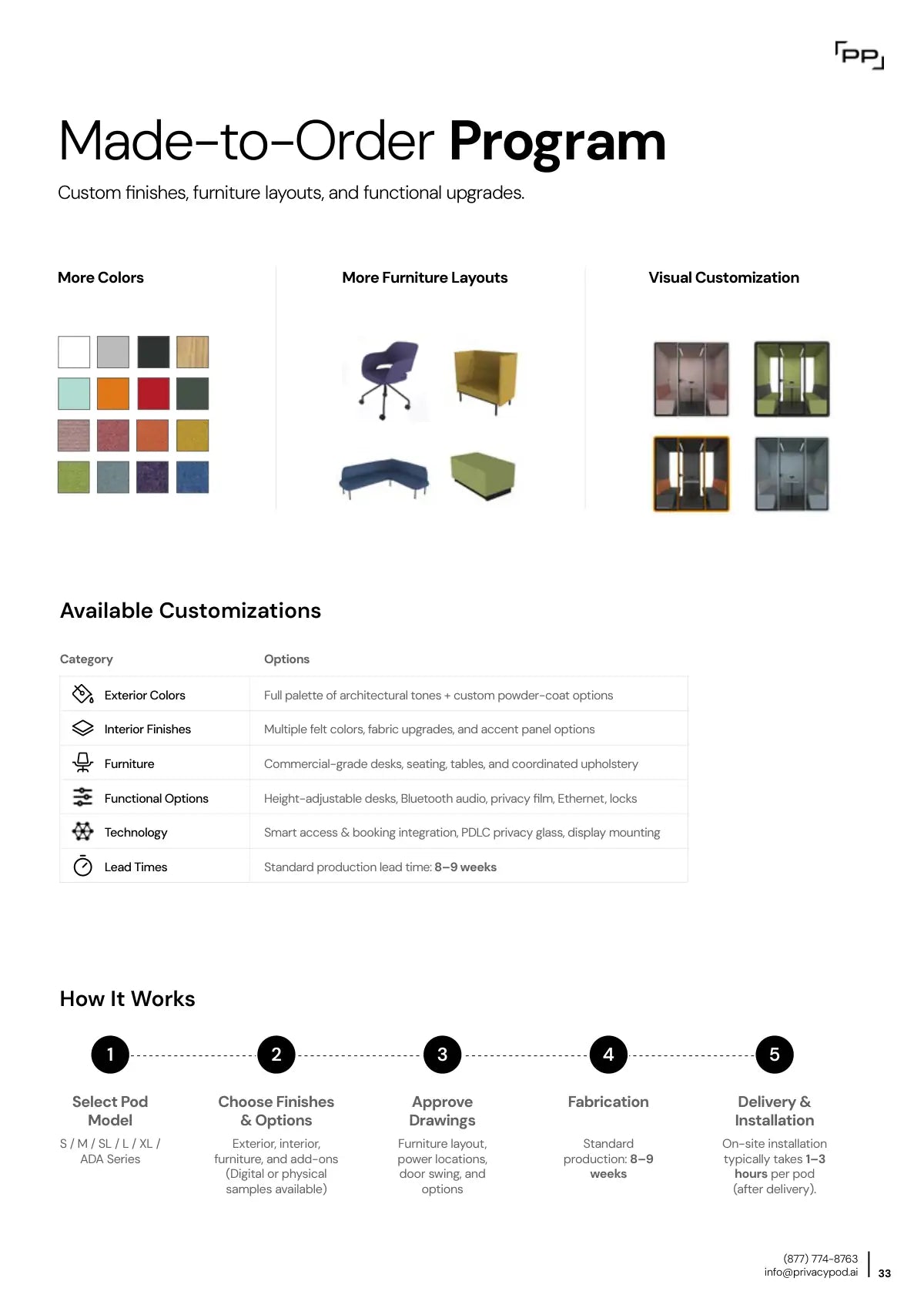
Yes. Lighting, ventilation, furniture, power configuration and interior finishes are all selectable, and accessories can be added to an existing pod later.
Can a pod be moved after it is installed?
Yes. The modular construction allows a pod to be taken apart, moved and reassembled, which is what makes it a fixture-free way to add a quiet room.
Where can the pods be used?
Offices, schools, libraries, hospitals and community centers. Anywhere a closing door and a quiet conversation are worth more than another open desk.
Start with the room you actually have
Inclusive space is not a renovation project. It is usually one pod, placed where the noise is worst, and then a second one after people start booking the first. Whether the driver is an ADA obligation or an employee who has asked for somewhere quieter to work, the pod is the same size it was before, and it can be in the building without a construction schedule.
Talk it through with us at info@privacypod.ai or call +1 (877) 774-8763, Mon to Fri, 8am to 5pm CT. You can also send us the floor plan and we will tell you what fits.
Filed under Accessibility
Back to the blog